Royal Pantheon of Poblet: A Gothic Royal Burial Ensemble
Site at a Glance
- Popularity
- Medium
- Country
- Spain
- Primary era
- Medieval
- Eras represented
- Medieval, Early Modern
- Civilizations
- Crown of Aragon, Habsburg, Habsburg Spain, Spanish
- Site type
- Religious
- Remains
- Tomb
On this page13 sections
History
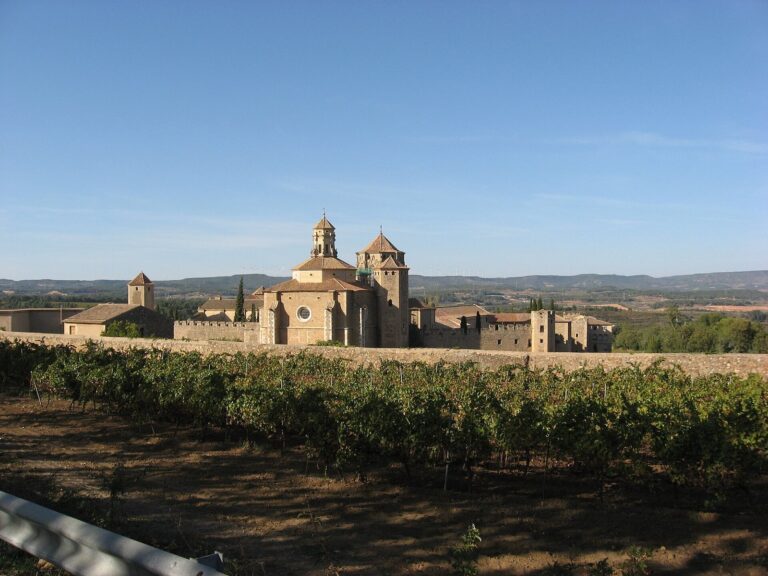
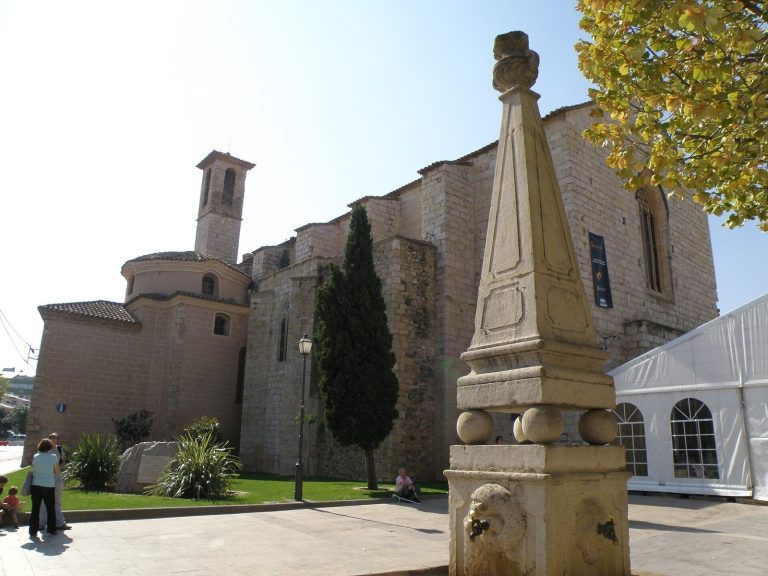
The Royal Pantheon of Poblet is a Gothic Catalan funerary ensemble in the monastery church at Poblet, Spain. Its royal tombs were built in the fourteenth century on the initiative of Peter IV of Aragon. The pantheon forms part of a Cistercian monastery, belonging to a monastic order that developed from Benedictine monasticism. It is described as the most important and richly ornamented Gothic funerary sculptural ensemble of its kind in Catalonia.
From a royal burial wish to a pantheon
In 1194, Alfonso II the Chaste stated in his will, signed at Perpignan, that he wished to be buried at Poblet and wanted the monastery to become a royal pantheon. He was buried there in 1196, but the pantheon was created later, under Peter IV.
The fourteenth-century building campaign
In 1359, Peter IV engaged Aloi de Montbrai, then working in Barcelona, to direct the project. An early design placed four tombs in the transept with a passage between them, but the plan was abandoned because space was insufficient. Work on broad arches was under way by 1370. The carpenter Bernardo Teixidor, who was also associated with work on the arches, was commissioned in 1382 to make wooden canopies designed by Jaume Cascalls.
Peter IV had a strong influence on the artistic direction and on the choice of sculptors. Aloi de Montbrai and Pere de Guines, both described as French in origin, worked on the project at first. Jaume Cascalls later led the work with his workshop. After Cascalls died, Jordi de Déu, a Greek sculptor who had been enslaved, was freed and succeeded him as director. Esteve de Burgos also took part.
The Royal Chapel and its disruption
The ensemble became known as the Royal Chapel. In 1660, Juan Francisco Grau altered it with a carved base bearing coats of arms and reliefs, and added a doorway that closed the previously open space beneath the arches. The change followed the accumulation of royal coffins there while permanent resting places and tombs were sought. The coffins, including those of Martin I, Charles, Prince of Viana, and the dukes of Segorbe and Cardona, were made of plain wood and covered with velvet, and on solemn occasions with special tapestries. Martin I’s tomb had not been completed.
An engraving by the nineteenth-century traveler and writer Alexandre de Laborde, published in his Voyage pittoresque et historique de l’Espagne between 1806 and 1820, shows the ensemble after Grau’s alteration. The monks finally left Poblet in 1835 after monastic property was confiscated, and looting followed. In 1837, Antonio Serret, rector of the church at Espluga de Francolí, gathered the scattered royal remains and placed them beneath the choir stairway in his parish church. After the court learned of this, Queen Regent Maria Christina issued an order on 3 May 1840, but the remains were not safeguarded there. When architect Elías Rogent visited Poblet in 1845, the tombs still stood on their pedestals, but had been opened and mutilated; the kings’ remains had been removed and scattered across the church floor.
In 1856, Pedro Gil y Serra paid for wooden coffins and the remains were sent to Tarragona Cathedral for safekeeping. James I’s remains were displayed for a time in the Corpore Christi chapel in the cloister. Valencia then claimed them, and Tarragona promised to provide a royal funerary monument within two years, intending to reuse sculpture and architectural pieces from Poblet. A team under archaeologist Buenaventura Hernández Sanahuja pried pieces loose and transported them by cart without protection. Nearly all arrived shattered. They were stored in the cellars of Tarragona City Hall and forgotten after Sanahuja’s death. Workers rediscovered them in 1894 while converting the space into a school; the pieces went first to the city’s museum and later to the National Archaeological Museum of Tarragona.
Recovery and reconstruction
A preservation board and the Brotherhood of Friends of the Monastery were established in 1930 to help recover surviving stones and artworks. Monastic life resumed in 1940 as restoration of the monastery progressed. In 1942, the Ministry of Education began restoring the royal tombs, seeking to return the arches and sarcophagi to their known arrangement. Sculptor Federico Marès led the reconstruction, and the restored ensemble was inaugurated at Poblet in 1952. After the sculptures were shown in Madrid, Zaragoza, and Barcelona, rain during an open-truck journey caused serious damage; Marès repaired it.
Remains
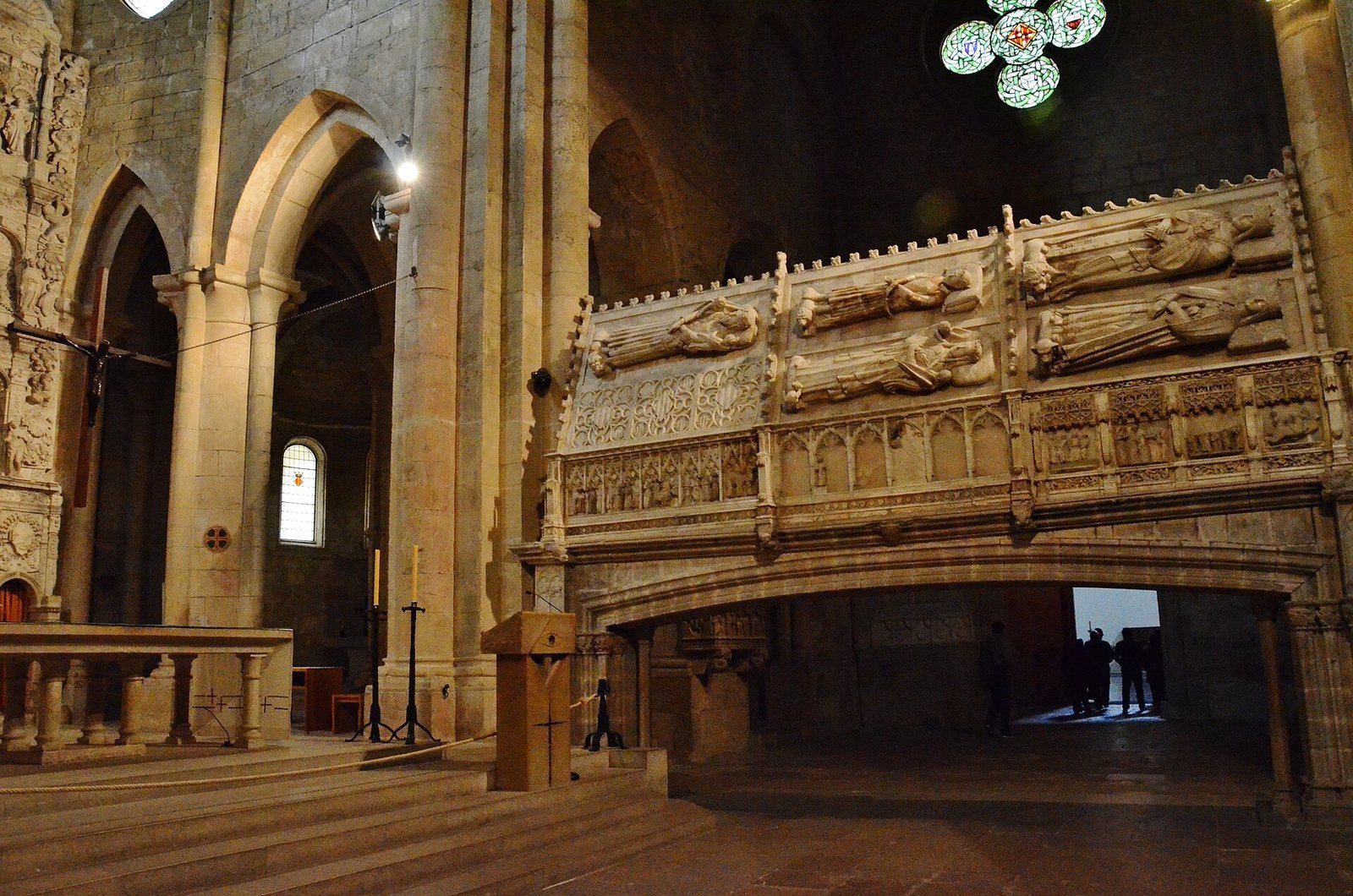
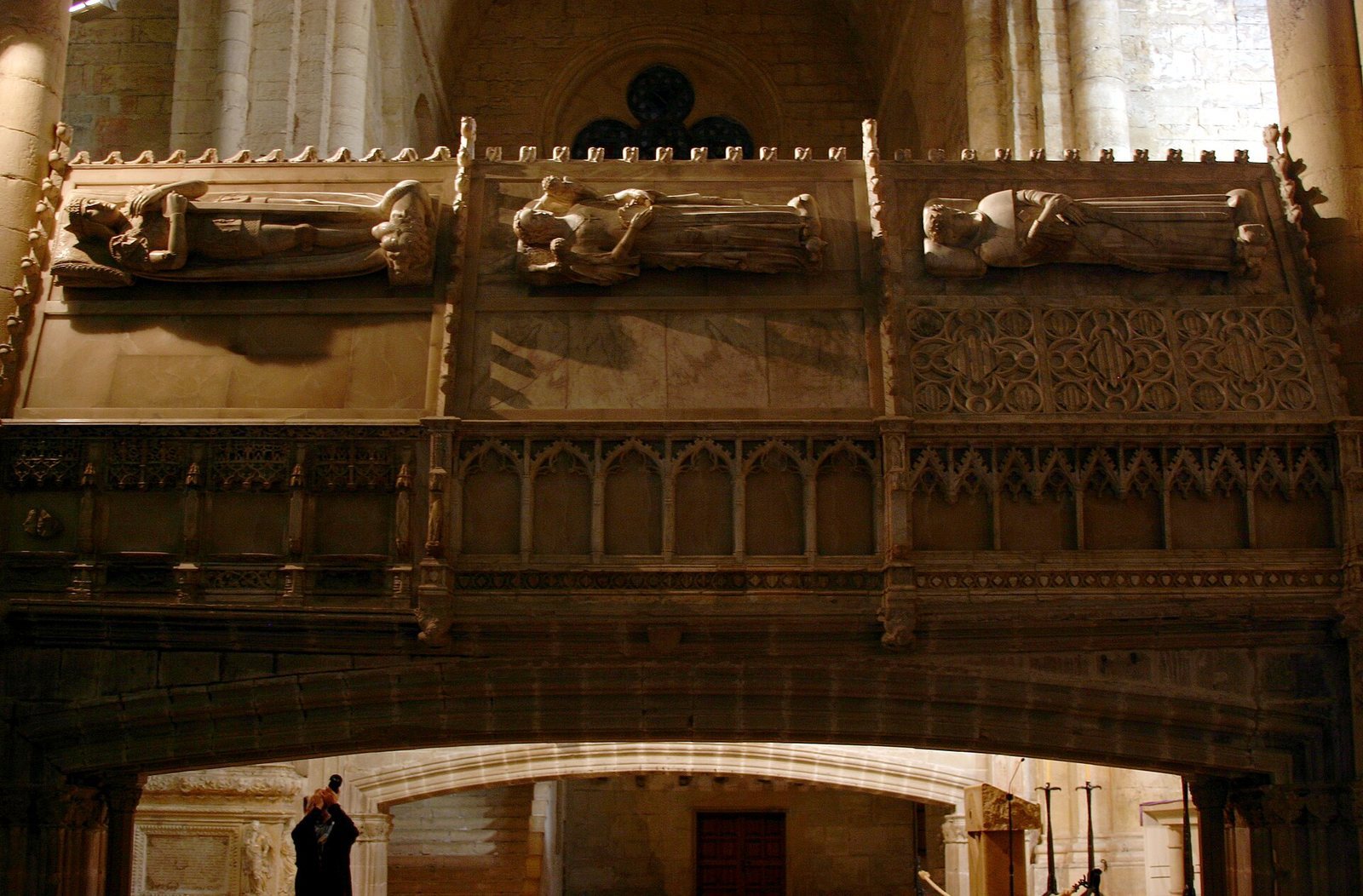
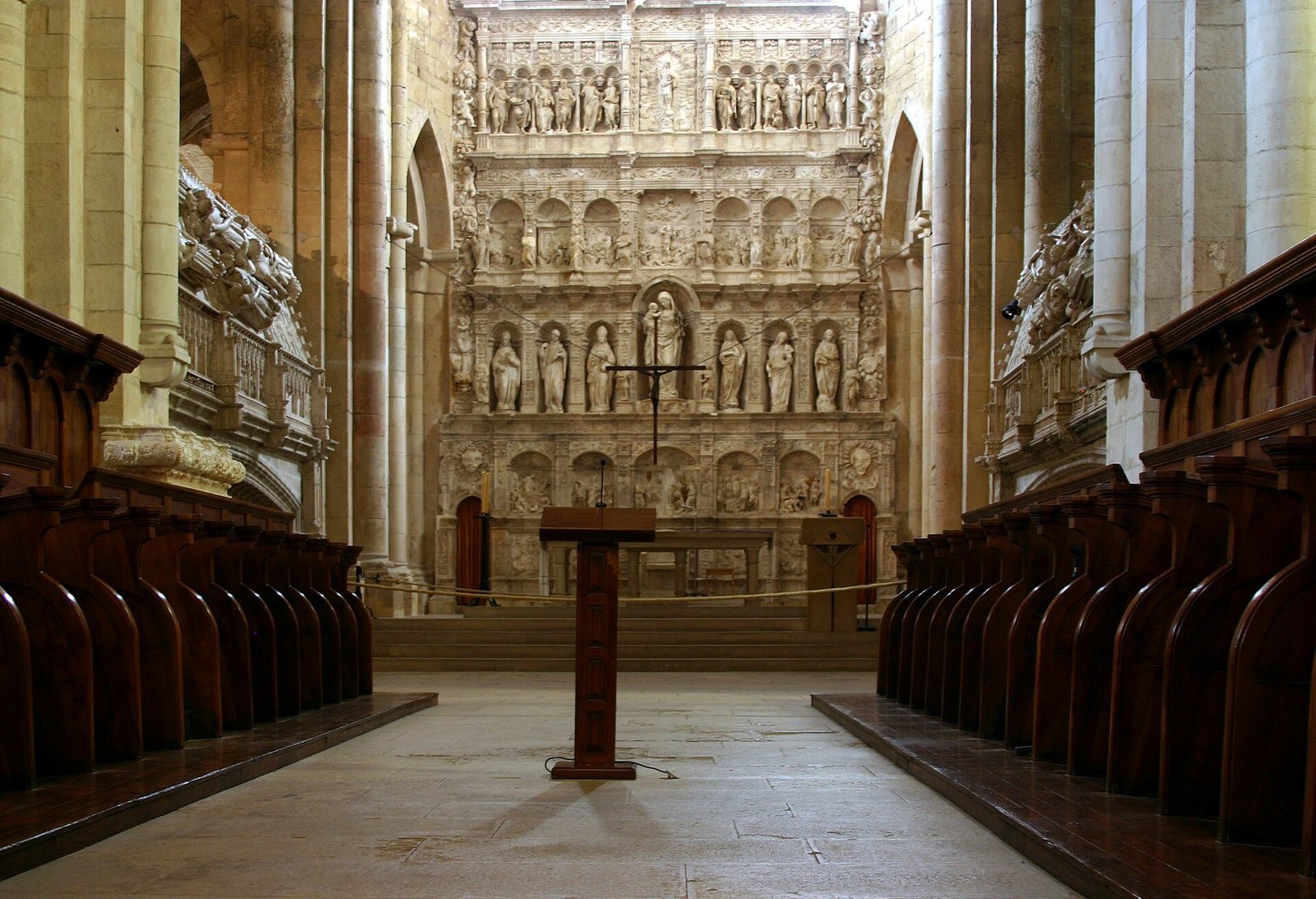
The pantheon occupies the monastery church’s transept. Six royal tombs stand above broad segmental arches, shallow arches formed from part of a circle, with three tombs on each side. The arches span the transept, leaving passages beneath them. The carved tomb figures are made of alabaster painted in several colors.
Royal tombs across the transept
Gospel side
On the Gospel side, the side associated with the Gospel reading in church services, are the tomb of James I; that of Peter IV with Mary of Navarre, Eleanor of Portugal, and Eleanor of Sicily; and the paired monument to Ferdinand I of Antequera and Eleanor of Alburquerque. Eleanor’s tomb is a cenotaph, a memorial for someone buried elsewhere: her remains lie at the Convent of Santa María la Real in Medina del Campo, which she founded.
Epistle side
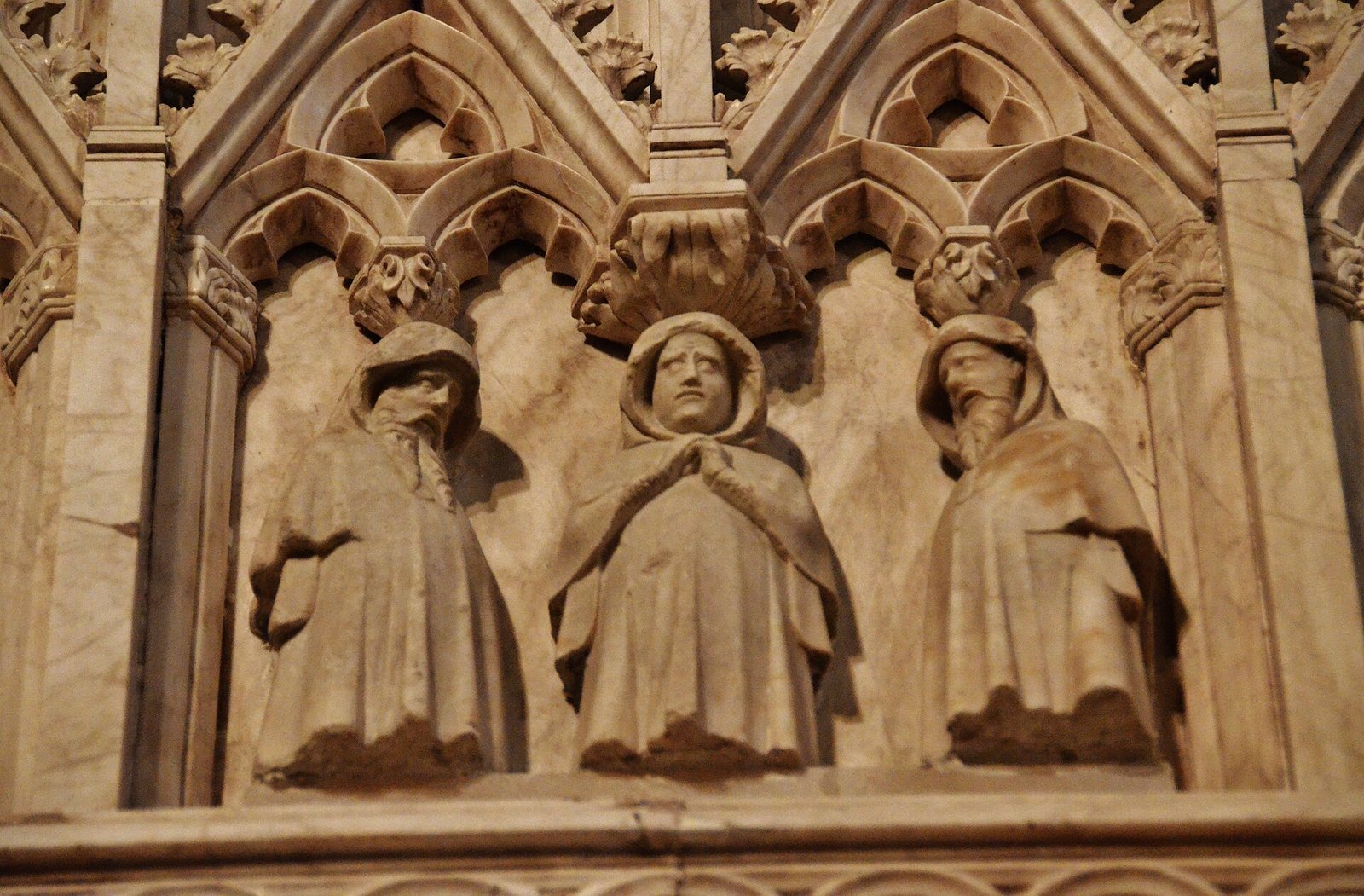
On the Epistle side, associated with the other liturgical reading, are Alfonso II’s tomb; John I’s with Martha of Armagnac and Violante of Bar; and John II’s with his second wife, Juana Enríquez. Martha died in 1378, before her husband became king in 1387, so her effigy holds her crown rather than wearing it. Peter IV is shown in the garments in which he was shrouded, the same clothing he wore at his coronation. The figures express both royal rank and Cistercian affiliation, reflecting a practice of presenting the dead as sharing the spiritual benefits of the religious order that received them. An eighteenth-century description counted sixteen reclining figures beneath the canopies.
Canopies and surface decoration
Wooden canopies rise over the carved tomb slabs like elaborate roof coverings. They have pinnacles, pointed ornamental tops, and gables with open, cut-through decoration. Their surfaces were painted and gilded, while the inner vaults were blue with gold stars. The original decoration also used blue glass-like backgrounds with gold and niello ornament. Niello is a dark metal compound used to fill engraved lines or areas. Peter IV chose this scheme after seeing a funerary relief with mourners in Cascalls’s workshop. The blue and gold decoration was lost during the nineteenth-century destruction.
Other tombs beyond the arches
Independent tombs outside the arches contain the remains of Juana of Aragon, Countess of Empúries (1485); Martin I and María de Luna (1410 and 1406); Pedro, Count of Alburquerque and prince of Aragon (1438); Enrique of Trastámara of Aragon and Beatriz Pimentel (1445 and 1490); Alfonso V (1458); Alfonso of Aragón y Escobar, Duke of Vilafermosa (1485); Beatrice of Naples, twice queen of Hungary (1508); Juan de Aragón, son of Ferdinand the Catholic and Germana de Foix, who died shortly after birth (1509); and Pedro Antonio de Aragón, politician and soldier (1690).
The seventeenth-century base
The seventeenth-century base bears carved coats of arms and reliefs, with a doorway opening into the interior. Its construction closed the area beneath the arches that had formerly remained open.
Reconstructed sculpture and displaced fragments
For the twentieth-century reconstruction, Marès worked with about 500 alabaster fragments that had lost their recognizable forms. They represented only around two percent of the sculpture that had been lost. He added alabaster from Beuda in Girona, the quarry used by the fourteenth-century sculptors. Individual tombs formerly attached to the ensemble for members of the houses of Cardona and Segorbe were not incorporated into the restored arrangement. Some fragments were reused in James I’s new tomb; the others were restored and taken to the Chapel of the Relics.