Kames Castle: A Historic Country House on the Isle of Bute
Site at a Glance
- Popularity
- Medium
- Country
- United Kingdom
- Primary era
- Early Modern
- Eras represented
- Early Modern, Modern
- Civilizations
- British, Kingdom of Scotland
- Site type
- Domestic
- Remains
- Castle
On this page9 sections
History
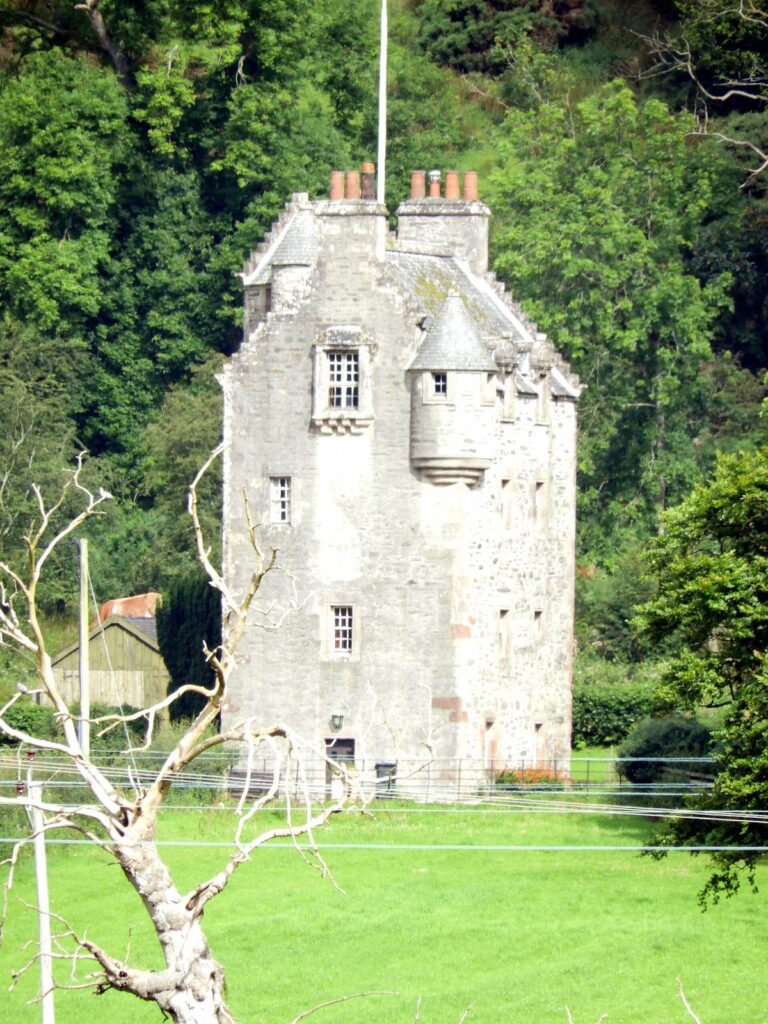
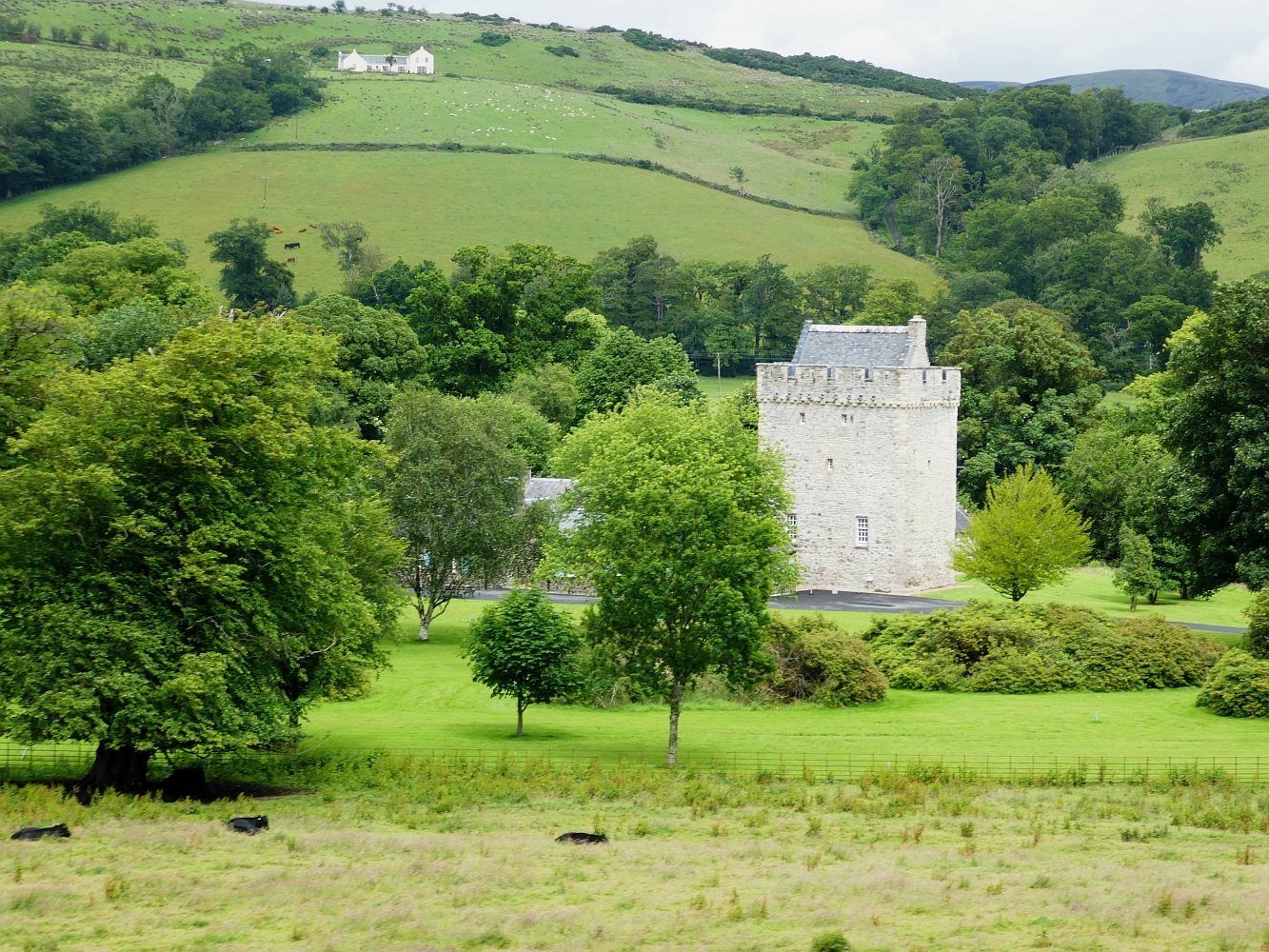
Kames Castle is a country house on the shore of Kames Bay near Port Bannatyne on the Isle of Bute, Scotland, United Kingdom. Its tower house, a fortified residence built around a tower, is thought to date from the 16th century, although it has a 14th-century appearance. The house has a crenellated parapet, formed by alternating raised and lowered sections, and has been regarded as one of Scotland’s oldest continuously inhabited houses.
The Bannatyne family seat
In the 14th century, Robert the Bruce, king of Scots, granted the lands of Kames to the Bannatyne family, and the castle became their family seat. The tower house’s appearance recalls this earlier period, but its construction is thought to belong to the 16th century.
Estate changes in the 18th and 19th centuries
Sir William Macleod Bannatyne, the last Bannatyne owner, laid out the walled garden and built a mansion beside the tower house in the late 18th and early 19th centuries. He became Lord Bannatyne in 1799 after promotion to the College of Justice, a Scottish judicial institution for senior judges. In the early 19th century, he sold the estate to James Hamilton, a member of the historic Scottish solicitors’ body known as the Writer to the Signet.
John Sterling, later a critic and essayist, was born at Kames Castle and spent his early years there. His biographer, the Scottish historian and essayist Thomas Carlyle, described the property as a run-down country residence with a small farm attached. In 1863 the estate became part of the Marquess of Bute’s holdings. The tower house was altered later in the 19th century, and around 1900 the mansion was demolished and replaced by cottages planned as a hunting lodge.
Later use and protection
In the mid-to-late 20th century, Kames served as a children’s holiday home run by the Scottish Council for Spastics, an organization concerned with services for people with cerebral palsy. The castle, estate buildings, and gardens have listed-building protection, including Category B status, a Scottish grade for buildings of regional or greater-than-local importance. The gardener’s cottage is listed Category C, a grade covering local importance or lesser examples.
Remains
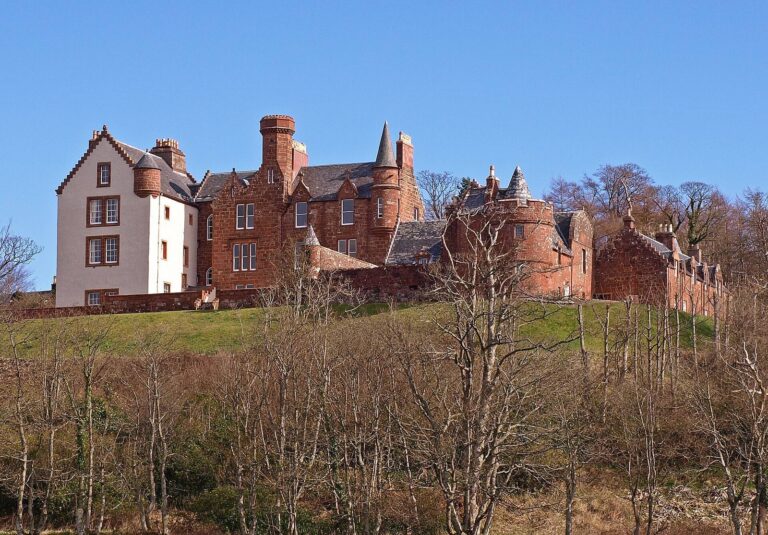
The complex stands beside the bay within planted grounds of about 20 acres (8 hectares). It includes the principal house, a group of stone cottages, a walled garden, a gate lodge at the main approach, and a gardener’s cottage.
The house and cottages
Tower house
The country house incorporates the tower house and has a parapet with alternating raised and lowered sections. The tower remains part of the larger house complex.
Courtyard cottages
A range of stone cottages forms part of the complex. The cottages are arranged around a courtyard.
Garden and entrance buildings
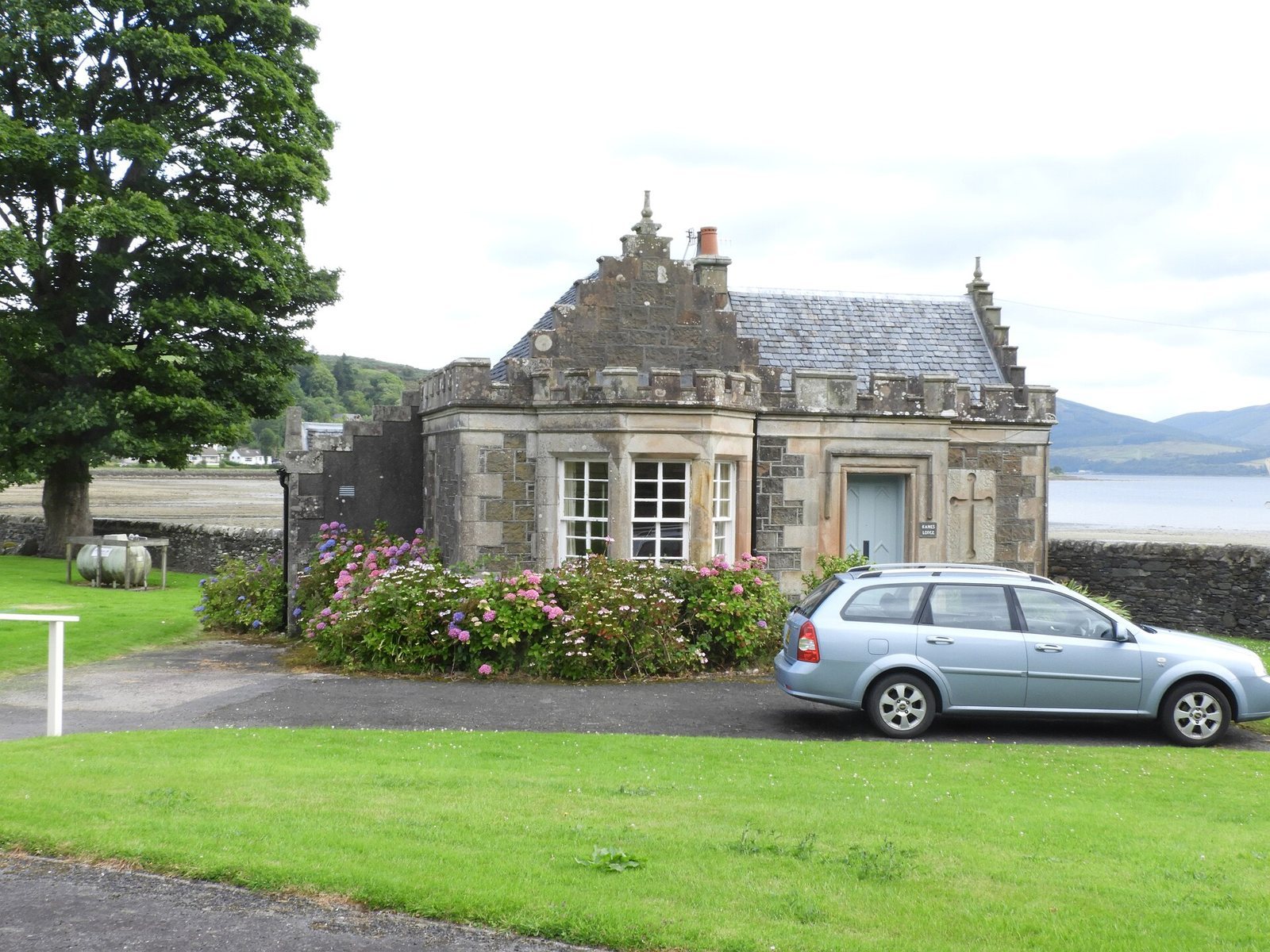
The estate’s walled garden covers about 2 acres (0.8 hectares). The gate lodge stands at the main approach, and a separate gardener’s cottage is also part of the estate buildings.