Palatium Vetus: Medieval Civic Center and Later Military Headquarters
Site at a Glance
- Rating
- 4.5
- Popularity
- Low
- Country
- Italy
- Primary era
- Modern
- Eras represented
- Medieval, Early Modern, Modern
- Civilizations
- Unclassified
- Site type
- Civic
- Remains
- Town Hall
On this page7 sections
History
Medieval civic center
Palatium Vetus is a historic civic complex in Alessandria, Italy, with a building on its site dating to the late 12th or early 13th century. By 1191, the site housed a domus consulum, or “house of consuls,” referring to the magistrates who governed a medieval commune. The later broletto, a civic building for municipal administration, appears to have been built against the earlier structure, reusing its masonry.
In the 13th and 14th centuries, the broletto served as the political, administrative and judicial center of Alessandria’s commune, a self-governing urban community. Construction and alterations to the complex continued through 1843.
Military use and restoration
In 1856, the Municipality of Alessandria transferred the building to the State, which used it for the guard post of the Division Command. It later housed the garrison and military district until 1995.
A restoration carried out from 2007 to 2012 included architect Gae Aulenti as a consultant. Since 1 September 2012, Palatium Vetus has served as the headquarters of the Cassa di Risparmio di Alessandria Foundation.
Remains
Complex and courtyard
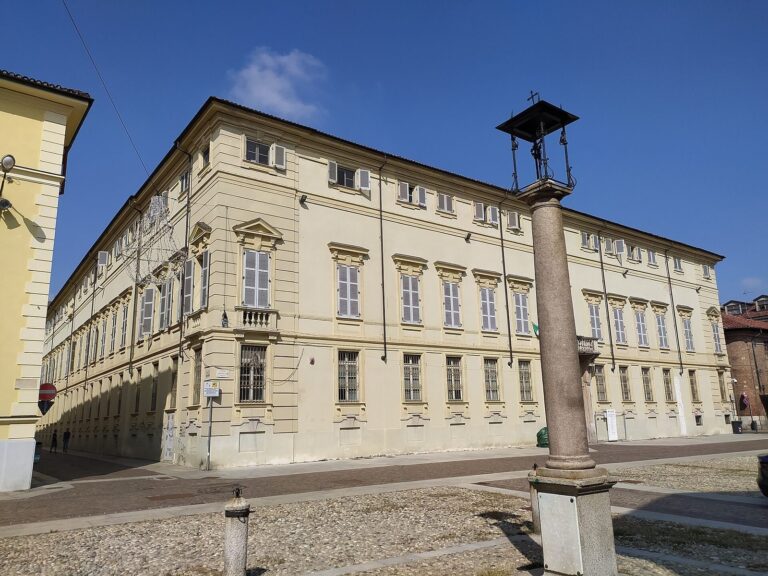
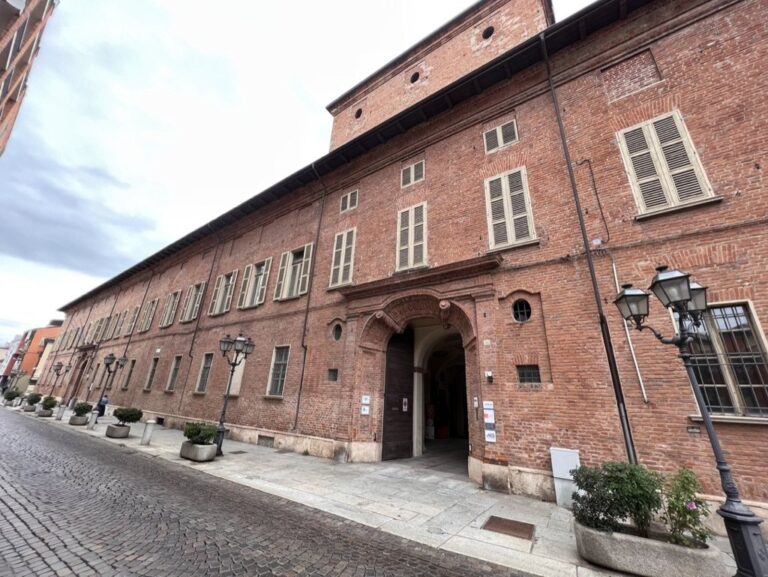
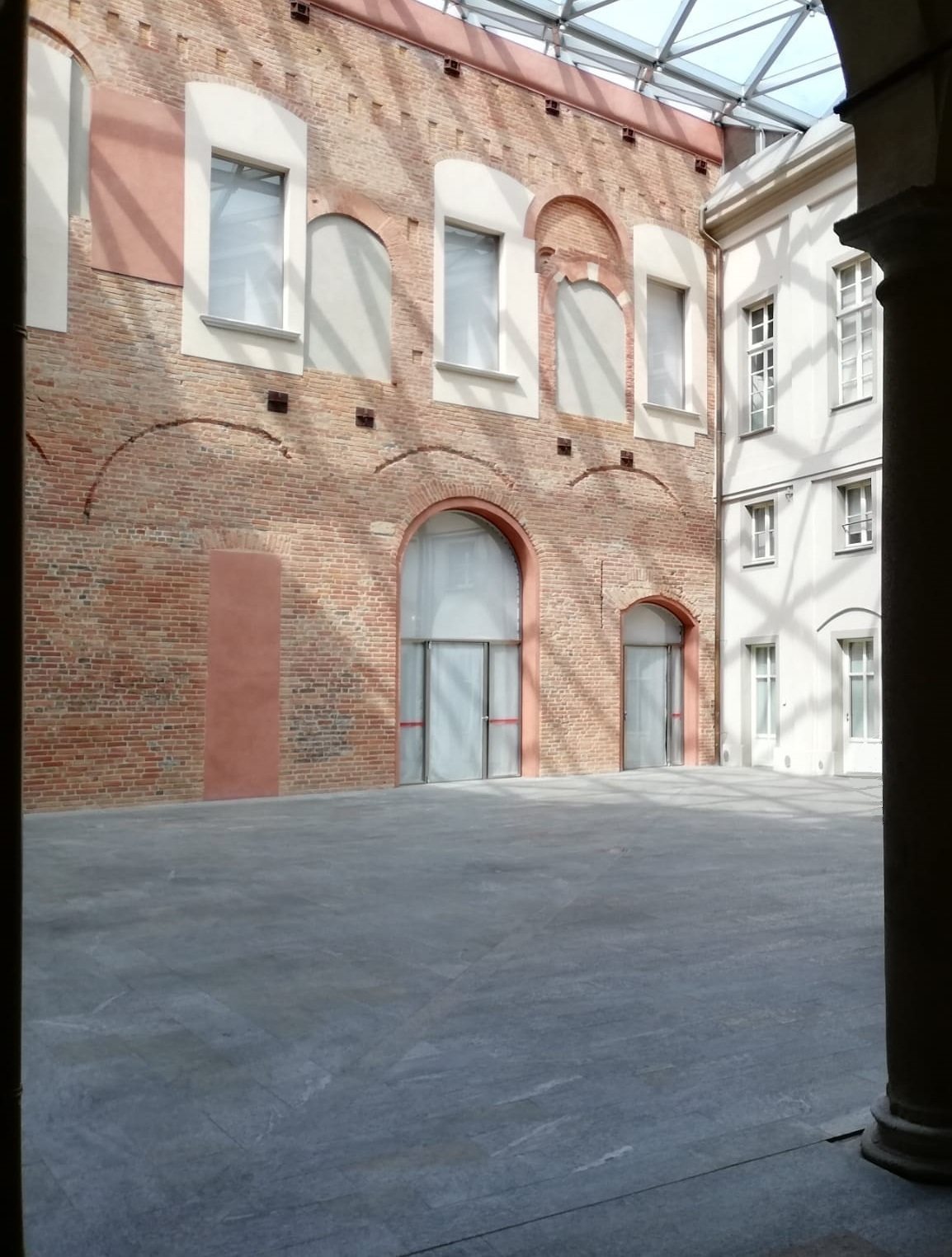
The complex brings together buildings altered and extended as their uses changed. Its four-storey appearance is predominantly mid-19th century. One of its two courtyards is partly enclosed by a portico with pointed arches.
Medieval broletto and frescoes
The medieval broletto has a ground-floor portico and a hall on the first floor, in Lombard architecture, the medieval regional style associated with Lombardy and northern Italy. Restoration exposed medieval architectural features beneath heavy 18th- and 19th-century plaster. In the first-floor hall, it also uncovered numerous blocked three-light windows and large sections of frescoes dating from the 13th to the 17th century. One fresco shows the earliest known representation of Alessandria’s coat of arms, a red cross on a white field.
Commemorative features
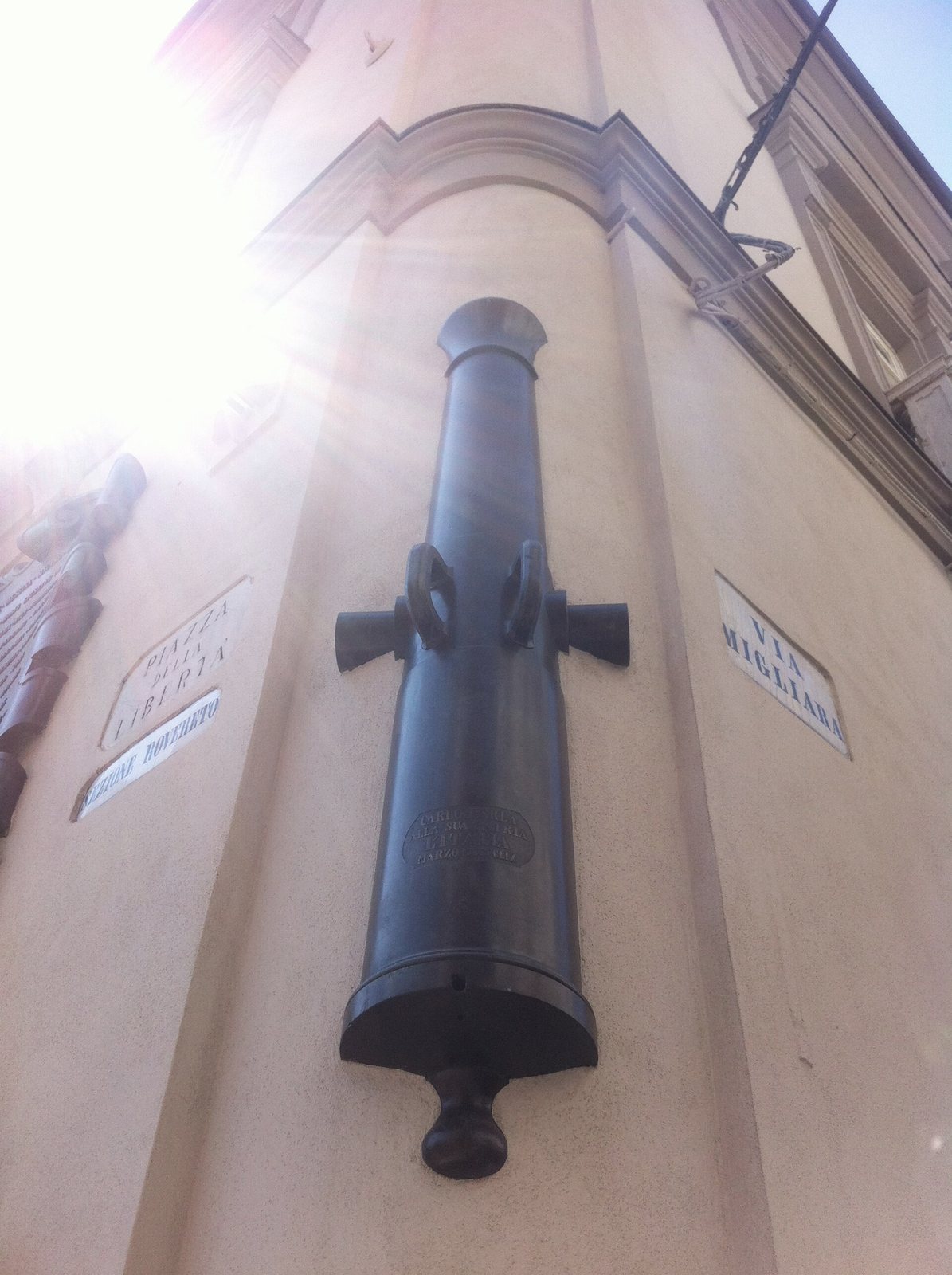
A plaque on the façade commemorates the “Hundred Cannons” subscription, a fundraising appeal for the Citadel of Alessandria, a fortress. The last cannon surviving from the appeal stands at the building’s northern corner.