Schloss Nettlingen: A Renaissance Castle in Germany
Site at a Glance
- Rating
- 3
- Popularity
- Very Low
- Country
- Germany
- Primary era
- Early Modern
- Eras represented
- Early Modern
- Civilizations
- Holy Roman Empire
- Site type
- Domestic
- Remains
- Castle
On this page8 sections
History
Schloss Nettlingen is a Renaissance castle in Nettlingen, Germany, built around 1570 by the Lords of Salder. It served as a seat of the lower nobility, the lesser-ranking hereditary noble class.
The Nettlingen family and early estate
Nettlingen is recorded in 1022. A lower-noble family bearing the settlement’s name appears in records from 1166 to 1520. In 1320, St Michael’s Monastery in Hildesheim granted the family a Wallhof, a fortified manor estate, at Nettlingen.
The Salder castle and later owners
After passing through two other owners, the estate came to the Lords of Salder in 1552. Around 1570, Kurt von Saldern built the Renaissance castle that survives today.
The Brewers’ Guild of Hildesheim began negotiating to buy the costly-to-maintain building in 1605, and the negotiations concluded in 1611. The following year, the guild sold the castle to Arend von Wobersnow for 28,000 Reichstaler, a currency used in the German lands. Wobersnow was a senior territorial administrator serving Duke Friedrich Ulrich of Brunswick.
In 1717, Tsar Peter the Great and his wife stayed overnight at the castle while traveling from Paris to Moscow. Napoleon Bonaparte, the French military leader who later became emperor, is also said to have rested there during his campaigns of conquest.
Later ownership and use
Theodor Josef von Wrede, president of the Hildesheim government, bought the castle in 1803 and left it to his nephews, Carl and Caspar von Wrede zu Amecke. The barons von Wrede sold the estate to the barons von Cramm in 1909; the von Cramms sold it again before the Second World War. Gottfried von Cramm, later a prominent German tennis player, was born at the castle in 1909. The building is now used for rental apartments.
Remains
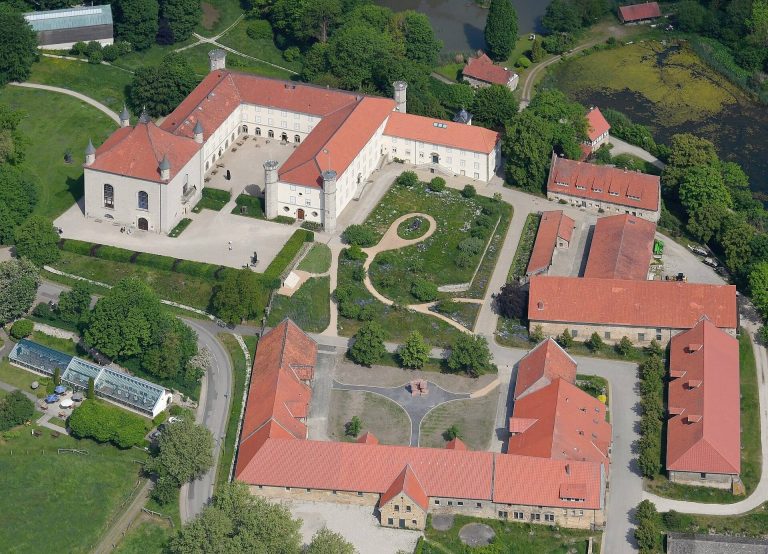
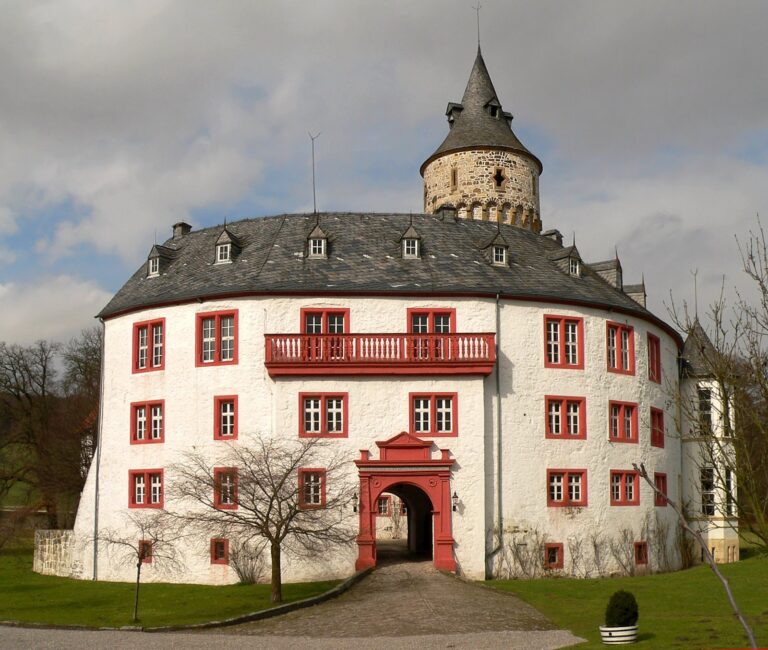
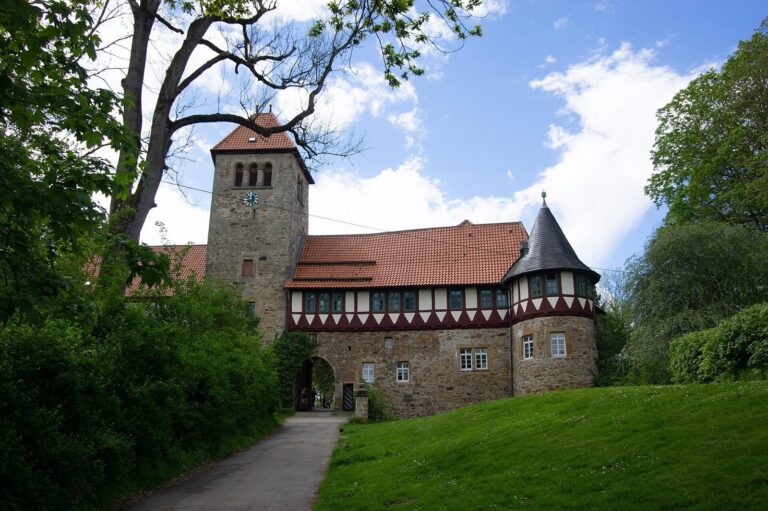
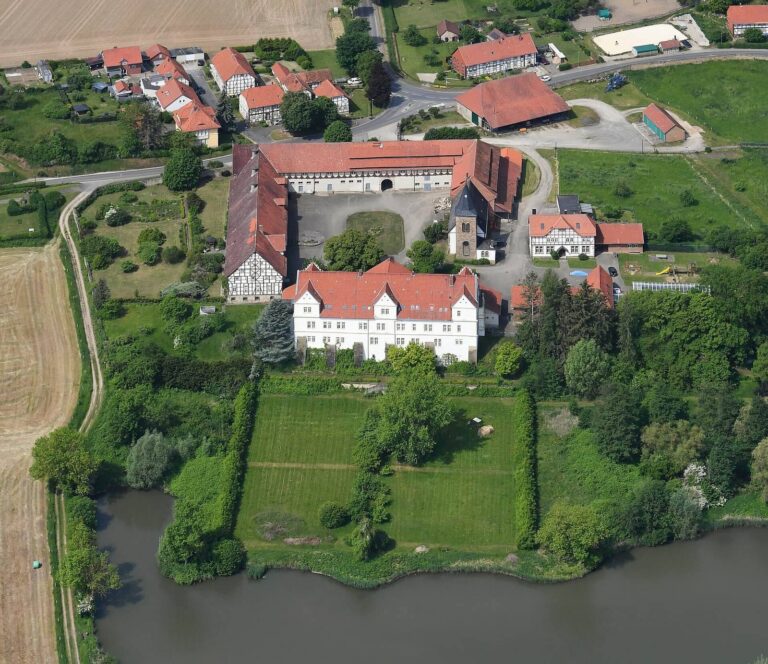
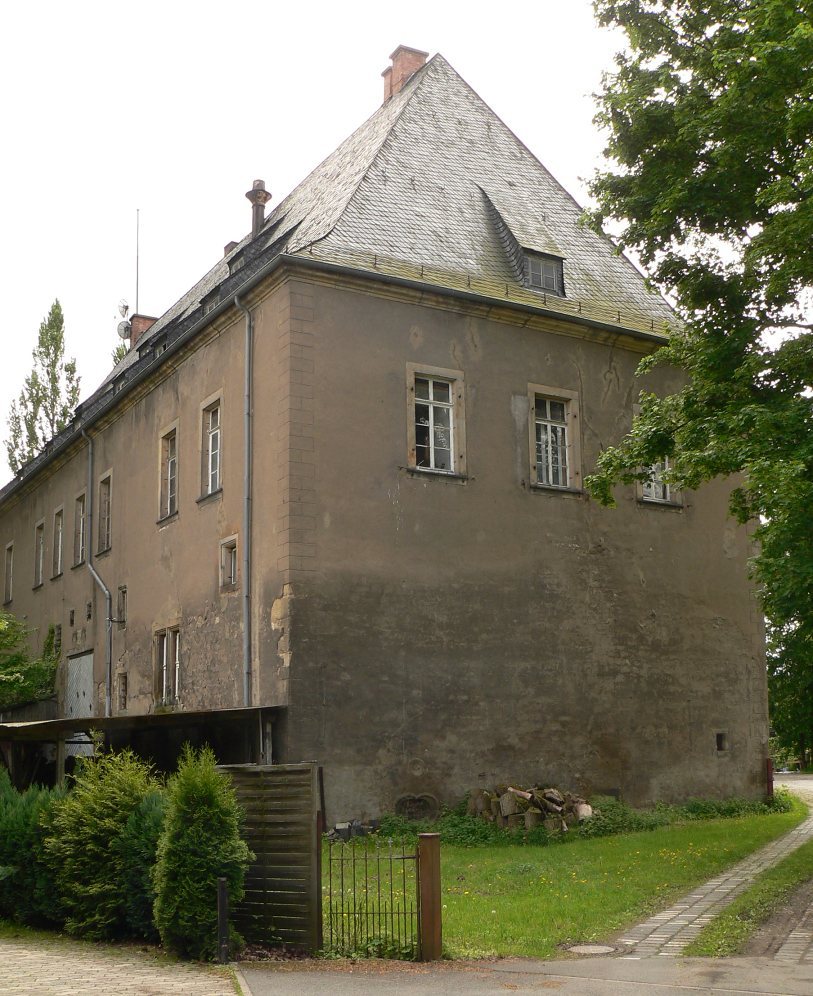
The surviving lowland castle is a Renaissance complex with two wings set at right angles. Its façades are plastered, and the roof is slate-covered.
Surviving architecture
Staircase tower, hall, and cellar
A staircase tower stands between the wings and has a Renaissance portal. In the west wing, the large hall has been subdivided. The cellar has firing openings.
Defensive works
A rampart, moat, and wall formed the castle’s defenses.