Septfontaines Castle: A Late Baroque Family Residence in Luxembourg
Site at a Glance
- Rating
- 4.2
- Popularity
- Medium
- Country
- Luxembourg
- Primary era
- Early Modern
- Eras represented
- Early Modern
- Civilizations
- Habsburg, Habsburg Austria, Holy Roman Empire
- Site type
- Domestic
- Remains
- Elite Residence
On this page7 sections
History
Factory and family residence
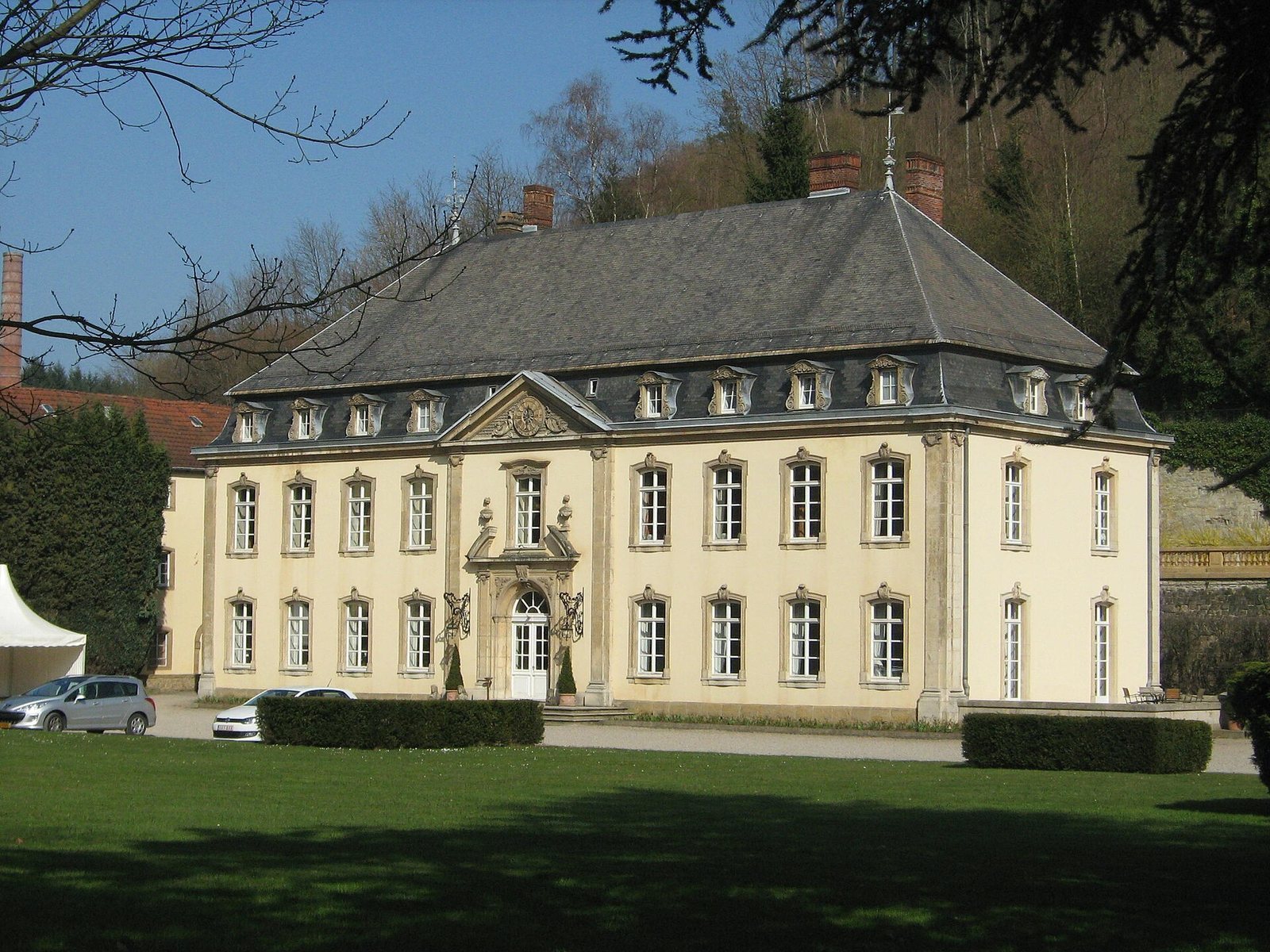
Septfontaines Castle is a late Baroque residence in Rollingergrund, Luxembourg City, Luxembourg. Jean-François and Pierre-Joseph Boch built it in 1783–1784 for their families, within the grounds of their nearby porcelain factory. The factory had opened in 1767, when Luxembourg formed part of the Austrian Netherlands, a Habsburg-ruled territory in the Low Countries. The brothers chose Rollingergrund for its supplies of clay, water, and wood for the factory kilns.
Maria Theresa, a Habsburg ruler, authorized the factory and exempted the Boch brothers from taxes for its first ten years. French troops occupied the château at an unspecified date. The property was sold in 1914.
Company ownership and later use
In 1970, Luitwin von Boch reacquired the property on behalf of Villeroy & Boch and commissioned his cousin Antoine de Schorlemer to oversee a comprehensive renovation. The work lasted 12 years.
Villeroy & Boch’s porcelain factory closed in 2010, while the château remained associated with the company. It served for business conferences and receptions and was also used by company management, partners, and clients visiting Luxembourg. In early 2021, it remained Villeroy & Boch property and was planned as a future location for the Luxembourg School of Business, described at the time as Luxembourg’s first business school.
Remains
The interior was arranged to accommodate the two Boch families. The château is attributed to architect Jean-Baptiste Fresez and is in good condition.
Interior arrangement
Family quarters and shared rooms
The first floor has two separate bedroom sections, one for each family. On the ground floor, rooms including the dining room and lounge could be shared.
Porcelain decoration and portrait
Porcelain pieces in varied shapes and sizes decorate the walls and windows. A portrait of Maria Theresa hangs in the dining room.