Ardabil Bazaar: Historic Market Complex in Iran
Site at a Glance
- Popularity
- Medium
- Country
- Iran
- Primary era
- Medieval
- Eras represented
- Medieval, Modern
- Civilizations
- Seljuk
- Site type
- Economic
- Remains
- Market
On this page6 sections
History
Ardabil Bazaar is a historic market complex in the center of Ardabil’s old city in Iran. It originated under Seljuk rule, with its beginnings placed in the sixth century of the Islamic lunar calendar, which counts years from Muhammad’s migration from Mecca to Medina.
Rebuilding under successive dynasties
The bazaar was rebuilt and repaired during the Safavid and Qajar periods, and renovated under the Zands in the 18th century. The Safavid era was an especially important period of Iranian rule and culture, and the market flourished during that time.
Religious endowments and trade
Some of the bazaar’s shops, bathhouses, and inns belonged to the endowment estate of the Shaikh Safi al-Din Shrine, a complex dedicated to the Persian religious master Shaikh Safi al-Din. An endowment estate consists of property set aside to support a religious or charitable institution, and income from these holdings helped maintain the shrine. The estate also owned caravan inns, which lodged travelers and their animals, both in and around the bazaar. Some mosques there were endowed by Ata-Malik Juvayni, a Persian historian and administrator, for the shrine.
Division and heritage status
About half a century ago, Imam Khomeini Street, then called Pahlavi Street, was opened through the bazaar, splitting it into two parts. Ardabil Bazaar was registered as an Iranian National Heritage site in 1985.
Remains
Plan and buildings
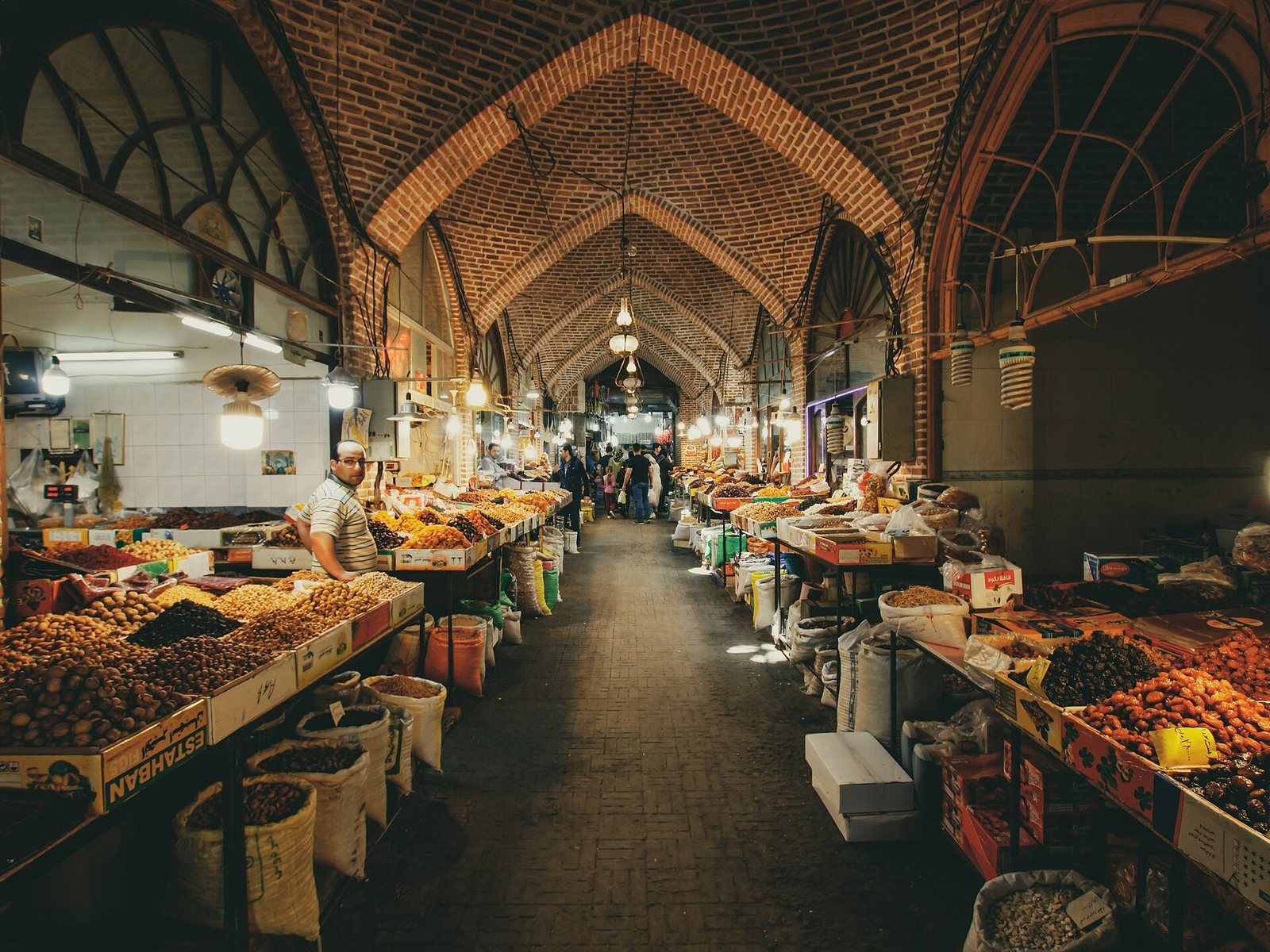
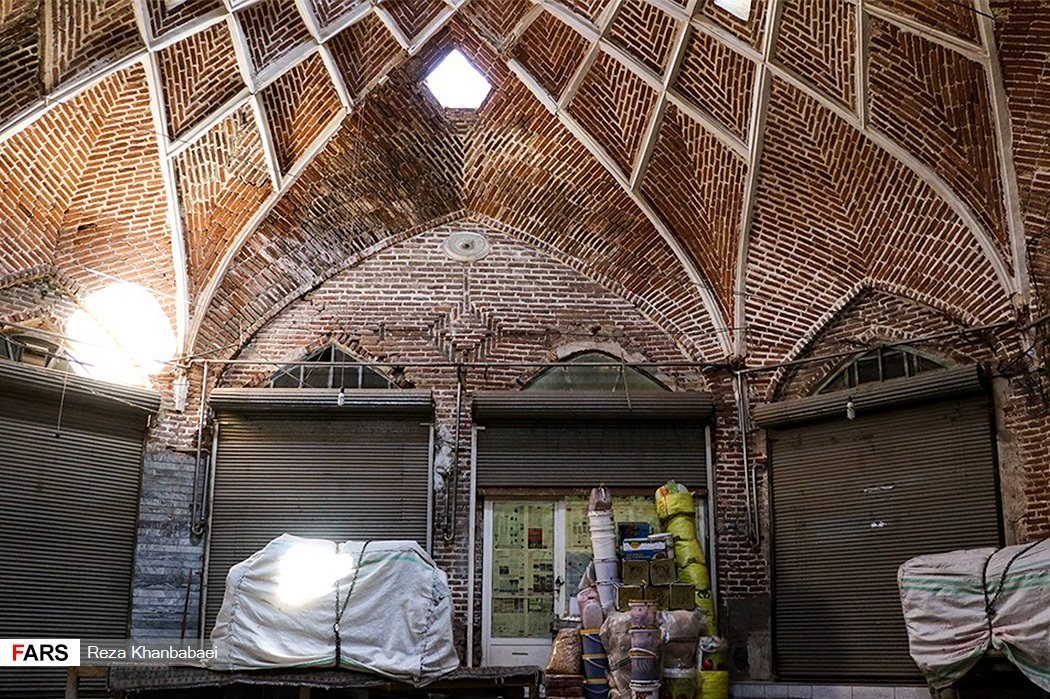
The bazaar occupies the center of Ardabil’s old city. Imam Hussein Square, also called New Square, marks its northern edge. Ayatollah Taleghani Street, Ayatollah Morouj Ardabili Boulevard, and Fajr Square lie to the south, while Ayatollah Kashani Street bounds it to the east and Naser Ali Soufi Street to the west. The complex is described as cross-shaped, with a domed roof, and its architectural character reflects the Seljuk, Safavid, Zand, and Qajar periods. Its buildings use tile and mortar, with side arcades and simple domes. The Jameh Mosque and the Great Mosque stand within the bazaar, alongside shops, bathhouses, caravan inns, and other inns. Additional caravan inns and lodging places are located around the complex.