Ter Elst Castle: A Historic Castle Ruin in Belgium
Site at a Glance
- Popularity
- Medium
- Country
- Belgium
- Primary era
- Medieval
- Eras represented
- Medieval, Modern
- Civilizations
- Belgian, Holy Roman Empire
- Site type
- Military
- Remains
- Castle
On this page7 sections
History
Early references and abbey ownership
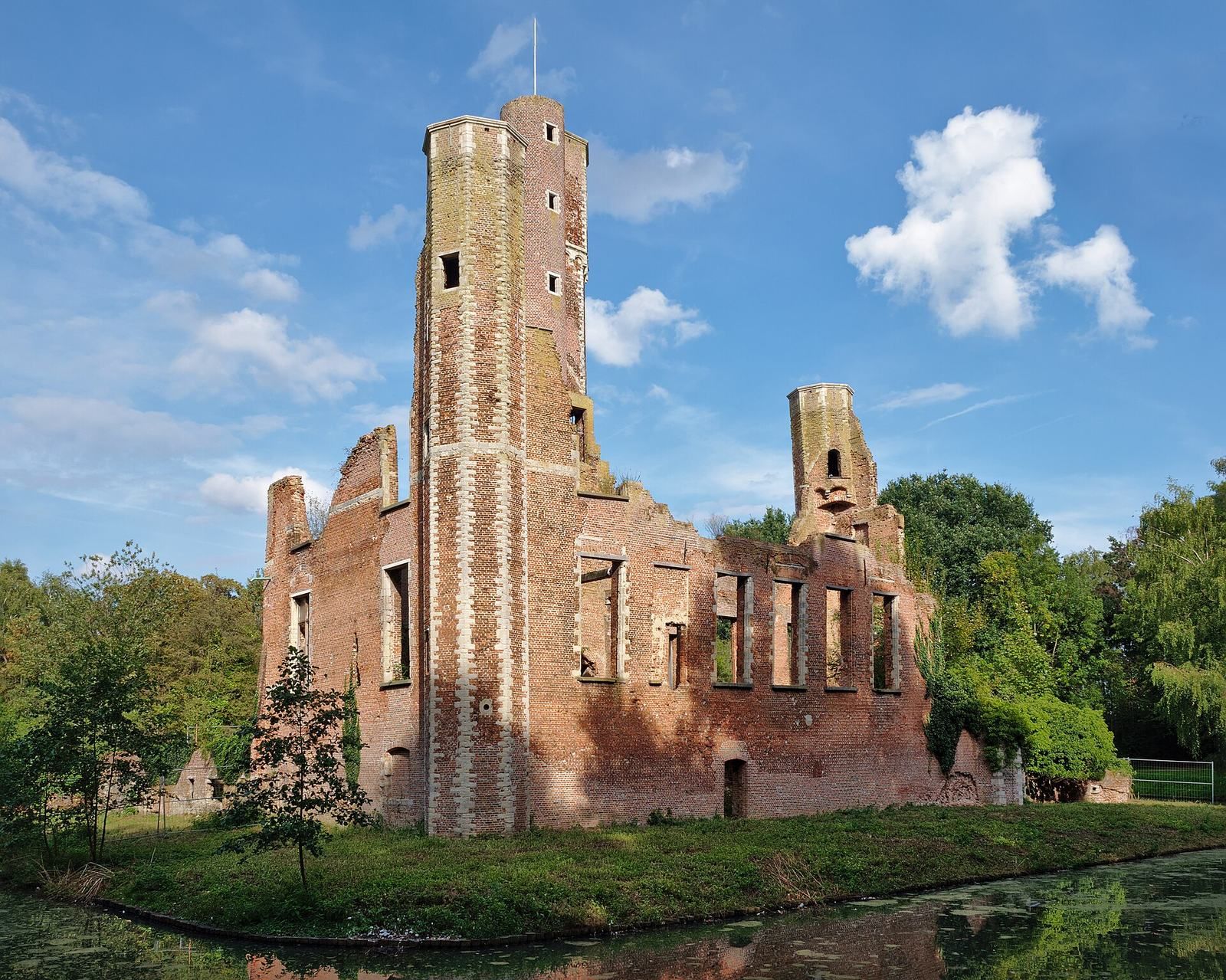
Ter Elst Castle is a historic castle ruin in Belgium, regarded as one of the oldest known castle sites in Antwerp Province. Its earliest known reference dates to the 12th century, when the castle belonged to the brothers Hildincshusen.
From 1356 until the French Revolution in 1789, the castle belonged to Tongerlo Abbey, a Catholic religious institution. The abbey’s steward lived there, and members of the nobility also used it as a residence. A fire destroyed the castle in 1584, after which it was rebuilt. At an uncertain date, it also served as a rectory, or a priest’s residence.
Alteration, industry, and wartime damage
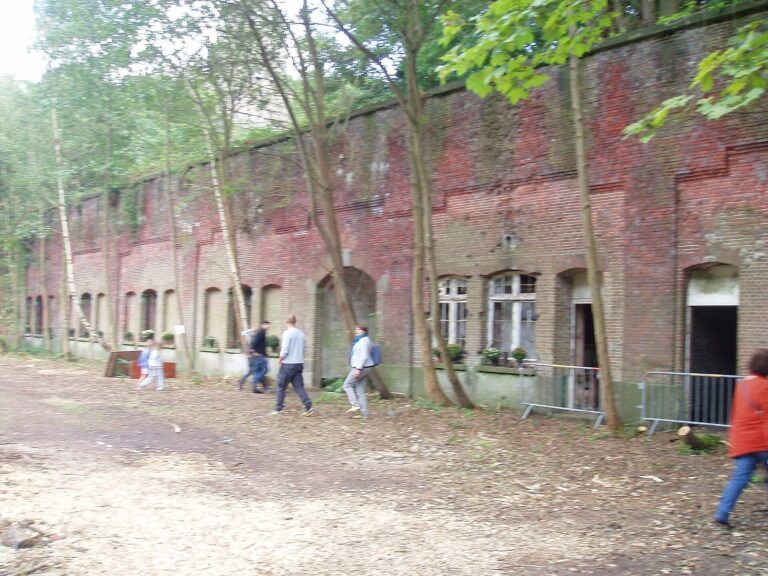
After buying the castle in 1799, Louis Hermans had three of its four main buildings demolished and restored the wing with towers. In 1879, C. Funcke established a brickworks near the castle. The castle suffered severe damage during the First World War and became a ruin, amid competition from brickworks in the Kempen, a region in northeastern Belgium.
Conservation and cultural use
Since the 1980s, the site has hosted cultural activities and events. Site management was entrusted to Stichting Kempens Landschap, a regional heritage and landscape organization, working with the municipality of Duffel. Restoration work began on 12 August 2024, with the aim of stabilizing and conserving the ruin.
Remains
Castle island and surviving fabric
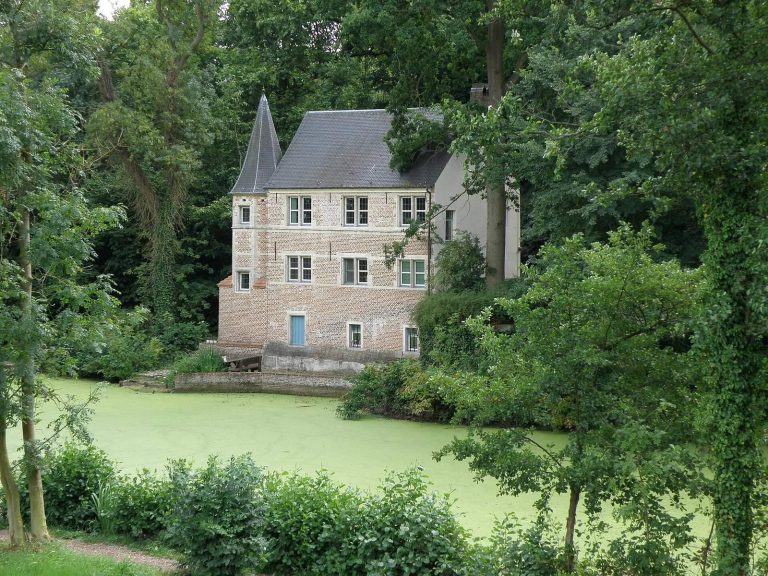
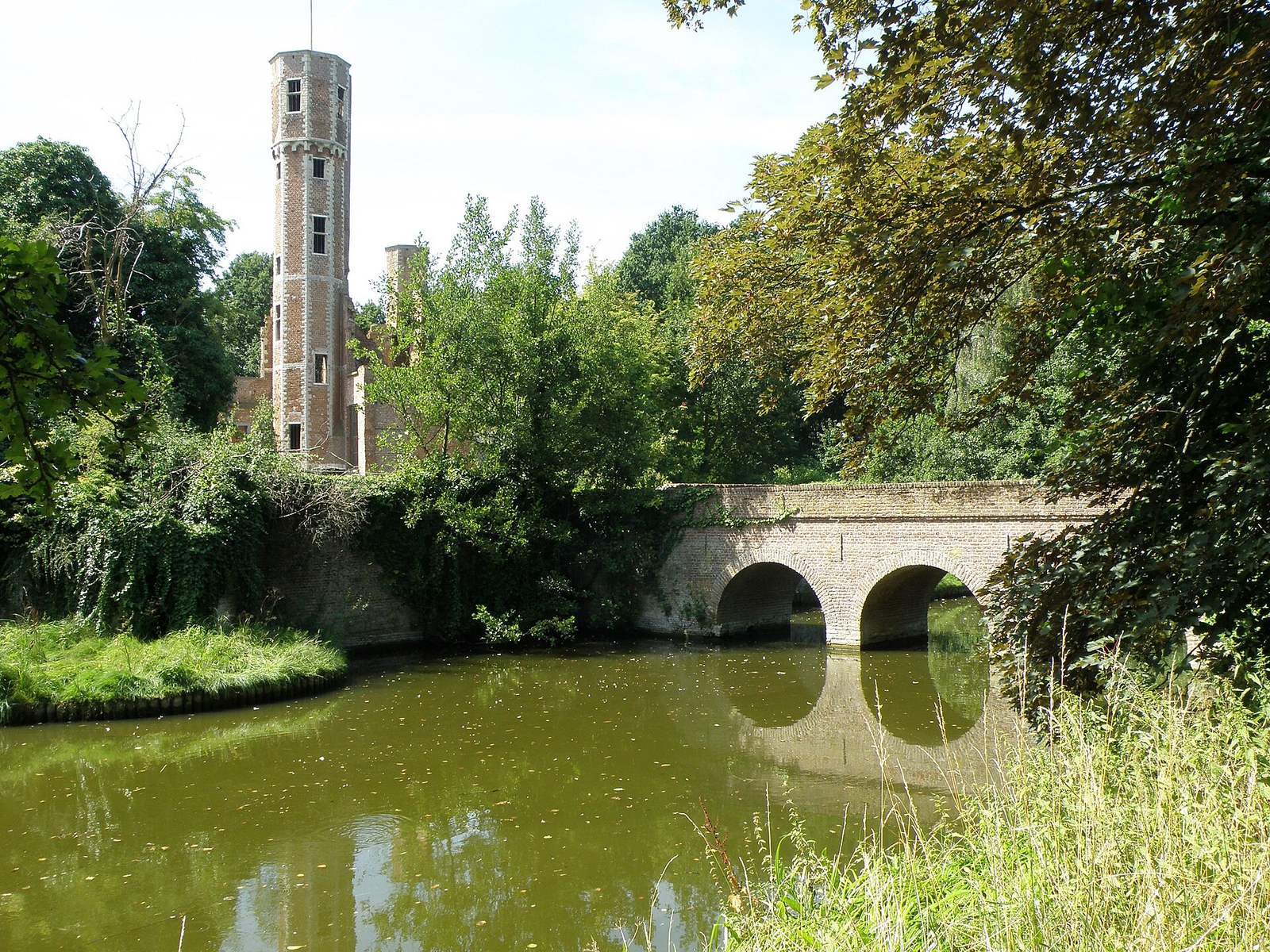
The original castle complex was extensive. Drawings from the 17th and 18th centuries show it surrounded by moats and gardens. The principal surviving part is the castle ruin, which occupies a castle island.
Access and conservation
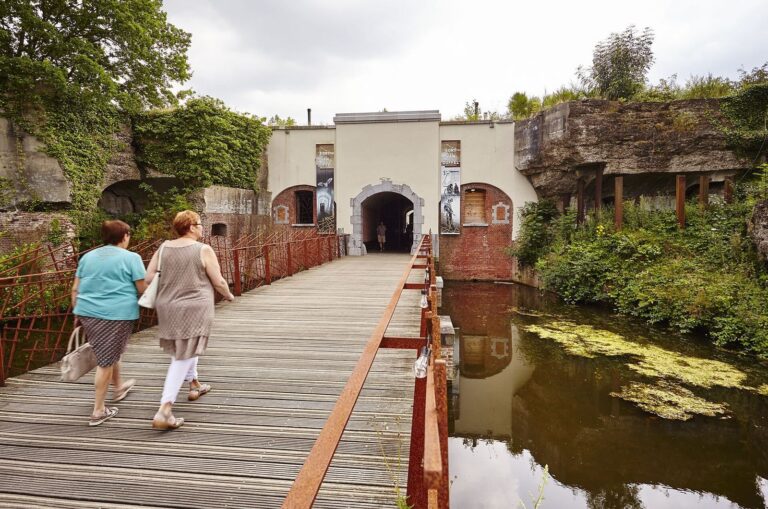
The island retains its historic access. A footbridge built in 2025 provides an additional connection and an evacuation route. Conservation work includes masonry repairs, work on ruined sections, measures to limit water entering the structure, and changes to movement routes on and around the island.