Church of Saint-François-des-Cordeliers: Burial Church of the Dukes of Lorraine
Site at a Glance
- Rating
- 4.6
- Popularity
- Medium
- Country
- France
- Primary era
- Medieval
- Eras represented
- Medieval, Early Modern, Modern
- Civilizations
- Duchy of Lorraine, French, Holy Roman Empire
- Site type
- Religious
- Remains
- Church
On this page13 sections
History
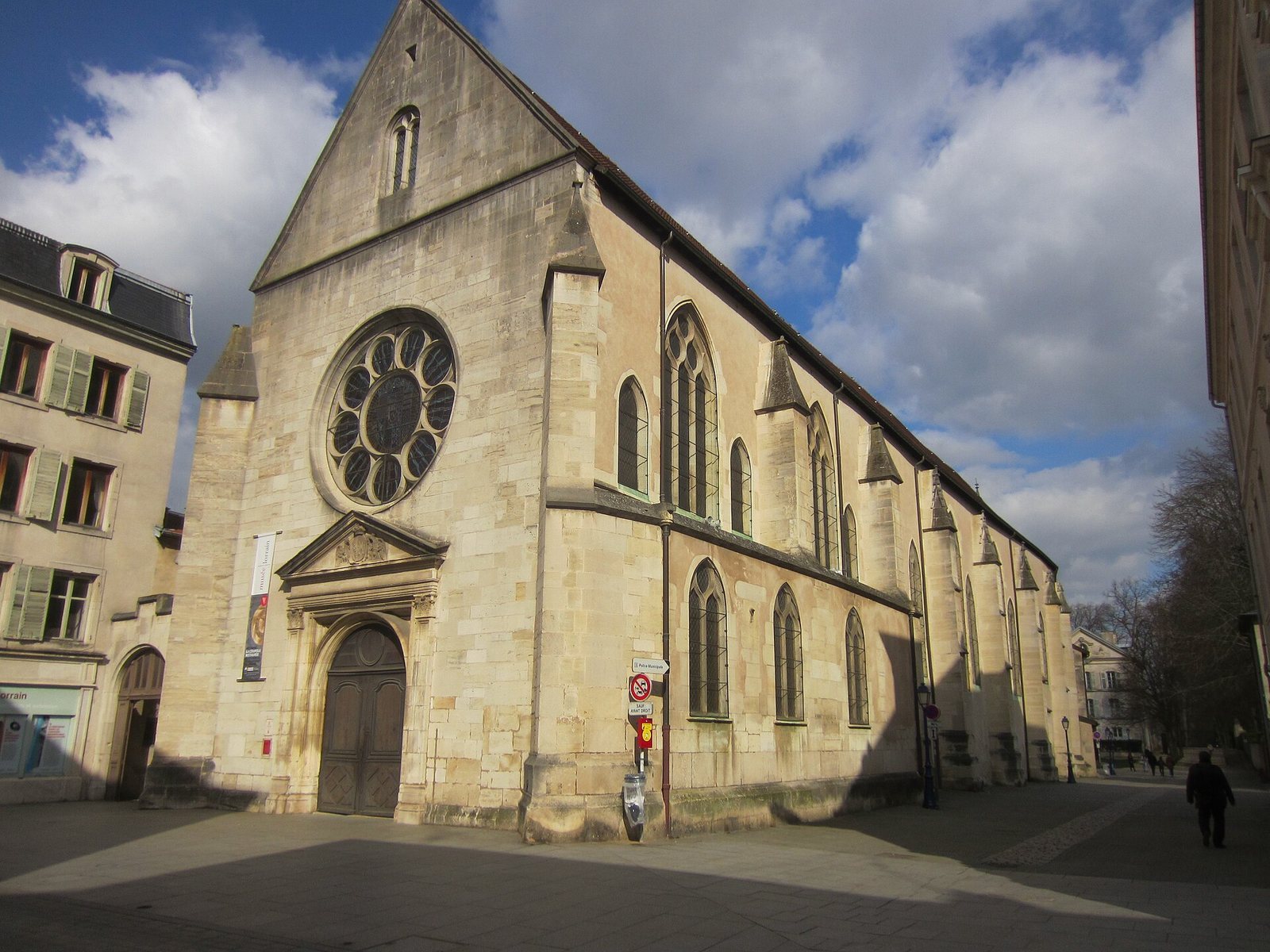
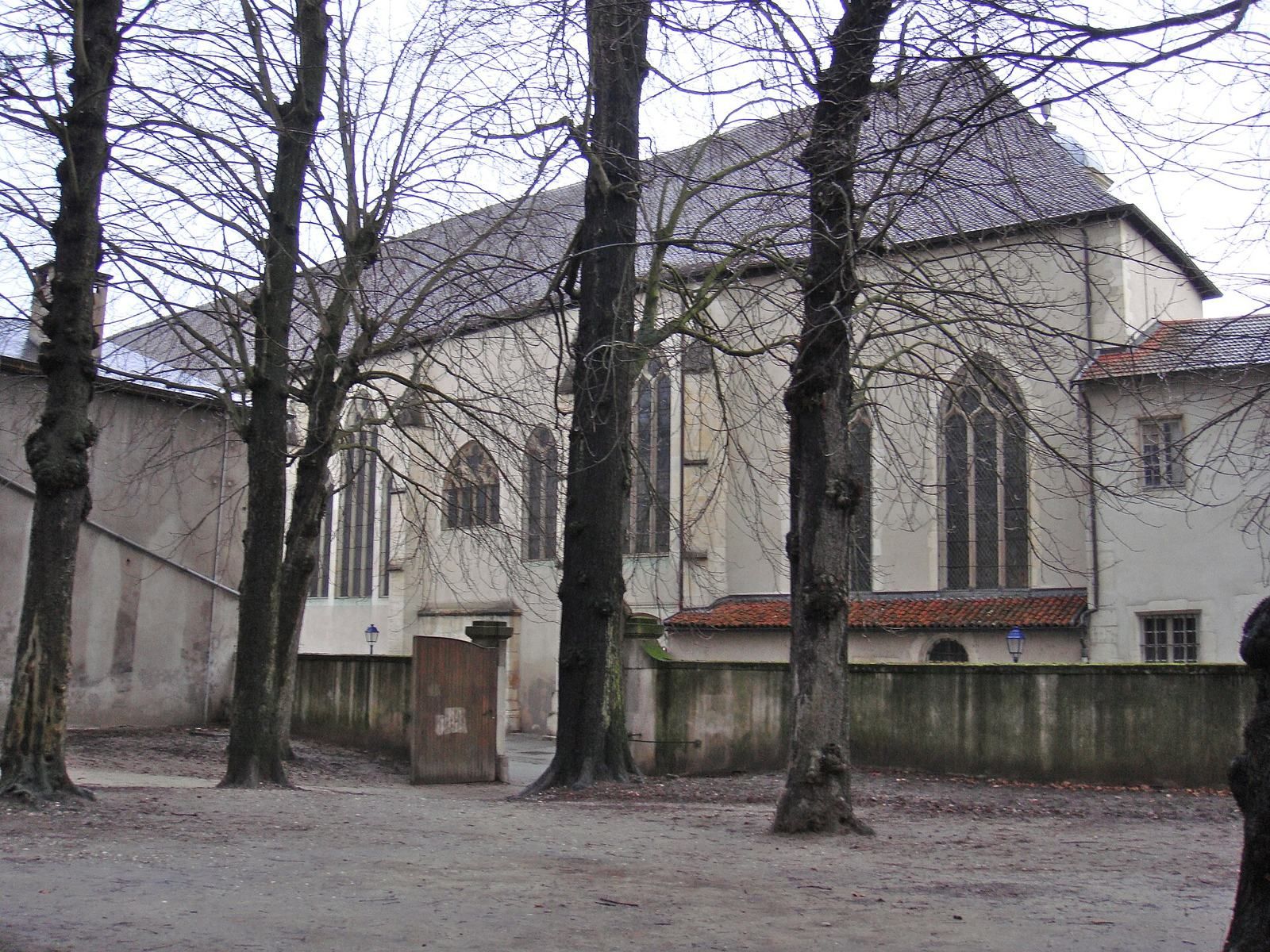
The Church of Saint-François-des-Cordeliers is a Franciscan church in France, built beside the ducal palace as part of a monastery under René II, duke of Lorraine. Construction began in 1477, after Charles the Bold of Burgundy was defeated and killed at the Battle of Nancy. The church was completed and consecrated in 1487. Its architecture combines Gothic and Renaissance styles, and it became the burial church of the dukes of Lorraine.
Foundation and ducal patronage
The church belonged to the Cordeliers, a French Franciscan community whose name refers to the cord belts worn by its friars. The dukes of Lorraine, the ruling dynasty of the duchy, served as its patrons. The adjacent ducal palace was rebuilt around the same period. The church remains a Roman Catholic place of worship in the parish of Saint-Epvre, and it and the adjoining convent form part of the Lorraine Museum.
The chapel and dynastic burials
Duke Charles III of Lorraine had the chapel of Notre-Dame-de-Lorette built between 1609 and 1612. In 1743, after the collegiate church of Saint-Georges was destroyed, the Cordeliers church became the burial place of the dukes of Lorraine. The chapel received ducal remains and memorial tombs, including cenotaphs, which commemorate people whose remains are elsewhere. It became a burial place for the ancestors of the Habsburg-Lorraine family, formed through the marriage of Francis Stephen of Lorraine, later Holy Roman Emperor Francis I, and Maria Theresa of Austria.
In 1722, hearts were brought from Nancy’s Church of the Novitiate. They belonged to Charles of Lorraine, bishop of Strasbourg and Metz; Duke Charles III; Antoinette of Lorraine, duchess of Jülich; Dorothea of Lorraine, duchess of Brunswick; Duke Charles V; Léopold-Clément of Lorraine; and Duke Leopold I. The 1743 transfer from Saint-Georges added the remains of John I, Nicolas of Anjou, Charles II, Marguerite of Wittelsbach, Marie of Bourbon, Henry II and Marguerite of Gonzaga. Henry II’s and Marguerite’s hearts and entrails were placed on their coffins, as were the entrails of Charles the Bold. Further remains arrived from the collegiate church of Vaudémont in 1762.
After the French Revolution, remains and hearts from other religious houses were gathered into the church’s crypt. They included Charles IV, Charles-Henri, prince of Commercy, and Anne-Élisabeth from the Charterhouse of Bosserville; Gérard I, count of Vaudémont, from Saint-Léopold; and the heart of Henri, marquis of Hattonchâtel, from the Minims. From Royaumont came the heart of Camille of Lorraine and the remains of Henri, count of Harcourt, Louis, count of Brionne, and François-Armand of Lorraine. Hearts of François II, Christine of Salm and Marie le Veneur, countess of Salm, came from Notre-Dame in Nancy. Deposits from the Capuchin convent at Varangéville included Éric of Lorraine, bishop of Verdun, Henri of Lorraine, count of Chaligny and marquis of Mouy, and François of Lorraine-Chaligny, bishop of Verdun. Beaupré Abbey supplied the remains of Dukes Raoul, Ferry IV, Ferry III and Thiébaud II, as well as the heart of Ferry, bishop of Orléans. From Clairlieu Abbey came Duke Mathieu II, Judith-Berthe of Hohenstaufen and Mathieu, son of Mathieu II.
The church also became the resting place of many members of the ducal family. Among them were René II; Nicolas of Lorraine, count of Vaudémont, and Marguerite d’Egmont, with their sons Cardinal Charles of Vaudémont and Philippe-Emmanuel, duke of Mercœur; and François-Camille of Lorraine. Other family pairs included Antoine of Lorraine and Renée of Bourbon-Montpensier, François I and Christine of Denmark, and Charles III and Claude of France, whose daughters Anne and Claude were also buried there. Nicole of Lorraine and Charles IV, Nicolas-François of Lorraine and Claude-Françoise of Lorraine, and Charles V and his son François, abbot of Stavelot, were likewise associated with the church. The heart of Joseph of Lorraine, an imperial army general who died in 1705, was deposited there.
Other named burials included Henri III of Vaudémont, Antoine of Vaudémont and Marie d’Harcourt. The church also holds the tomb of Cardinal Charles of Vaudémont. Burial memorials associated with Duke Leopold I and Elisabeth-Charlotte of Orléans include those of their children Leopold, duke of Bar; Elisabeth-Charlotte; Louise-Christine; Gabrielle-Charlotte; Louis; Josèphe-Gabrielle; Léopold-Clément, hereditary prince of Lorraine; Éléonore; and a daughter who died in 1715. Their daughter Anne-Charlotte, abbess of Remiremont, died in 1773, and the heart of their son Charles-Alexandre, governor of the Netherlands, is also among the church’s remains.
Dynastic change and restoration
François III of Lorraine gave up the duchy in 1737 under the Treaty of Vienna, in favour of Stanislas Leszczynski, a former king of Poland. François had married Maria Theresa of Austria in 1736 and became Holy Roman Emperor Francis I in 1745. He was buried in Vienna, making him the Lorraine duke not interred at the Cordeliers. Lorraine became part of France in 1766, after Stanislas’s death, but the Habsburg-Lorraine family continued to maintain links with the church.
From the 1760s, the Austrian emperor arranged marble work on ancestral tombs and had masses said for the family. Marie Antoinette stopped at the chapel in 1770 while travelling to marry the future Louis XVI. Emperor Francis I of Austria and King Louis XVIII later took an interest in its condition. During the French Revolution, the tombs were desecrated and coffins broken open; the bones were buried separately in Boudonville cemetery. The chapel was restored during the Restoration, and the ducal remains were solemnly reinterred on 9 November 1826. The ceremony was led by Nicolas-Charles de Vincent, a Lorraine nobleman and former Austrian ambassador, and Charles de Forbin-Janson, bishop of Nancy. Further funeral deposits followed.
In 1826, the Austrian emperor established a foundation to support a chaplain who would celebrate daily mass and a solemn funeral service for the family’s ancestors each November. These services ceased in 1914 with the outbreak of the First World War. After the war, Lorrainers led by Marshal Lyautey revived an annual commemorative mass for the dukes and princes of Lorraine and Bar. Organized by the Lorraine History Society and the Lorraine Museum, it has been held since 1934, with the parish priest celebrating and the bishop of Nancy sometimes presiding. From 1857, while the old basilica of Saint-Epvre was being rebuilt, the Cordeliers church temporarily served as the parish place of worship. The chapel containing the Lorraine tombs has been classified as a historic monument since 1840, with further classifications in 1945 and 2005.
Other family connections continued into modern times. Emperor Francis Joseph of Austria prayed at his ancestors’ tombs in 1867. Archduke Otto of Habsburg-Lorraine and Regina of Saxe-Meiningen married in the church on 10 May 1951 and returned for their golden wedding anniversary in 2001. A requiem for Otto was celebrated there on 9 July 2011.
Remains
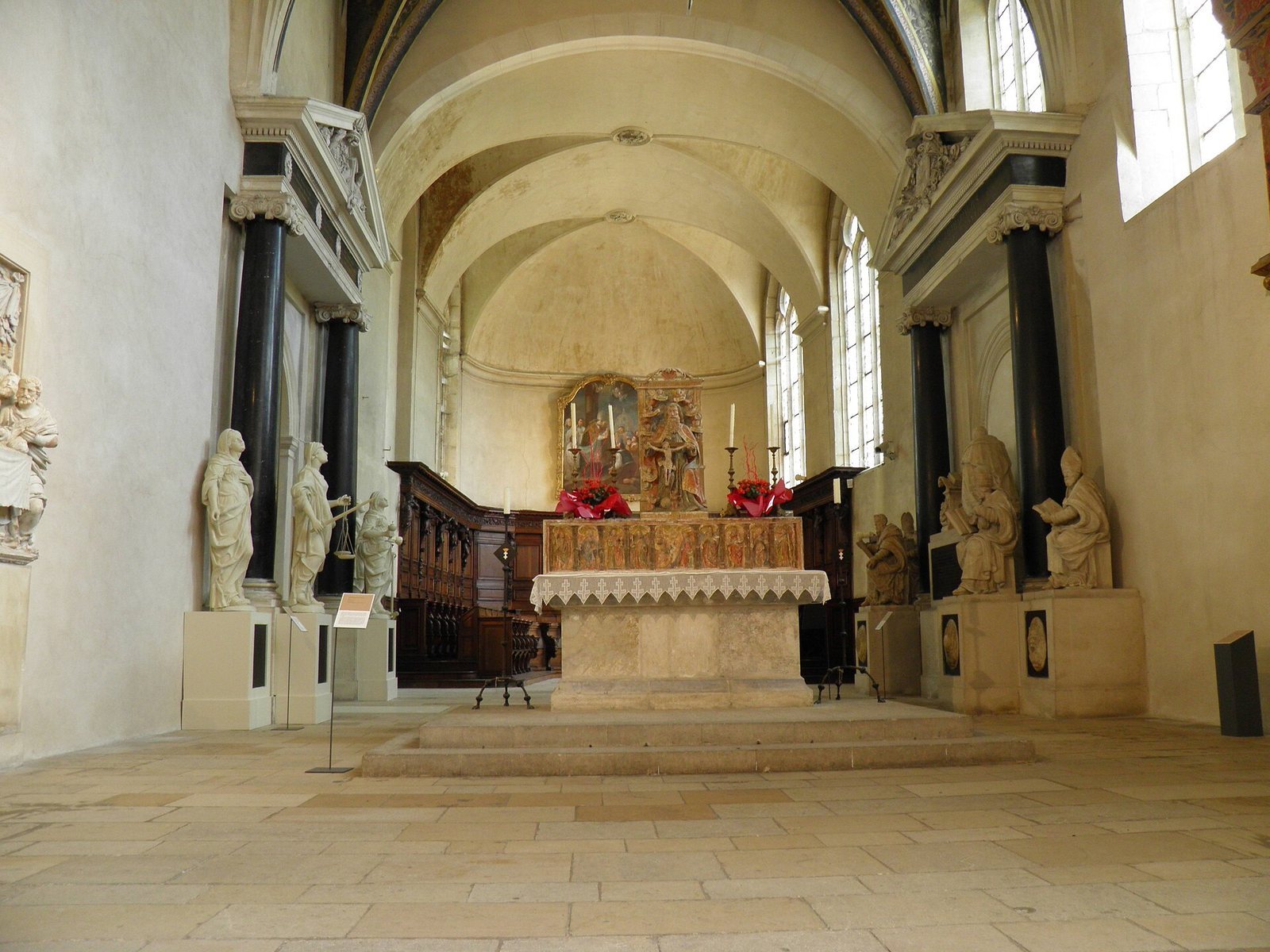
The church is 73 metres long and 9 metres wide. Its plain exterior surrounds a single broad nave, the main body of the church, with chapels opening from its sides. The building combines Gothic and Renaissance forms. The funerary chapel of Notre-Dame-de-Lorette stands beside the choir, the area near the altar, on the left; tomb monuments and other features occupy the interior.
Chapel and tomb monuments
Notre-Dame-de-Lorette
The chapel has an Italian Baroque design, an ornate early modern style, and a painted dome that creates an illusion of three-dimensional form. A hatch in its wooden floor provides access to the crypt. An imposing grille bearing the arms of the Lorraine dynasty closes the entrance. The chapel contains ducal remains and cenotaphs, memorial tombs that do not contain the person’s remains.
René II’s funerary monument
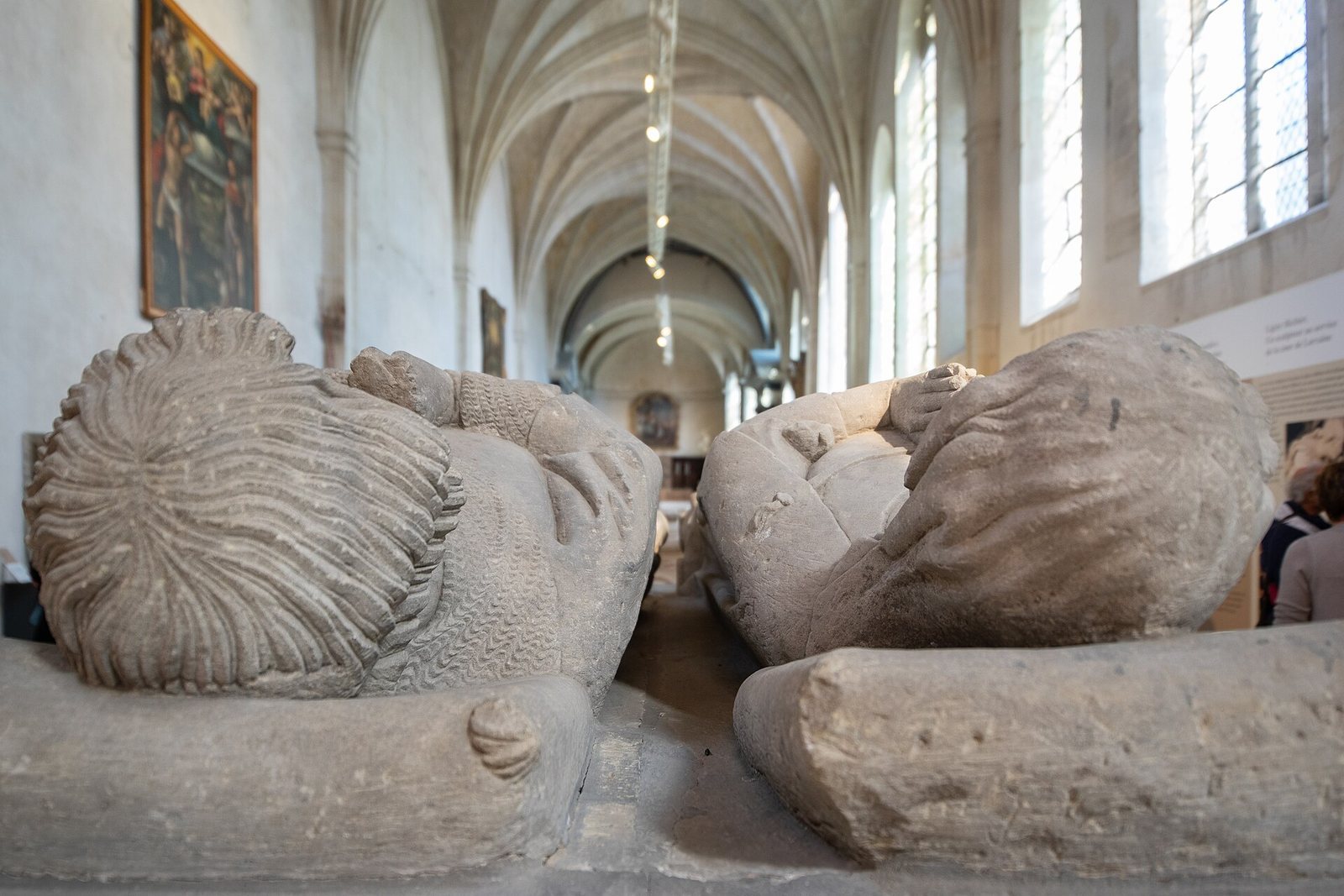
Near the choir, to the right of the altar, is a large, painted Renaissance funerary recess for René II. Architect Jacques Vauthier designed it, and it was made in 1511; its painted colours were renewed in the nineteenth century. Nearby is the recumbent effigy of René II’s wife, Philippe de Gueldre. An effigy is a sculpted representation of a person, often shown lying on a tomb. Made by Ligier Richier from Meuse limestone treated to resemble marble, it was brought to the church from Pont-à-Mousson.
Other sculpted tombs
Recumbent effigies of Henri III of Vaudémont, Antoine of Vaudémont and Marie d’Harcourt are also among the tomb sculptures. Florent Drouin made the tomb of Cardinal Charles of Vaudémont. A twelfth-century Romanesque sculpture, a medieval style known for rounded arches, is called The Return of the Crusader. It may represent either Gérard I of Vaudémont and Huderige of Dagsbourg or Hugues I of Vaudémont and Aigeline of Burgundy. The scene shows a woman embracing her husband after his return from an absence of more than ten years.
Paintings, windows and furnishings
Frescoes and stained glass
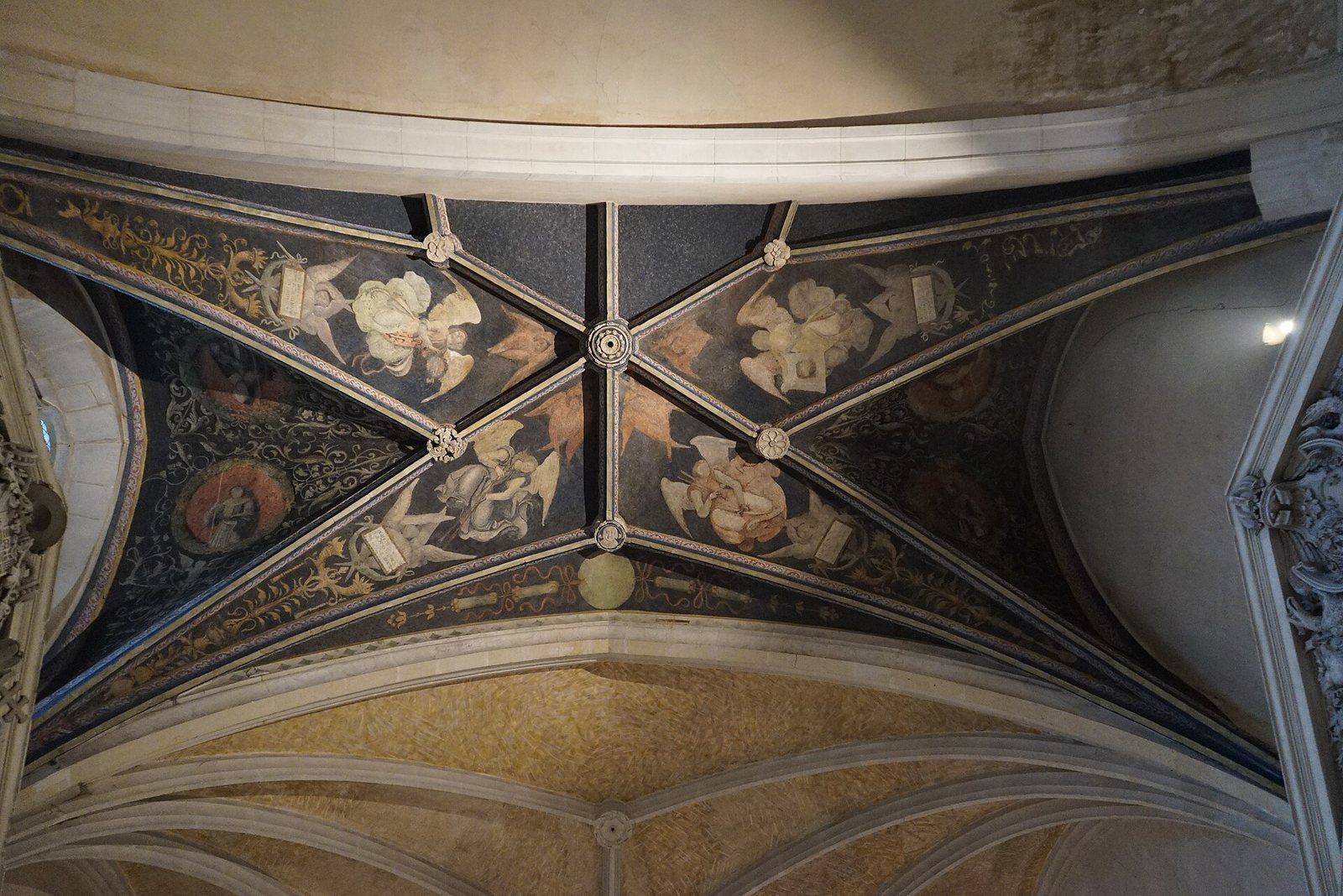
Frescoes decorated the church’s interior, and one intact bay survives at choir level. A sixteenth-century ceiling fresco, attributed to Hugues de la Faye, shows angels holding the instruments of the Passion. A separate tempera painting devoted to Notre-Dame-de-Consolation covers the first two bays on the left, near the effigies of Claude de Baudoche and René de Beauvau. Stained-glass windows once adorned the nave; fragments believed to come from them can be seen at the Lorraine Museum.
Altar and fittings
The altar has a polychrome altarpiece dated 1522. The large rose window was remade in the Classical period and displays the arms of Lorraine. Wooden choir stalls from Salival Abbey were installed in the nineteenth century; they date to 1691. The arms of Duke Antoine of Lorraine appear above the church porch.
Cloister burials
The adjoining cloister contains the burials of Jacques Callot, an engraver, and Jean Le Clerc, a painter and engraver.