Rijnsburg Abbey: A Benedictine Nunnery in the Netherlands
Site at a Glance
- Popularity
- Medium
- Country
- Netherlands
- Primary era
- Medieval
- Eras represented
- Medieval
- Civilizations
- Holy Roman Empire
- Site type
- Religious
- Remains
- Monastery
On this page8 sections
History
Foundation and growth
Rijnsburg Abbey was a Benedictine nunnery for women in Rijnsburg, Netherlands, founded in 1133 by Petronilla of Lorraine. Its church was Romanesque, a medieval style associated with rounded arches and substantial masonry. Petronilla, widow of Count Floris II of Holland, established the abbey while acting as regent for her son Dirk VI. In the same year, nuns arrived from Stötterlingenburg in the Northern Harz, the religious house from which Rijnsburg’s community was founded.
The abbey was home to women of noble birth. Its liturgical manuscripts point to Germanic religious practices, and there is little basis for connecting either Rijnsburg or its mother house with the Cluniac reform movement associated with the Abbey of Cluny. Protected by the counts and countesses of Holland, Rijnsburg became the territory’s leading women’s religious house. Donations and extensive landholdings in Holland and Zeeland made it wealthy. Its properties included Aalsmeer, then known as Alsmar, and Boskoop, acquired in 1222.
Abbesses and dynastic burials
Several abbesses came from Holland’s ruling family. Sophie, a daughter of Dirk VI, held the office in 1200. Agnes, daughter of Floris III, died in 1228, and Ada of Holland, daughter of William I, served from 1239 until her death in 1258. Machteld of the House of van Wassenaer died in 1349. In the sixteenth century, Maria Schenck van Toutenburg died in 1552 and was buried in Rijnsburg’s Great Church of St Lawrence. Elburg van den Boetzelaer, born around 1510, became abbess in 1553 and remained in office until her death in 1568.
The abbey church also served as a burial place for members of the House of Holland, the dynasty that ruled medieval Holland. Those buried there included founder Petronilla, Adelaide of Cleves, wife of Dirk VII, the abbess Ada, Floris the Black, Dirk VI, and Counts William I, Floris IV, Floris V, and John I. Tombs were identified for William I (1203–1222), Floris IV (1222–1234), Floris V (1256–1296), and John I (1296–1299).
Destruction and aftermath
In 1574, during the Eighty Years’ War, the prolonged conflict in which the Dutch Revolt took place, Geuzen rebels and residents of Leiden pillaged and burned the abbey buildings. The Geuzen were rebel groups opposing Habsburg rule. The community had been evacuated before the attack. Work to rebuild the church began in 1578, but the abbey itself was not restored. The surviving ruins were demolished around 1808.
Remains
Church and archaeological evidence
Church and excavations
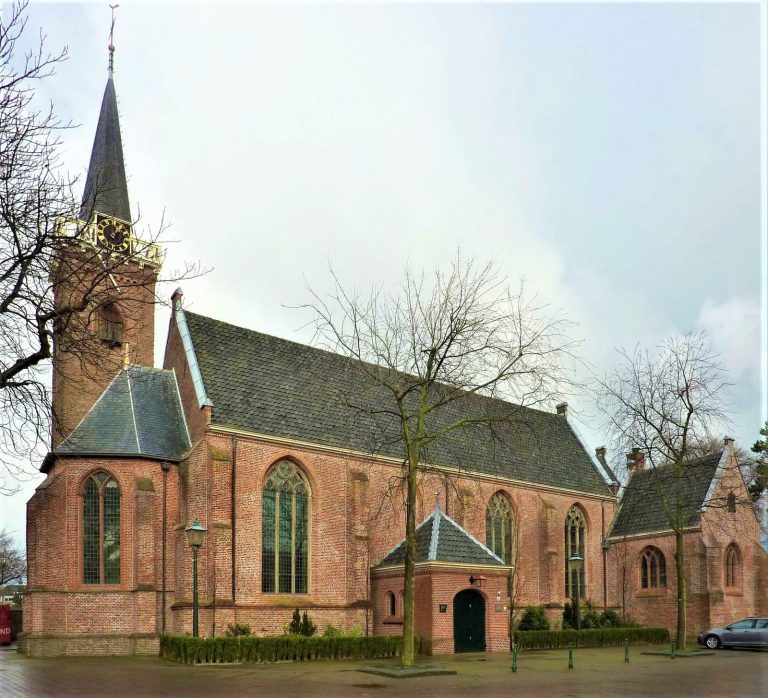
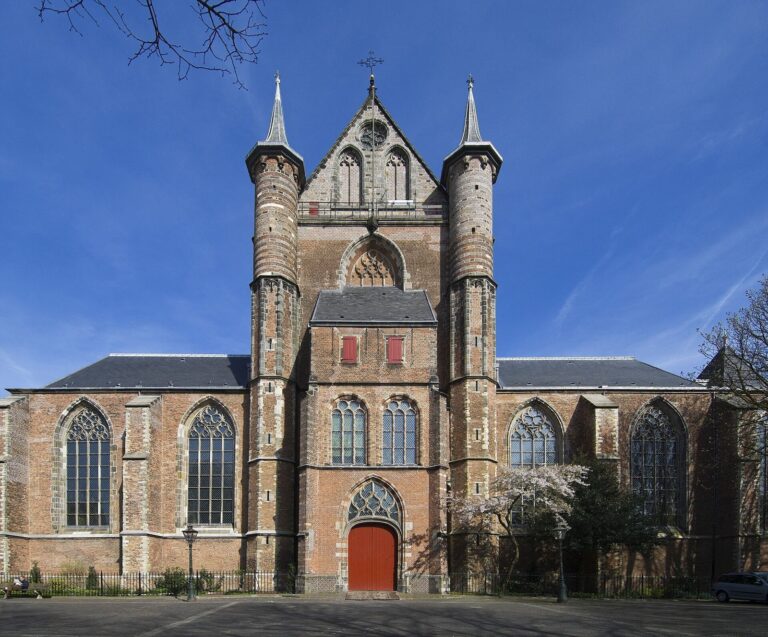
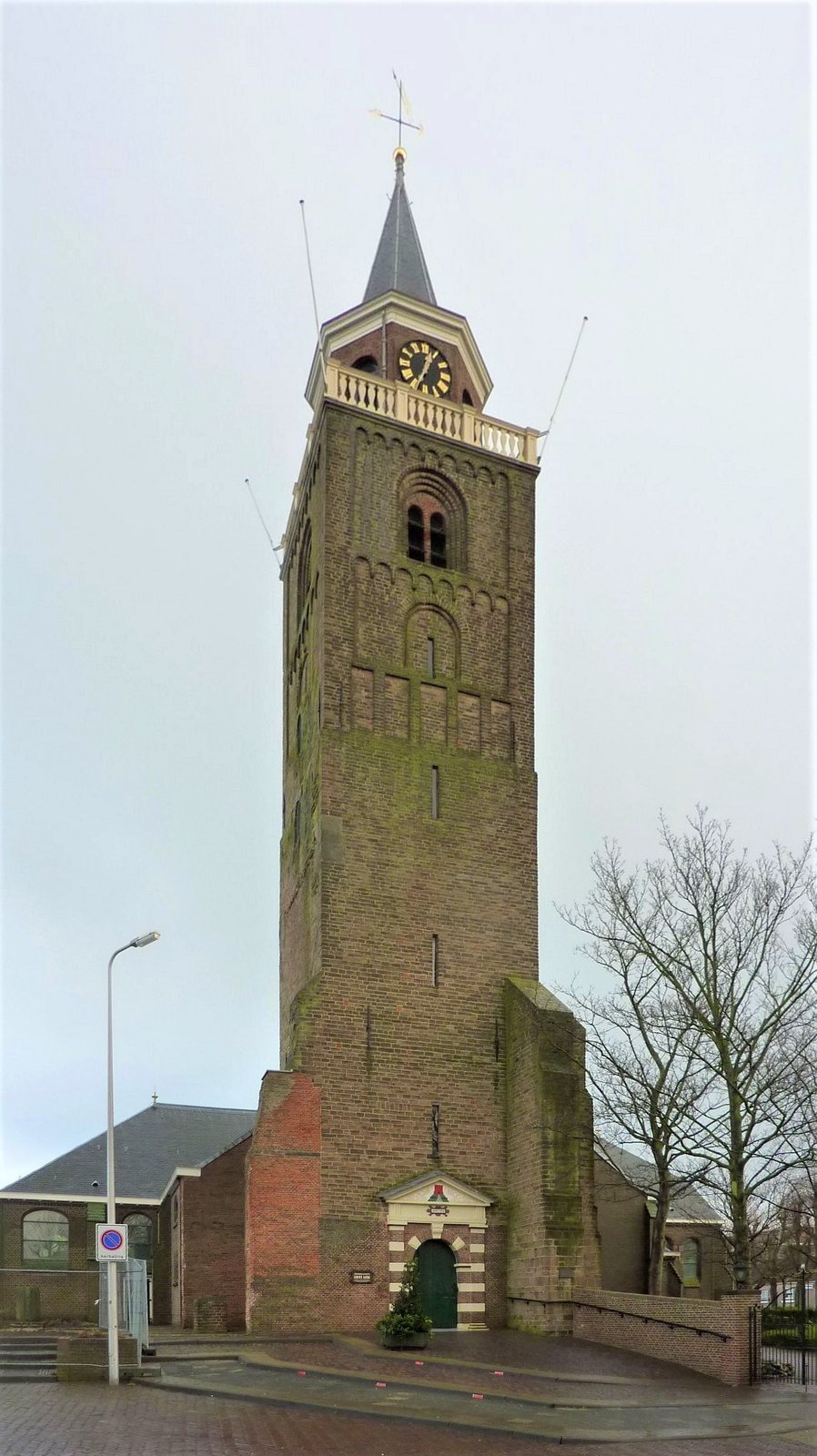
The Romanesque abbey church had two towers. Its southwest tower survives as part of the present church in central Rijnsburg. Excavations took place in 1612 and again between 1949 and 1966. Work in 1966 exposed fragments of foundations and human remains, including skulls, bones, and complete skeletons.
Images of the ruins
Around 1596–1598, Symon Aerntsz made an aerial drawing showing the abbey ruins. A deer-hunt painting by Philips Wouwerman, dated around 1650–1668, also depicts the remains.