Petershausen Abbey: A Benedictine Monastery in Konstanz
Site at a Glance
- Popularity
- Medium
- Country
- Germany
- Primary era
- Early Modern
- Eras represented
- Medieval, Early Modern, Modern
- Civilizations
- Holy Roman Empire
- Site type
- Religious
- Remains
- Monastery
On this page9 sections
History
Foundation and reform
Petershausen Abbey was a Benedictine monastery founded around 983 by Gebhard II, bishop of Constance, in what is now Konstanz, Germany. The Benedictines are a monastic order whose members follow the Rule of Saint Benedict. Gebhard established the abbey as a proprietary monastery, founded under a patron’s authority, and brought its first monks from Einsiedeln Abbey. He endowed it with hereditary estates, especially around Lake Constance. Although the abbey received an exemption from the bishop’s ordinary jurisdiction, the bishops of Constance and the bishopric’s secular advocates continued to influence its affairs. In principle, the community could choose its abbot and lay advocate, a secular protector with legal and administrative responsibilities.
The first monastery buildings and church were built in 983. The laying of the church’s foundation stone is the earliest recorded event of its kind for a church in the German-speaking lands. The church was consecrated on 28 October 992 in honor of Pope Gregory the Great, and a relic of Gregory’s head was brought from Rome. Gebhard was buried there and was canonized in the twelfth century.
During the eleventh century, declining monastic discipline prompted Bishop Gebhard III to seek reformers from Hirsau Abbey. The Hirsau reforms were a Benedictine movement that called for stricter discipline and observance. Hirsau’s prior Theodoric became abbot of Petershausen in 1086 and remained in office until 1116. He introduced the reforms, sent monks to other houses, including Neresheim, and also reformed Wagenhausen. An attempt to establish a monastery at Andelsbuch failed in 1086, while a house at Mehrerau was successfully founded in the 1090s.
The Investiture Controversy, a conflict between the papacy and secular rulers over appointments to church offices, disrupted the abbey. Gebhard III was deposed, and between 1103 and 1105 Theodoric and some monks had to leave Petershausen and take refuge at Kastl Abbey. They returned after Gebhard was restored in 1105. A fire destroyed the monastery in 1159; its buildings were reconstructed between 1162 and 1180, and the complex was enlarged in later periods.
Imperial status and late medieval challenges
Petershausen came under the protection of the Hohenstaufen, a ruling dynasty of the Holy Roman Empire, in the late twelfth century. In 1215, under Emperor Frederick II, the abbey gained imperial immediacy, meaning that it answered directly to the emperor rather than to an intervening territorial lord. It thereby became an Imperial Abbey and formally separated from the jurisdiction of the bishop of Constance.
During the Council of Constance, held from 1414 to 1418 to address the Western Schism and church reform, King Sigismund stayed at the abbey. Antipope John XXIII, a claimant to the papacy rejected by the council, granted Abbot Johannes Frei the right to wear pontifical insignia, the vestments and symbols of episcopal rank. On 28 February 1417, a regional meeting of the Benedictine province of Mainz-Bamberg took place at Petershausen.
Monastic life weakened during the fourteenth and fifteenth centuries. Abbot Diethelm II Wiss was deposed in 1443, while the city of Constance repeatedly sought control of the abbey. Bishop Hugo von Hohenlandenberg, a prince-bishop who held both religious office and territorial authority, tried to incorporate Petershausen and its possessions into the bishopric. Emperor Maximilian I prevented the move. After the abbey’s finances collapsed late in the fifteenth century, the monk Johann Merk served first as coadjutor, or assistant to an officeholder, and then as abbot from 1518 or 1519 until 1524. He restored discipline and reduced the debts.
Reformation, recovery, and regional alliances
The Reformation, the sixteenth-century movement that led to the establishment of Protestant churches, brought conflict with Constance. The city council demanded that the monks swear an oath placing them under civic rights and duties, including taxation. In 1528, Abbot Gebhard II Dornsperger fled to Überlingen with the abbey archive and church treasure. In 1530 the city expelled the community, demolished part of the monastery, and subjected the church to iconoclasm, the destruction of religious images or sacred art. Habsburg forces plundered the abbey in 1548 during the re-Catholicization of Constance. The abbot and monks returned in 1556.
The abbey joined the Swabian Imperial Circle, a regional grouping of territories within the Holy Roman Empire, in 1500. In 1575 it entered the Swabian College of Imperial Prelates, a body that represented abbots and other prelates at the imperial diet, where it held seventh place. In 1583, and definitively in 1597, Petershausen united with the impoverished Abbey of St. George at Stein am Rhein and the provostry of Klingenzell. These unions and other acquisitions helped sustain its finances. The abbey’s territory included Hilzingen, the lordship of Herdwangen, Ebratsweiler, and Schopflocherhof near Engen, as well as the possessions of St. George and Klingenzell from the late sixteenth century.
In 1603, Petershausen and Weingarten founded the Upper Swabian Benedictine Congregation, a regional association of monasteries that coordinated religious efforts and defended the members’ rights. Its other members included Ochsenhausen, Zwiefalten, Wiblingen, Mehrerau, and Isny. The congregation continued until secularization in 1802–1803, when church institutions and property passed into secular control.
During the Thirty Years’ War, military operations and taxes imposed by Constance for its fortifications burdened the abbey. The bishop deposed several abbots, possibly because of poor administration. Petershausen recovered after the war during the Counter-Reformation, the Catholic Church’s response to the Reformation, and made agreements with Constance, Überlingen, and the Teutonic Order’s commandery on Mainau. In 1671, Abbot Wunibald established the Angel Confraternity, a devotional association that encouraged conversion and confession and offered mutual material, social, and spiritual support. It attracted members from the surrounding area.
Baroque rebuilding and secularization
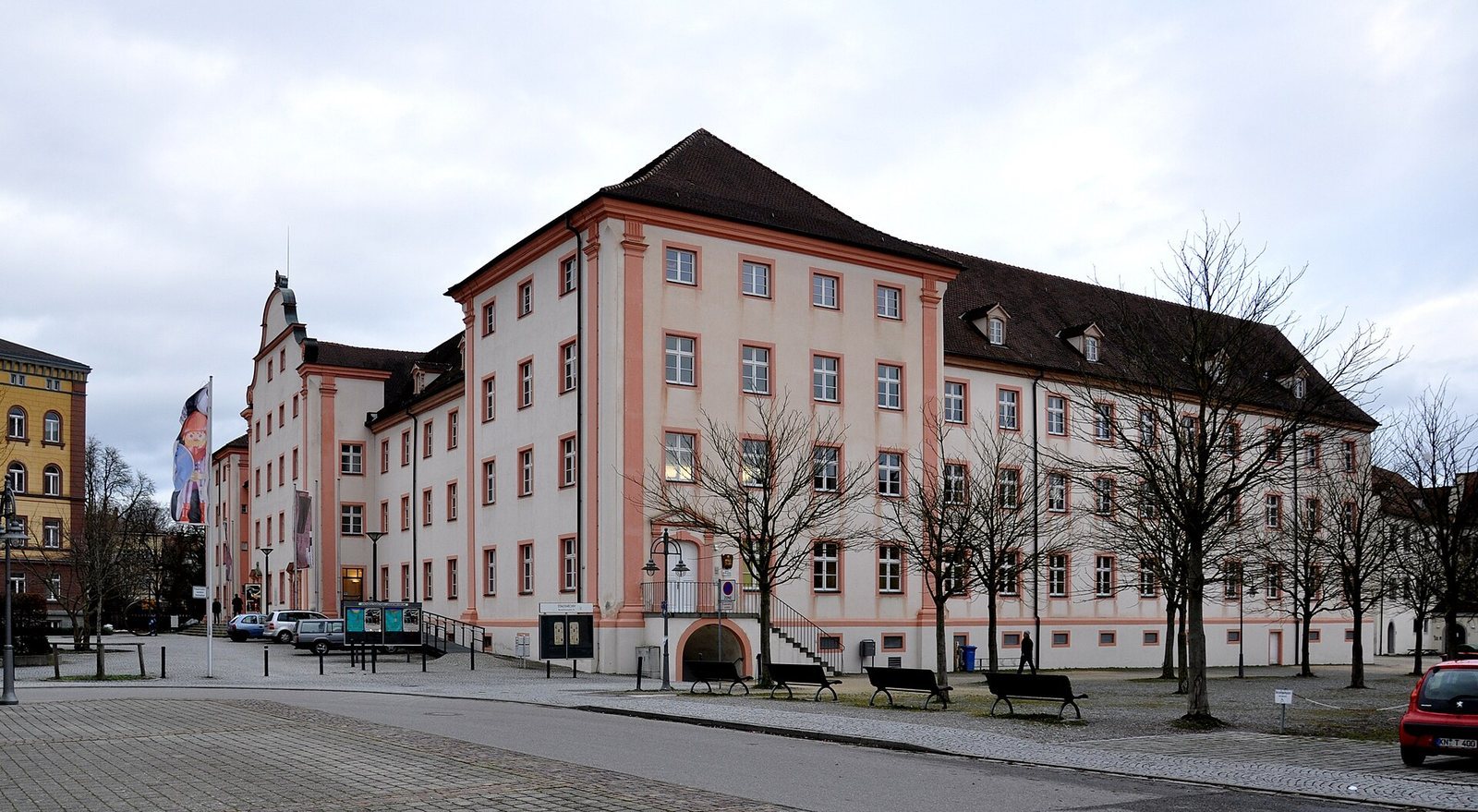
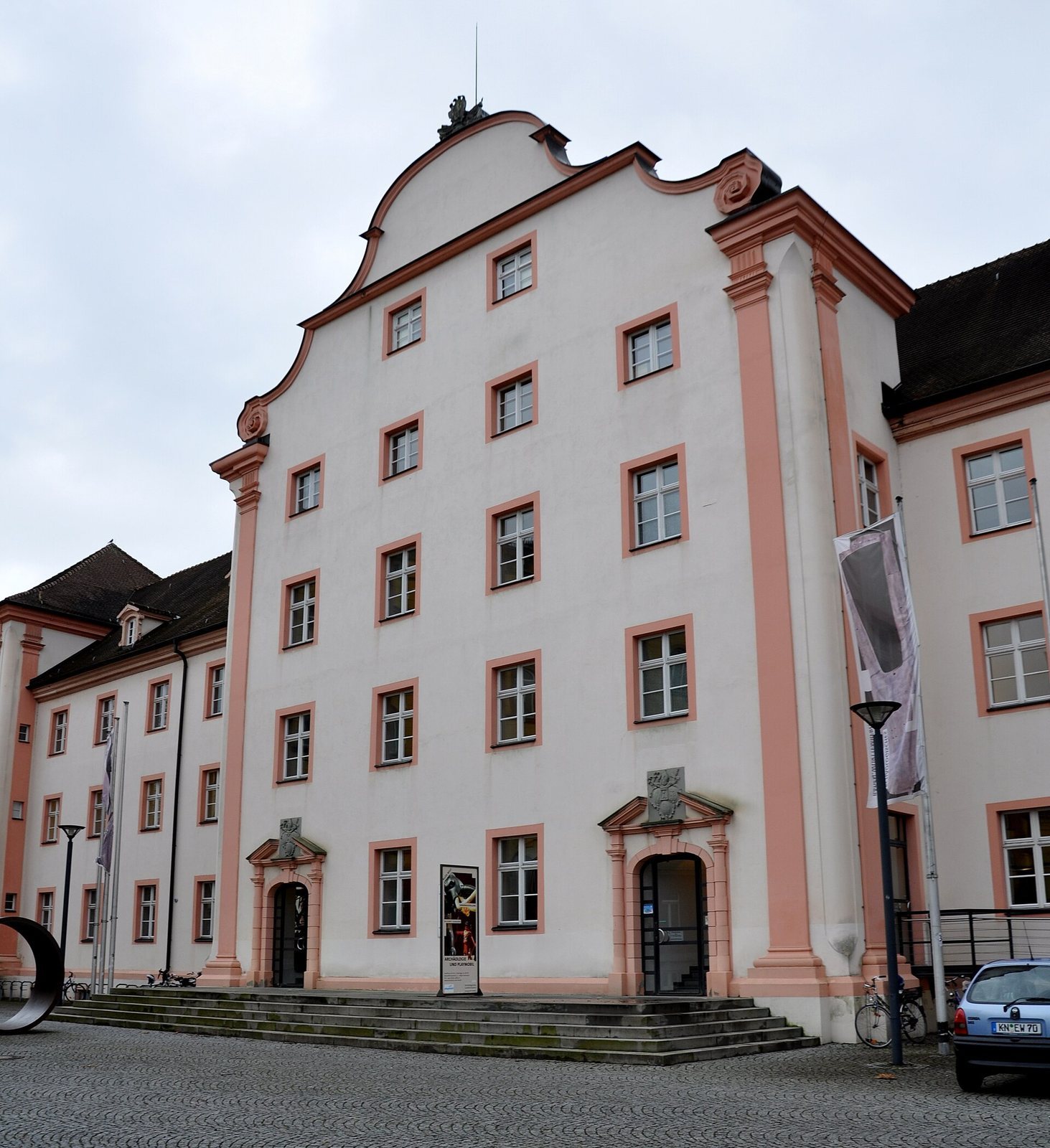
In the eighteenth century, the abbey underwent rebuilding in the Baroque style, an ornate European artistic and architectural style. The monk and scholar Johann Georg Übelacker prepared a design for the rebuilding in 1769, and the main abbey building and church were reconstructed in that style.
Petershausen was secularized in 1802 and passed to Baden. The monks were dispersed and the abbey’s possessions confiscated. The buildings initially became a residence for sons of Margrave Charles Frederick of Baden, who styled themselves Counts of Petershausen; their small county was incorporated into the Grand Duchy of Baden in 1807. The former abbey became a military hospital in 1813–1814 and a barracks from 1850. Baden troops, German troops, and, after the Second World War, French forces used the barracks until 1977. The church, closed in 1819, was demolished in 1832.
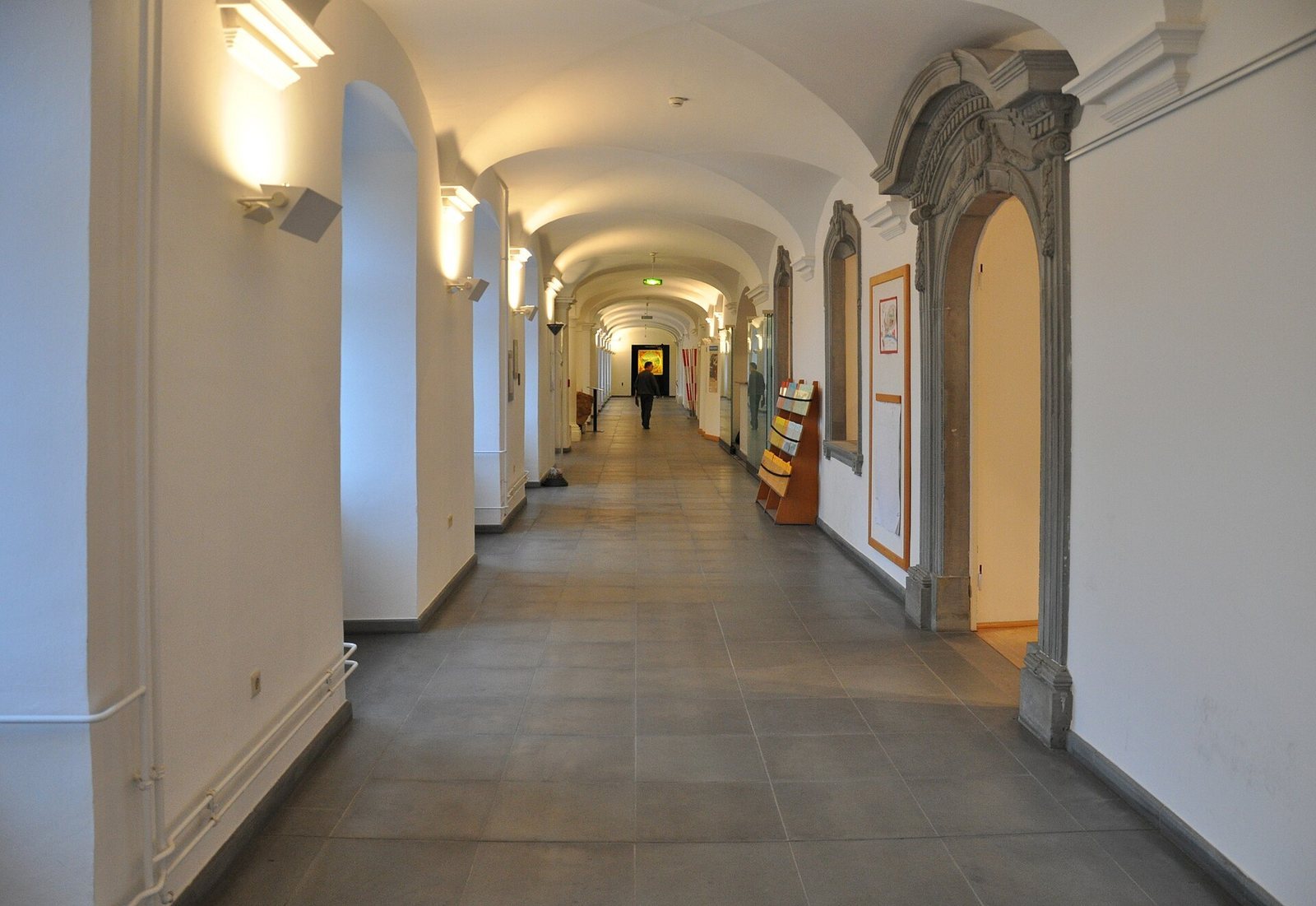
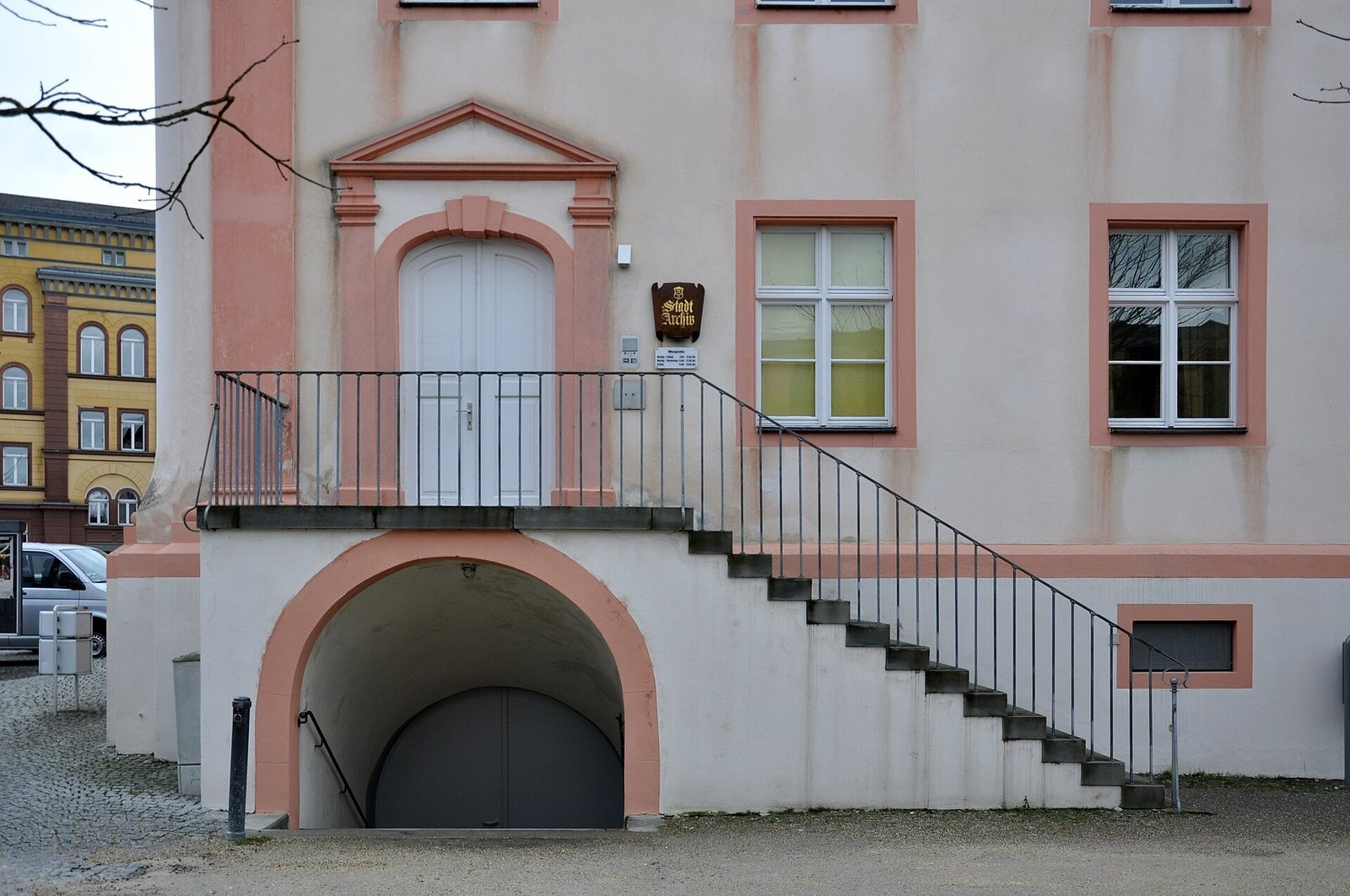
Heidelberg University acquired the abbey library, whose holdings included the Petershausen Sacramentary and a monastery chronicle. The surviving complex is protected as a historic monument. Since 1984, the west wing has housed the Konstanz city archive, while the central and east wings have housed the main exhibition of the Archaeological State Museum of Baden-Württemberg since 1992.
Remains
Site and surviving wings
The abbey originally stood outside the gates of Constance, on the Rhine’s right bank near the river’s outlet from Lake Constance, opposite the episcopal residence and cathedral. The surviving complex occupies the southern part of the Petershausen district and preserves only part of the former abbey buildings, whose main structures were rebuilt in the Baroque style. The east and central wings contain the Archaeological State Museum of Baden-Württemberg’s main exhibition, and the west wing houses the city archive. Other former abbey buildings are used by the police, district administration, and a music school.
Courtyard and later additions
In 1990, garden architect Gunnar Martinsson redesigned the inner courtyard with a layout inspired by Baroque monastery cloisters. A steel-and-glass extension for exhibits on Lake Constance shipping projects projects from the museum’s east wing toward Sternenplatz. In 2018, the northern half of the site was cleared to make space for urban gardening.
Church site and portal
The abbey church was modeled on St. Peter’s Basilica in Rome. Its position across the Rhine from the episcopal residence echoed the setting of the Roman basilica, while the Seerhein was understood to correspond to the Tiber. The church’s Romanesque sculpted portal, from a medieval architectural style often marked by rounded arches and heavy masonry, is now in the Baden State Museum. A steel sculpture installed in 2018, called the New Petershausen Portal, recalls that sculpted entrance.