Platýz: A Prague Palace and Historic Apartment Building
Site at a Glance
- Rating
- 4.4
- Popularity
- Medium
- Country
- Czechia
- Primary era
- Modern
- Eras represented
- Medieval, Early Modern, Modern
- Civilizations
- Austrian Empire, Habsburg, Habsburg Austria, Holy Roman Empire, Kingdom of Bohemia
- Site type
- Domestic
- Remains
- Elite Residence
On this page8 sections
History
Platýz is a palace in Prague, Czechia, founded in 1347 by Prince Frederick of Burgundy, a member of the court of Charles IV, the 14th-century king of Bohemia and Holy Roman Emperor. Its architecture developed through Renaissance, Baroque, and Empire phases. Renaissance design drew on classical forms, Baroque work favored elaborate ornament, and Empire was an early 19th-century form of Neoclassicism.
Medieval palace and early owners
Three houses occupied the site until Frederick built a palace there in 1347. The 16th-century Bohemian chronicler Václav Hájek of Libočany later described the palace as castle-like and noted its tall tower. In 1405, the palace passed to Prague businessman Jan Bradatý of Stříbr. Three years later, a dispute there concerned how to interpret the writings of John Wycliffe, an English theologian and religious reformer whose ideas influenced debates about church doctrine.
Renaissance and Baroque changes
In 1586, Jan Platais of Plattenštejn, also known as Platejs, acquired the palace. He served as an imperial councillor and secretary to Rudolf II, a Habsburg ruler and Holy Roman Emperor. Platýz took its present name from Platais. Count Jan of Šternberk acquired the property in 1637 and began Baroque alterations.
The palace prospered after Jan Leopold Paar received it as a dowry in 1715, following his marriage to Marie-Thérèse of Šternberk. A fencing school and a post office operated there, and its rooms hosted balls and concerts. Landowner Jakub Wimmer became the owner in 1797 and had the basement stables remodeled in the Baroque style.
Residential rebuilding
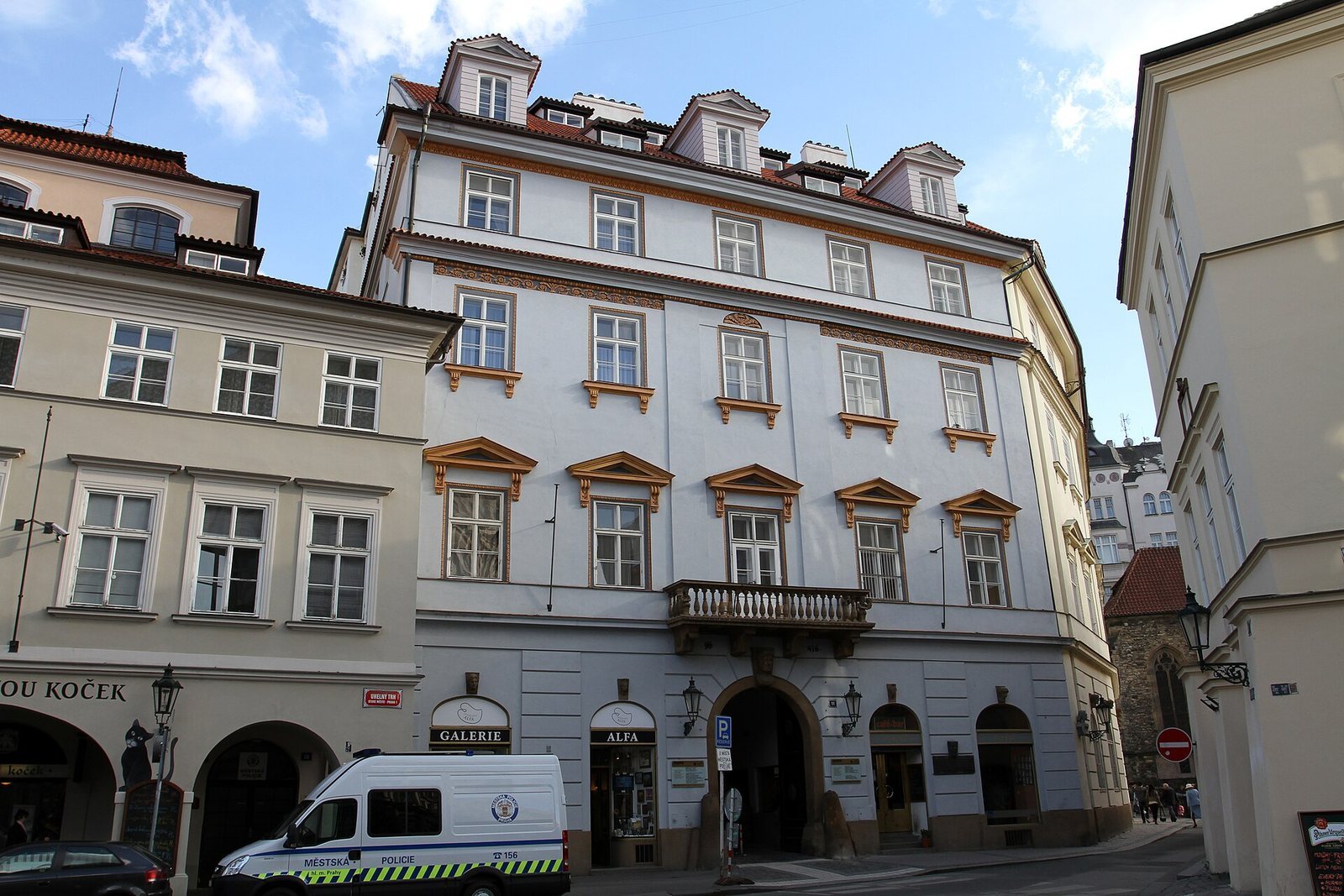
Knight František Daubek bought Platýz in 1813 and rebuilt it for residential use. The work made it one of Prague’s oldest and largest apartment buildings, and it remains a residential building. Platýz is protected as a cultural monument of the Czech Republic.
Remains
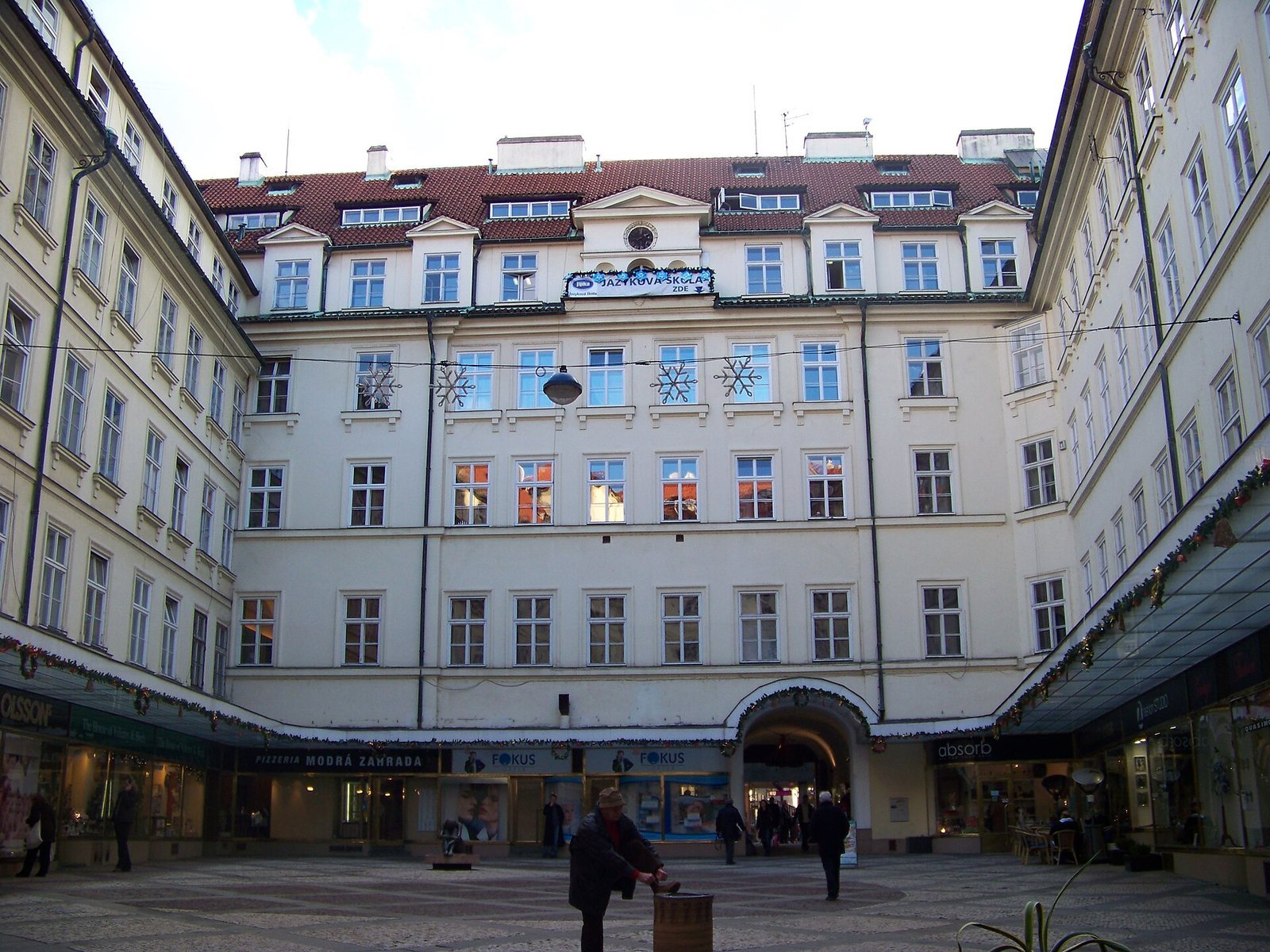
Platýz is a large urban palace arranged around a courtyard. Its present fabric reflects successive phases of building and alteration.
Courtyard and loggia
Jan Platais’s Renaissance alterations changed the palace façade and added a loggia, a gallery open along one or more sides, on the courtyard’s first floor. Small portions of this gallery remain visible.
Courtyard passage
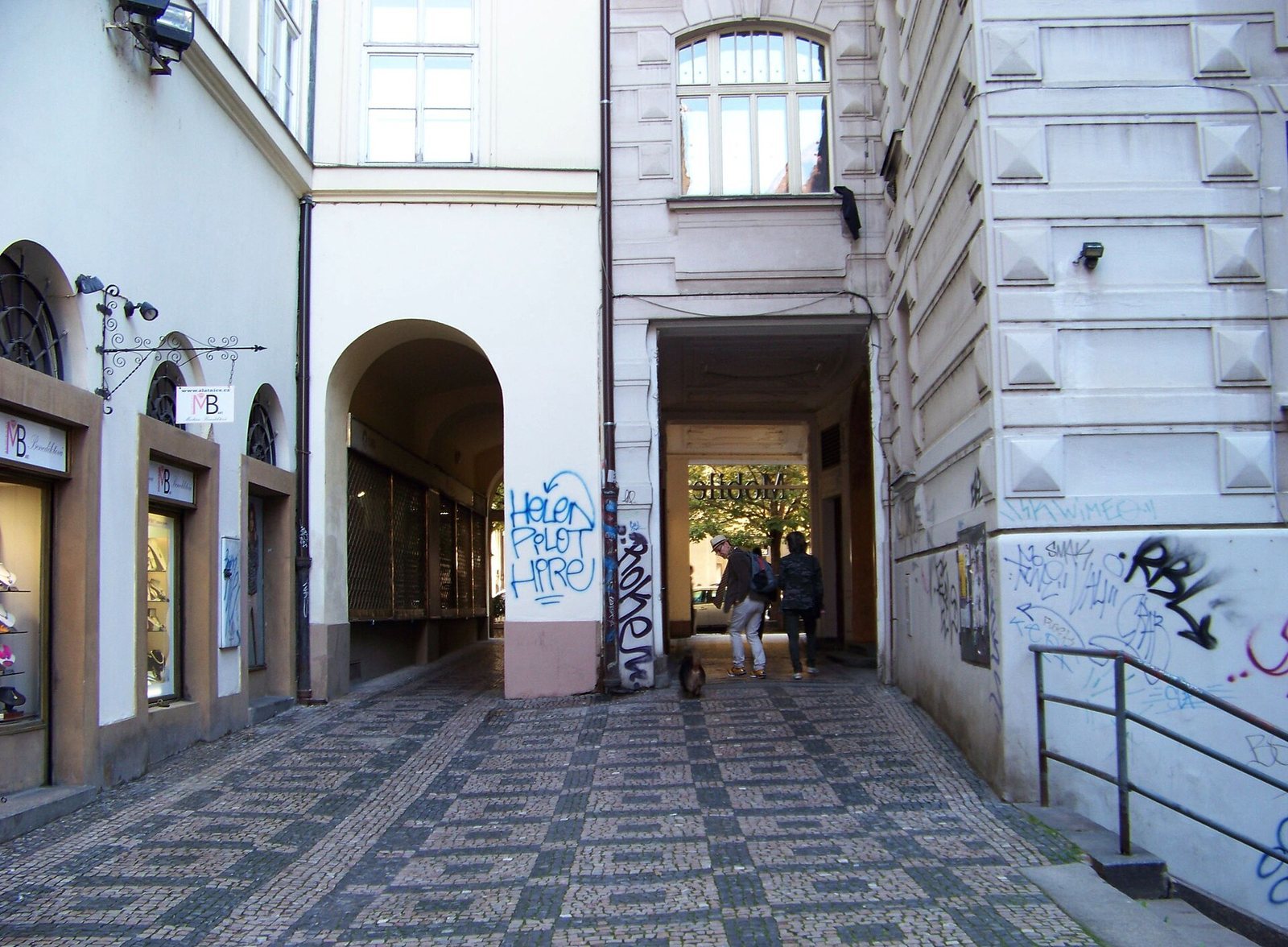
A passage runs through the courtyard between Národní Avenue and Coal Market Square. It dates to the Baroque phase begun under Count Jan of Šternberk.
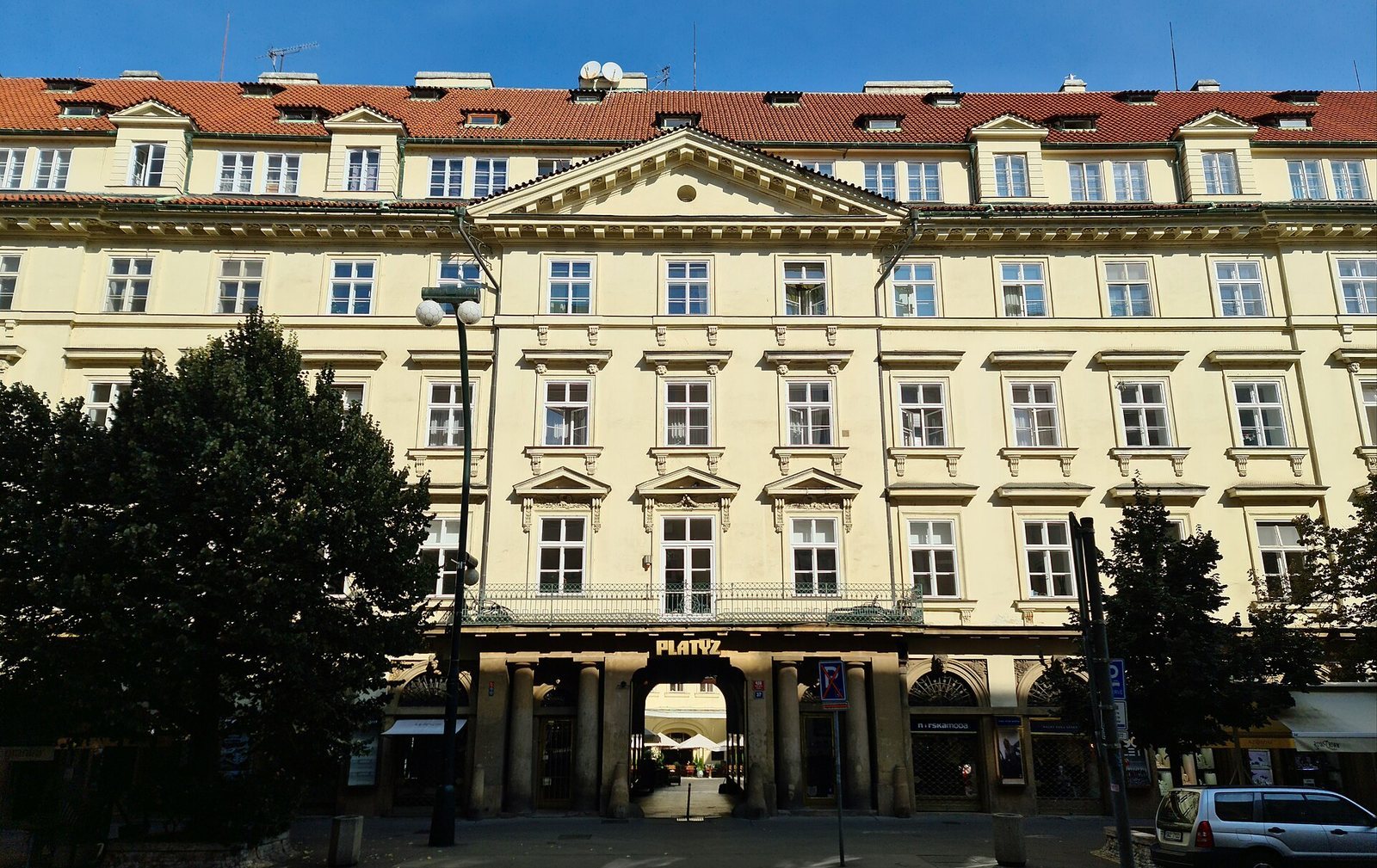
Empire-style façade and entrance
Daubek’s rebuilding gave Platýz an Empire-style façade and changed the principal entrance’s orientation. The earlier entrance faced north toward Coal Market Square; the rebuilt entrance faced south toward Národní Avenue.