Bégard Abbey: The First Cistercian House in Brittany
Site at a Glance
- Popularity
- Medium
- Country
- France
- Primary era
- Early Modern
- Eras represented
- Early Modern
- Civilizations
- French
- Site type
- Religious
- Remains
- Monastery
On this page10 sections
History
Bégard Abbey was a Cistercian monastery in Bégard, Brittany, France, founded in 1130. It was the first Cistercian establishment in Brittany and became the parent of several other religious houses.
Foundation and expansion
Four monks from L’Aumône Abbey near Chartres founded Bégard. Jean, the first abbot, came with Guillaume, Abraham, and Jacques. The foundation date is given as either 10 September or 10 November 1130. The monks first settled at a place called Pluscoat, also known as Purcoat or Pura Silva. It later took the name Bégar after a hermit who had lived there.
Geoffroi Botherel II, count of Lamballe, initially welcomed the monks, then directed them to his father, Étienne I, count of Penthièvre, who granted them land. Raoul, bishop of Tréguier, urged local people to support the new house. Conan III of Brittany also favored the foundation, encouraged by his mother, Ermengarde of Anjou.
Bégard was a daughter house of L’Aumône, meaning it was founded by a community from that abbey. Its wider Cistercian lineage traced back through L’Aumône to Cîteaux, the order’s founding house. Dedicated to Notre-Dame, a title meaning “Our Lady” for the Virgin Mary, Bégard belonged to the Cistercian order until its dissolution in 1790 and was associated with the dioceses of Saint-Brieuc and Tréguier.
The abbey founded Le Relec in 1132, Boquen in 1137, Saint-Aubin-des-Bois and Lanvaux in 1138, and Coatmalouen in 1142. Le Relec and Coatmalouen remained active until 1791, while Saint-Aubin-des-Bois and Lanvaux ended in 1790. Boquen’s first period ended in 1790, followed by another from 1937 to 1973. Bégard also established the Begare priory in Yorkshire, England.
Étienne I de Penthièvre, his wife Havoise, their son Alan the Black, and their grandson Conan IV received burial rights at Bégard in return for substantial gifts to the abbey.
Influence and changing administration
In the twelfth century, Bégard was called “the little Cîteaux of Armorica.” Its monks held influence over more than a third of the parishes in Trégor, especially around Pédernec. From 1660 to 1774, they measured peasants’ grain payments with vessels enlarged by 10 percent. These payments were tithes, dues owed to a religious institution, often in produce. When an investigation appeared likely, the monks secretly made replacement vessels and gave them an aged appearance.
After Bégard had become a priory, Saint-Rion, a dependent house in the deanery of Lanvollon, provided revenues for the prior of Saint-Magloire Abbey at Léhon. From 1789, those revenues went to a bishop.
Revolution and later use
During the French Revolution, which brought the abbey’s institutional life to an end, local municipal authorities seized it on 30 September 1790. An inventory was drawn up between 8 November and 31 December. On 3 November 1791, the buildings, gardens, orchards, woods, and farm were sold to the Parisian merchant Étienne-Marie Le Bouteux du Mousseau for 165,300 livres.
Seven of the eight monks still at Bégard in 1790 left religious life during the Revolution. The prior declared himself an atheist and married a former nun. Nuns have occupied the site again since 1927.
Remains
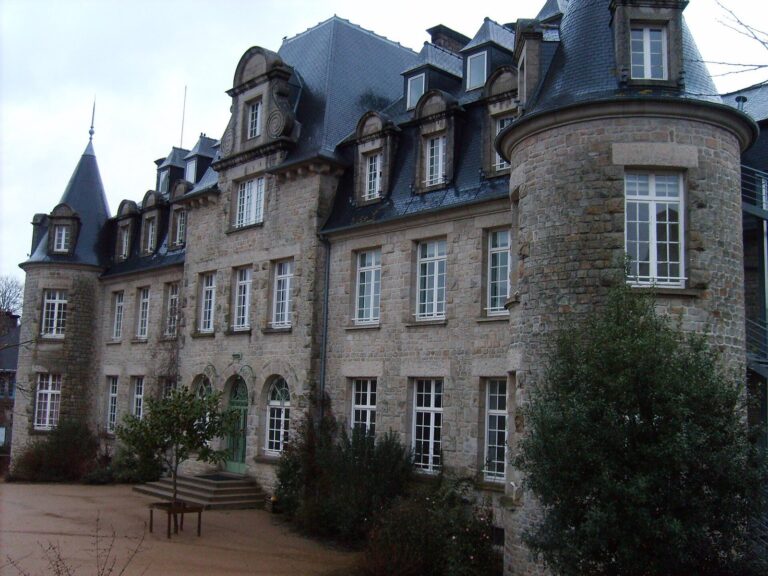
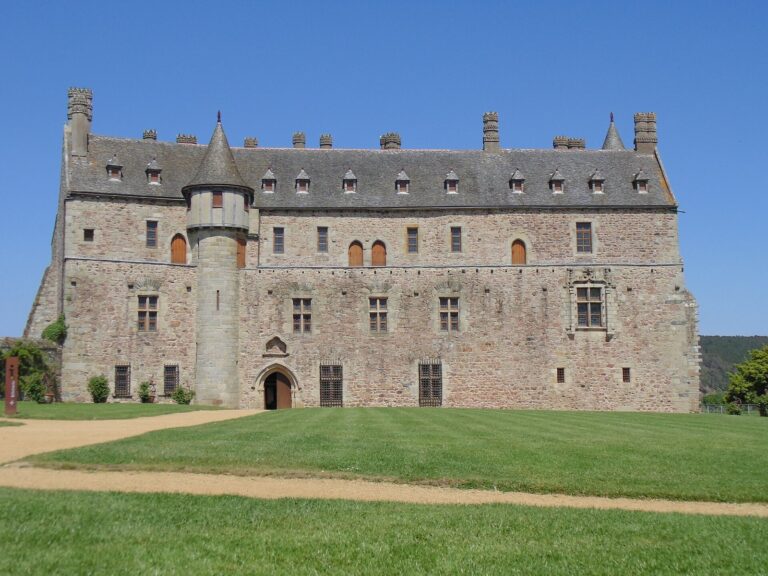
At Bégard, about 14 km northwest of Guingamp, the surviving remains include the abbot’s residence, buildings erected in 1765, and part of the enclosure wall. The abbey farm stands about 1 km from the former monastery, and the Pluscoat farm also survives.
Monastic buildings and enclosure
Abbot’s residence
The abbot’s residence dates to the mid-eighteenth century. In 1857, the Congregation of the Good Savior of Caen converted it into a hospital. After a fire, the building was restored in 1943.
Buildings and enclosure wall
Some of the abbey’s buildings were newly constructed in 1765. Remains of these buildings and part of the enclosure wall survive.
Abbey church
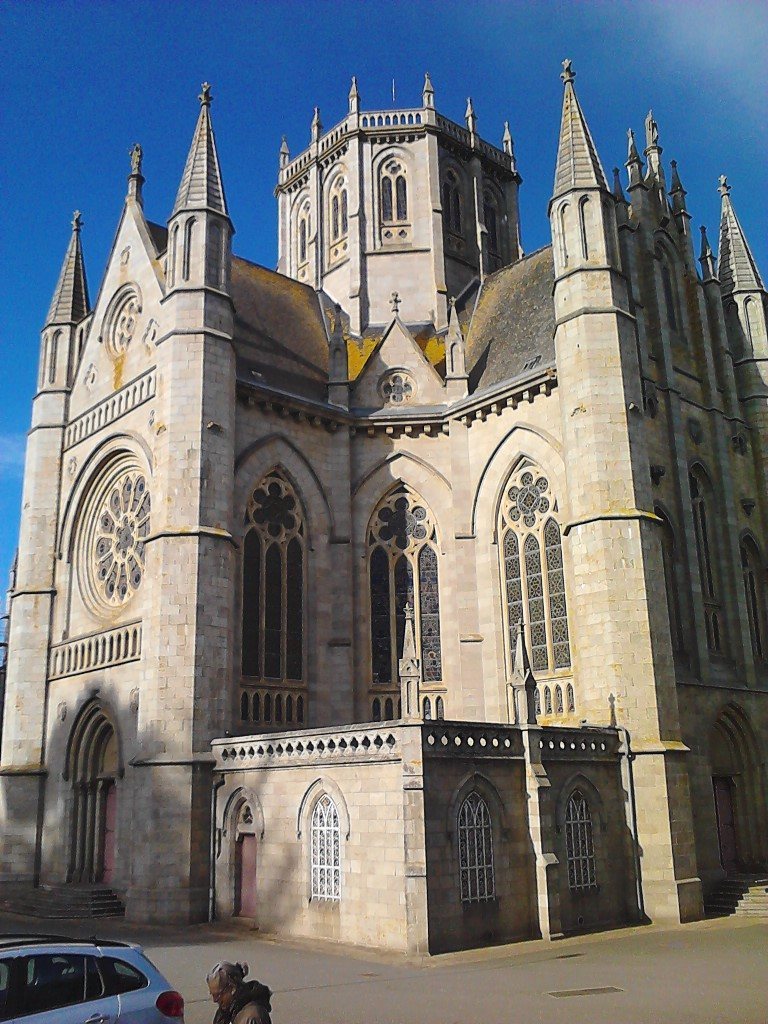
A fire destroyed the abbey church around 1900.
Farms
The abbey’s farm remains about 1 km from the monastery. The Pluscoat farm, associated with the name of the monks’ first settlement, also survives.