Höglwörth Abbey: An Augustinian Collegiate House in Germany
Site at a Glance
- Rating
- 4.6
- Popularity
- Medium
- Country
- Germany
- Primary era
- Early Modern
- Eras represented
- Medieval, Early Modern
- Civilizations
- Holy Roman Empire, Prince-Archbishopric of Salzburg
- Site type
- Religious
- Remains
- Monastery
On this page8 sections
History
Höglwörth Abbey is a former Augustinian collegiate house in Germany, founded in 1125 by Conrad I, Archbishop of Salzburg, as a church-based community of canons who followed the Rule of St. Augustine. Dedicated to Saints Peter and Paul, it became an economic, cultural, and religious center for the surrounding area from the twelfth century into the early nineteenth century. Its church developed through Romanesque (rounded-arch), Gothic (pointed-arch), Baroque (dramatic and elaborate), and Rococo (ornate, curving) styles.
Sixteenth-century leadership and decline
During the provostship of Wolfgang Griesstätter, from 1522 to 1541, he kept Salzburg’s rebels away from the abbey during the German Peasants’ War, a series of uprisings in German-speaking lands in the early sixteenth century. He also improved the abbey’s finances and played a role in developing iron mining between Raschenberg and Neukirchen.
By 1568, just one canon remained, and the monastery buildings were ruined or in poor condition. In 1614, Provost Marquard von Schwendi ordered the community dissolved and transferred its two parishes to secular priests, diocesan clergy who did not belong to a religious order. A lay inspector took charge of the abbey’s administration.
Recovery and rebuilding
After von Schwendi’s death in 1634, the community gradually recovered, with canons arriving from the collegiate houses at Au and Heilig Kreuz in Augsburg. Wolfgang Zehentner, provost from 1652 to 1671 and administrator until 1676, pursued rebuilding in the Baroque style. He considered relocating the abbey to a less isolated site, but a lack of funds meant that new buildings were instead erected at Höglwörth.
Patritius Pichler, provost from 1686 to 1691, was the first in a succession of provosts whose appointments were confirmed solely by the Archbishop of Salzburg. In 1733, Provost Johann Baptist II Puechner received the privilege of using pontifical insignia, ceremonial objects and vestments associated with bishops.
Secularization and suppression
Höglwörth escaped the Bavarian secularization of 1802–1803, when secular authorities dissolved religious institutions or transferred their property. In 1802 it passed to the Electorate of Salzburg, a territory within the Holy Roman Empire then ruled by Archduke Ferdinand of Tuscany. The part of the Rupertiwinkel, a historical region, containing the abbey became Bavarian in 1810. Admission of new canons had been prohibited in 1806, and the last provost, Gilbert Grab, was temporarily deposed in 1810.
Grab sought the abbey’s dissolution in 1813. Although a Bavarian royal order in 1816 opposed suppression, it was not carried out. In early 1817 the abbey remained under the jurisdiction of the Freising Ordinariate, an archdiocese’s administrative office. The Kingdom of Bavaria suppressed Höglwörth on 30 July 1817, in its final act of secularization, and the abbey’s property passed into private ownership.
Remains
Island and peninsula setting
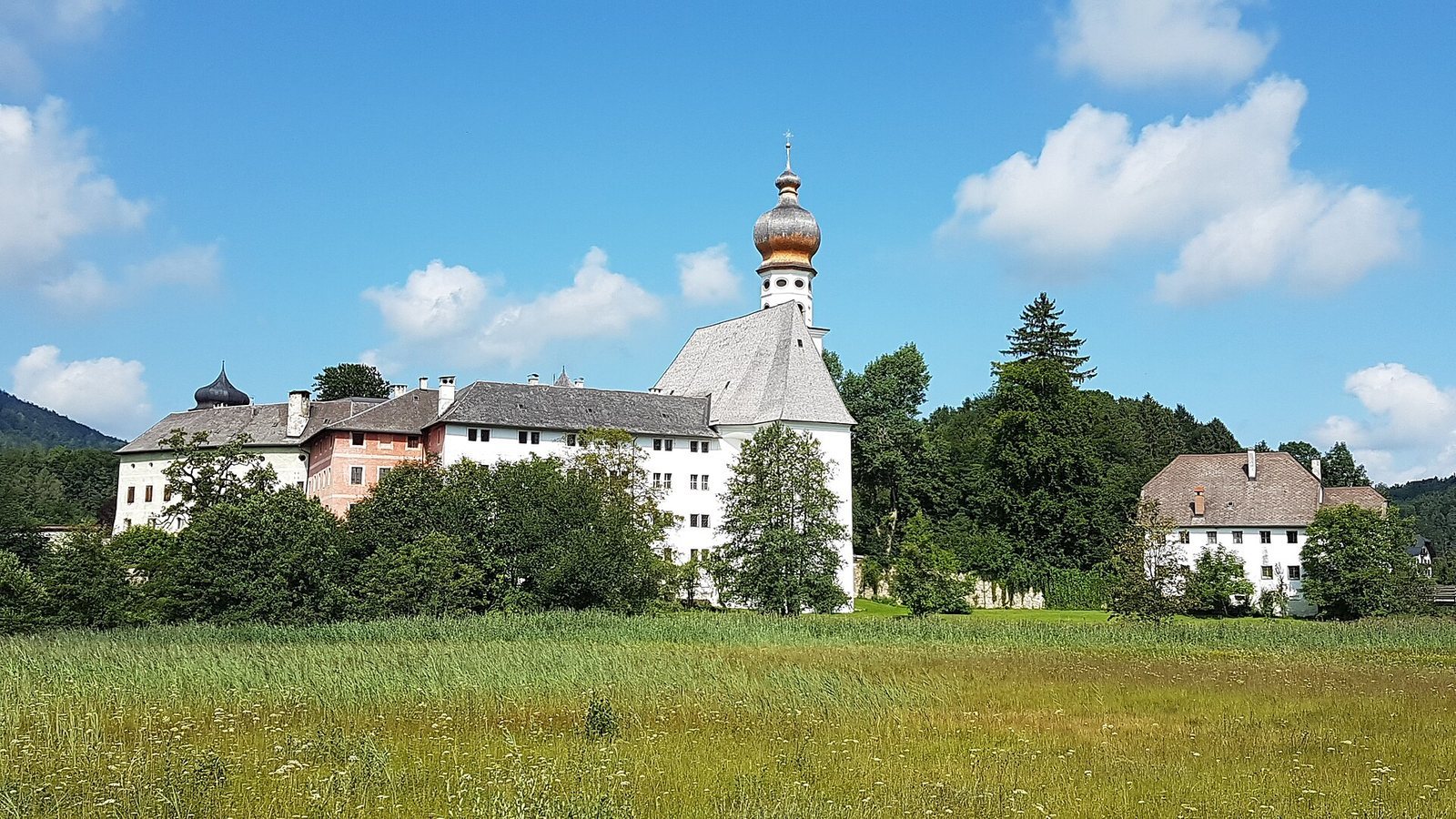
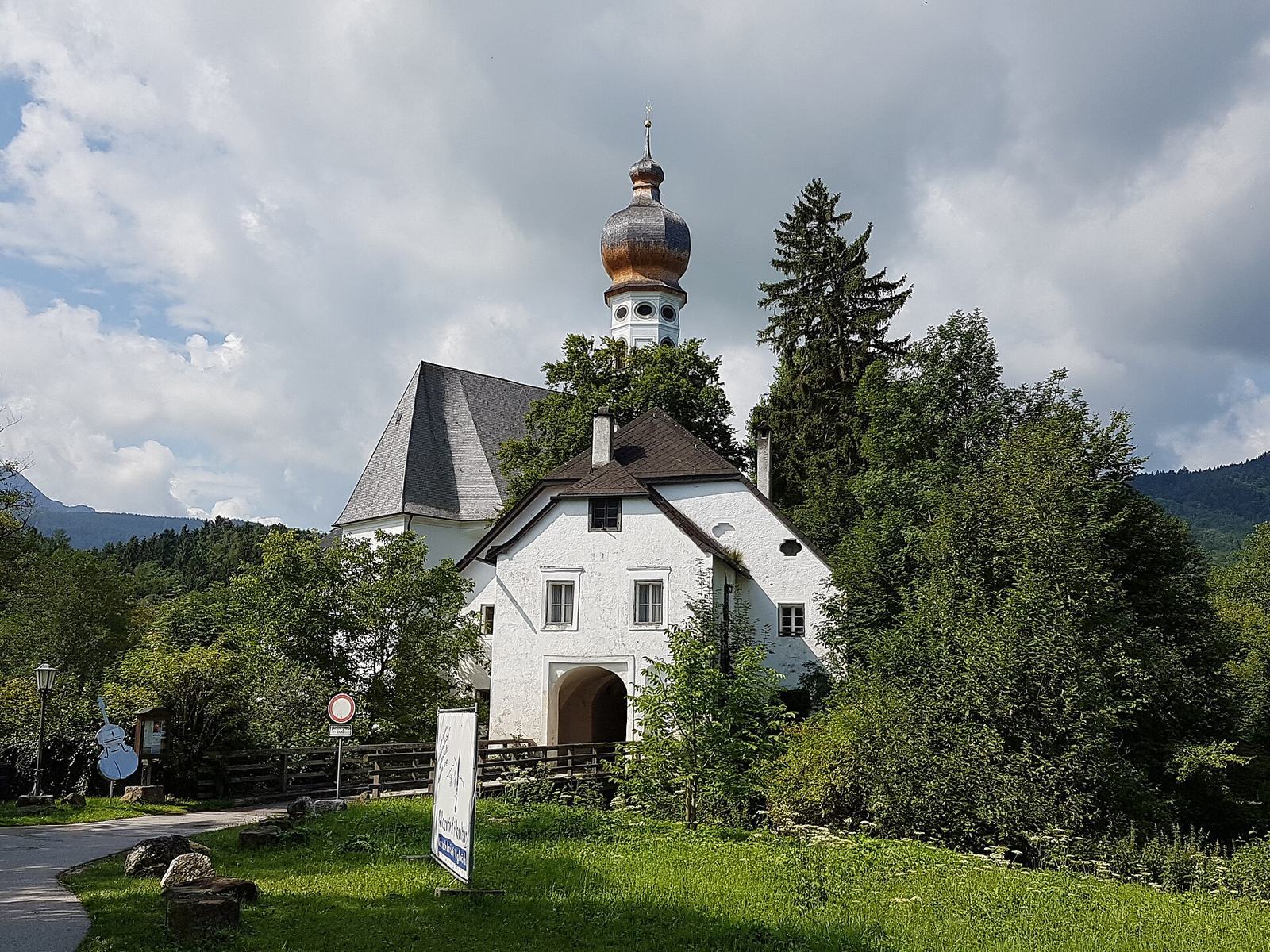
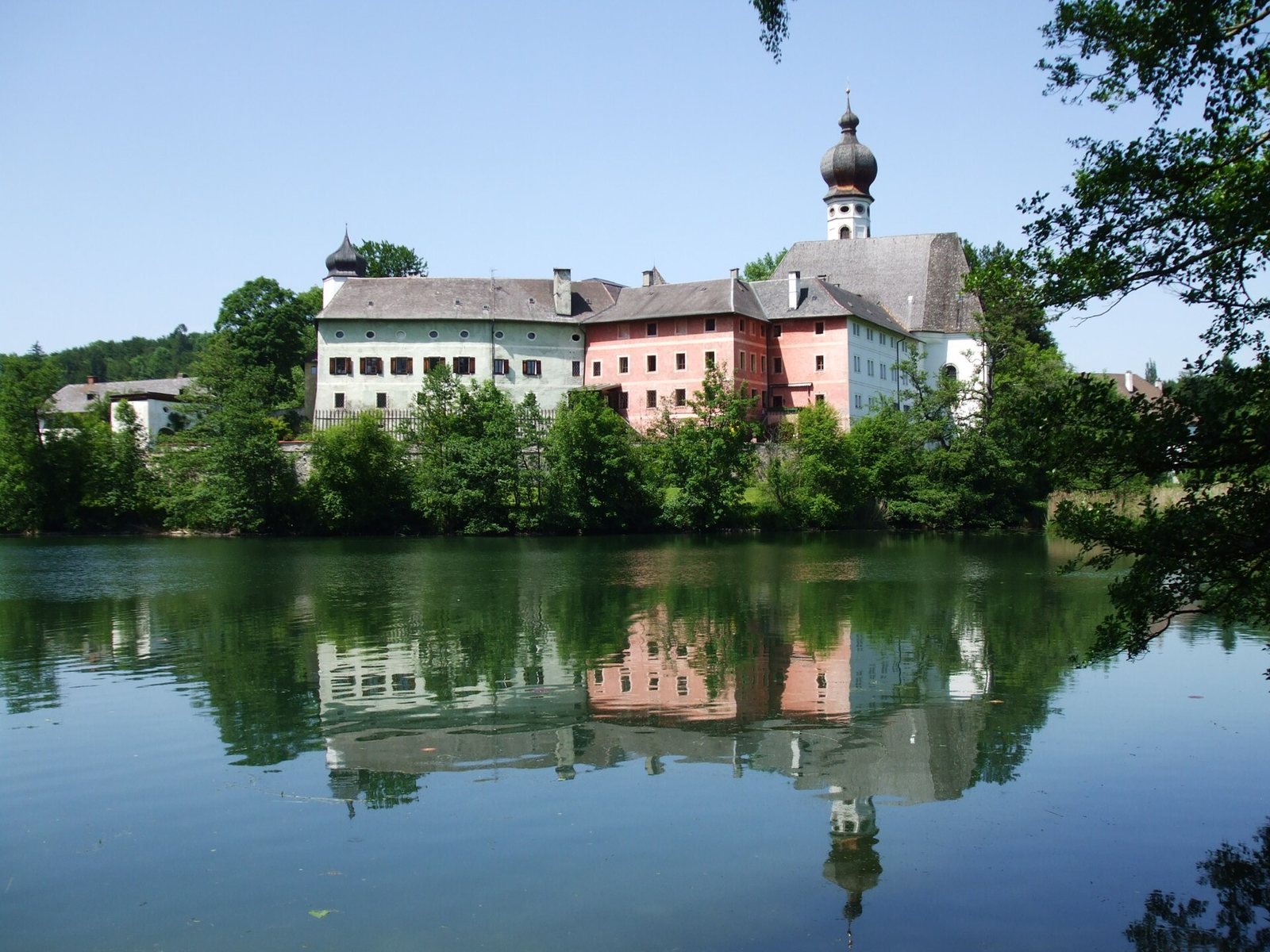
The abbey and church stand on a peninsula in Lake Höglwörth. The site was once an island; silting on its eastern side eventually joined it to the shore.
The abbey church
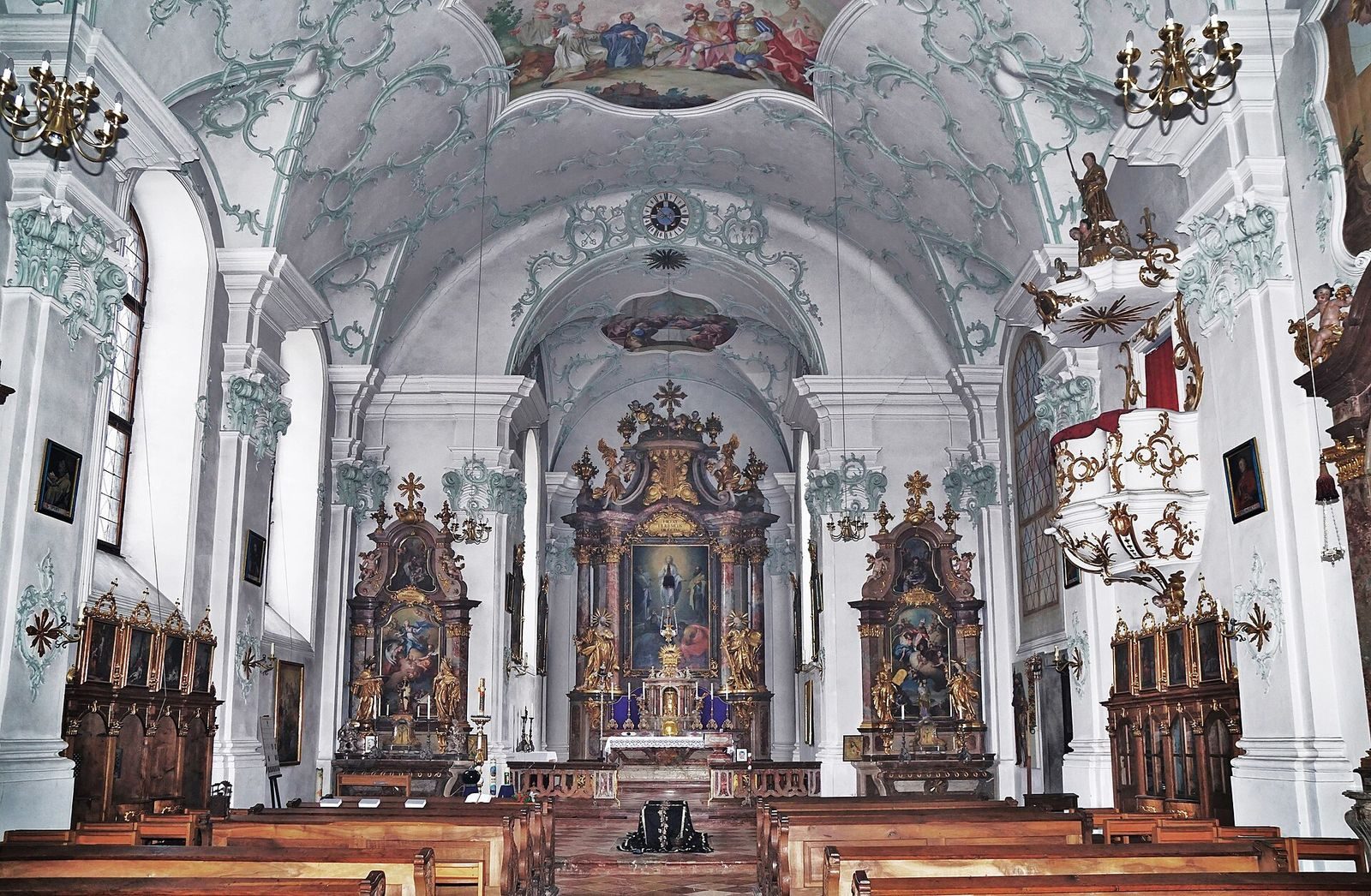
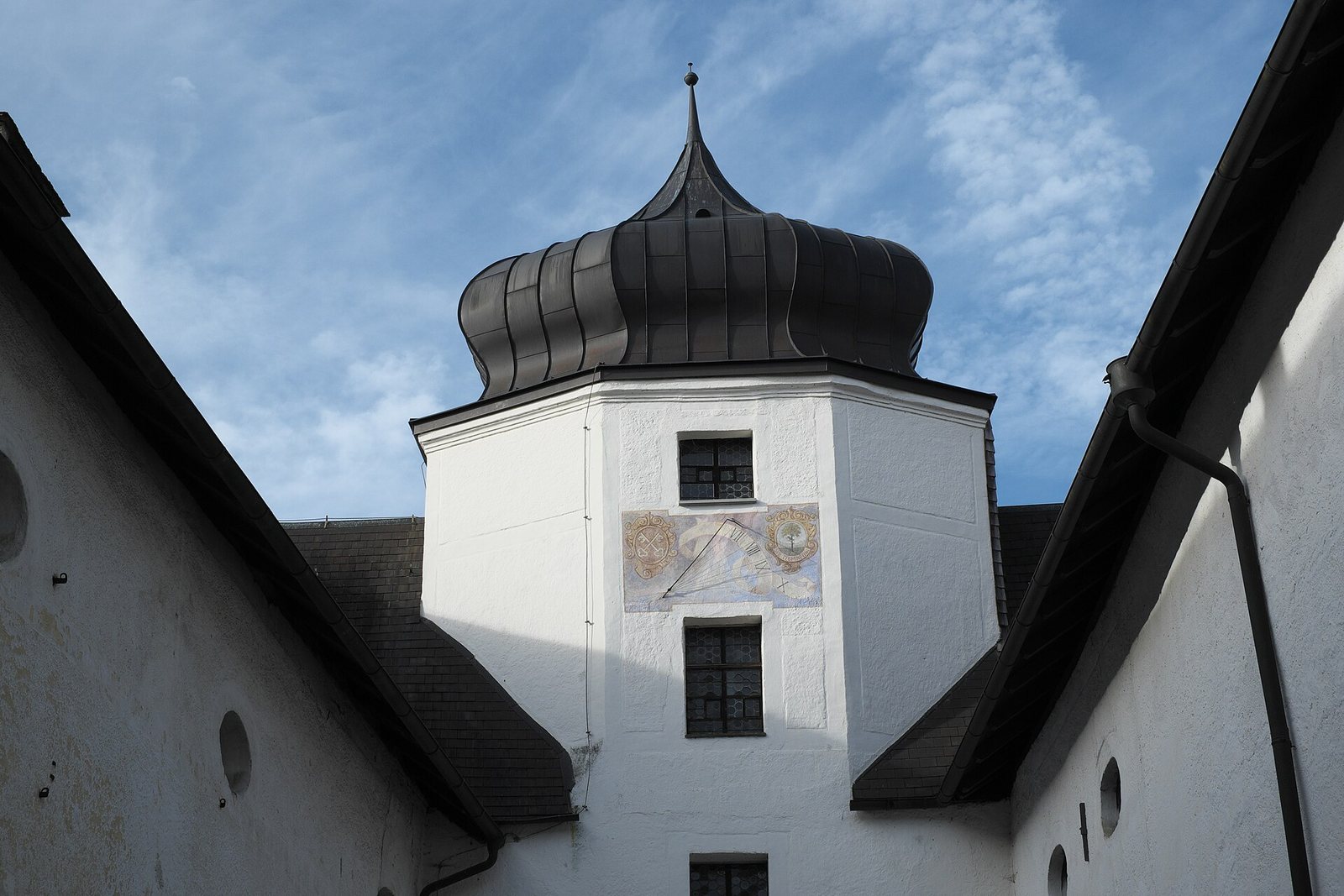
The earliest church was a three-aisled basilica, with a central nave rising above two side aisles. Dedicated to Saints Peter and Paul, it was consecrated in 1219. The choir is the surviving part of this Romanesque church and was incorporated into the later building, where it received Baroque treatment. The church was remodeled in the Gothic style in 1311. A new church was built between 1675 and 1689, and its interior was embellished with Rococo decoration between 1760 and 1785.
Earlier abbey buildings
At the time of Zehentner’s rebuilding plans, the complex included a small church with two Gothic bell towers and a main building containing five cells. The buildings were modest in scale.