Saint Catherine’s Monastery: A Dominican Monastery in Tallinn
Site at a Glance
- Popularity
- Medium
- Country
- Estonia
- Primary era
- Medieval
- Eras represented
- Medieval, Early Modern
- Civilizations
- Crusader, Danish, Livonian Order
- Site type
- Religious
- Remains
- Monastery
On this page12 sections
History
Saint Catherine’s Monastery is a former Dominican monastery in Tallinn, Estonia, dedicated to Catherine of Alexandria, a Christian saint traditionally venerated as an early martyr. It was the first Catholic monastery in Estonia and remains among Tallinn’s oldest buildings. Its Gothic church took shape from the 13th century into the 16th.
Foundation and growth
Dominican friars first established a monastery on Toompea in 1229. They left after conflicts between Danish and German knights, returned in 1246, and moved to the Lower Town in 1260, where they began building the church around which the monastery grew. The location supported both preaching to a large audience and commercial activity. The friars traded in fish and operated a brewery that produced four kinds of beer.
The monastery became known for scholarship as Reval, the historical name for Tallinn, developed into the center of a diocese, a church district overseen by a bishop, covering northern Estonia. The friars learned Estonian, and local people later joined their community. The monastery fostered Estonian culture and literature through translations from Latin and other languages. Its school taught basic literacy and scripture; a dispute with the cathedral over teaching rights was resolved by a special papal ruling.
Dissolution and decline
During the Reformation, a 16th-century movement that brought major changes to Western European Christian institutions and practices, the monastery was dissolved and its property confiscated. In 1524, a city crowd attacked Saint Catherine’s Church, but the city council intervened and saved some of its furnishings. The friars were forced to leave Reval in 1525. The city put monastery buildings to other uses, including a school, quarters for Polish mercenary troops, and a poorhouse.
A fire in 1531 destroyed the church and damaged much of the rest of the complex. Most of the ruins deteriorated as the area was gradually built over. The surviving buildings generally fell out of use, with the granary among the exceptions.
Catholic revival and later use
Catholic communal life revived after Reval came under Russian rule in 1710, and the Catholic community gained official status in 1799. Catholics re-established themselves on the former monastery grounds and held services in the refectory, the community’s dining hall. Dominican priests served the parish in pastoral and missionary roles until new parishes opened in 1860.
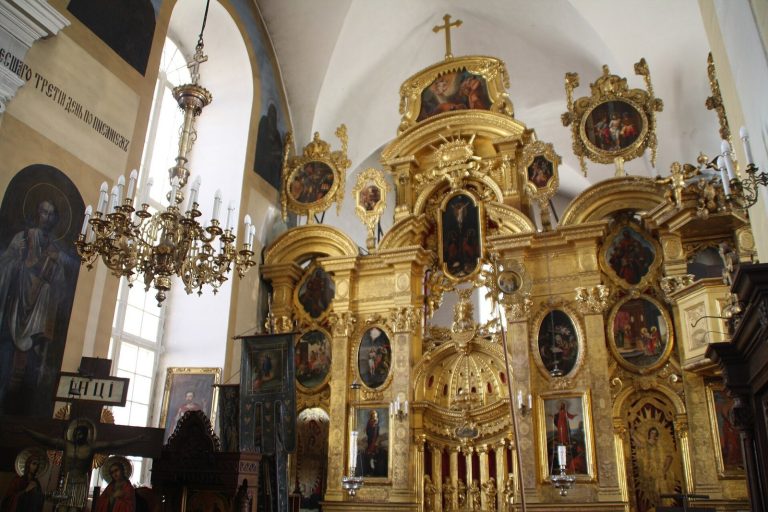
Between 1842 and 1844, the former refectory was converted into the Catholic Church of Saints Peter and Paul. Its consecration followed in 1845, making it the city’s first Catholic church in three centuries. Warehouses and residences were also built among the ruins. In 1954, the site was cleared and its ruins secured, and an exhibition of architectural stonework was arranged in the surviving cloisters. The remains are one of Tallinn’s two surviving medieval monastery complexes.
Remains
Layout and construction
The monastery occupied part of Tallinn’s Lower Town between Vene, Munga, and Müürivahe streets. Four wings surrounded a rectangular courtyard with an internal cloister, a covered walkway around the courtyard. The church stood to the south, the refectory to the north, the dormitory to the west, and the chapter house, where the community met for business, to the east. Built of brick and stone, the Gothic church measured 67.7 metres long and was the city’s longest building when completed. At least part of its ceiling used star vaulting, a vaulted design with ribs forming a star-like pattern.
Surviving church and convent fabric
Church and St Catherine’s Passage
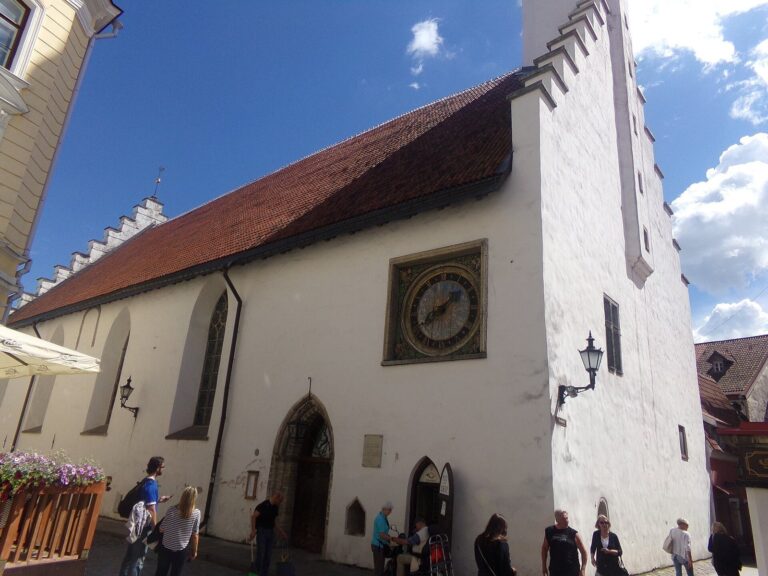
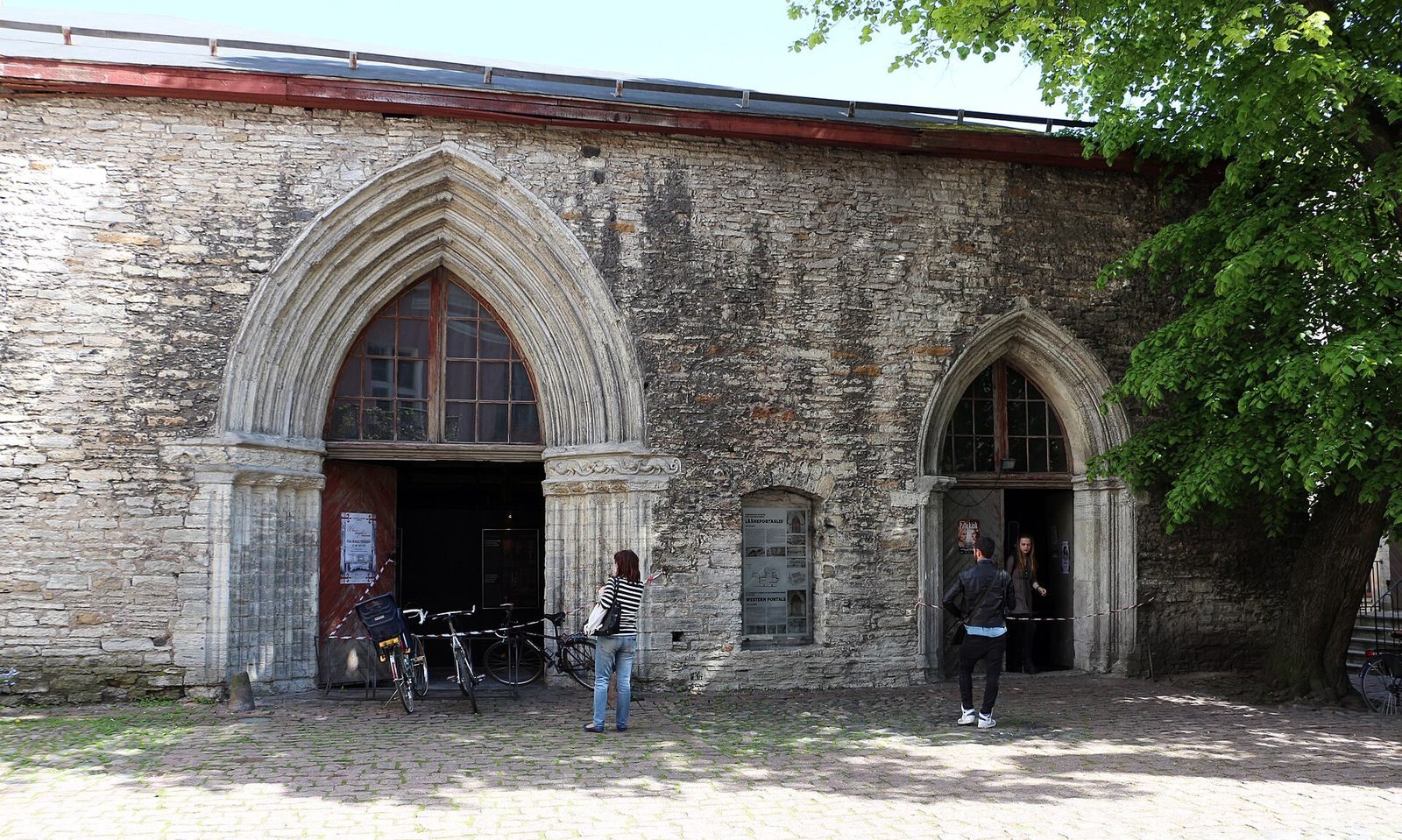
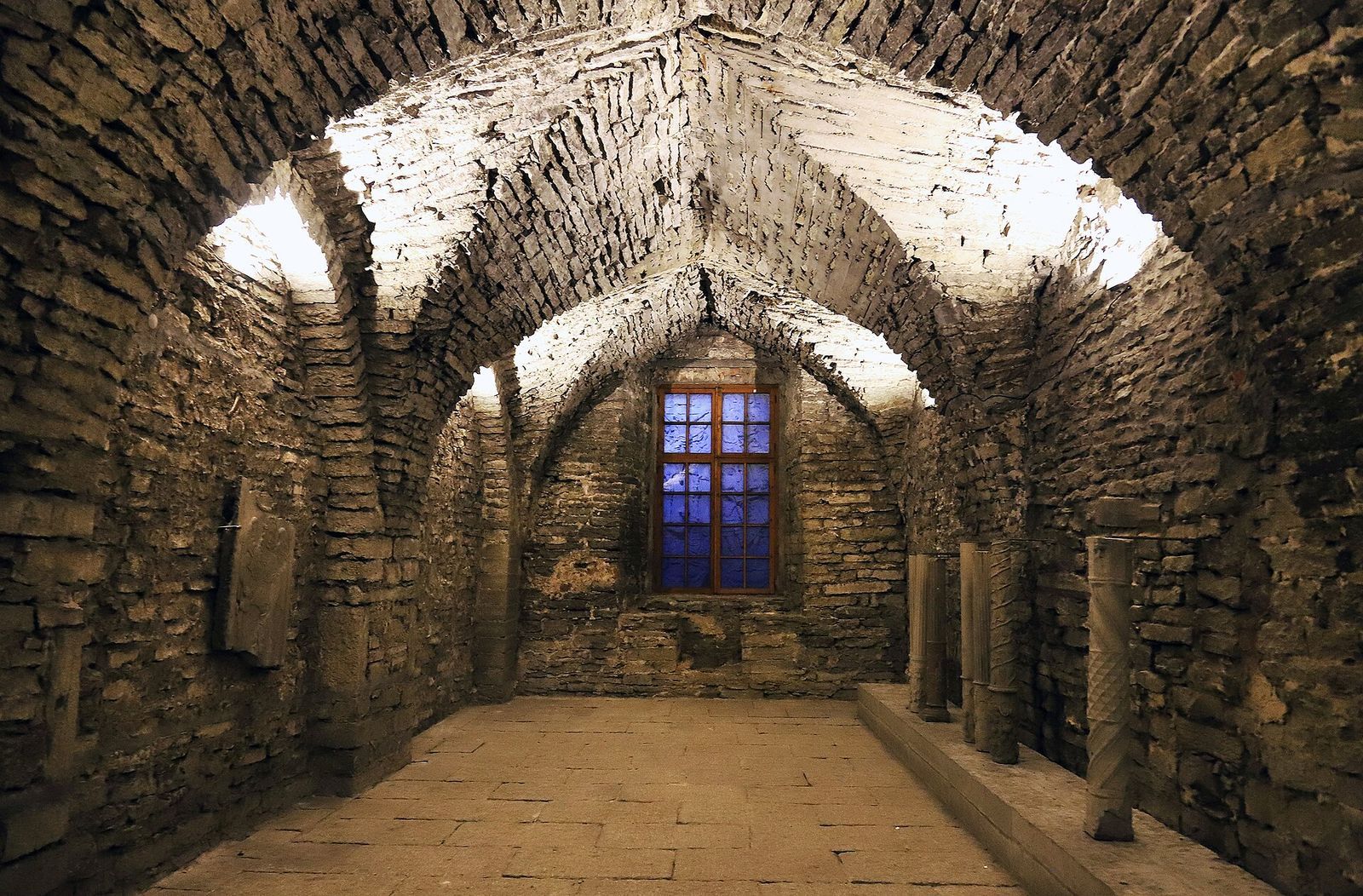
The western part of the church survives with two richly ornamented portals, completed around the middle of the 14th century. A tower was added on the church’s southwestern side toward the end of that century. The remains also include a crypt and a scriptorium, a room for copying or producing manuscripts. The church ruins are used as a chamber vocal and music hall.
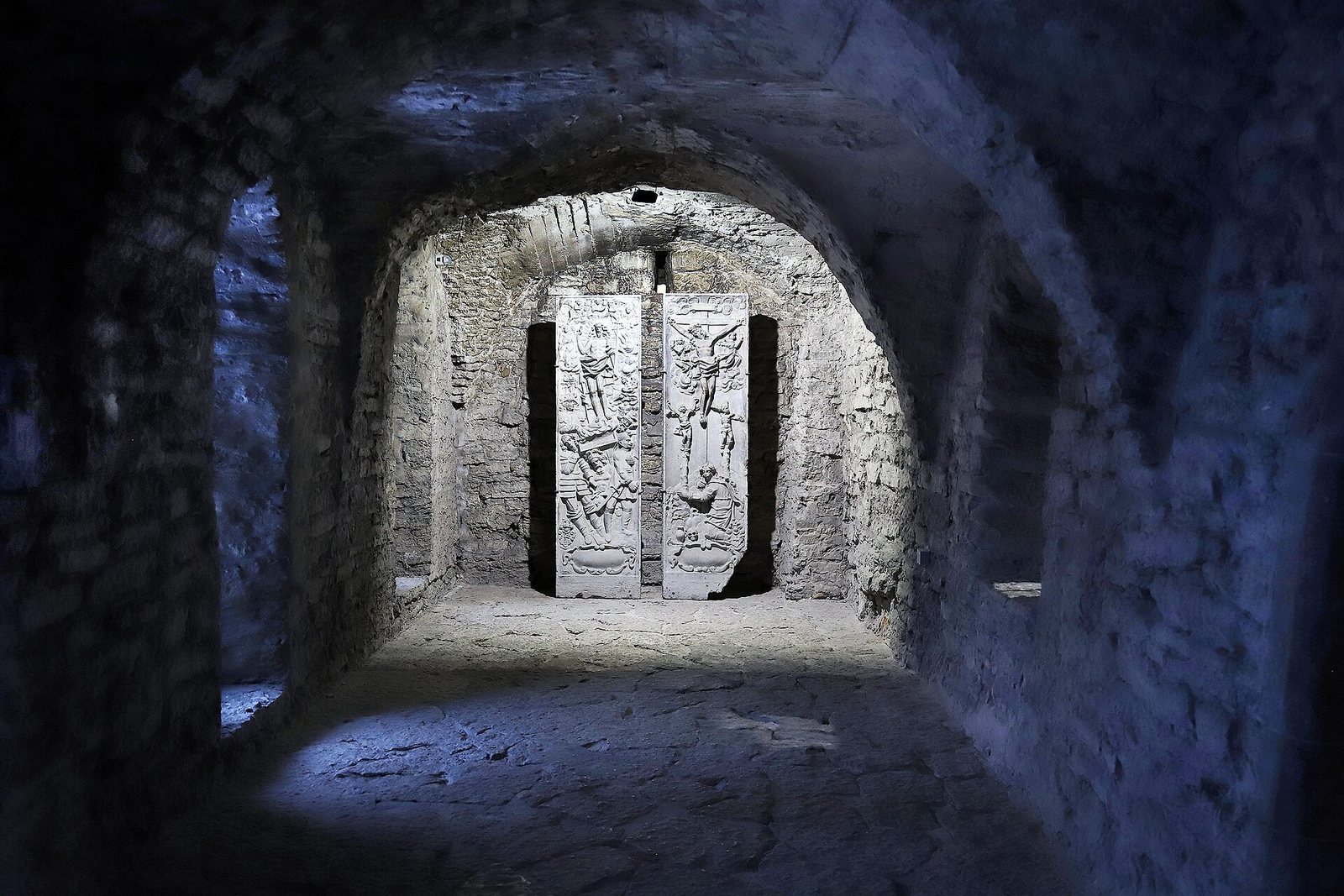
St Catherine’s Passage, created in the 20th century between Vene and Müürivahe streets, runs beside the church. Grave slabs of wealthy townspeople are fixed to the church wall there. The oldest, dated 1381, commemorates Kunigunde Schottelmund, the wife of Reval’s mayor.
Cloister and eastern wing
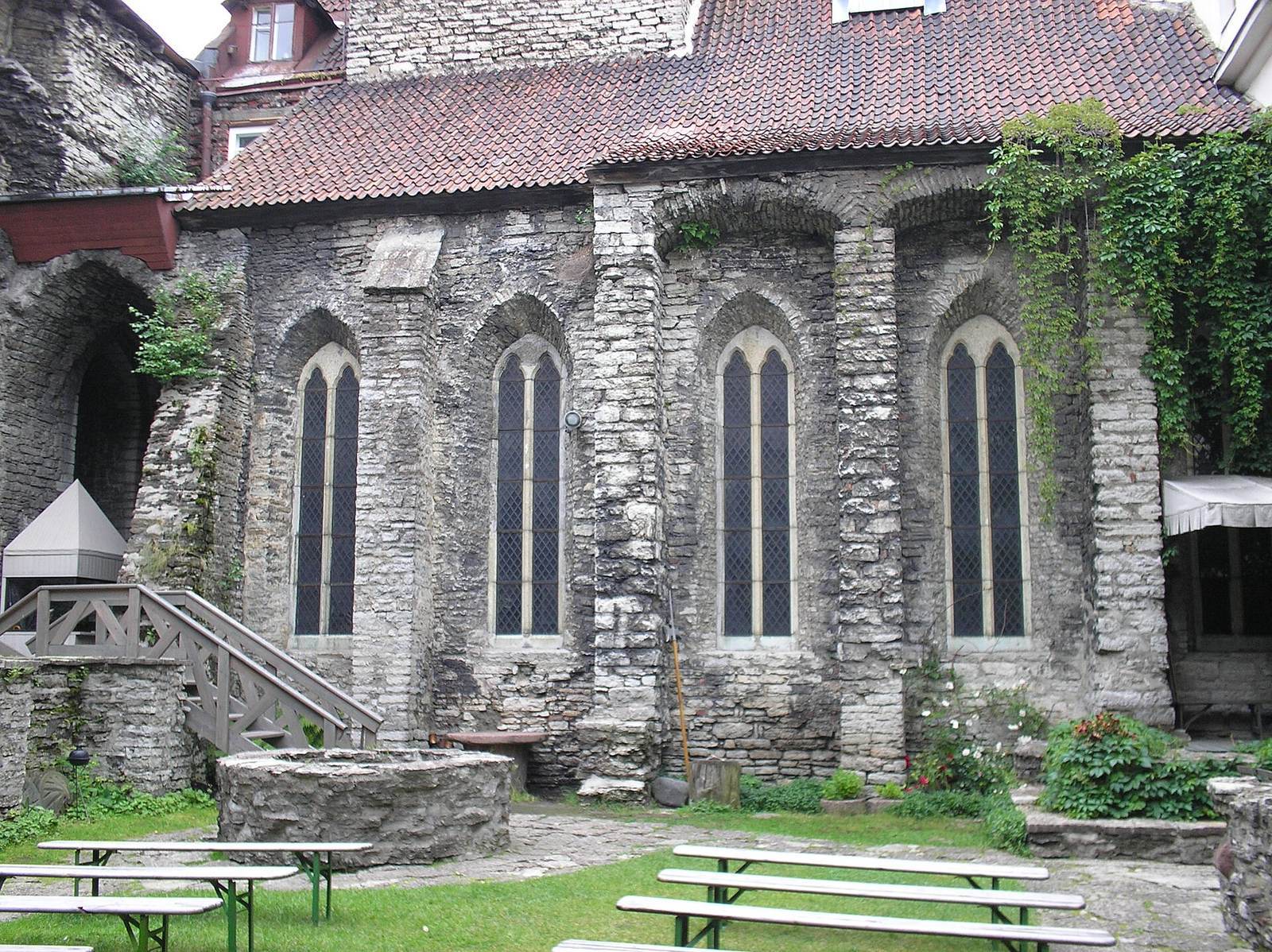
Parts of the cloister and the chapter house remain. The surviving eastern wing includes a sacristy on the ground floor and a chapter room on the second floor. These rooms date to the early 16th century and are among Tallinn’s latest Gothic architectural examples. Limestone tombstones and threshold stones are displayed in the church and cloisters. A well in the courtyard is linked to a local tradition that wishes made there come true.
Later buildings and surviving objects
Refectory and granary
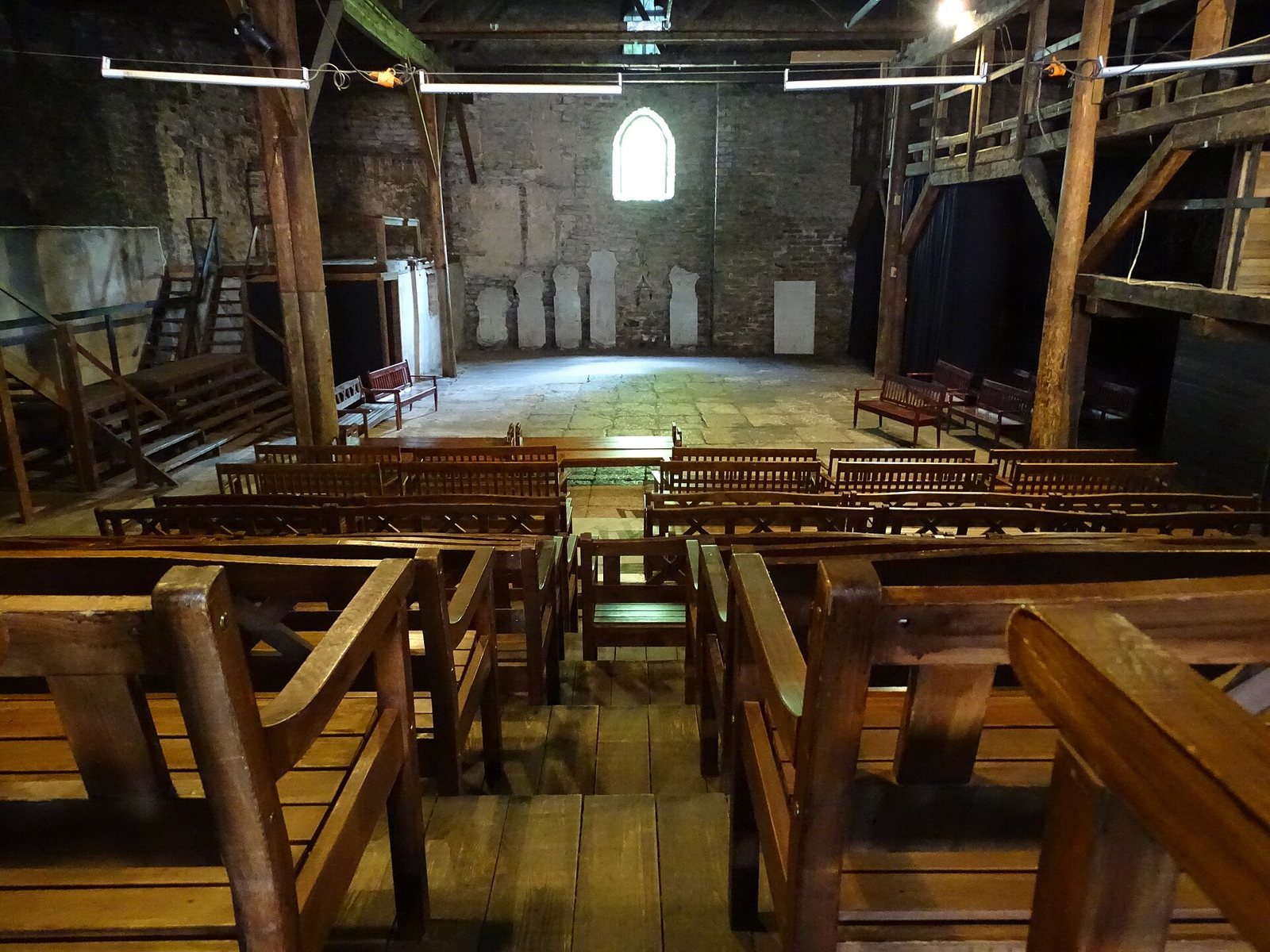
The former refectory on the north side now forms the Cathedral of Saints Peter and Paul. The monastery granary also survives; after the Reformation it was converted into an arsenal and has also been used as a theatre.
Altars and library
Two altars from the church are displayed at the Niguliste Museum. One, depicting the Virgin Mary, was commissioned and funded by the Brotherhood of Blackheads, a merchant confraternity active in Baltic towns. It was made in Bruges by an unidentified painter conventionally called the Master of the Legend of Saint Lucy, a name drawn from paintings of episodes in that saint’s life. The second altar depicts the Holy Kinship, the extended family of Jesus and Mary. Some books from the monastery library may also have survived.