Jarlsberg Manor: A Norwegian Estate and Family Seat
Site at a Glance
- Popularity
- High
- Country
- Norway
- Primary era
- Modern
- Eras represented
- Medieval, Early Modern, Modern
- Civilizations
- Denmark–Norway, Norwegian
- Site type
- Domestic
- Remains
- Manor House
On this page11 sections
History
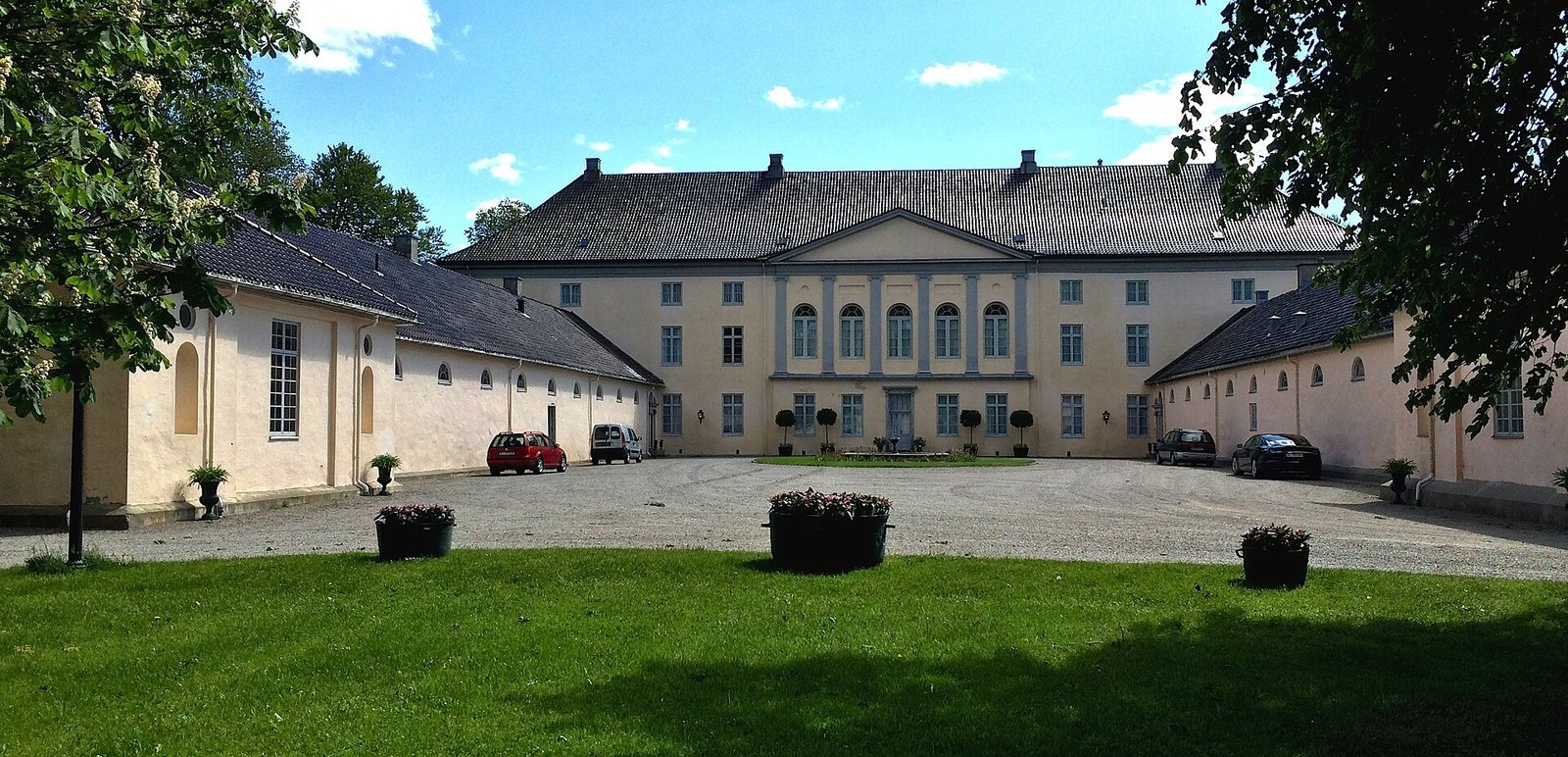
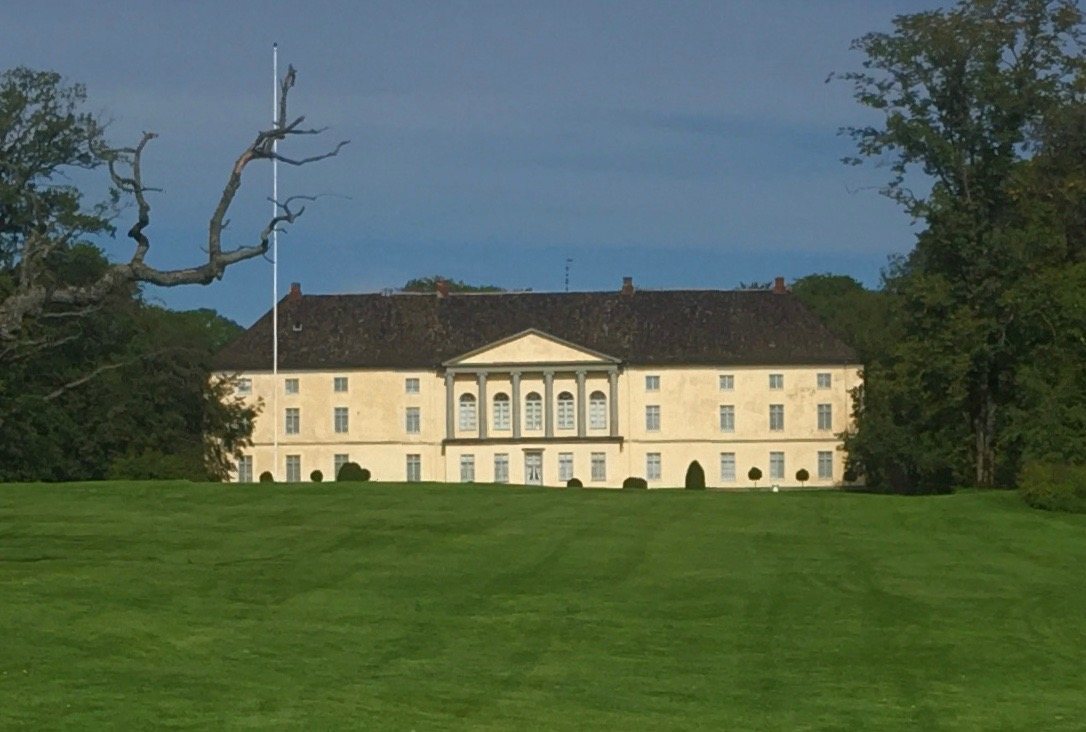
Jarlsberg Manor is an estate in Tønsberg, Norway, with a stone main residence completed in 1701 and later remodelled in the Empire style, a neoclassical style associated with the early nineteenth century. From crown property, it became the seat of the County of Tønsberg and later the family seat of the Wedel-Jarlsberg family.
Crown estate and Griffenfeld’s county
The estate began as the crown property of Sem, previously held by the provostry of Tønsberg, an ecclesiastical district administered by a provost. During the Reformation, the sixteenth-century movement that established Protestant churches across much of northern Europe, the Danish-Norwegian king confiscated the property and added surrounding farms.
In 1673, the crown estate passed in an exchange to Peder Schumacher Griffenfeld, a Danish statesman, who renamed it Griffenfeldgård. The estate was enlarged in 1675 and became the County of Tønsberg. Griffenfeld also received Sem’s lordly seat as a gift and renamed it Griffenberggård. As count, he could appoint clergy to the county’s churches and to Slagen Church near Tønsberg, fill county offices, and collect income from many public levies. He later acquired the county churches themselves. The county extended from Drammen in the north to Tassebek in Stokke in the south, and Griffenfeld owned 14 percent of its land.
The Wedel family and the county’s end
After Griffenfeld was convicted in 1676, the estate was confiscated and granted to Ulrik Fredrik Gyldenløve, governor and holder of the County of Laurvig. In 1683, Gyldenløve sold Jarlsberg to Gustav Wilhelm Wedel, a Danish officer who had become a commanding general in Norway in 1681. Wedel received the name Wedel af Jarlsberg and the title of feudal count in 1684, a noble title connected to a county granted by a ruler. His descendants made the manor their family seat.
In 1750, the owners gained permission to sell churches and land. By 1775, the family’s landholding had declined from 14 percent to 5 percent. A law passed in 1821 provided for the County of Tønsberg to end when its last count died. It ceased to exist in 1896, on the death of Peder Anker Wedel Jarlsberg, and the manor became the Wedel-Jarlsberg family’s ancestral seat.
Inheritance and protection
The family entail, a legal arrangement restricting inheritance or the transfer of an estate, was wound up along with Scandinavian entails generally. Jarlsberg nevertheless retained an exceptional, legally preserved right of primogeniture, meaning inheritance by the eldest heir. A 1927 law limited inheritance to male descendants of the current Norwegian line, excluded numerous descendants living in Germany from access to the estate, and provided for the seat to pass to the University of Oslo if that male line died out. A 1999 law restored inheritance through the female line. The manor received heritage protection in 1939.
In June 2024, archaeologists announced the discovery of Viking ship remains on the manor grounds using ground-penetrating radar, which detects features below the surface with radar signals.
Remains
Manor house
The earlier residence, repaired from 1636, consisted of four timber wings surrounding a paved courtyard. It was destroyed by fire in the late seventeenth century and replaced by a stone, four-wing house with four pavilions at its corners. The north wing was later demolished. The main wing was raised to two storeys and given a large Knight’s Hall; subsequent remodelling and improvements shaped the building’s present appearance. Its first floor contains a columned hall used for concerts, while the Knight’s Hall on the second floor is used for private functions.
Grounds and archaeological features
Park and family burial ground
The estate includes about 750 acres of cultivated land. Its park was laid out in the French style around 1720 and redesigned in the English style in 1840. Woodland forms part of the grounds, as do the areas called Store and Lille Gullkronen, which contain the family’s burial place.
Medieval chambers
Chambers with vaulted ceilings lie beneath the manor’s east wing. A tradition holds that Eric Bloodaxe, a Norwegian king, killed his brother Bjørn Farmann there.
Farmannshaugen
Farmannshaugen is a large burial mound traditionally said to have been raised for Bjørn Farmann, remembered in early Norwegian tradition as a petty king of Vestfold.
Viking ship remains
The ship remains found on the grounds include numerous rivets and two horse crampons, devices fitted to horses’ hooves to provide traction on icy ground.