Burg Gleuel: A Medieval Water Castle in Germany
Site at a Glance
- Popularity
- Medium
- Country
- Germany
- Primary era
- Early Modern
- Eras represented
- Early Modern
- Civilizations
- Electorate of Cologne, Holy Roman Empire
- Site type
- Domestic
- Remains
- Castle
On this page9 sections
History
Burg Gleuel is a medieval lowland water castle in Germany’s historic Kölngau, the region around Cologne. It is regarded as one of the area’s oldest castles and belonged to an ecclesiastical estate. A grant made on 4 June 898 by Zwentibold, king of Lotharingia from 895 to 900, transferred the manor at Gleuel to Essen Abbey, a religious institution that held land. The grant also covered twelve other agricultural holdings, a church, and property at Selstena (Sielsdorf). The estate and church site were already considered old, but the grant does not establish when the castle itself was built.
Ecclesiastical and local rule
By the middle of the 13th century, the castle and settlement belonged to the cathedral chapter, a body of clergy associated with a cathedral that could own property. In 1260, Gleuel’s feudal vassal Gerard von Gleuele fought alongside the people of Cologne against Konrad of Hochstaden, Archbishop of Cologne from 1238 to 1261.
In 1463, local official Heinrich von Gluwel signed the hereditary compact of the prince-archbishopric, a territory ruled by an archbishop who also held secular authority. A decade later, in 1474, Göddert von Gleuel served as a cavalry captain leading the Cologne Funken, a local military troop, during the Burgundian War.
Changes of ownership and rebuilding
After the Gleuel family line ended in 1550, the Schall von Bell family took ownership. Johann von Cölln, a member of a Cologne council family, bought the property in 1630. Two years later, he changed the original four-wing complex into its two-wing arrangement. A stone in a gable bears the date 1632.
The estate returned to the cathedral chapter through a purchase in 1726. Secularization, the transfer of church property to secular control, brought another change in 1802, when the estate passed into private ownership. Its first private owner was Heinrich Felten, who later served as mayor of Hürth from 1817 to 1845.
Municipal ownership and restoration
The municipality took over the property in 1969 but found no use for the castle. An architect later acquired it and arranged for its restoration in 1976–77; the ancillary buildings were converted into housing. The castle is also used as its owner’s residence and workplace and houses a small vintage-car museum.
Remains
Layout and exterior
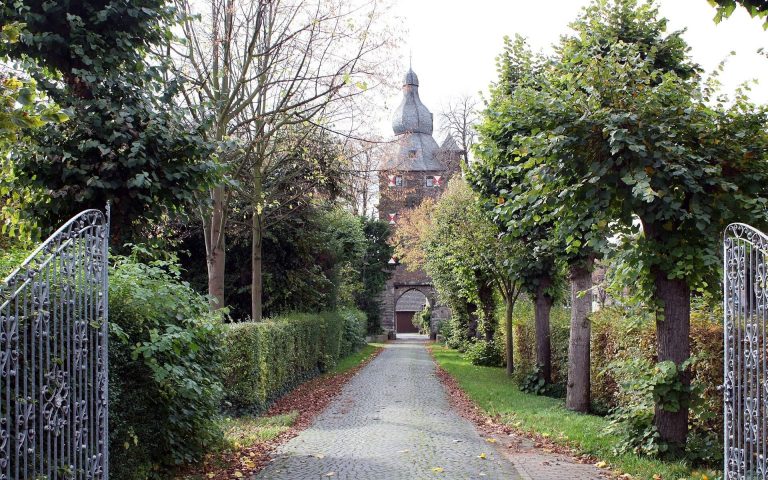
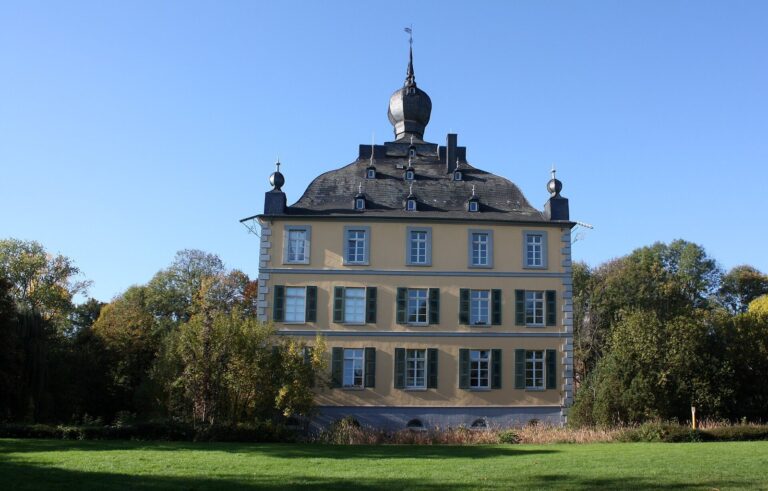
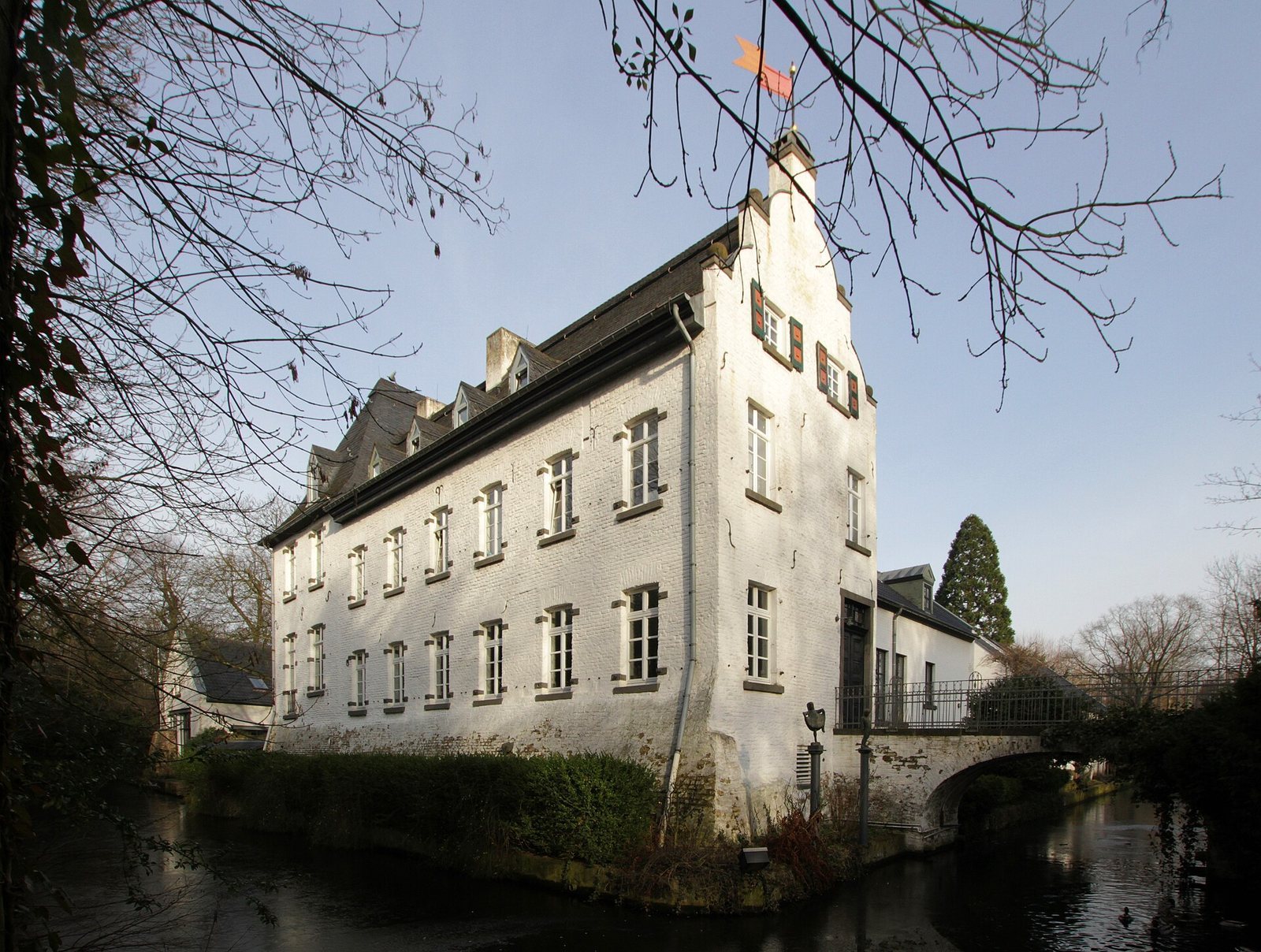
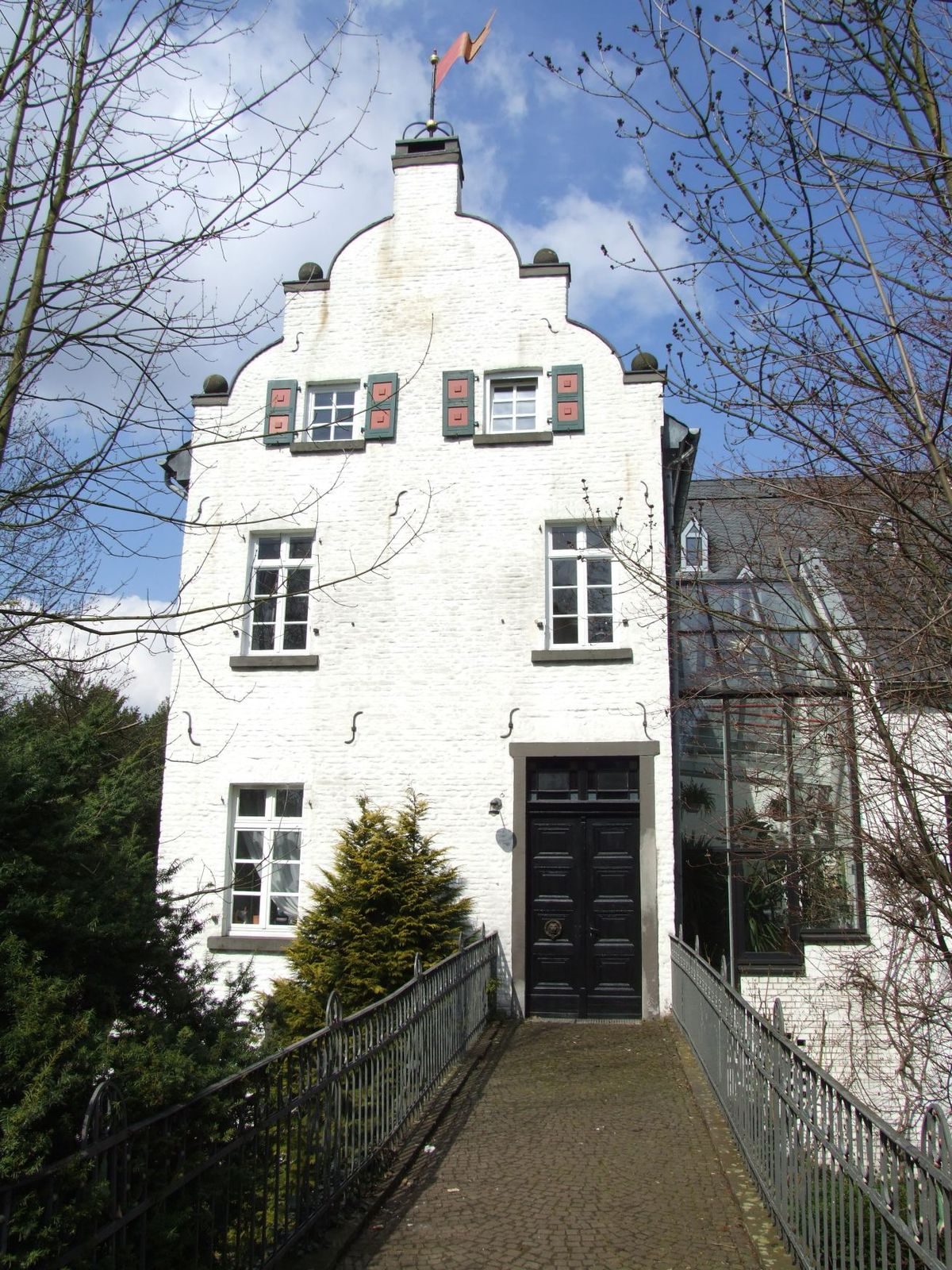
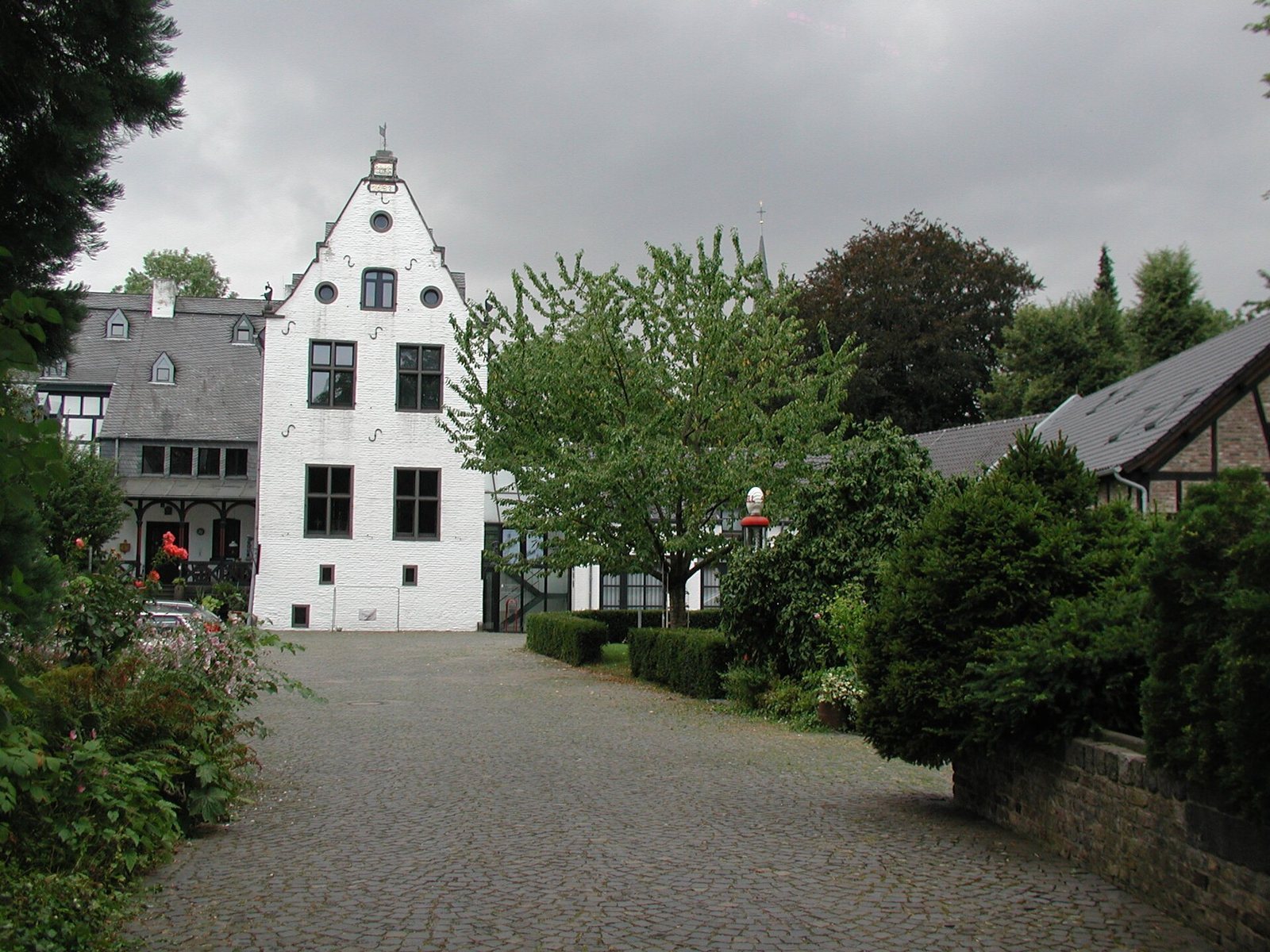
Set in a park and surrounded by water ditches associated with Gleuel Brook, the castle is a two-storey brick building with whitewashed walls. Its two wings meet at an angle, forming a Rhenish angular plan. Ancillary buildings enclose a horseshoe-shaped courtyard, which is closed by a gate. A bridge decorated with two marble lions leads to the entrance at the gable end of the main wing.
The street-facing main wing has six bays, or divisions of the facade, and a stepped gable with a stair-like outline. The side wing is slightly taller, has four bays, and is covered by a hipped roof that slopes down on all sides. A stair tower joins the wings at their angle.
Interior features
Knight’s hall
The knight’s hall in the main building has a Cologne ceiling, a decorative timber-ceiling form associated with Cologne. The ceiling bears the coats of arms of the Cölln and Mülheim families and is dated 1685.
Library
The library contains a sandstone fireplace brought from England and dating to the early 18th century.