Viñuelas Castle: A Fortified Palace in Spain
Site at a Glance
- Popularity
- High
- Country
- Spain
- Primary era
- Early Modern
- Eras represented
- Early Modern, Modern
- Civilizations
- Habsburg, Habsburg Spain, Spanish
- Site type
- Domestic
- Remains
- Castle
On this page7 sections
History
Viñuelas Castle is a fortified palace in Soto de Viñuelas, Spain. The present castle was built during the seventeenth and eighteenth centuries, while an earlier building is associated with the estate in 1285. Its history reflects successive changes in ownership, royal control, and architectural adaptation.
Medieval landholding
In 1285, Sancho IV of Castile granted the lands to García López de Saavedra and the sons of Ruy Sánchez. In the fourteenth century, the woodland and building passed to Leonor Núñez de Guzmán, a Castilian noblewoman and mistress of Alfonso XI. The estate later belonged to the Order of Santiago, a medieval military-religious order, and then to the Marquis of Santillana, the nobleman and poet Íñigo López de Mendoza. Under the latter’s ownership, the area became part of the Real de Manzanares, a royal territory in the Manzanares area.
Royal ownership and construction
In the sixteenth century, Emperor Charles I of Spain, also known as Charles V as Holy Roman Emperor, acquired the estate and castle. To raise money for the Crown, he sold them to Arias Pardo de Saavedra, Marshal of Castile, a high-ranking military officer. The price included 42 million maravedís, a historical Spanish monetary unit, a further 24,572 maravedís, and annual payments of 3,000 maravedís and seven lambs.
Following several further sales, the Marchioness of Mejorada and La Breña acquired the estate and commissioned its four corner towers in 1697. The Spanish Crown regained the woodland and castle in the eighteenth century. Reforms promoted under Charles III were followed by improvements during the reign of Charles IV.
Nineteenth- and twentieth-century changes
After the estate was auctioned during the First Spanish Republic, a short-lived republican government in Spain, the Duke of Infantado bought it. His ownership brought substantial architectural changes to the castle. In 1939, architect Diego Méndez reconstructed and adapted the building as a residence for Francisco Franco, a Spanish general and dictator. The work took three months. After leaving Burgos in mid-October that year, Franco used the castle as his provisional official residence until 1940, when he moved to the Palace of El Pardo.
Further twentieth-century alterations adapted the castle for celebrations and conventions. The castle and its surrounding woodland are privately owned.
Remains
Setting and exterior
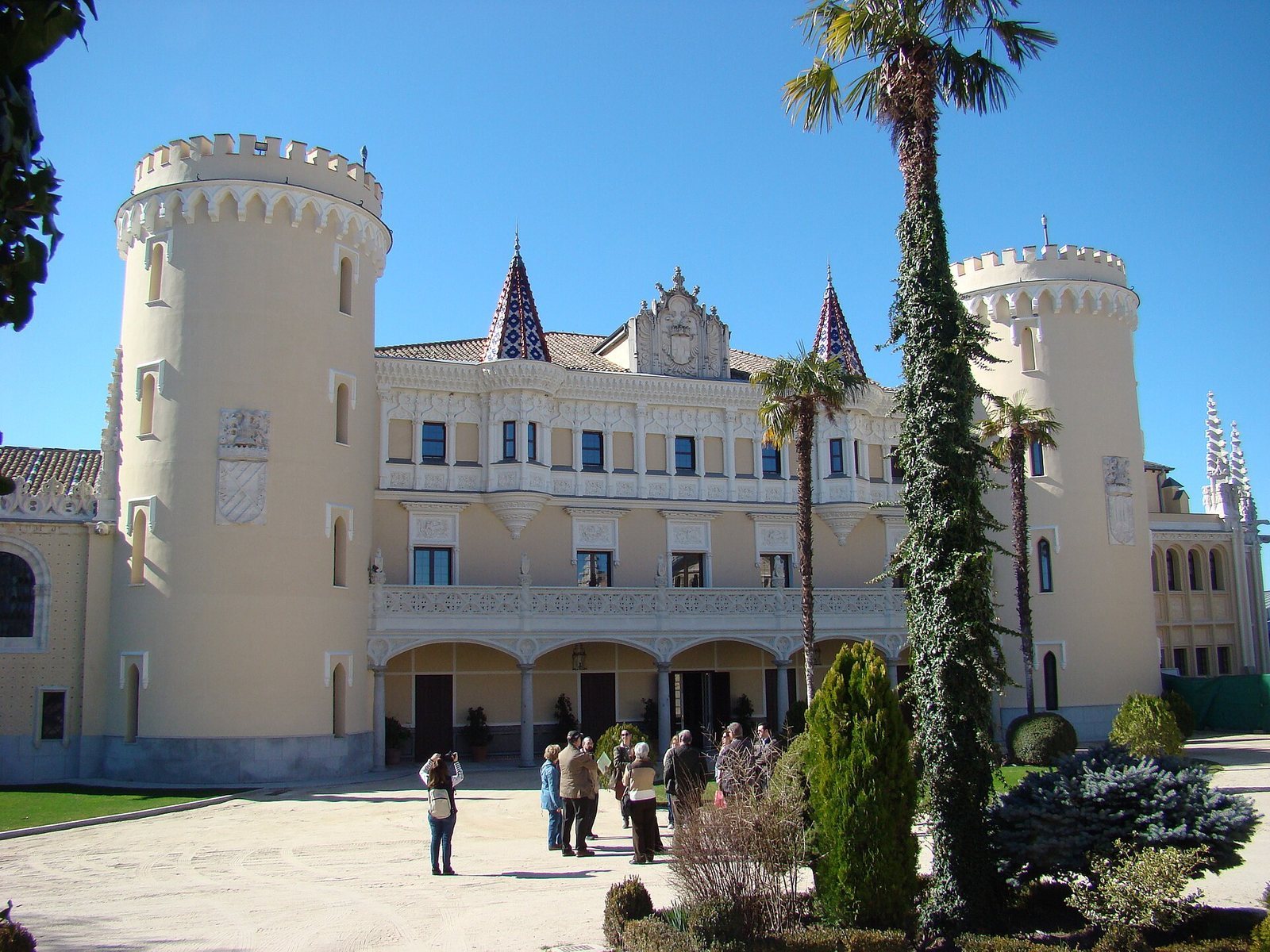
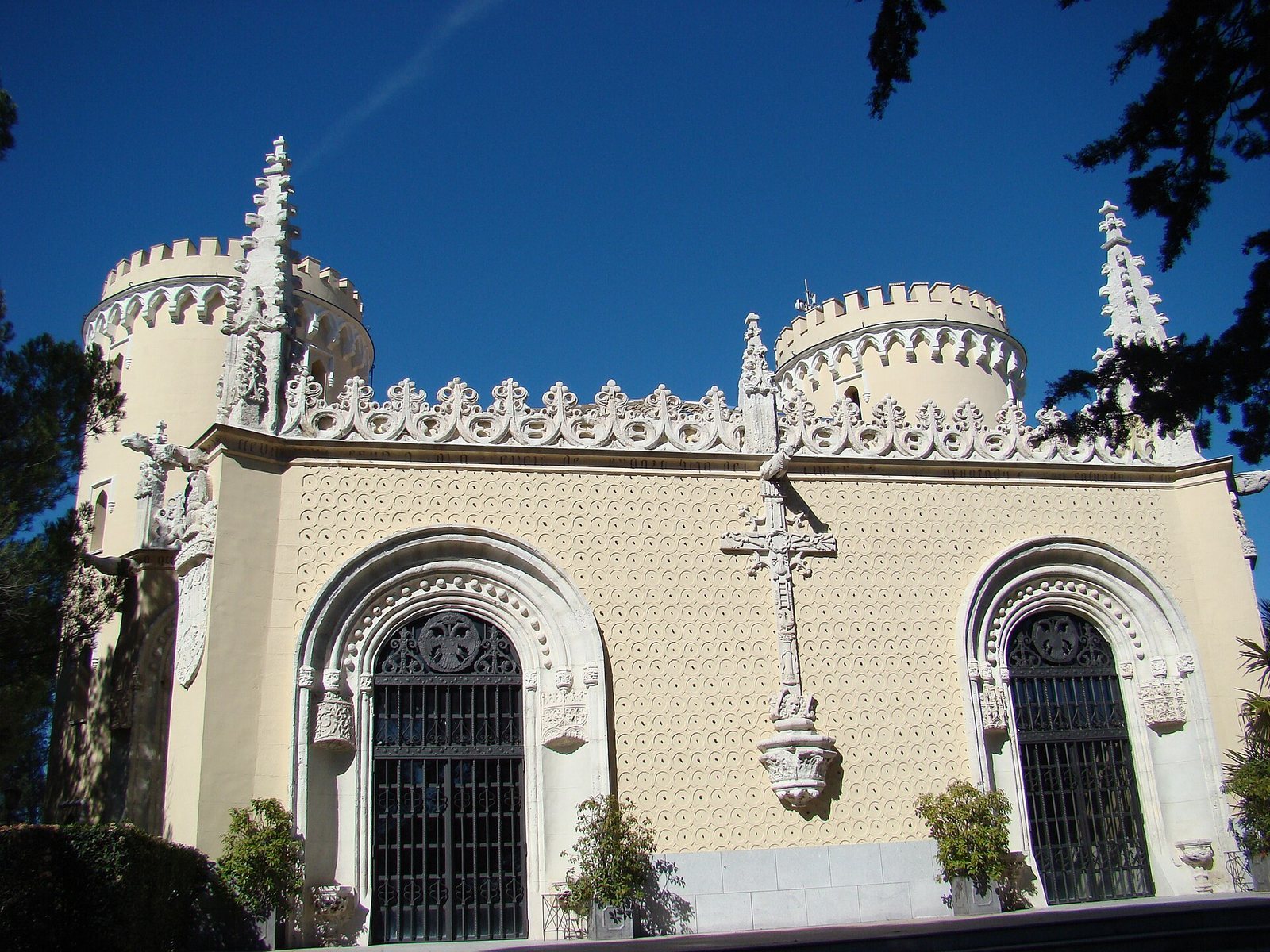
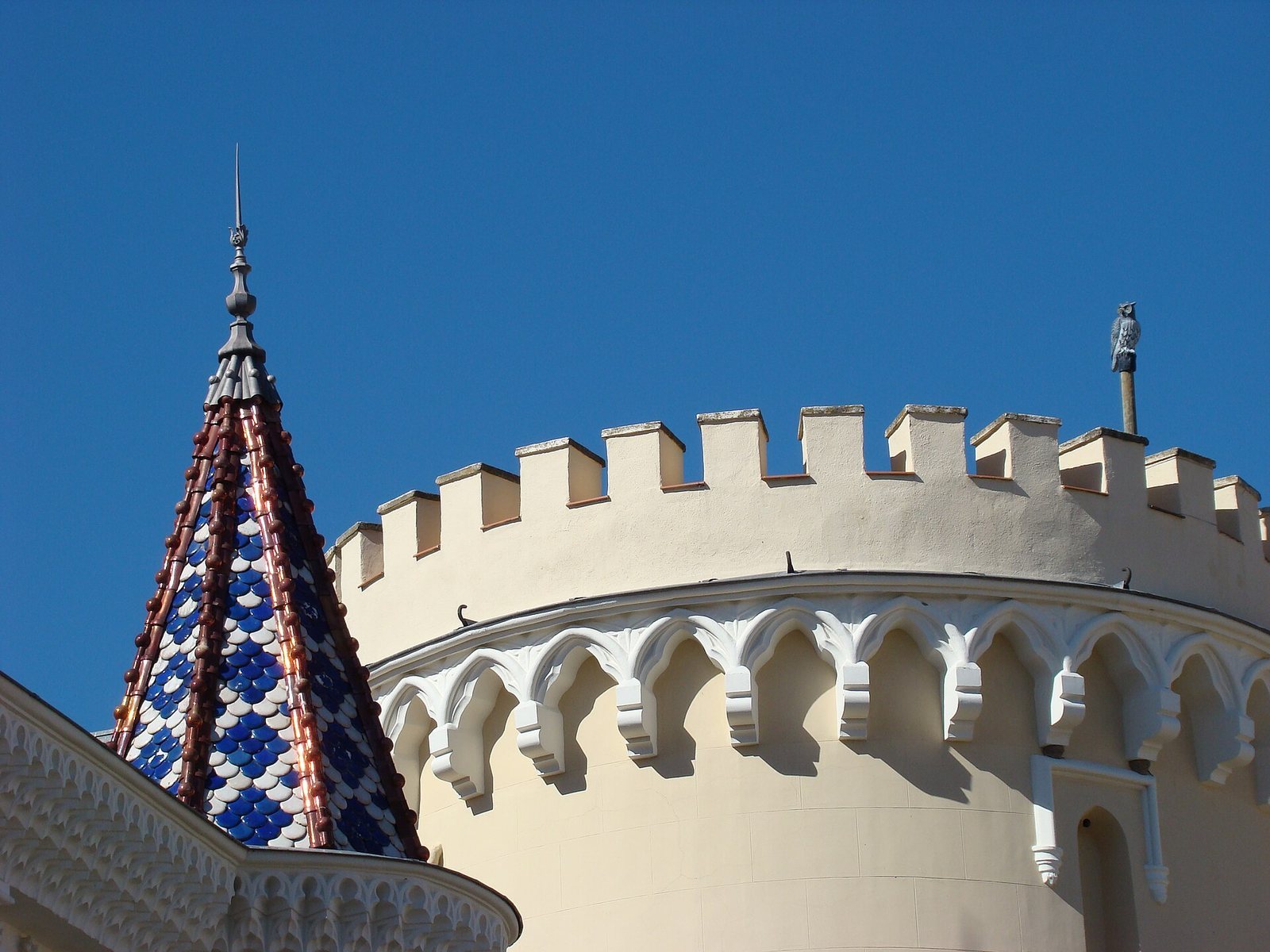
The fortified palace stands within Soto de Viñuelas, in the Upper Manzanares Basin Regional Park. Its setting is an open, managed holm-oak woodland valued for hunting. The castle has a square plan and three storeys, with a cylindrical tower at each corner. Each tower rises one storey above the main building and has battlements, raised sections along a defensive parapet. On the north-facing façade, a central upper panel bears a coat of arms above a continuous first-floor balcony. Columns support the balcony and form a portico, a covered entrance porch, below it. Two small sentry boxes, or guard posts, flank the portico, each topped by a spire. The exterior also carries the coats of arms of the Cueva, Mendoza, and Toledo families, along with a large stone cross.
Interior and architectural features
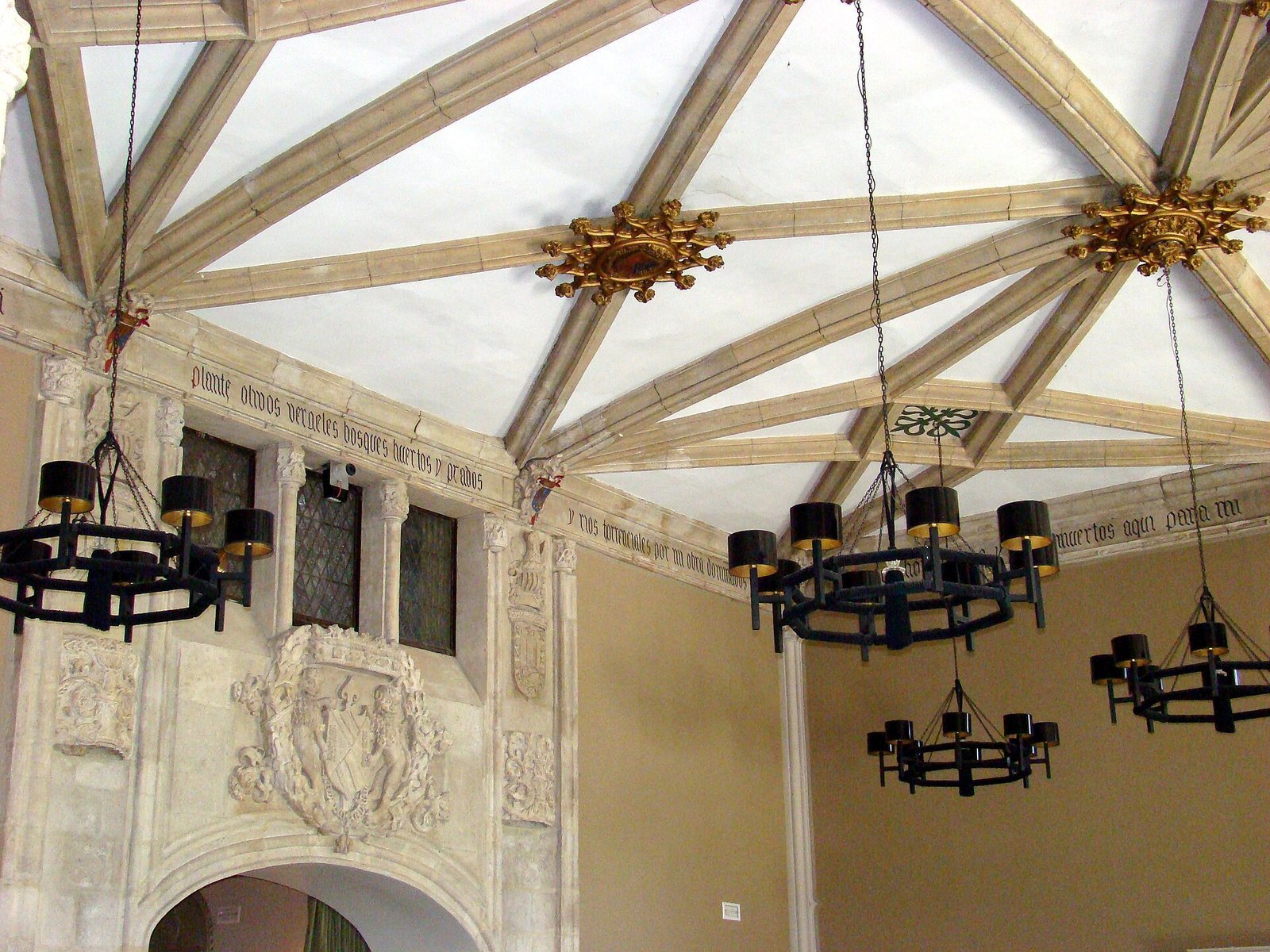
The interior includes a Gothic hall formed from the main chapel of the church at the monastery of San Francisco in Cuéllar. Windows depicting the apostles and decorative roof cresting, ornament along the roof ridge, also came from the monastery monument. The Arms Room is the interior’s most monumental space. Other architectural elements were transferred to the castle from Manzanares el Real Castle.