Castle of Chinchón: A Sixteenth-Century Fortress in Spain
Site at a Glance
- Popularity
- Medium
- Country
- Spain
- Primary era
- Early Modern
- Eras represented
- Early Modern, Modern
- Civilizations
- Crown of Castile, Habsburg, Habsburg Spain, Spanish
- Site type
- Military
- Remains
- Castle
On this page4 sections
History
An earlier fortress and its rebuilding
The Castle of Chinchón is a fortress in Chinchón, Spain, rebuilt between 1590 and 1598 for the third Count of Chinchón on the site of an earlier stronghold around which the Lordship of Chinchón was organized. The Cabrera family held the lordship from the reign of Henry IV, a fifteenth-century king of Castile.
Comunero troops, participants in a major revolt in Castile, badly damaged the earlier fortress in 1520. It surrendered with all its artillery on 21 January 1521. Diego Fernández de Cabrera y Bobadilla later ordered its remains demolished and a new castle built with materials reused from the old structure. The building campaign is dated to 1590–1598, although the count’s will records that he had spent 50,000 ducats while the work had reached only the foundations.
War, damage, and reuse
In 1705, during the War of the Spanish Succession, troops supporting Archduke Charles of Austria, the Habsburg claimant to the Spanish throne, occupied the castle. They were commanded by the Marquis de las Minas and installed substantial artillery inside. A fire later damaged the building’s northwest part after hemp had been stored there.
During the three-day siege of Chinchón in 1808, the Polish Brigade of French Marshal Claude Perrin Victor plundered and burned the castle. The attack took place during the Peninsular War, the 1808–1814 conflict in Iberia involving Napoleonic France, Spain, Portugal, and Britain. In the twentieth century, building materials were taken for roads, fences, and houses, while use as a liqueur factory led to changes in the interior partitions. The castle forms part of Chinchón’s historic-artistic ensemble, designated in 1974, and is privately owned by the Counts of Chinchón.
Remains
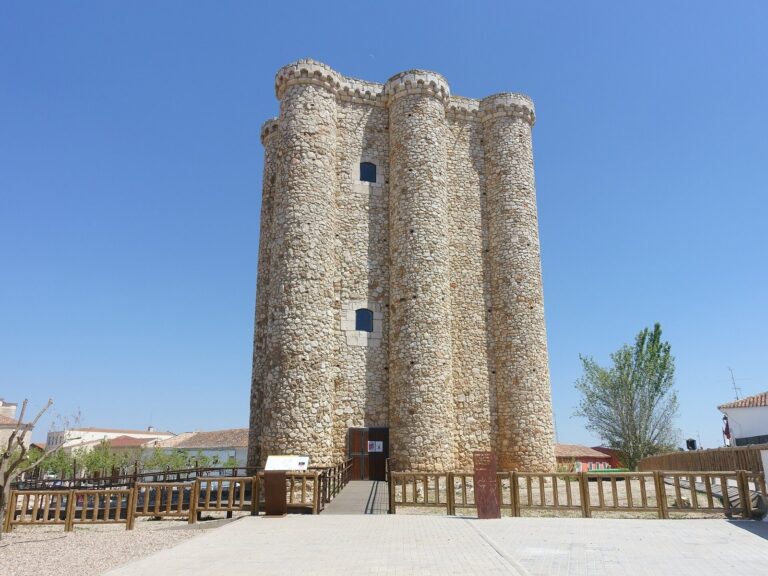
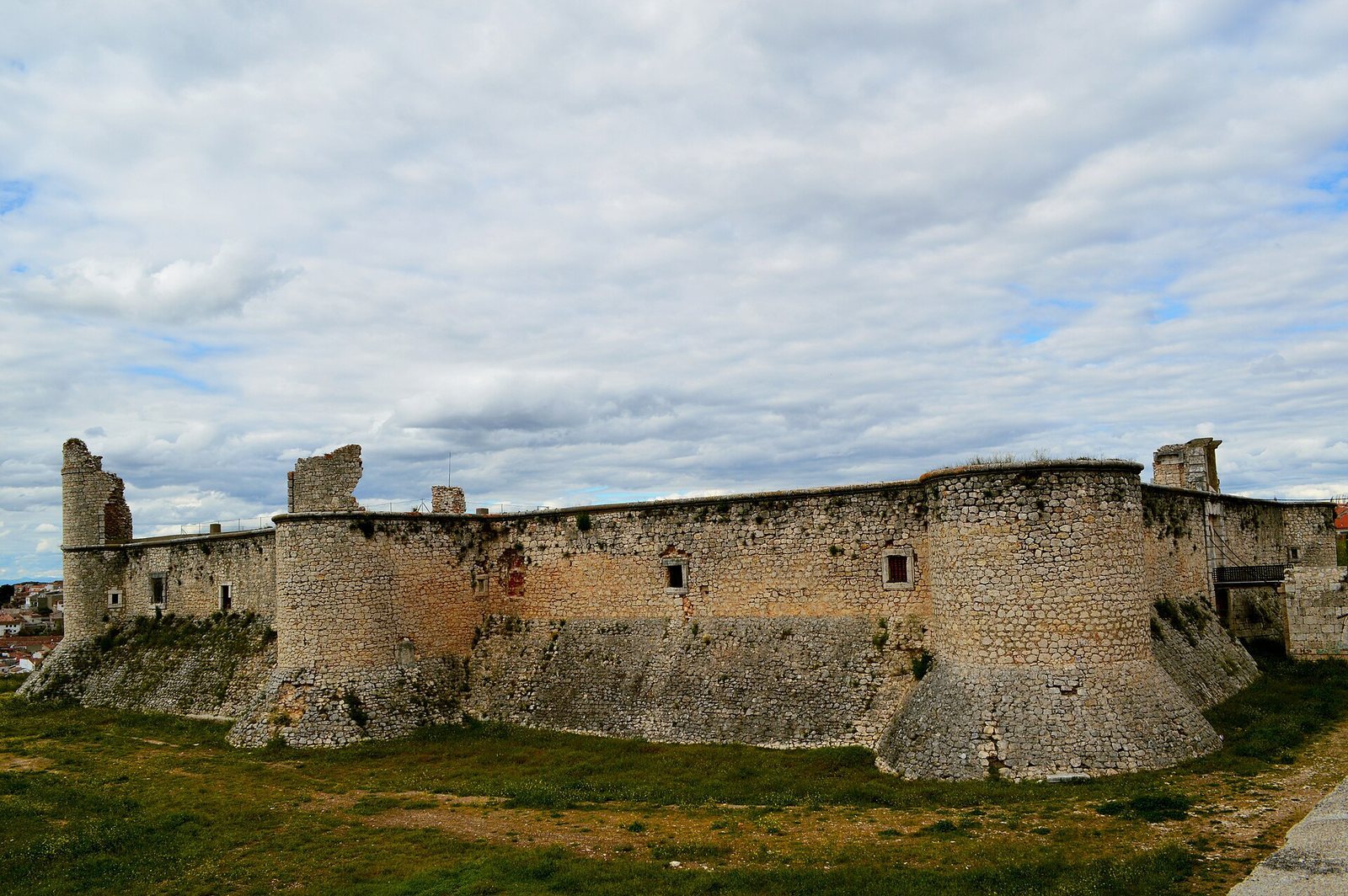
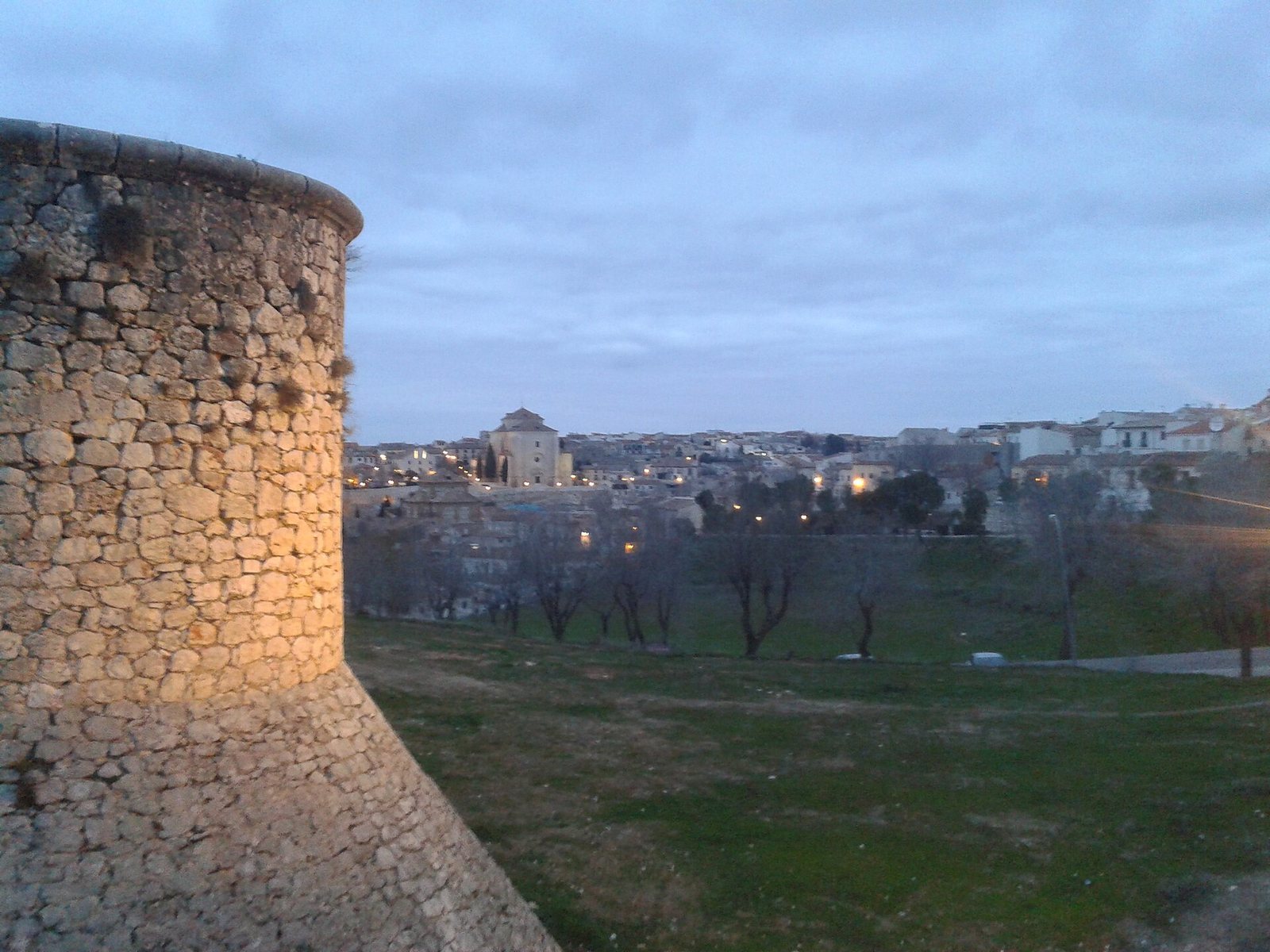
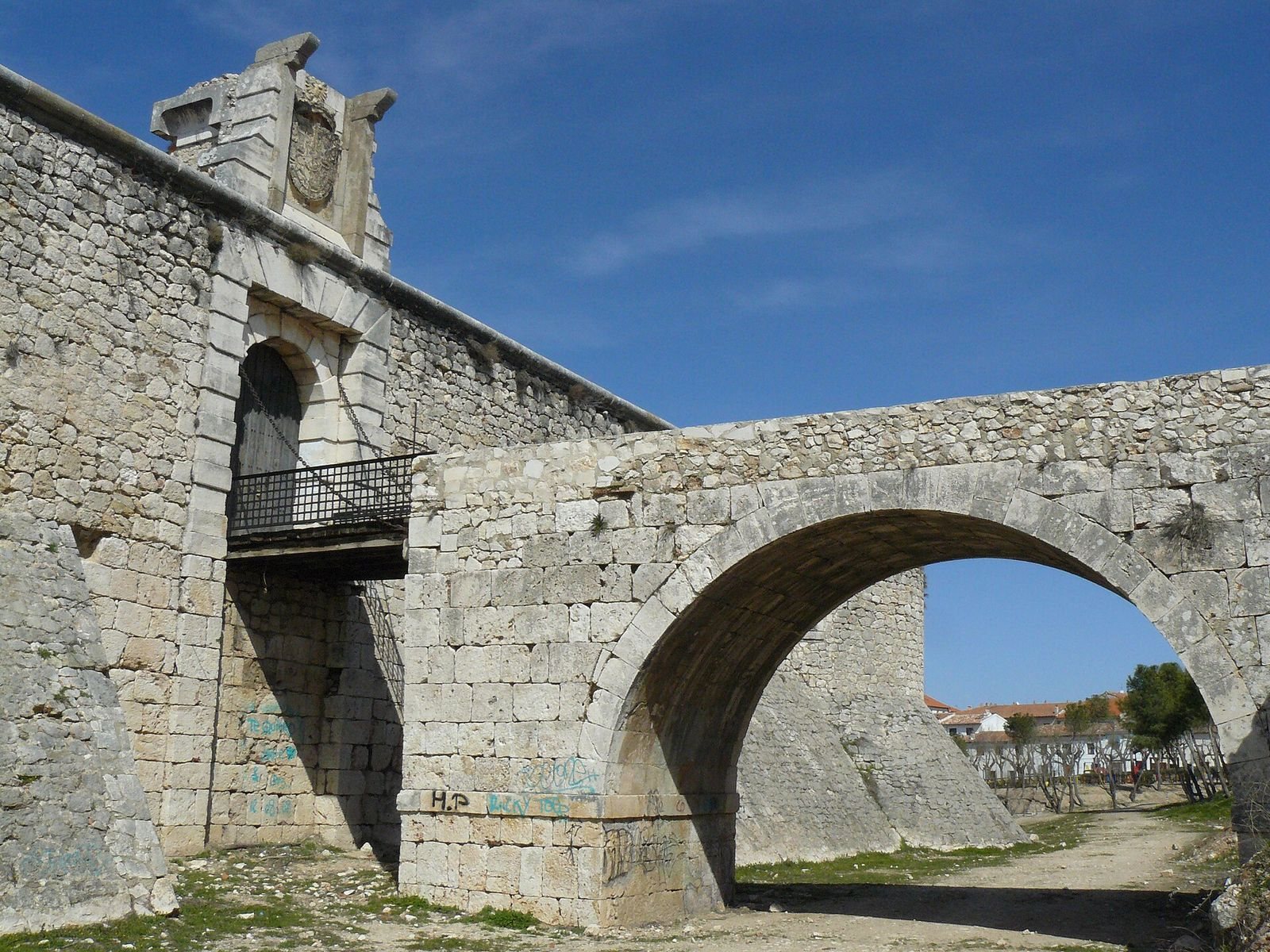
South of Chinchón’s urban center, the castle is one of the municipality’s two fortresses; the other is the Castle of Casasola. Its plan brings together two interlocking quadrangular sections to form a large rectangle. Cylindrical towers mark the corners of both sections. The layout is generally symmetrical, but at the western corner the secondary section projects outward, breaking the lines of the northwest and southeast walls. A moat surrounds the building and survives in part.
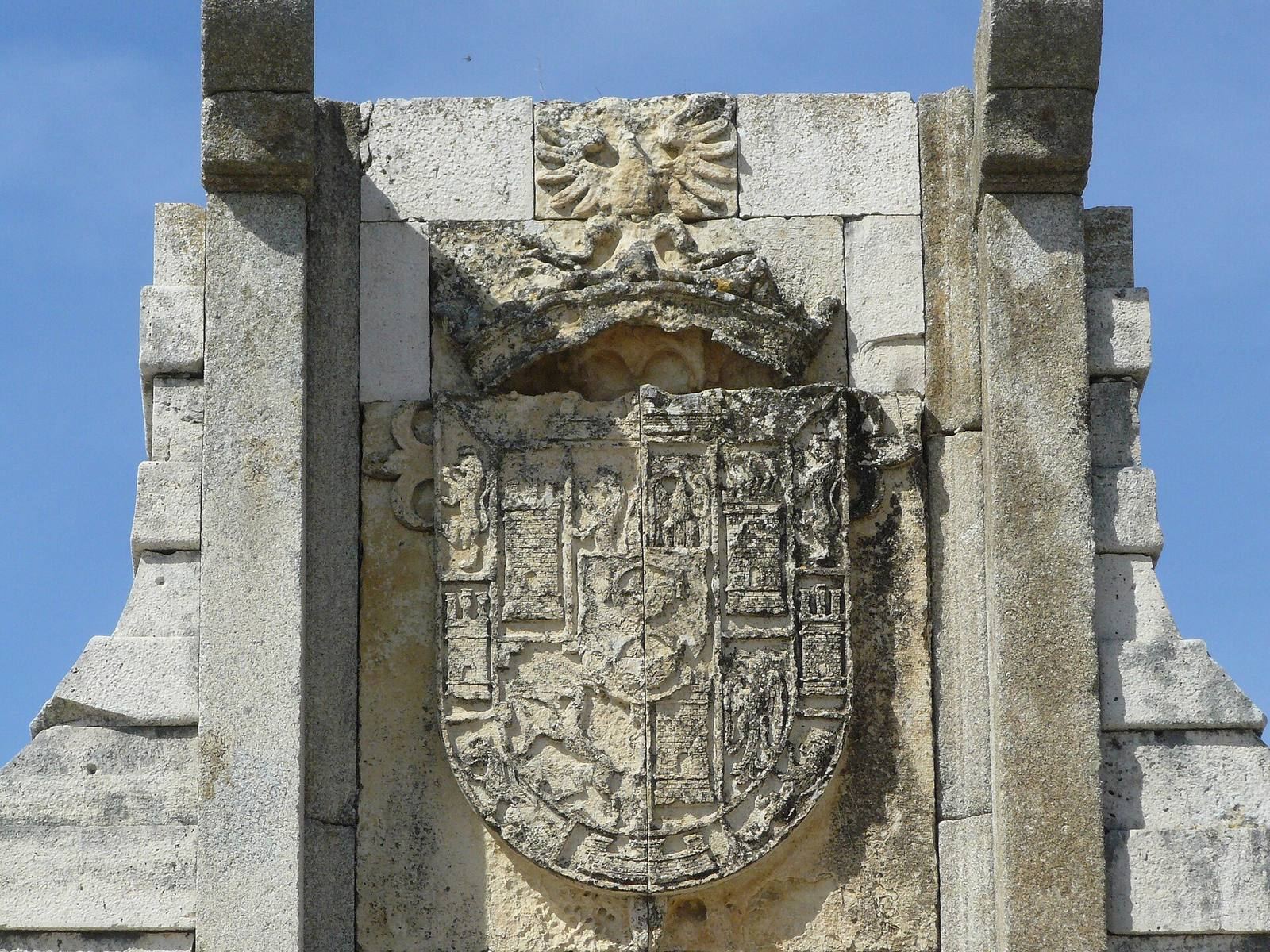
The walls consist of carefully laid limestone rubble masonry, bonded with mortar and filled with stone. Dressed stone blocks form the openings and moldings, while the entrance doorway is partly made of roughly dressed stone. The Counts of Chinchón’s coat of arms appears above the entrance, framed by rough-faced cut blocks.
Only the lower floor survives; the upper floor was lost amid the castle’s sieges, fires, and plundering. Inside, rooms line galleries around a large central courtyard, and a cistern occupies the courtyard’s center. Despite its history of damage, the castle is in good condition.