Hinnenburg Castle: A Noble Family Residence near Brakel
Site at a Glance
- Popularity
- Medium
- Country
- Germany
- Primary era
- Early Modern
- Eras represented
- Medieval, Early Modern, Modern
- Civilizations
- Holy Roman Empire, Kingdom of Prussia
- Site type
- Domestic
- Remains
- Castle
On this page6 sections
History
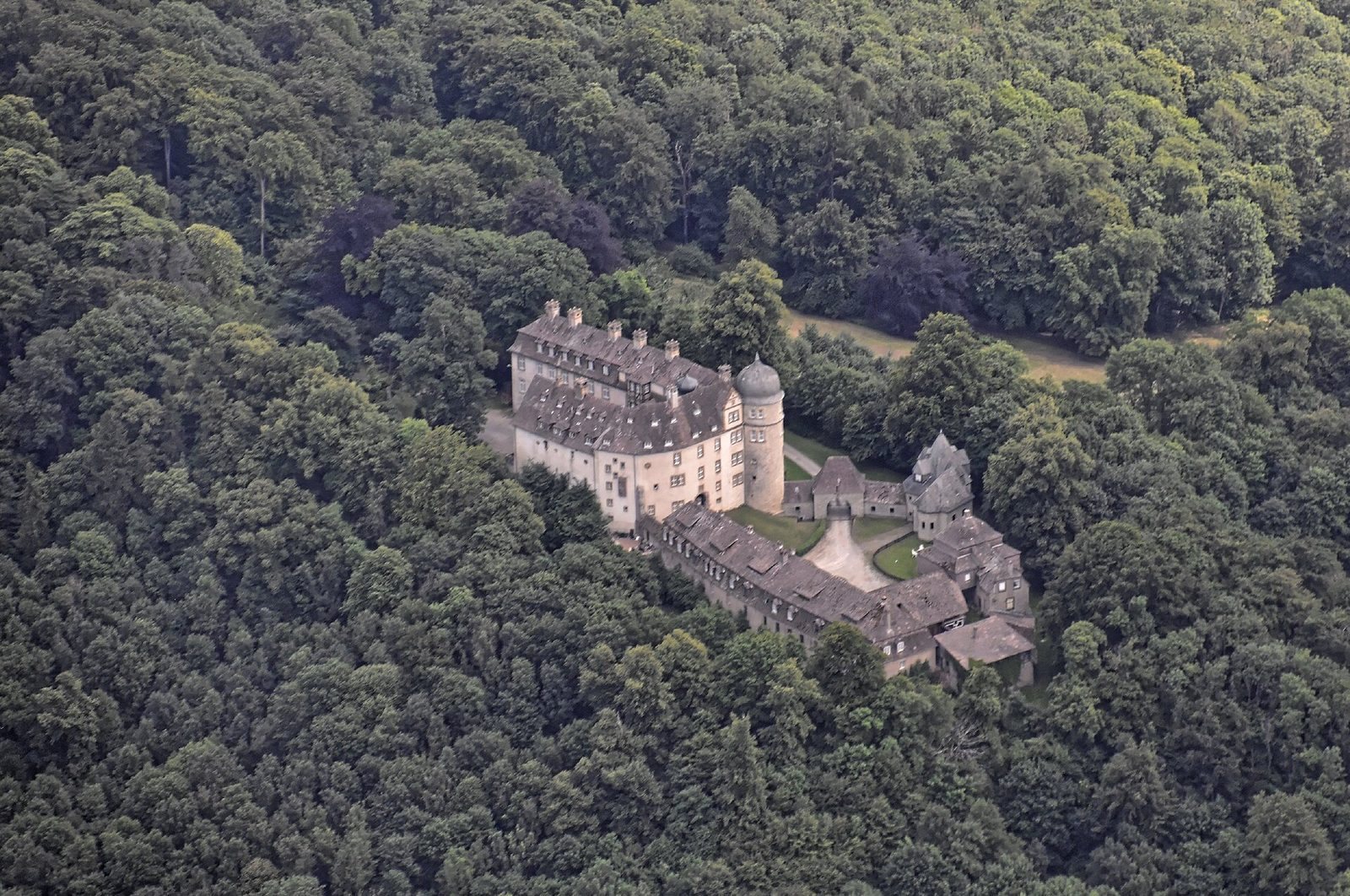
Hinnenburg Castle stands near Brakel in the district of Höxter, Germany. First recorded in 1237 as the residence of the knight Berthold von Brakel, it became one of the principal seats of the Brakel noble family. Its three-wing Renaissance residence was constructed around 1600, while the wider estate reflects later changes in ownership and design.
A seat of the Brakel and Asseburg families
The Brakel family’s influence extended beyond the town, particularly within the Prince-Bishopric of Paderborn, an ecclesiastical territory whose ruler also held secular authority, and the Rhenish-Westphalian Imperial Circle, a regional administrative grouping within the Holy Roman Empire. The name Hinnenburg comes from a term meaning “Rear Castle”; a “Front Castle” stood in the Pahenwinkel area.
Through inheritance, the castle and parts of its estate passed to the Asseburg family in the late 13th century. In 1793, an heiress transferred the property to the von Bocholtz family. From 1803, its members used the title Counts of Bocholtz-Asseburg. After that line ended in 1985, the property passed to an adopted son from the Counts von der Asseburg-Falkenstein-Rothkirch family, which owns it today.
Renaissance residence and later changes
Hermann Werner von der Asseburg, a minister of the Electorate of Cologne, an ecclesiastical principality governed by an archbishop with electoral status, oversaw the castle’s enlargement in the 18th century in the Baroque style. A chapel was added around 1658.
Wilhelm Anton von der Asseburg, later the 52nd Prince-Bishop of Paderborn, was born at Hinnenburg on 16 February 1707. Annette von Droste-Hülshoff, the German poet and a relative of the Asseburg family through her mother, visited the castle repeatedly during her youth.
A fire on 19 December 1910 largely destroyed the estate’s service buildings and burned the outer bailey, which was rebuilt in a historicist Baroque style. On 6 November 1934, another severe fire damaged parts of the castle, including its grand hall. Fire brigades from Brakel, Höxter, and Holzminden put out the blaze.
Remains
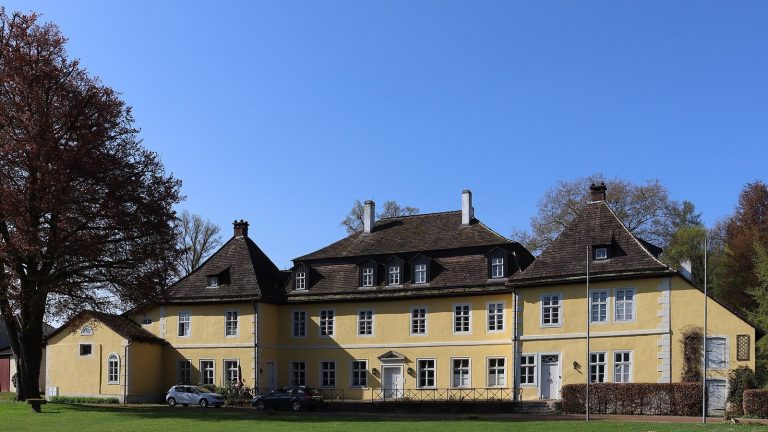
The castle occupies a hilltop 282 metres high. Its three-wing plan includes a round tower at the southwest corner, the oldest part of the castle. The Renaissance building rises three storeys, and later Baroque ancillary buildings form part of the complex. Several rooms retain Rococo stucco decoration, an ornate style that flourished in the 18th century.
Chapel and mausoleum
An octagonal chapel stands in the outer courtyard and is described as Byzantine in style. A mausoleum added to the chapel serves as the family burial place.
Archive and former service buildings
The castle holds the Asseburg family archive. Its former servants’ buildings now contain rental apartments.