Palazzo Bentivoglio, Ferrara: A Renaissance Palace and Civic Courthouse
Site at a Glance
- Popularity
- Medium
- Country
- Italy
- Primary era
- Medieval
- Eras represented
- Medieval, Early Modern, Modern
- Civilizations
- Duchy of Ferrara, Papal States
- Site type
- Domestic
- Remains
- Elite Residence
On this page6 sections
History
Palazzo Bentivoglio is a Renaissance palace in Ferrara, Italy, built in 1449 on the order of Borso d’Este, ruler of the Este dynasty, as a gift for his adviser Pellegrino Pasini. It later served as an aristocratic residence and, for many years, as a courthouse.
Este and Roverella ownership
After Pasini, the palace became the residence of Prince Alberto d’Este and later the counts Roverella. The Este were Ferrara’s ruling dynasty.
Bentivoglio residence
The palace passed to the Bentivoglio family of Bologna, which owned it until the nineteenth century. In 1585, Marquis Cornelio Bentivoglio commissioned a remodelling. The design is attributed to the Italian architect Pirro Ligorio, while the local architect Giovan Battista Aleotti carried out the work.
Facade plaques name the poet Ercole Bentivoglio and Cardinals Guido and Cornelio Bentivoglio, senior Catholic Church officials, as residents. Cardinal Cornelio was a different family member from the marquis who ordered the remodelling. French general Napoleon Bonaparte stayed at the palace in 1796. The hydraulic engineer Teodoro Bonati died there in 1820.
Courthouse and later use
For a long period, the building housed Ferrara’s city courthouse. After the Second World War, it became the seat of the city court. Extensive restoration later preceded its use for offices and private residences.
Remains
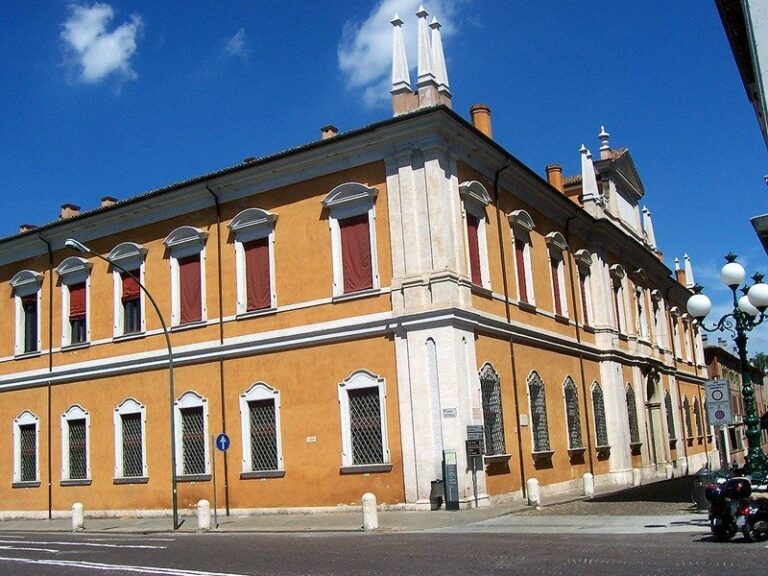
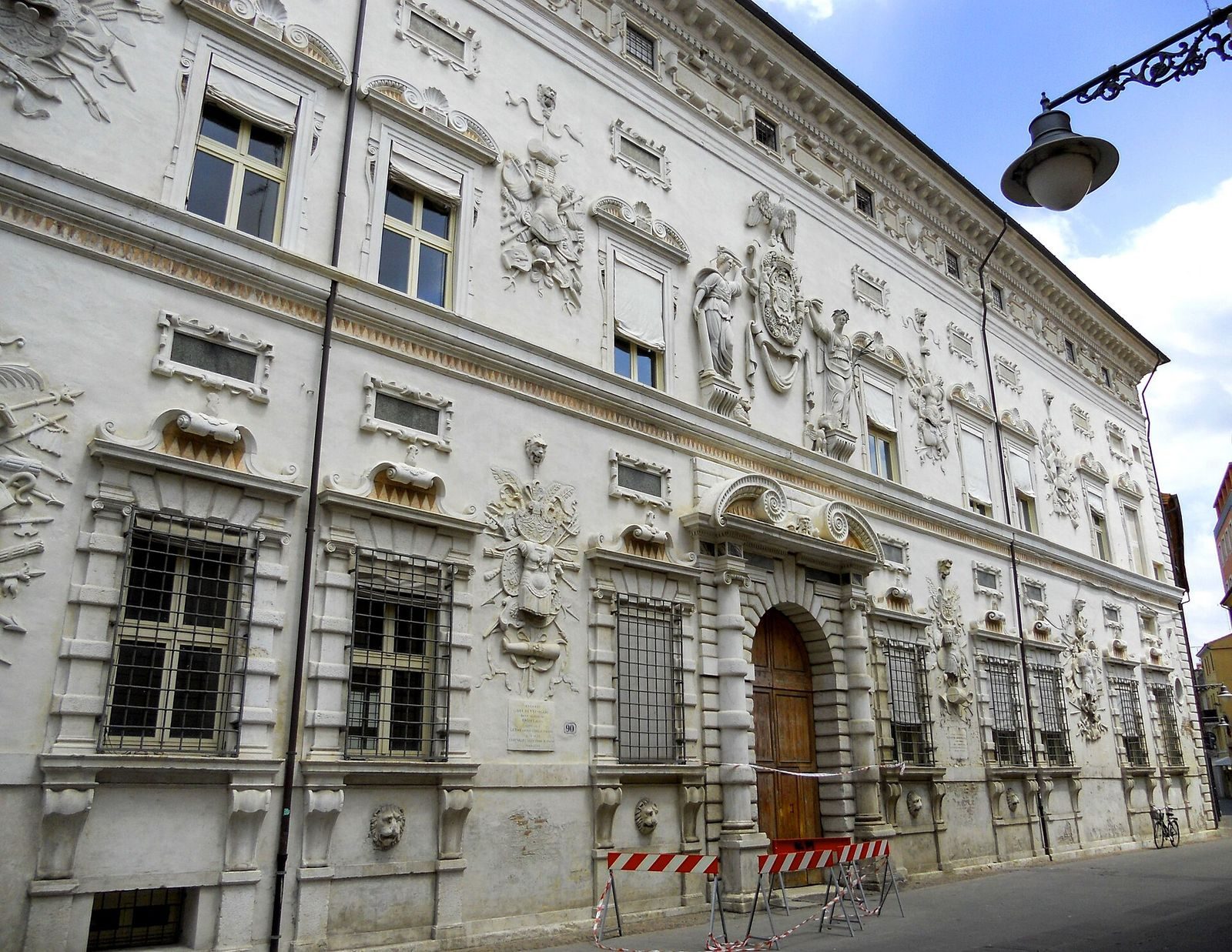
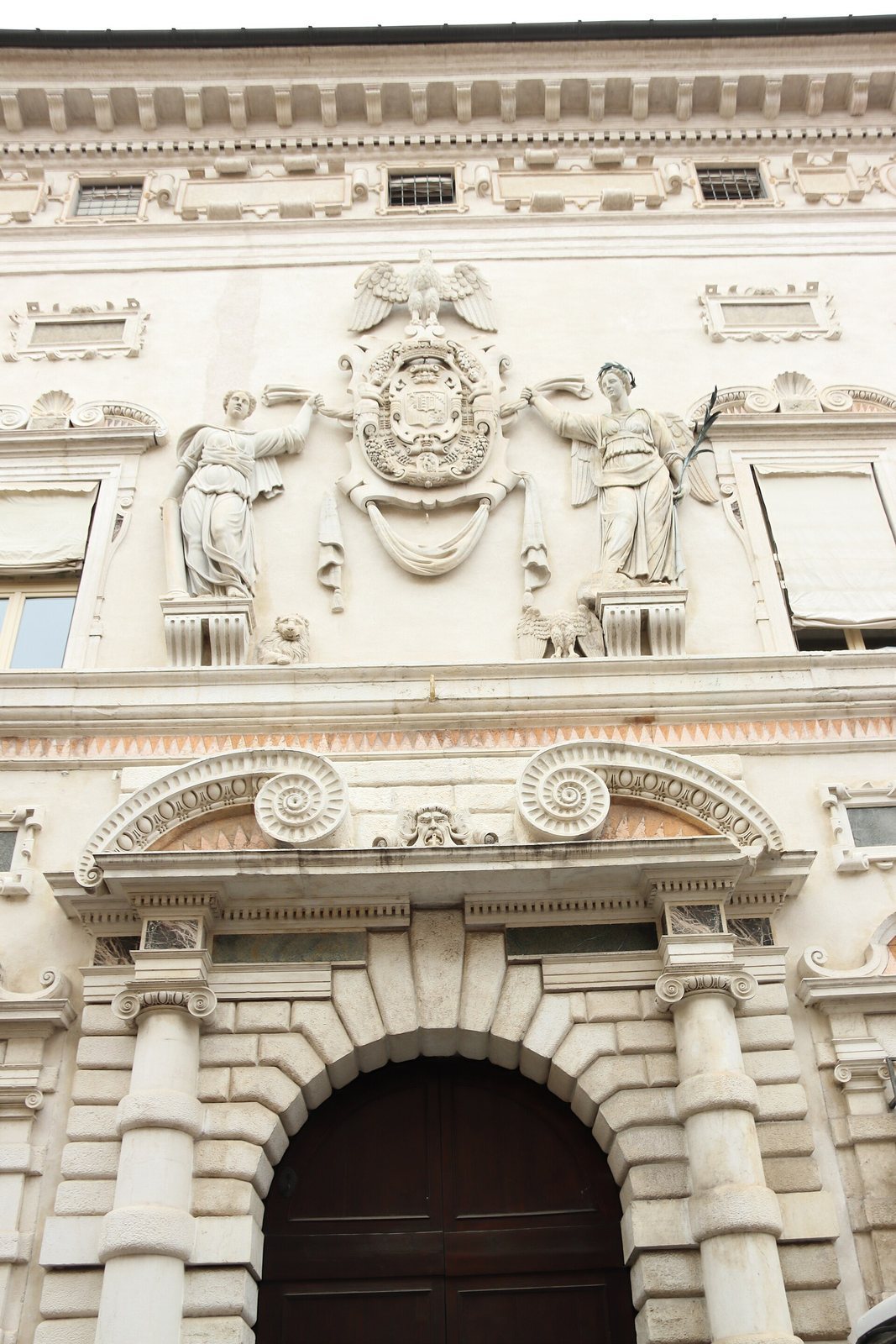
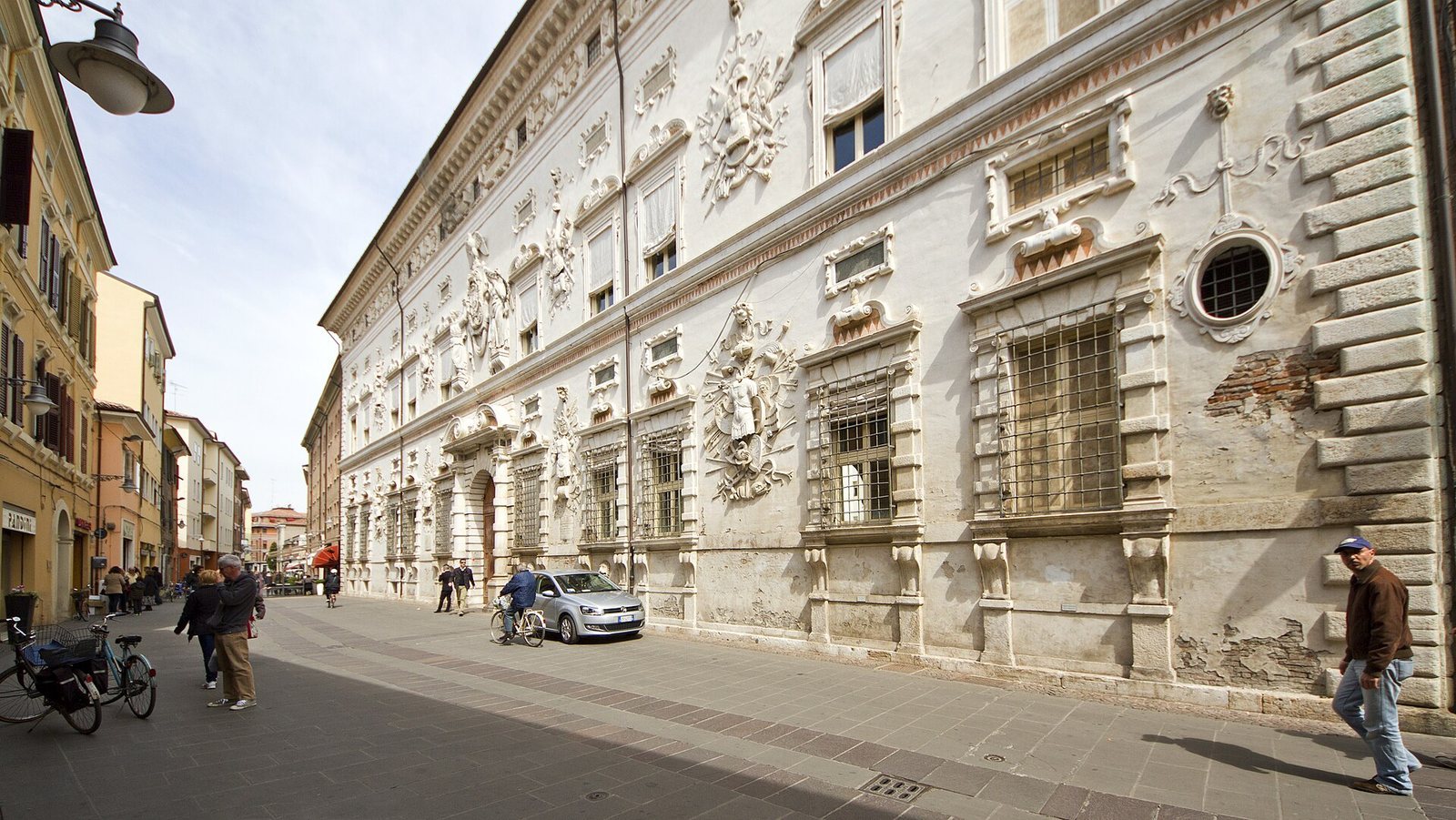
The palace stands on Via Garibaldi, with a street-facing facade in the Roman Mannerist style. Its design appears to draw inspiration from Palazzo Spada in Rome, where Ligorio also worked. The entrance portal, built with rough-faced masonry, is framed by banded piers and topped with spiral ornaments. Ground-floor windows rest on high projecting supports. The portal and windows follow the Ionic order, a classical style associated with scroll-shaped capitals. Marble military trophies, including armor, arrows, spears, swords, and flags, are carved in shallow relief on the facade; the motif recurs above the band dividing the floors. An eagle surmounts the Bentivoglio coat of arms above the portal, which is surrounded by allegorical figures. A decorative frieze and cornice crown the facade. A plaque commemorating Bonati is set to the right of the entrance.
Interior decoration
The ceilings carry seventeenth-century grotesque paintings, ornamental designs featuring fanciful forms. They were made by the Filippi workshop, which included the painter Sebastiano Filippi, known as Bastianino.