Haddenhausen Castle: A Weser Renaissance Estate in Minden
Site at a Glance
- Popularity
- Medium
- Country
- Germany
- Primary era
- Early Modern
- Eras represented
- Early Modern
- Civilizations
- Holy Roman Empire
- Site type
- Domestic
- Remains
- Castle
On this page6 sections
History
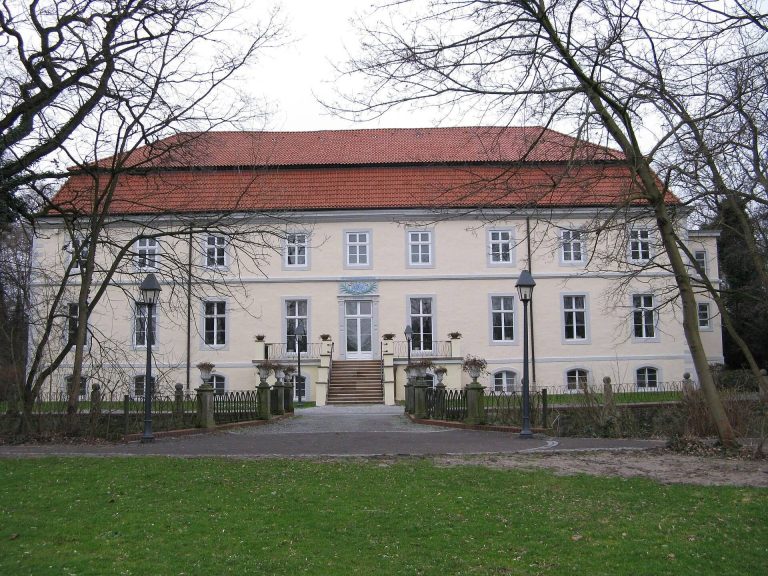
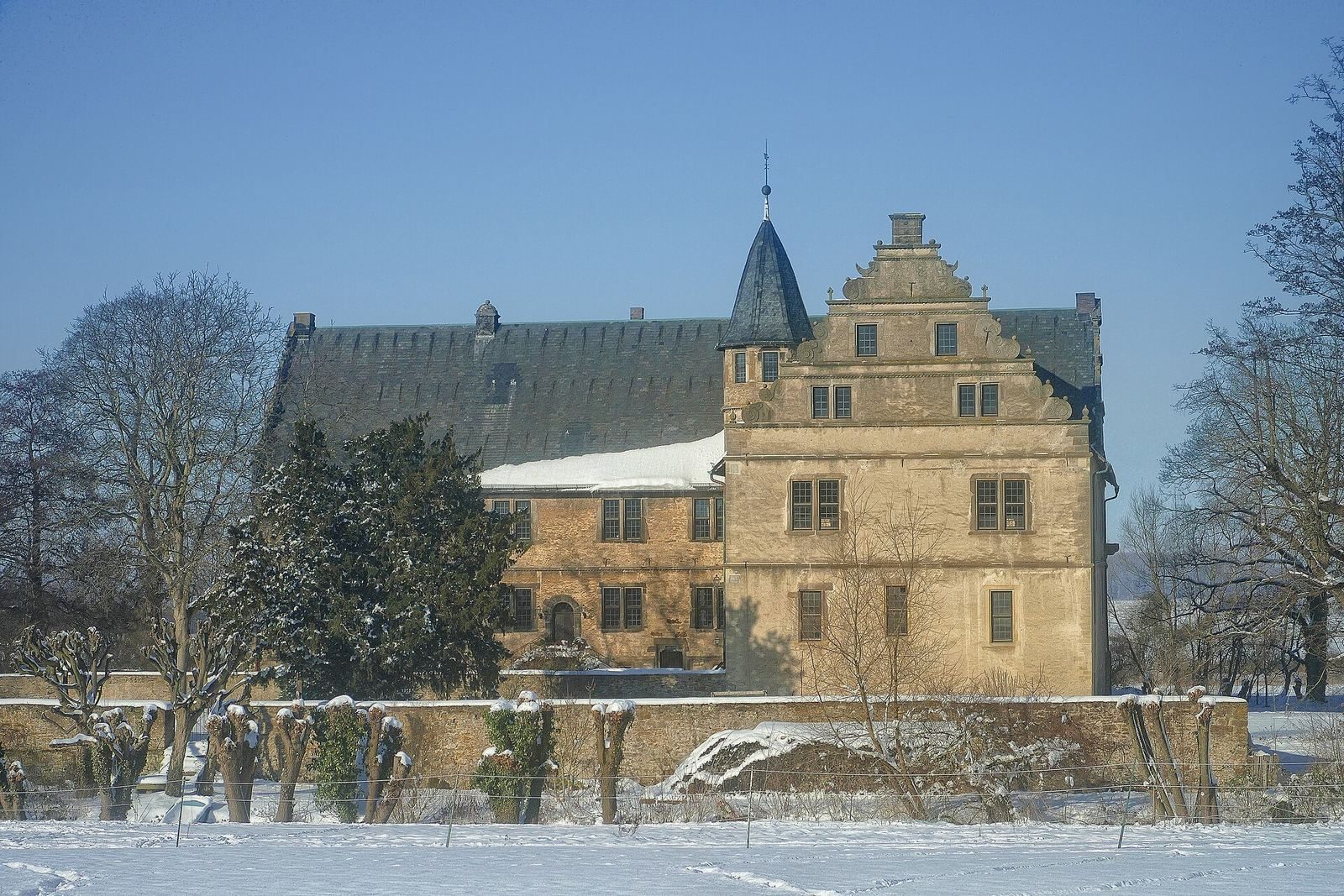
Haddenhausen Castle is a Weser Renaissance manor in Haddenhausen, a district of Minden, Germany. Johann von dem Bussche-Lohe and his wife, Hedwig von Münchhausen, commissioned the present castle, which master builder Eberhard Wilkening constructed between 1613 and 1616. The Weser Renaissance was a regional form of Renaissance architecture that developed around the Weser River in northwestern Germany. The estate had grown from medieval landholdings and was repeatedly affected by regional conflicts.
Medieval landholding and destruction
The Bishop of Minden acquired Haddenhausen in 1254. In 1385, Bishop Gerhard III of Hoya granted Ludolf von Mönnichhausen, a castle retainer at Vlotho Castle, two agricultural holdings and several tenant farms in nearby settlements. These properties developed into a manor during the fifteenth century. Around 1460, a feud between the bishops of Minden and Osnabrück destroyed the manor.
Conflict during the Reformation
When the Reformation reached Minden, the sixteenth-century movement that divided Western Christianity and led to the formation of Protestant churches, the local nobleman Johann von Münchhausen (c. 1466–1551) defended Catholicism. Conflict with the city ended in his defeat in 1530, and the estate complex was destroyed. His involvement in a feud between the von Rottorp and von Rommel families over Rahden Castle also contributed to the conflict.
After the defeat, Johann’s sons temporarily left for Courland. His son Johann, formerly a canon, or member of a cathedral chapter, in Bremen, became bishop of Courland and Ösel-Wiek in 1540. Another son, Christoph, who had taken over the Haddenhausen estate, served in Courland as a collegiate bailiff, an official responsible for a religious foundation’s property and secular affairs. He was governor of Estonia from 1558 to 1560 before returning to Haddenhausen.
Construction and family ownership
After several transfers within the family, the finances of Kurt von Münchhausen (1560–1604), the estate’s last owner, collapsed. In 1610, his brother Hilmar the Younger sold the estate to his son-in-law Johann von dem Bussche-Lohe, acting as guardian for his nephews. Johann and Hedwig commissioned the present castle. Wilkening, who also built the Ratcatcher’s House in Hamelin, completed it between 1613 and 1616.
District administrator Christoph von dem Bussche-Hünnefeld founded a family estate-holding organization in 1690. Similar to a family foundation, it held and administered assets under rules established for a family. From its foundation, elected representatives came from the von dem Bussche-Hünnefeld, von dem Bussche-Streithorst, and von dem Bussche-Haddenhausen branches. The organization held the estate and castle from 1726 to 2016.
In 2016, Baron Boris von dem Bussche-Haddenhausen of Hitzacker took over the estate and continued its operation. Extensive renovation work followed to preserve the complex as a Renaissance building. The agricultural estate is privately used by its owner.
Remains
The castle and estate complex
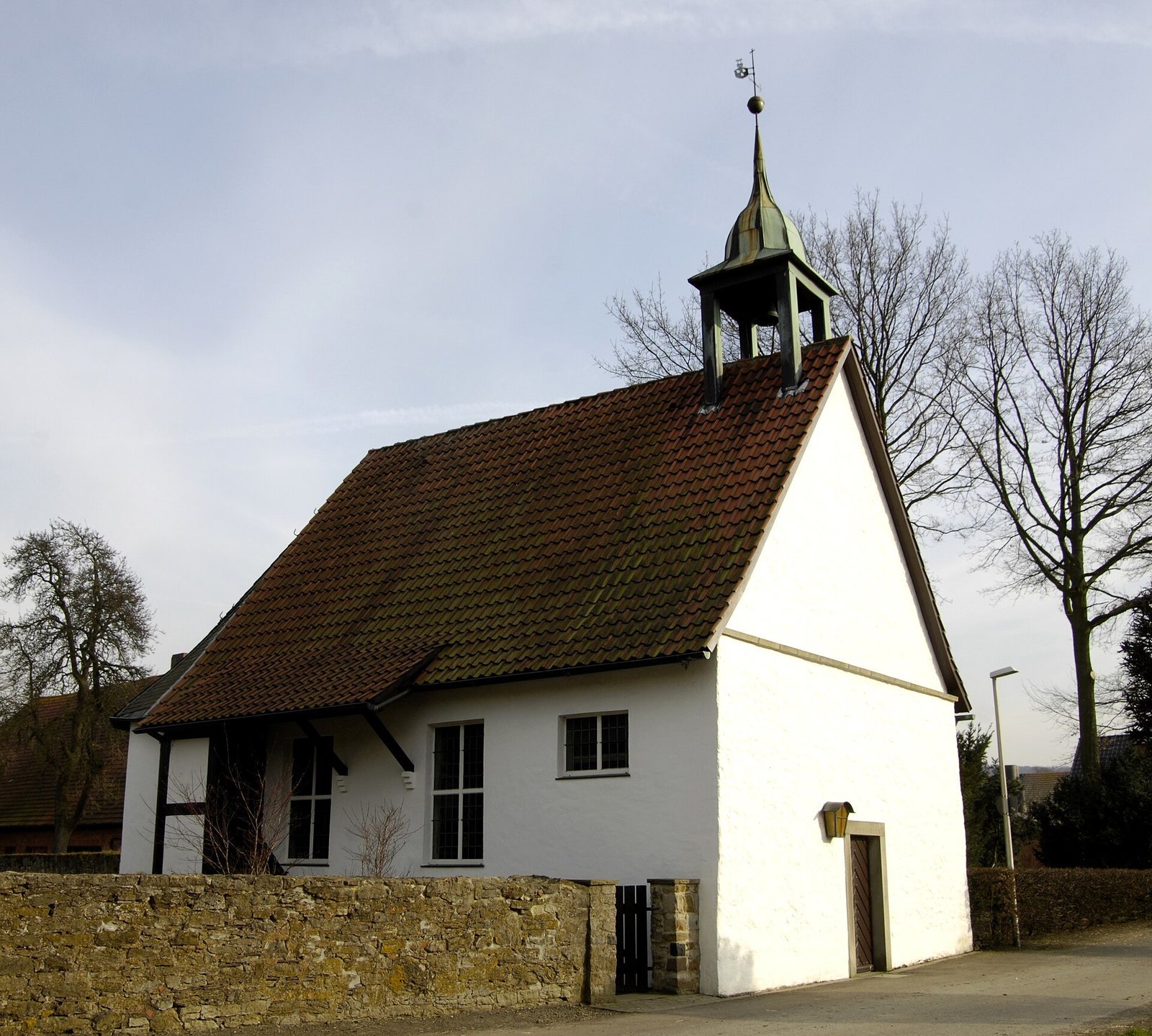
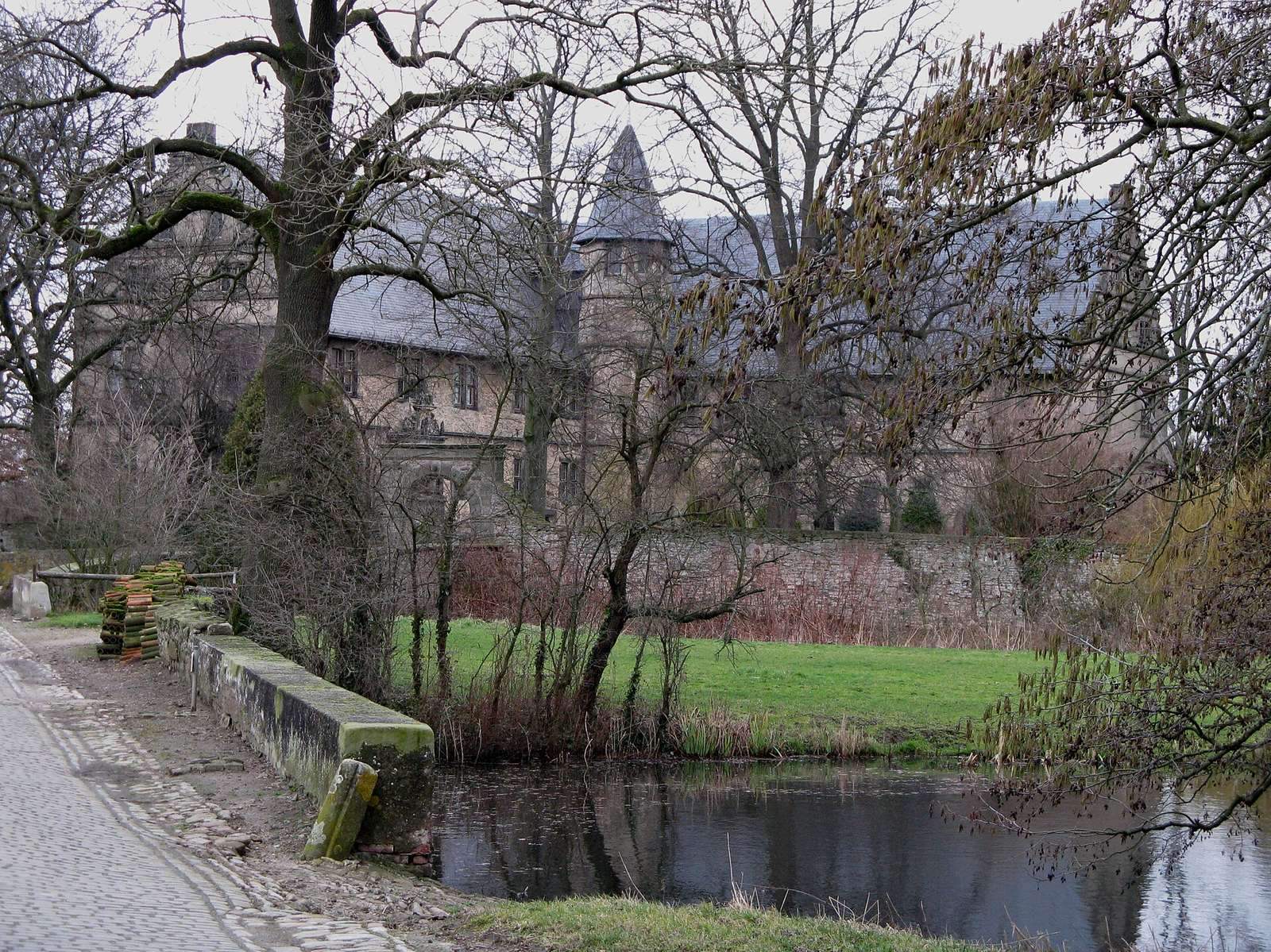
Northwest of Haddenhausen’s old village center, the complex includes a two-winged castle in the Weser Renaissance style, agricultural buildings and a chapel to the castle’s south, and a castle garden. The main building has a bay window, a stair tower, and numerous ornamental details. The agricultural buildings and chapel date to the early seventeenth century.