Torre del Fang: A Former Farmhouse in Barcelona
Site at a Glance
- Popularity
- Medium
- Country
- Spain
- Primary era
- Medieval
- Eras represented
- Medieval
- Civilizations
- Crown of Aragon
- Site type
- Domestic
- Remains
- House
On this page5 sections
History
Torre del Fang is a former farmhouse in La Sagrera, Barcelona, Spain, built broadly in the 13th and 14th centuries in Gothic and vernacular styles. It was one of many farmsteads in San Martín de Provensals, an agricultural municipality before its annexation to Barcelona. Its position near the Count’s Canal and the Ribes Road, a royal route connecting San Andrés de Palomar and San Martín de Provensals with Barcelona, suited its rural setting.
Medieval origins and early ownership
A legend known as the Devoured Heart places the tower’s beginnings in the 12th century. Its earliest recorded reference appears in the Generalitat’s diary on 23 February 1559. The Generalitat is Catalonia’s governing institution; the entry names the building the Tower of the Virgin Mary, formerly the Tower of the Devil.
The property belonged to the family of Galzeran de Gualbes, a 14th-century merchant and banker who joined Barcelona’s Council of One Hundred, the city’s municipal governing body. The estate and its land later passed by donation to clergy and religious orders.
Siege and changing use
During the War of the Spanish Succession, a conflict over the Spanish crown that lasted from 1701 to 1714, Torre del Fang may have served as an artillery base for the Bourbon army. The position was used during the army’s 1713–1714 siege of Barcelona, when the city was bombarded. The Bourbons secured the Spanish throne in the conflict.
In 1854, much of the estate’s farmland was expropriated for a railway to Granollers, later extended to France. The estate ceased to be agricultural in 1918, when the construction company Fomento de Obras y Construcciones acquired it. The company used the tower as offices and the former farmland to make and store paving stones for Barcelona’s Eixample, its planned urban expansion district.
The tower later fell into disuse as the surrounding area deteriorated and the La Perona shantytown expanded around it. In 1984, Barcelona City Council acquired and restored the estate as part of a municipal recovery project that also removed the shacks. The building received local architectural heritage protection and was designated a Cultural Asset of Local Interest. It subsequently housed language-normalization services, a pedagogical resource center, and the historical archive of San Martín.
Railway plans and preservation
Since the late 2000s, the estate has remained closed and unused amid high-speed railway works in La Sagrera. In 2006, the Ministry of Public Works proposed a Barcelona Sants–La Sagrera high-speed rail tunnel, with a shaft for launching the tunnel-boring machine at the site. The initial plan would have kept only the facades facing Clot and Espronceda streets, demolishing the rest of the complex for later reconstruction. Neighborhood associations and municipal opposition prompted a revised plan that retained the complex as a whole.
Remains
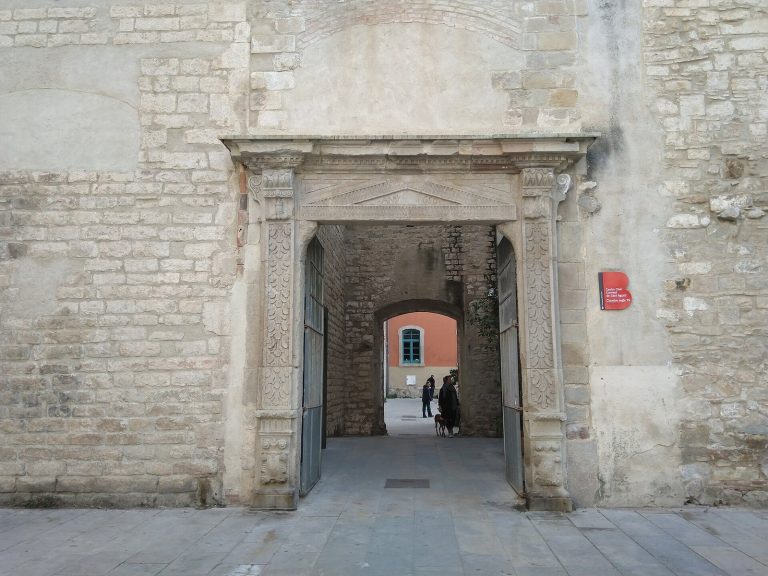
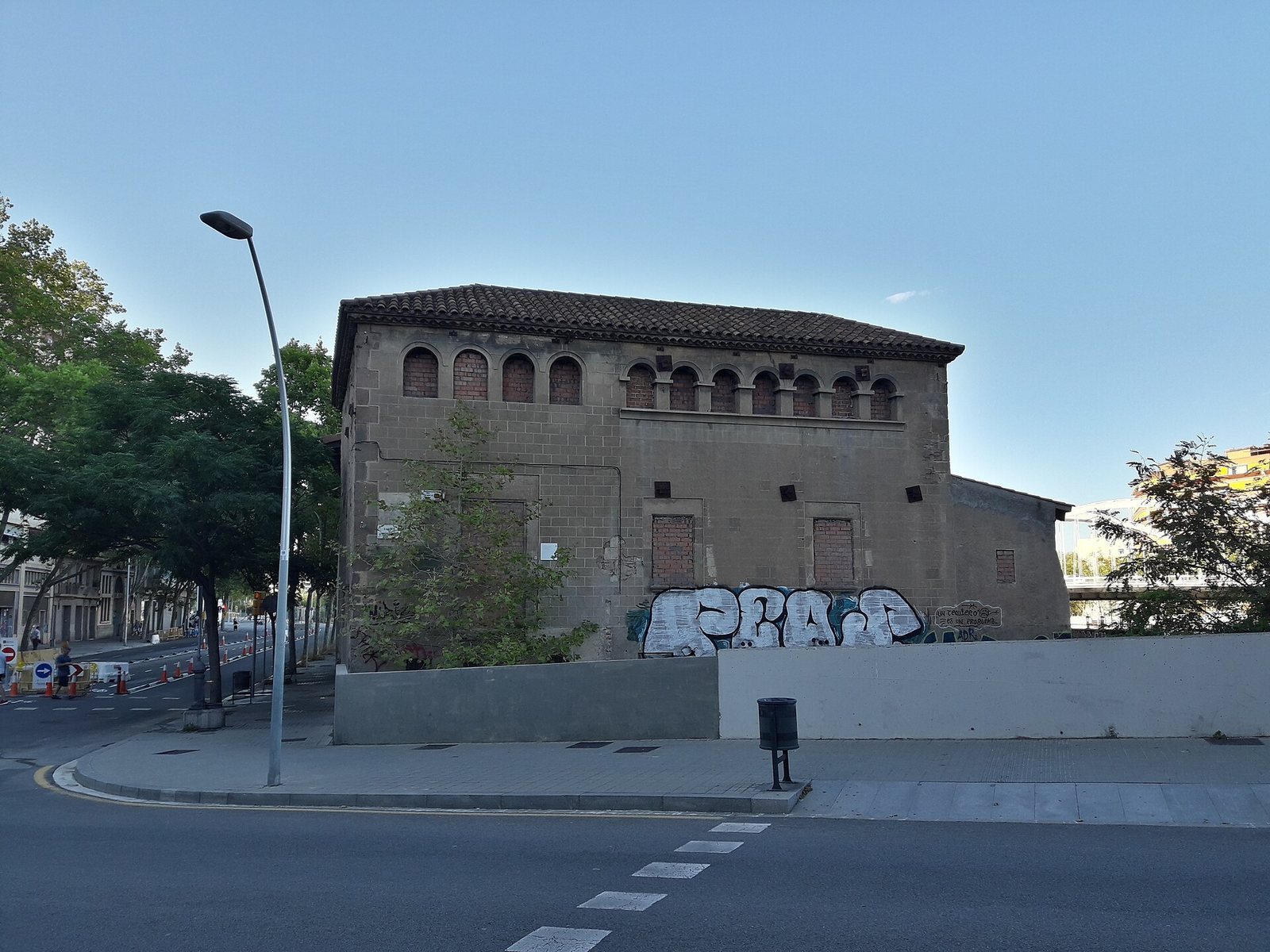
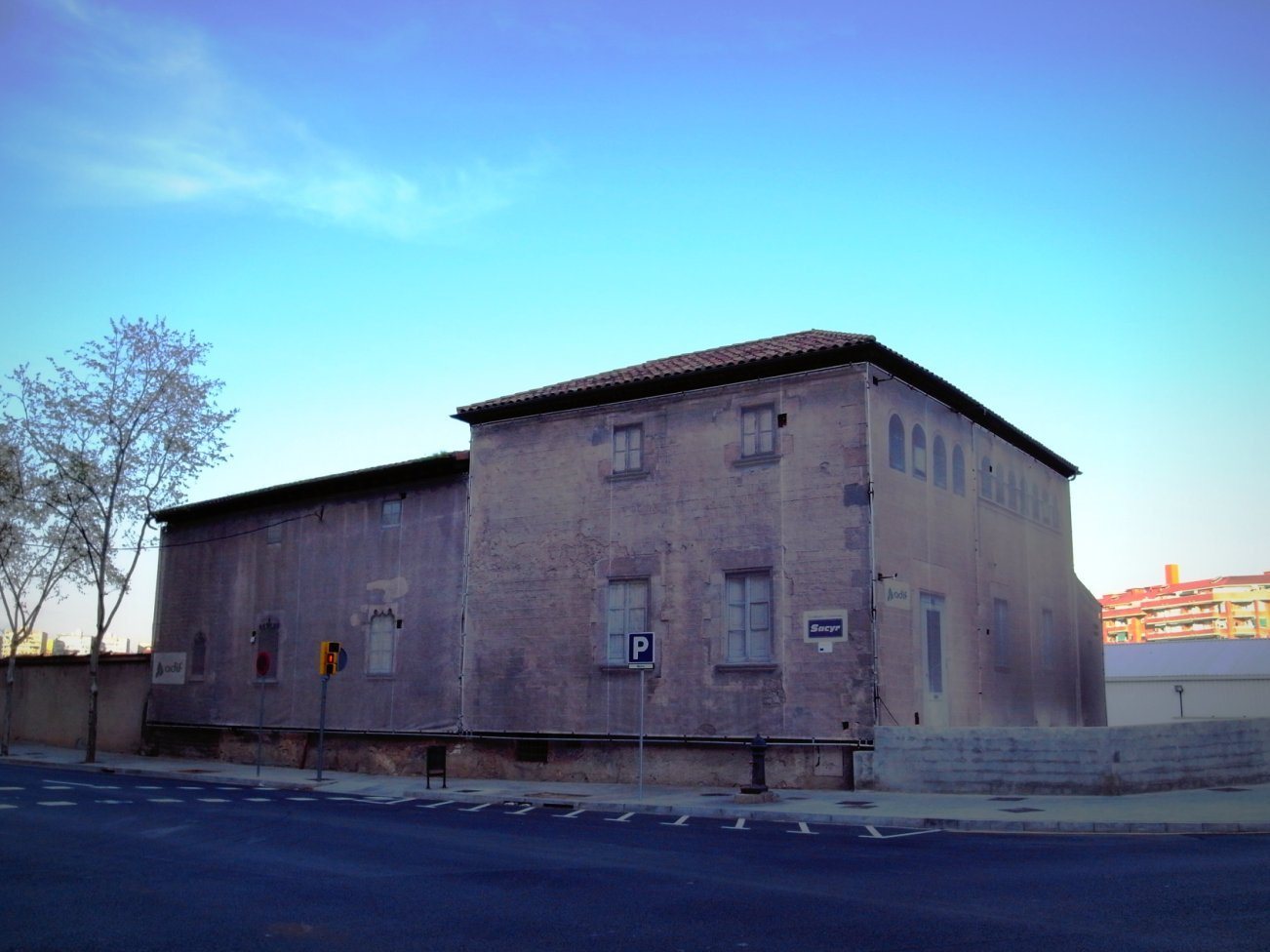
The surviving farmhouse complex stands at the intersection of Clot and Espronceda streets in La Sagrera. Its oldest facade is built from dressed stone blocks and dates to the late 13th or early 14th century.