Fortezza Medicea in Volterra: A Fortress Built to Control the City
Site at a Glance
- Popularity
- Medium
- Country
- Italy
- Primary era
- Medieval
- Eras represented
- Medieval
- Civilizations
- Republic of Florence
- Site type
- Military
- Remains
- Citadel
On this page9 sections
History
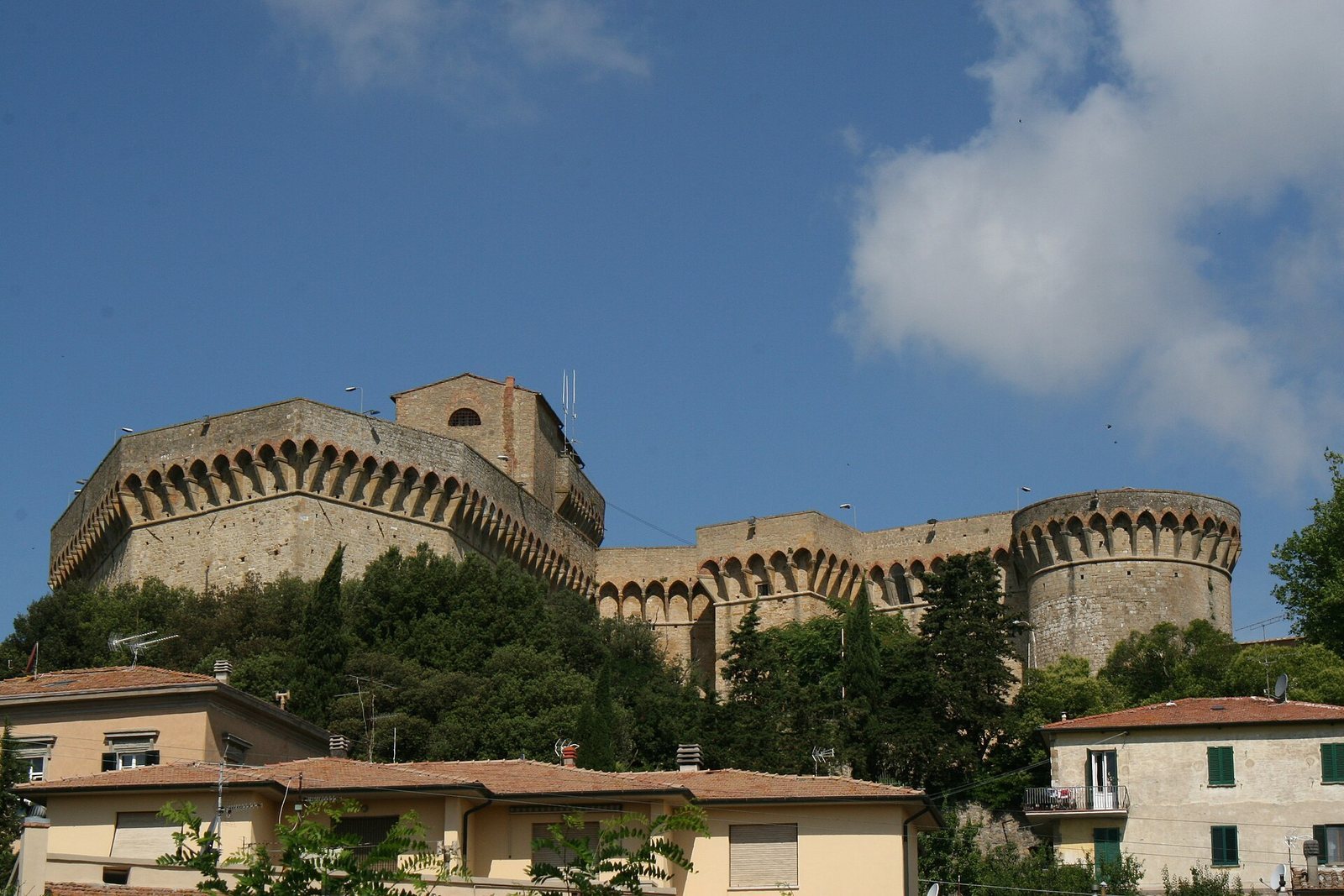
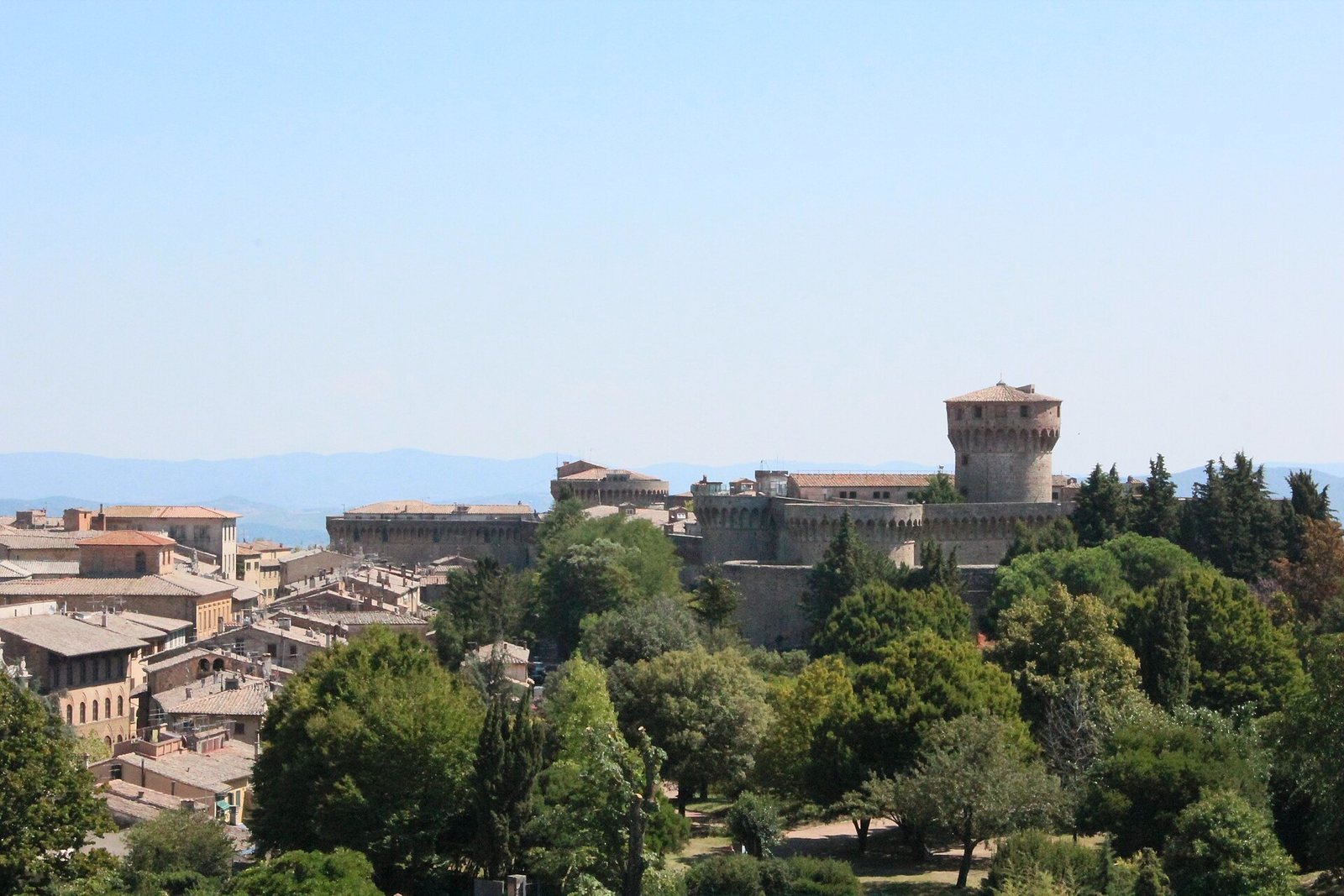
The Fortezza Medicea in Volterra, Italy, is a hilltop fortress formed by the Rocca Vecchia, built in 1342, and the Rocca Nuova, constructed under Lorenzo de’ Medici between 1472 and 1474. Its history reflects the city’s internal political conflicts and its eventual conquest by Florence.
The Rocca Vecchia and Volterra’s political struggles
In 1342, amid conflict between Volterra’s leading families, particularly the Belforti and Allegretti, the city entrusted its lordship to Walter VI of Brienne. A French nobleman and governor of Florence, Walter held the title Duke of Athens. Following Florence’s example, he ordered the construction of the Rocca Vecchia.
Walter’s rule was short. In the summer of 1343, Ottaviano Belforti regained power in Volterra. The fortress, however, remained part of the city’s later history.
Florentine conquest and the Rocca Nuova
Alum deposits near Volterra drew Florence’s interest. Alum, a mineral salt used in manufacturing, including textile dyeing, had economic value. Competition over control of the deposits contributed to war between Florence and Volterra. In 1472, Federico da Montefeltro, an Italian military commander serving Lorenzo de’ Medici, led the siege in which Florentine forces captured and sacked the city. About 7,000 Florentine troops took part. Volterra came under Florentine rule, securing Florence’s control of both the city and the alum mines.
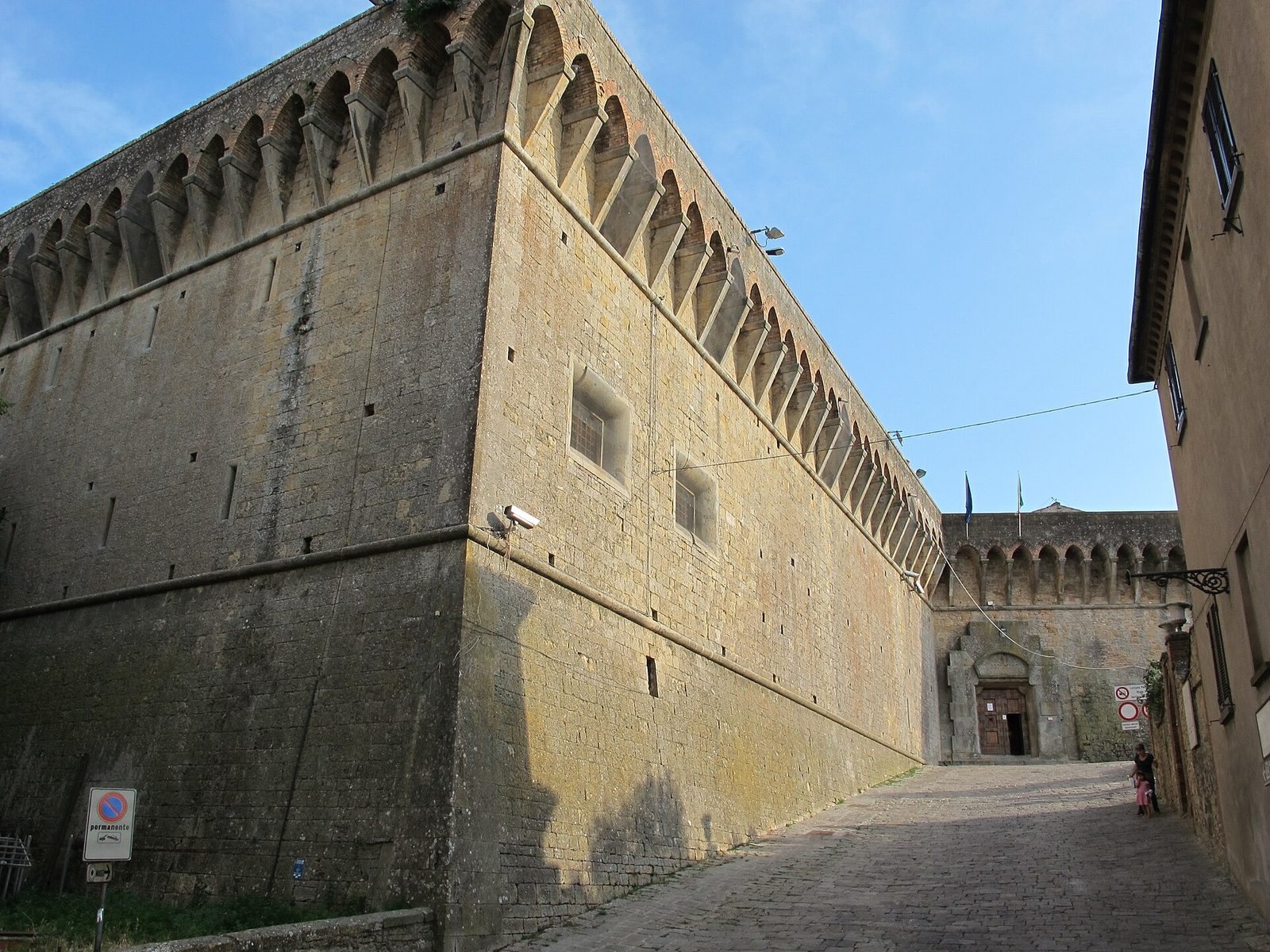
Lorenzo de’ Medici, known as Lorenzo the Magnificent, altered the older fortress and built the Rocca Nuova between 1472 and 1474. Completed in just over a year, the new stronghold required the destruction of two city districts and the Bishop’s Palace. Federico da Montefeltro is said to have proposed its construction. Its purpose was to keep the city under Florentine control rather than primarily to protect it: the garrison could watch Volterra and act against attempted rebellions. The fortress is now used as a medium-security state prison.
Remains
Fortress layout
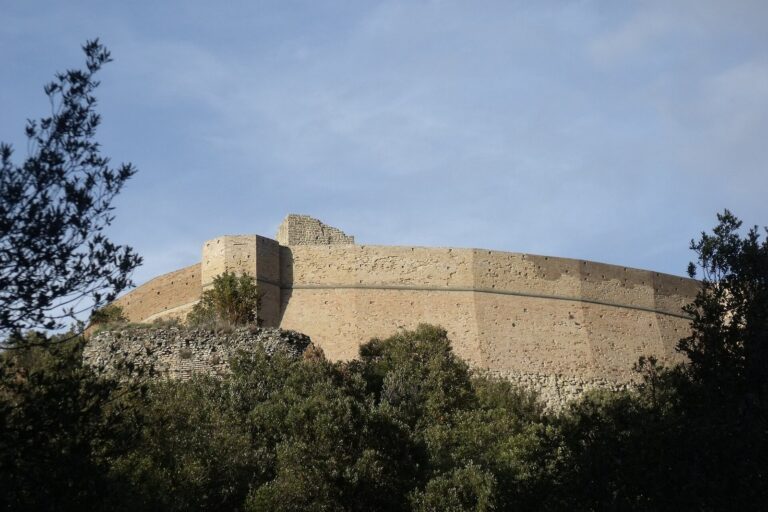
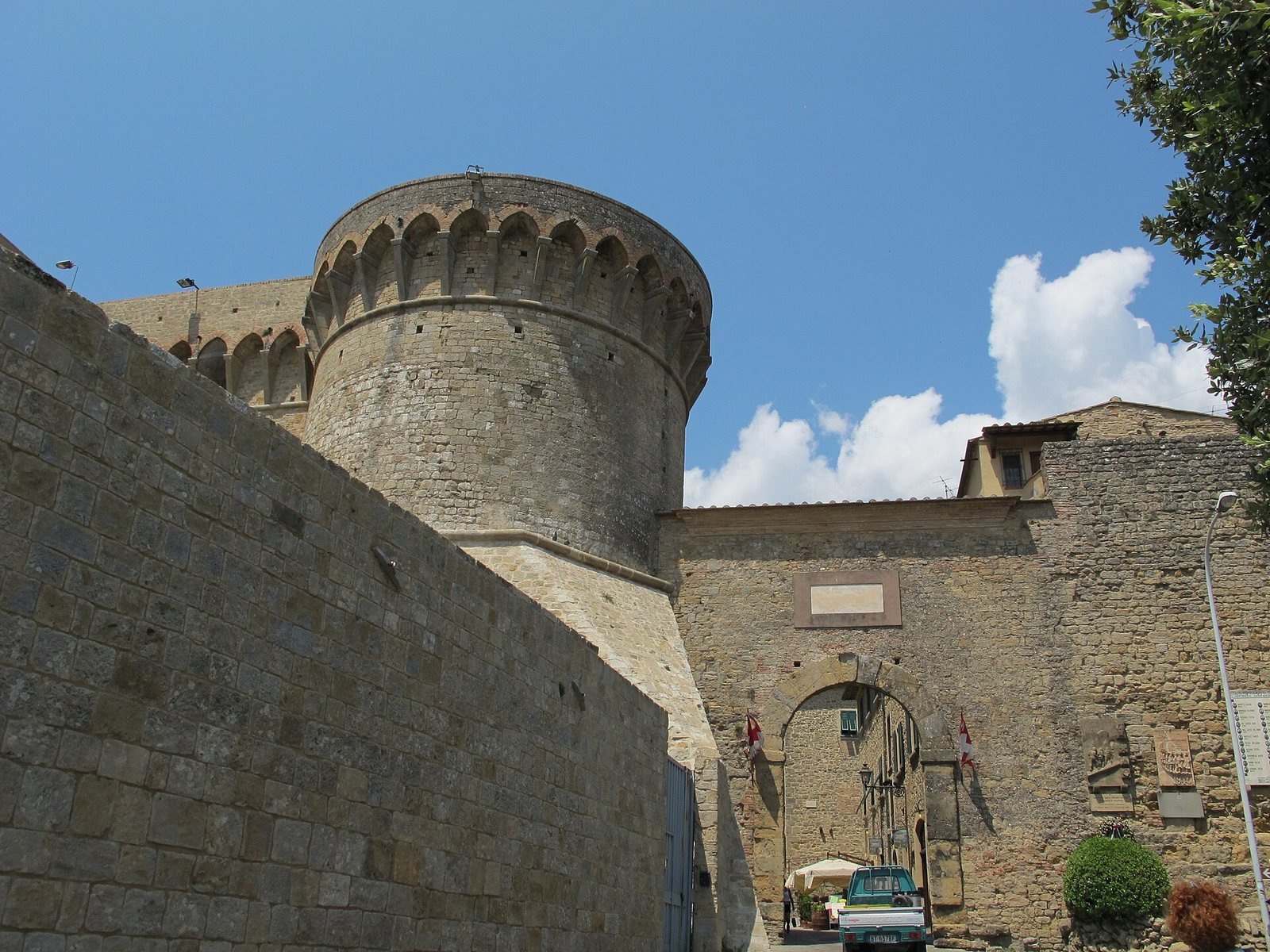
The fortress occupies the highest point of the hill overlooking Volterra and extends into the city. Its two strongholds, the Rocca Vecchia and Rocca Nuova, are joined by long defensive walls that enclose a citadel.
The two strongholds
Rocca Vecchia
The Rocca Vecchia forms the southern part of the complex. It is the older of the two fortifications and was later modified under Lorenzo de’ Medici.
Rocca Nuova
The Rocca Nuova is the newer stronghold. It is also known as Il Mastio, a name meaning the keep or main tower.
Walls and citadel
Two long stone walls connect the fortifications and enclose the citadel. They helped guard against an attack on either stronghold. The enclosed space was used for military maneuvers, storing weapons, and sheltering the population during a siege.