Croom Castle: A 13th-Century Tower House in County Limerick
Site at a Glance
- Popularity
- Medium
- Country
- Ireland
- Primary era
- Medieval
- Eras represented
- Medieval
- Civilizations
- Norman
- Site type
- Military
- Remains
- Castle
On this page8 sections
History
Croom Castle is a tower house in Croom, County Limerick, Ireland, believed to have been built in the early 13th century after earlier attacks on the town. A tower house is a compact fortified stone residence built around a tower. The castle later became one of the principal residences of the Kildare branch of the FitzGerald dynasty.
Before the tower castle
Before the Anglo-Norman invasion of Ireland, the area belonged to Uí Cairpre Áebda, a Gaelic territory whose leading family was the O’Donovans. Uí Cairpre formed part of Uí Fidgenti, a regional Gaelic political grouping that had existed since at least the fourth century. Later, its remaining territory lay between the kingdoms of Desmond and Thomond.
A manuscript from the 1130s connects an O’Donovan ancestor, Uaithne mac Cathail, who lived around 960, with Cromadgh, a form of the place-name also used in the mid-12th century. In 1151, Ruaidhri, son of Toirdhealbhach Ua Conchobhair, raided Thomond, took cattle, and burned Cromadh. In 1178, Domnall Mór Ua Briain, a ruler of Thomond, put Uí Fidgenti under pressure.
Construction and FitzGerald residence
The tower castle is believed to have been built in the early 13th century. In his 1837 description of Ireland, Samuel Lewis attributed the earliest known fortress to Dermot O’Donovan, placing its construction during or shortly before the reign of John of England (1199–1216). Lewis linked it to the securing of land taken from the MacEnirys, O’Donovan kinsmen within Uí Fidgenti. A separate account by Sir Richard Cox, written in 1690, says that O’Donovans came from Coshma in County Limerick and built the castle, which later passed to the Earl of Kildare.
O’Donovan oral tradition associated the castle’s construction with Crom Ua Donnabáin, who died in 1254 and was known as An Crom, meaning “the Bent.” That identification has been discredited as a connection based on similarity of names. An O’Donovan branch and remnants of Uí Fidgenti lived in Croom almost continuously for more than eight centuries. After the Earls of Kildare established their residence at the castle, the O’Donovans no longer occupied the tower house. The FitzGeralds’ war cry and motto, Crom a Boo or Crom Abú (“Crom forever”), derived from the fortress. A 1690 record notes its use on the Earl of Kildare’s heraldic shield.
Later use
In the 18th century, the castle hosted the Poets of the Maigue, a literary group. It was partly rebuilt in the 19th century. A church near the castle is recognized as a national monument of Irish history and architecture.
Remains
Architectural remains
Tower house
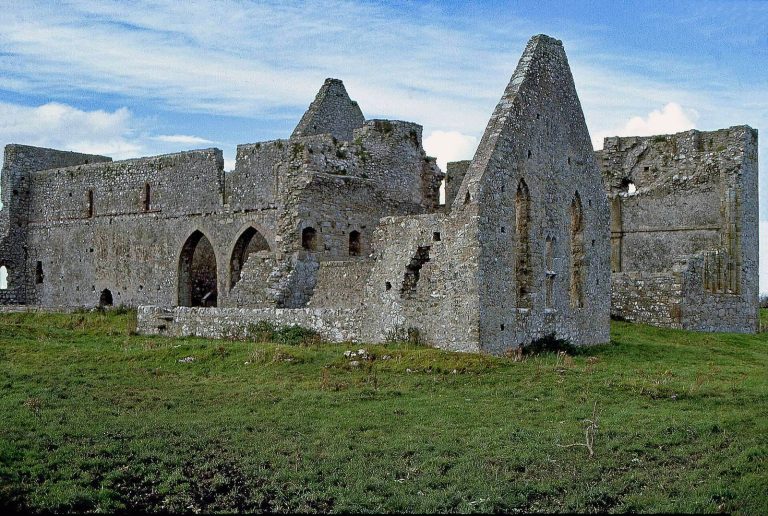
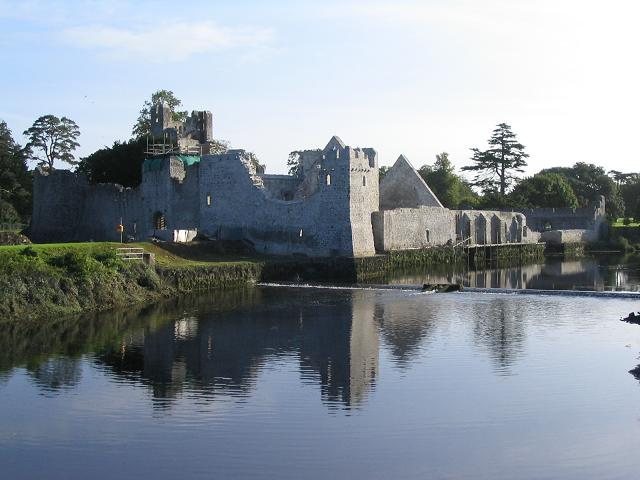
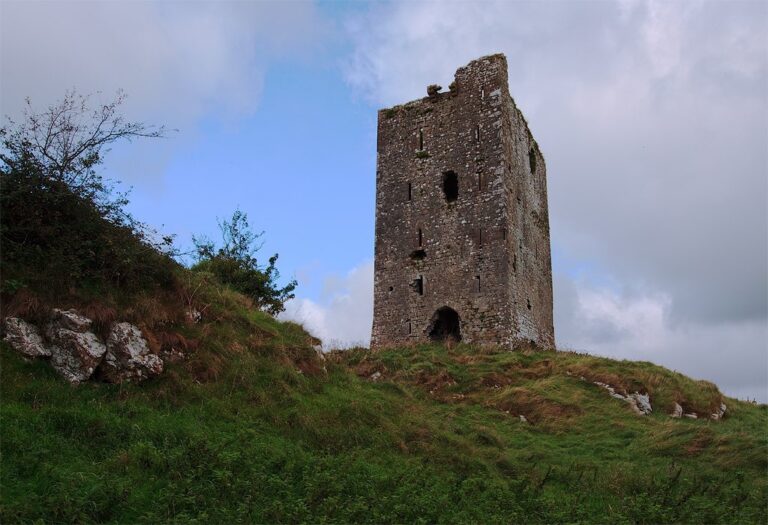
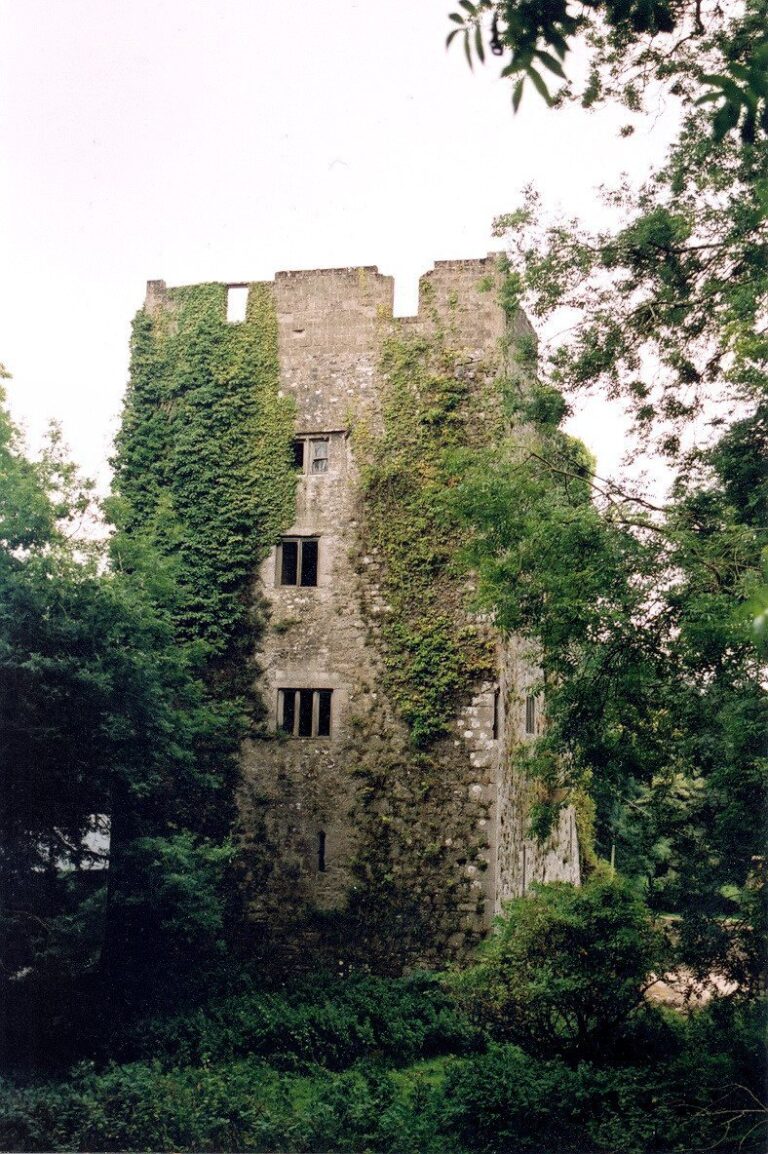
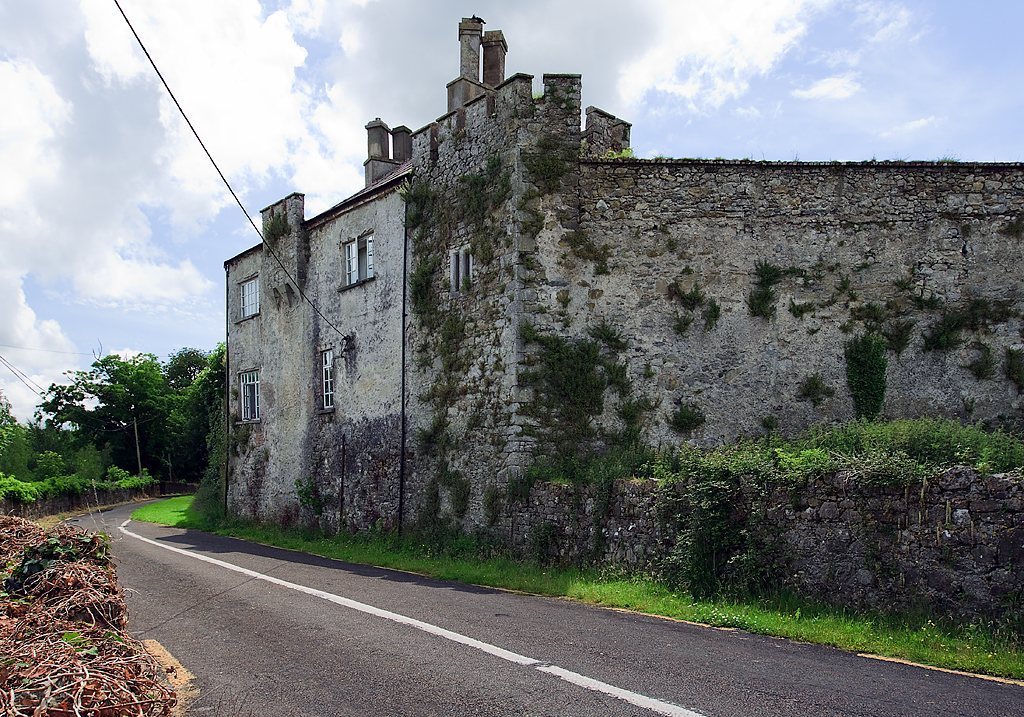
The lowland tower house stands at an important bend in the River Maigue and is built of rubble masonry. The name Croom derives from Cromadh, meaning “bend in the river.” The castle is now a ruin: two walls survive at about half their original height, while the other two have collapsed into a large heap of stone and brick.
Nearby structures
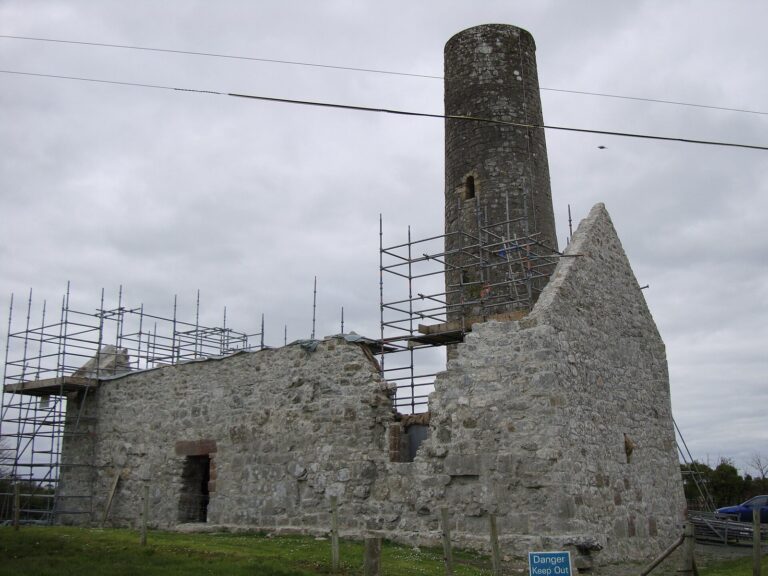
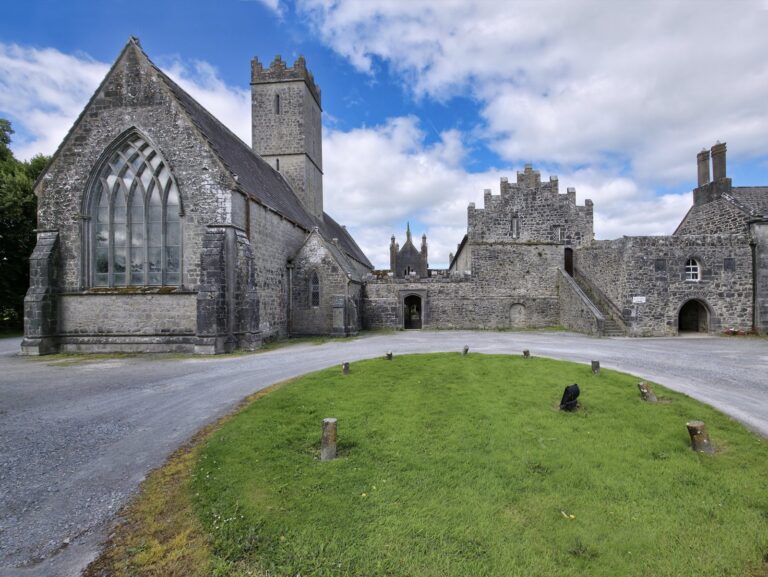
A partly ruined round tower dating to the 12th century and a 15th-century church stand near the castle.