Shanqal Fort: An Al-Baqum Tribal Justice Center and Defensive Stronghold
Site at a Glance
- Popularity
- Medium
- Country
- Saudi Arabia
- Primary era
- Early Modern
- Eras represented
- Early Modern
- Civilizations
- Unclassified
- Site type
- Military
- Remains
- Fort
On this page8 sections
History
Shanqal Fort is a stronghold associated with a branch of the Al-Baqum in Al-Labt village, Saudi Arabia. The Al-Baqum are an Arabian tribe connected with the Turubah region. Construction began in 1737, and the fort served as a residence, defensive position, refuge, and center of customary tribal justice.
Foundation and tribal role
Accounts of the fort’s founding differ. One attributes the work to an Al-Baqum princess. Another places construction in the later years of her father, Sheikh Abdurrahman bin Sultan al-Badri, and credits a tribal sheikh with directing the building, with members of the branch carrying out the work. Historian Muhammad bin Ghanam describes the fort as an eighteenth-century princely residence. Its main period of construction and occupation fell in the second half of the twelfth century AH, using the Hijri lunar calendar.
The fort was used by several sheikhs, or tribal leaders, as a home and a place to hear customary legal cases. It also helped defend Turubah, housed a disciplinary prison, and served as a place where people could seek refuge. Signals from the fort warned other Al-Baqum groups of danger. Its residents included families from the branch as well as people from outside it. The builder lived there with his family and other households until 1230 AH, after Ottoman forces attacked Turubah. Abdurrahman’s family also used the fort as a private residence, alongside a separate palace.
Leadership and customary law
Leadership of the branch and command of the fort passed from one sheikh to his son. After the son died around 1275 AH, his brother succeeded him and also served as a customary judge for the wider Al-Baqum tribe. A further son of the first sheikh later took over as tribal and fort leader, near the end of the thirteenth century AH. A prominent leader and horseman, he was also among the notable commanders of Sharif Hussein of Mecca. The title Sharif was associated with descent from the Prophet Muhammad and was used by the rulers of Mecca.
Under this later leader, the fort continued to serve as a residence, court, prison, refuge, and place of defense and warning. Decisions made there included an entry levy on neighboring tribes visiting Turubah and its market, introduced after thefts by some visitors and approved by Al-Baqum sheikhs. A customary ruling also set the boundary between two tribal sections, a line that remains recognized.
Before Saudi rule, the branch enforced penalties for neglecting or delaying prayer, applying them to its own members before others. A first offense brought the burning of a man’s turban; a second meant one day in the fort’s prison; and a third led to public flogging, with the sheikh setting the number of strokes. The fort also hosted a Sharif appointed governor of Turubah by Sharifian rulers. Its commander received him there for a time before he moved to another town.
Conflict, name, and later condition
The prominent leader who had commanded the fort was killed by gunfire in an area north of Turubah and south of a nearby town, three nights before the Battle of Turubah in 1337 AH. During the fighting, forces led by Sharif Abdullah I ibn al-Hussein entered Turubah and met resistance at the fort for a full day. Abdullah, a son of Sharif Hussein, was a Hashemite leader and later became king of Jordan. After sunset, the defenders withdrew east to nearby lava fields. The fighting damaged the fort.
The name Shanqal has no settled explanation. Suggested meanings include sloping or uneven ground, the fall of enemies around the walls, and “open,” referring to the fort’s use as a refuge. Another proposal connects the word with Turkish and its former use in the Hejaz. Folklore tells that the fort was built over a dwelling of jinn, supernatural beings in Islamic belief, whose leader was called Shanqal. In these implausible legends, his descendants guarded the abandoned fort and generally barred entry to people outside the tribal branch.
The fort remained damaged for more than 95 years amid neglect by Saudi antiquities authorities.
Remains
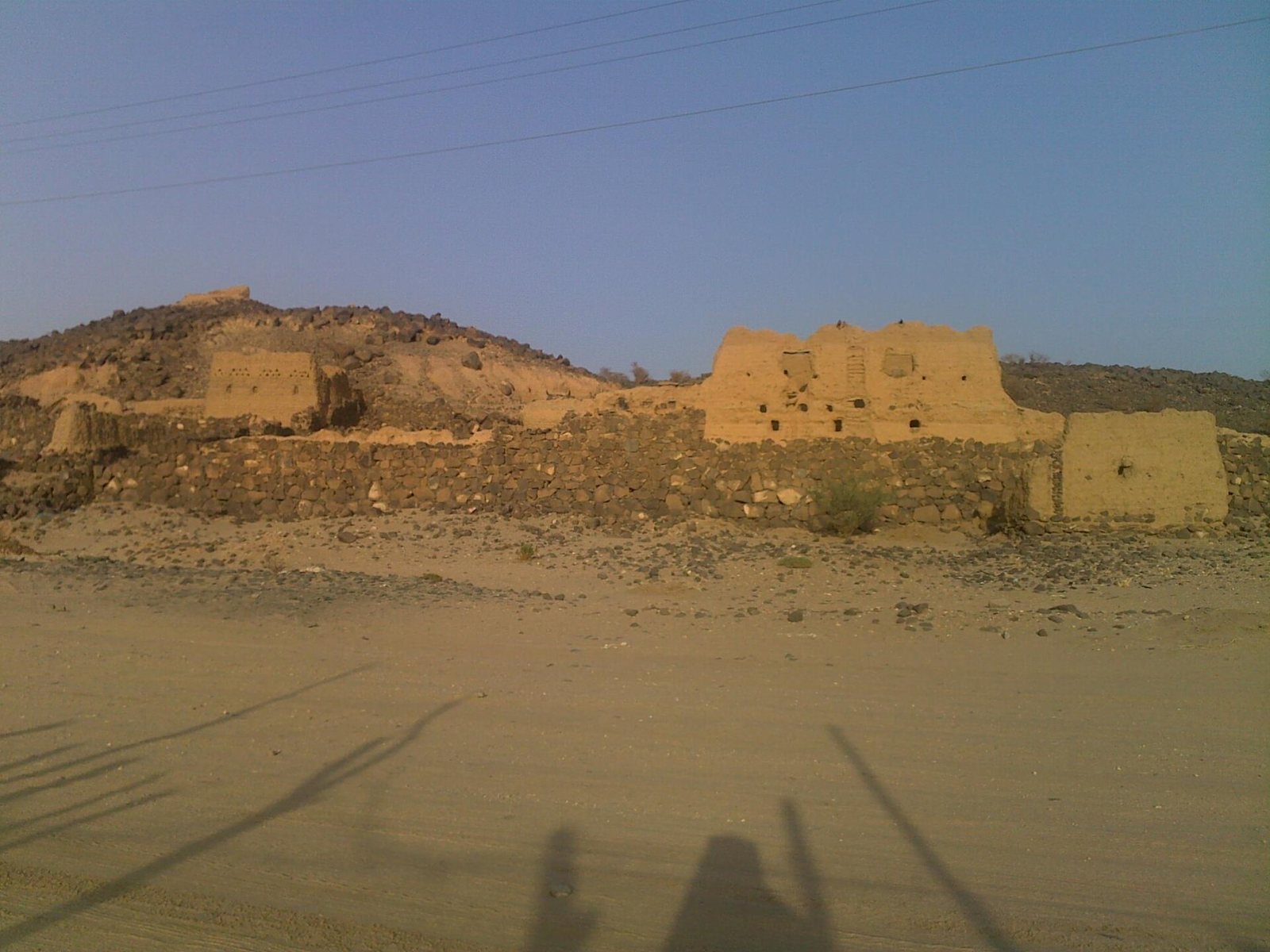
The fort occupies a rocky slope on a ridge projecting from the northwestern edge of the Al-Baqum lava field, east of Turubah Valley and overlooking the valley and its outskirts. At about 1,100 metres above sea level, the site covers approximately 3,000 square metres. Its main fort and a smaller watchfort higher on the ridge form the surviving architectural group.
Fort structures
Main fort
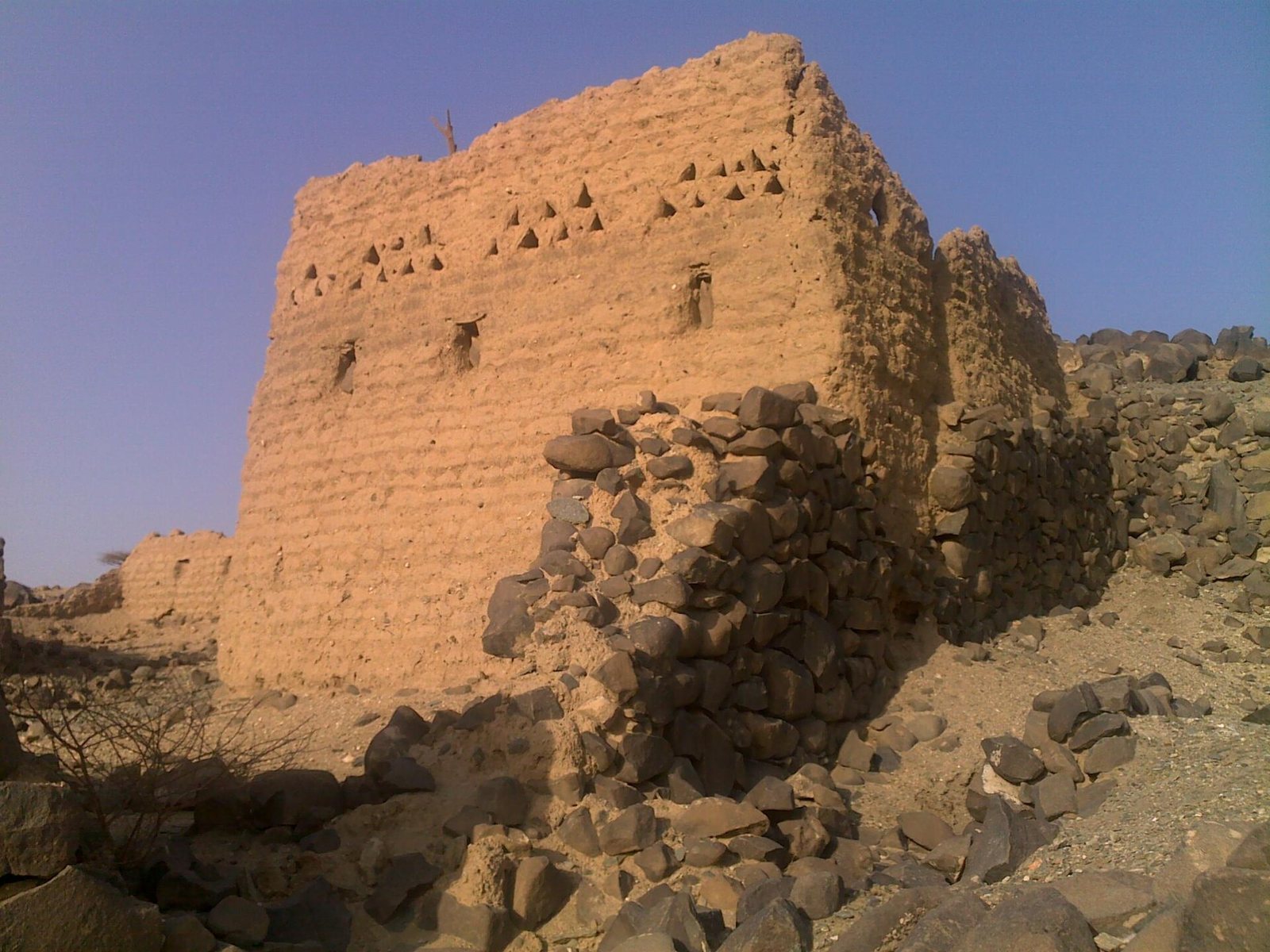
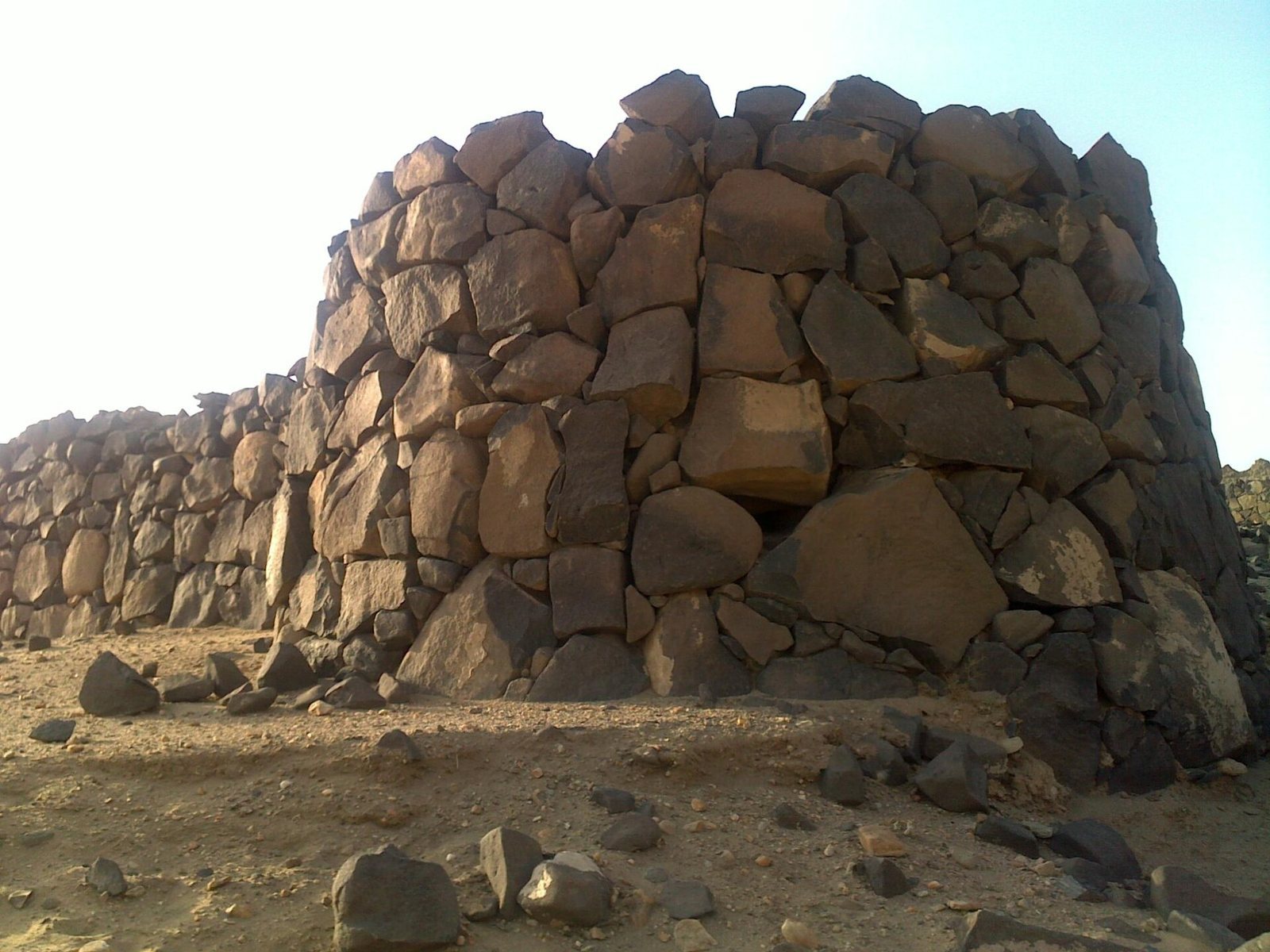
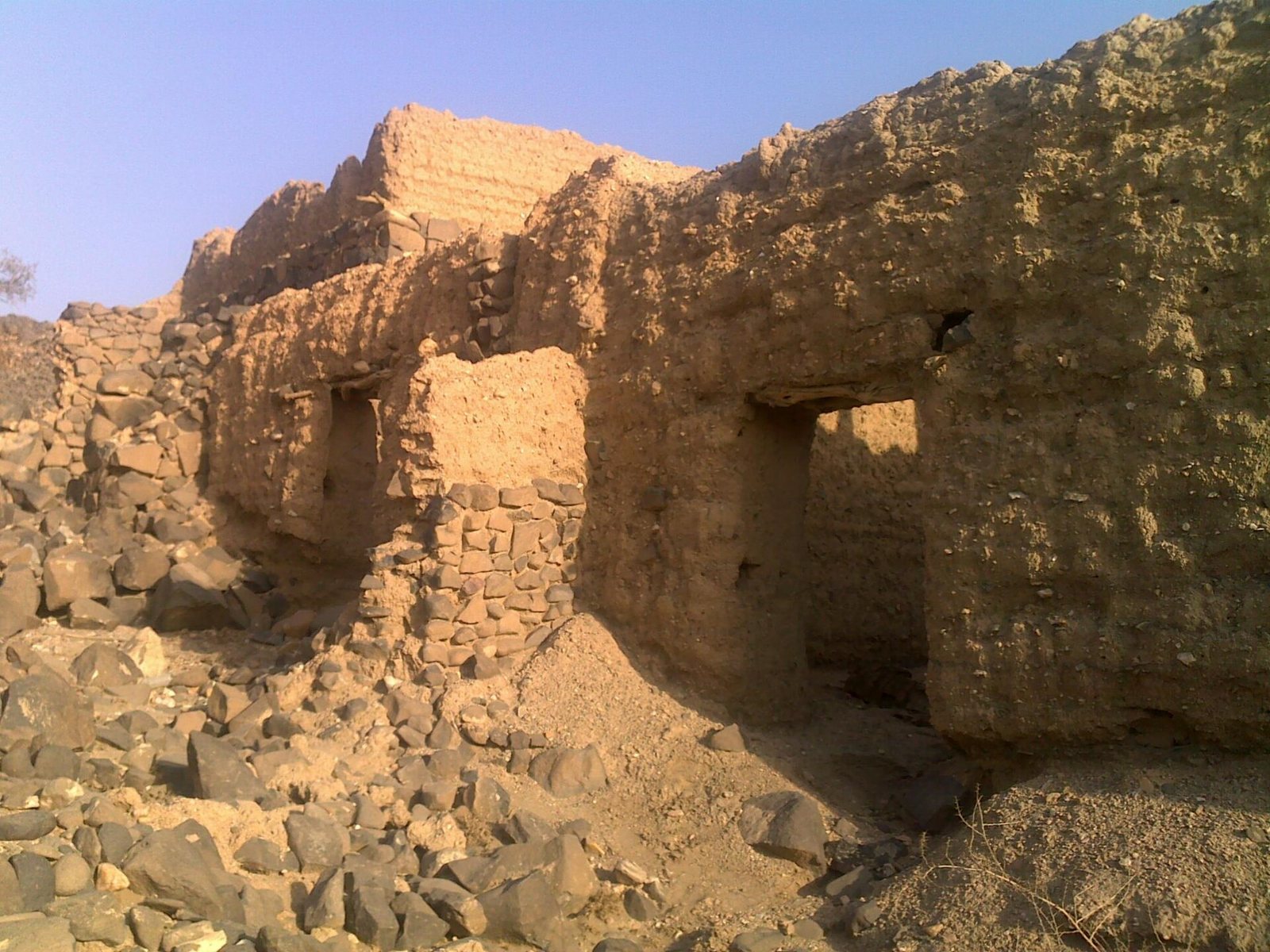
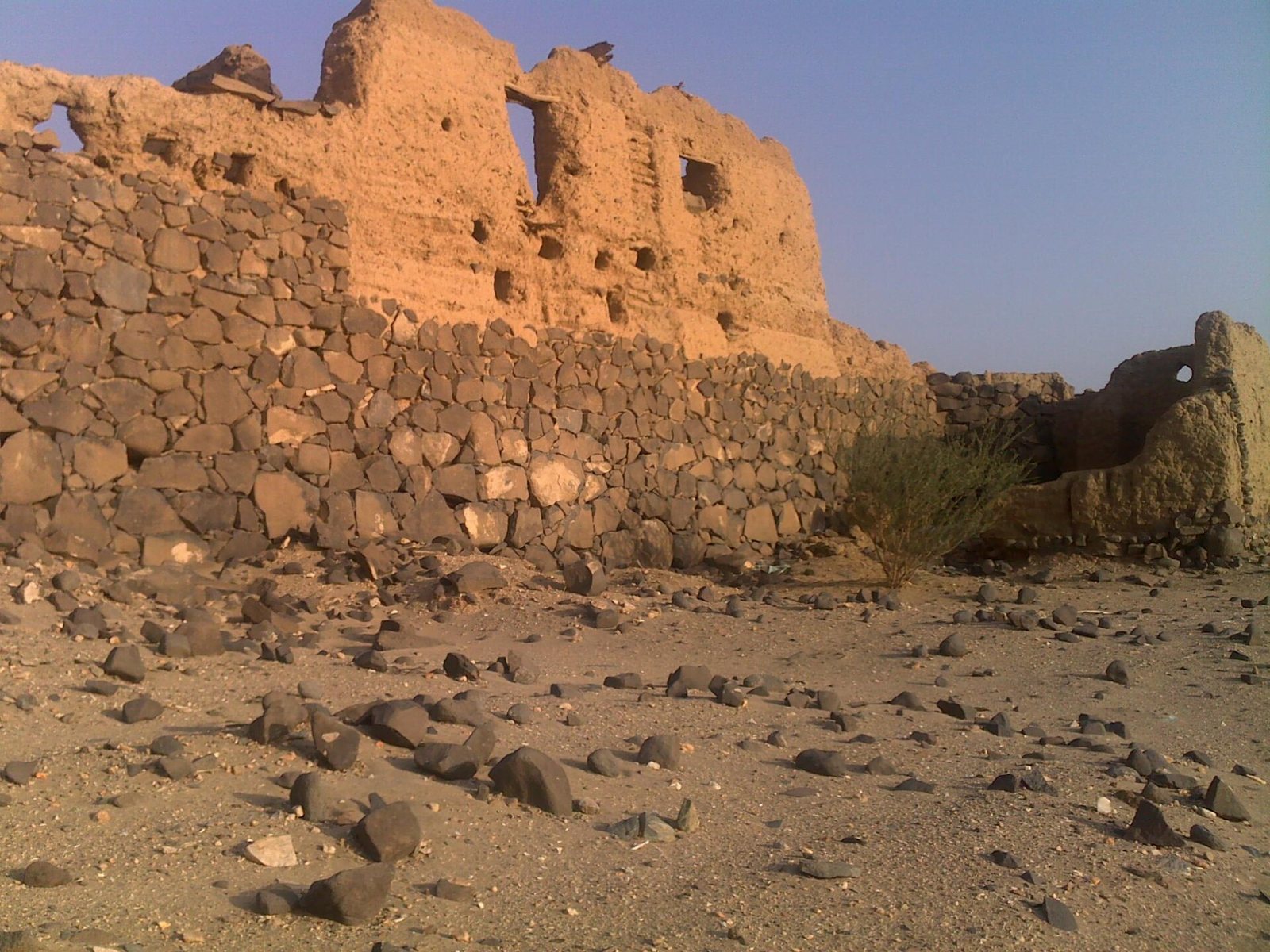
The main fort has walls between 6 and 7 metres high and a single entrance on its north side. Stone forms the foundations and lower half of the building, while the upper half is mudbrick. The roof, made from tamarisk branches, palm fronds, and palm trunks, has collapsed, as have some upper sections. About 30 rooms include a judicial council chamber, living quarters, a mosque, a prison, storage for weapons and provisions, and a small courtyard. A small area was used to tether horses. Circular structures at the corners suggest a military rather than residential design.
Watchfort
A small, two-storey watchfort stood behind the main building, higher up the ridge. Its upper storey has collapsed.