Bärenschlössle: A Pleasure Palace and Hunting Pavilion in Stuttgart
Site at a Glance
- Popularity
- Medium
- Country
- Germany
- Primary era
- Modern
- Eras represented
- Early Modern, Modern
- Civilizations
- Duchy of Württemberg, German, Holy Roman Empire, Kingdom of Württemberg
- Site type
- Domestic
- Remains
- Elite Residence
On this page11 sections
History
A pleasure pavilion for Solitude
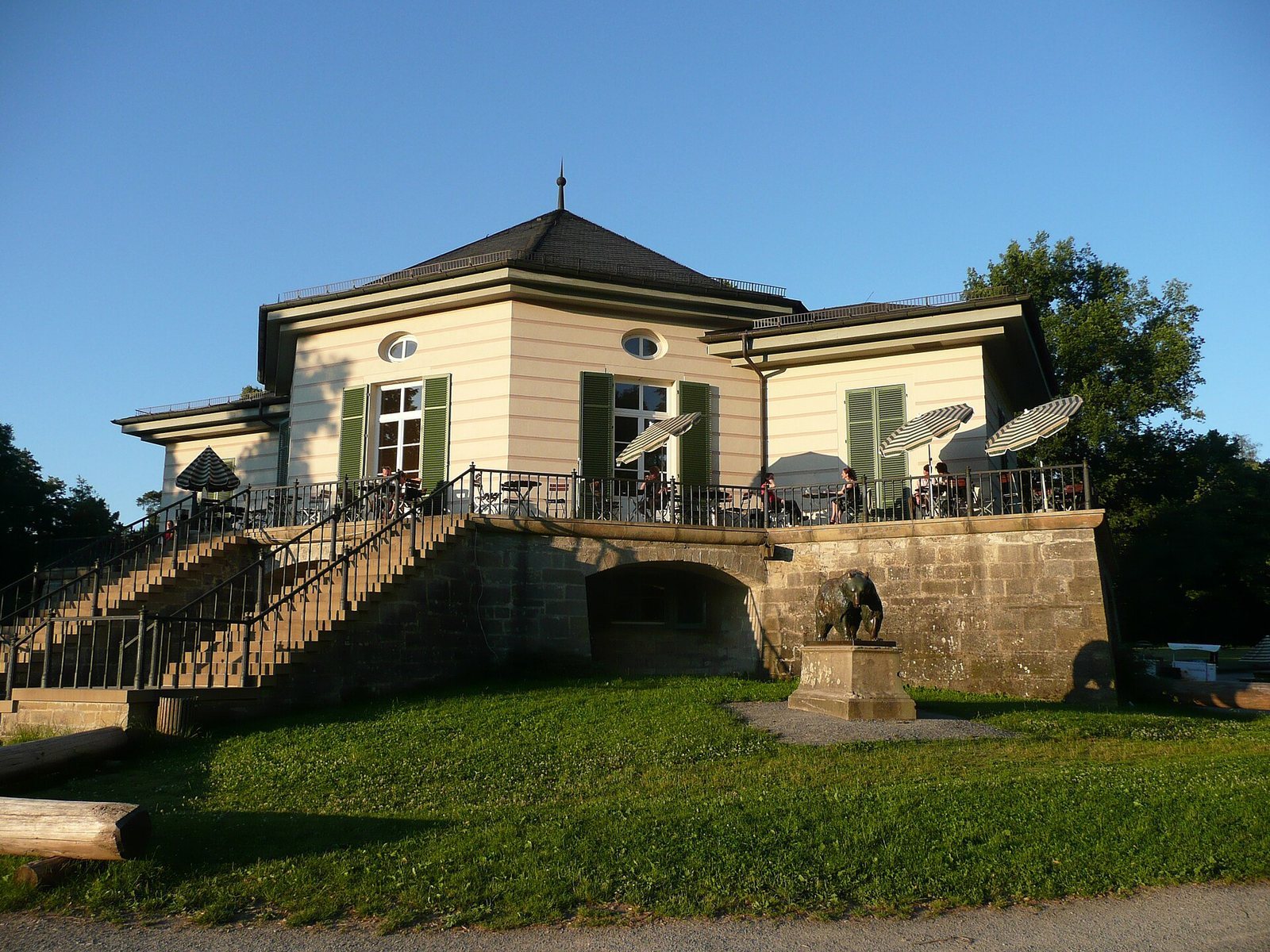
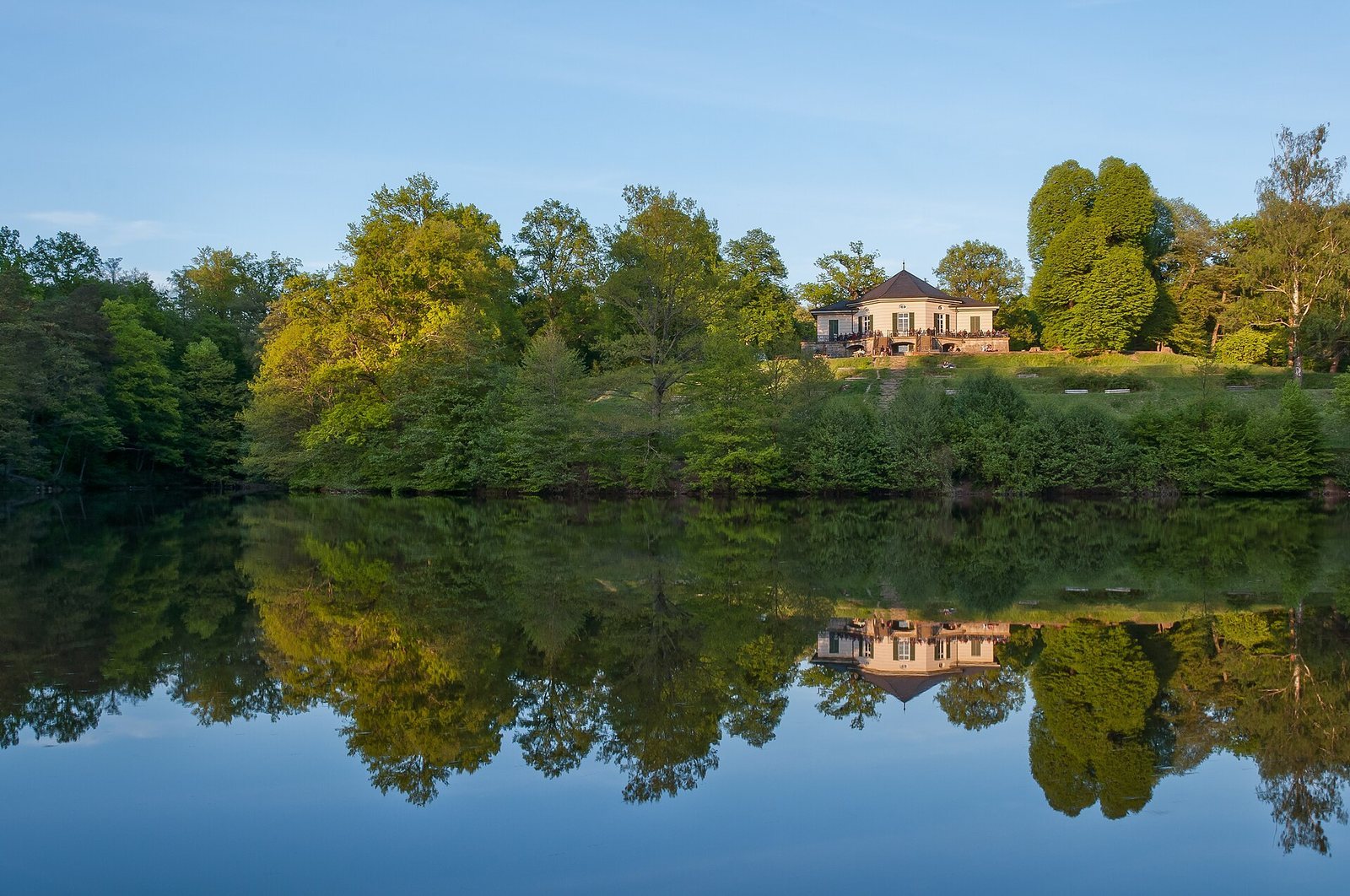
Bärenschlössle is a pavilion in the Rotwildpark on the outskirts of Stuttgart, Germany, first built in 1768 as a pleasure palace for Duke Carl Eugen of Württemberg. The stone building followed an ancient Roman style and formed an ancillary part of the Solitude palace complex. Architect Reinhard Ferdinand Heinrich Fischer, a German architect who had studied under the French designer Philippe de La Guêpière, designed it.
A three-kilometre path linked the pavilion to Solitude. Its setting beside Bärensee was part of the palace’s hunting park, where fallow deer were kept. Carl Eugen brought gondolas from Italy in 1766–67, and further boats made to resemble them were used on the lake. On 24 September 1782, a hunt at Bärensee was held in honour of Grand Duke Paul of Russia, who later became emperor. After Carl Eugen died in 1793, the pavilion and boats declined. The original building was demolished in 1817.
Hunting pavilion and changing access
In 1817, King Wilhelm I of Württemberg had a larger hunting pavilion moved from Freudental and erected on the site. He enlarged the park into a game enclosure for staged hunts. Access to the park and pavilion had been limited to people with annual passes; the enclosure was removed in 1919, when the area opened to the public.
From 1937, the pavilion served as a guesthouse for the state and the city of Stuttgart, and the hunting grounds were fenced again. The Rotwildpark became a protected natural area in 1939. Its protected area was enlarged in 1958 to include the Schwarzwildpark, or wild-boar park.
War damage and rebuilding
An incendiary bomb almost completely destroyed the hunting pavilion in 1943 during the Second World War. It was rebuilt in 1963 on the surviving terrace. A severe fire on 13 November 1994 again caused near-total destruction, and reconstruction following the earlier design was completed in 1997.
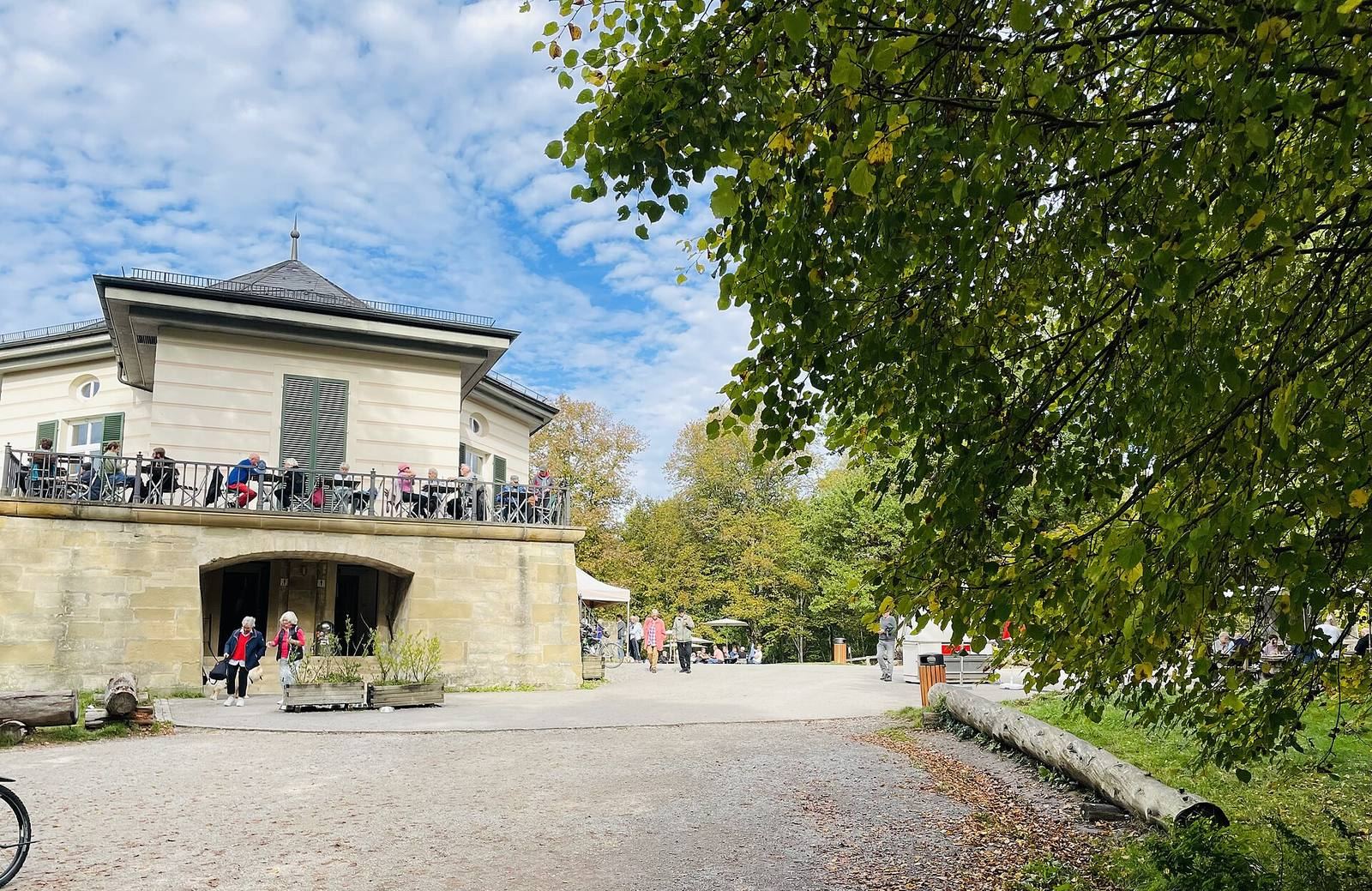
Bärenschlössle now operates as a restaurant and events venue, subject to restrictions because it lies within a protected natural area. Its name comes from the nearby Bärenbach, now called Bernhardsbach.
Remains
Pavilion and associated features
The pavilion stands on a terrace near the artificial lake Bärensee. Its successive buildings ranged from an oval stone structure in an ancient Roman style to a larger octagonal hunting pavilion in a classical style. Figures associated with the site mark the former lake landing and the pavilion’s west façade.
The first pavilion
The original building had two storeys and an oval plan. Its ground-floor hall had wall paintings, while the upper-floor salon featured a ceiling painting by Nicolas Guibal, a French painter associated with the Württemberg court. An image of the pavilion appears on a coffee pot preserved in Ludwigsburg.
The hunting pavilion
The replacement pavilion was larger, with an octagonal plan and two wings. Its hall displayed hunting trophies and paintings by E. Kehrer. The exterior was initially clad in tree bark and also carried hunting trophies.
The present building
The reconstructed pavilion closely follows the earlier design. On its upper floor, wing doors take the place of the windows found in the predecessor buildings.
Lake landing figures
Venetian-style lion figures associated with the first pavilion mark its former landing place on Bärensee. An etching by Nikolaus Heideloff depicts the 1782 hunt in honour of Grand Duke Paul; it is held by the Stuttgart City Archive.
Bear sculptures
Two cast-zinc bears made by Albert Güldenstein in 1863–64 stood near the pavilion. One was recovered after the Second World War and used as the model for two bronze bears by Lilli Kerzinger-Werth in 1964. The bronze figures still flank the west façade.