Château Branaire-Ducru: A Fourth Growth Wine Estate in Saint-Julien
Site at a Glance
- Popularity
- Medium
- Country
- France
- Primary era
- Modern
- Eras represented
- Modern
- Civilizations
- French
- Site type
- Economic
- Remains
- Production Complex
On this page10 sections
History
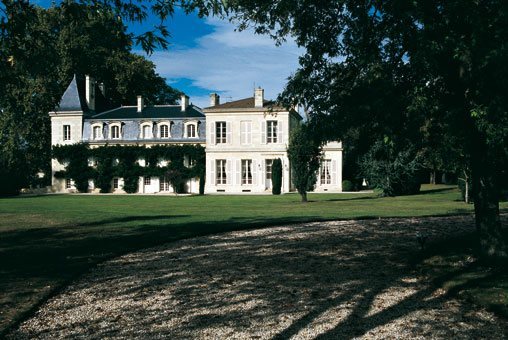
Château Branaire-Ducru is a wine estate in Saint-Julien, France, whose present château building dates to 1824. It is classified as a Fourth Growth in the 1855 Bordeaux ranking, a system that places selected wines in growth categories. The estate developed from a division of lands associated with Château Beychevelle.
Medieval lands and inheritance
The property formed part of the Lordship of Lamarque, and its land was cultivated by the early fourteenth century. In the late fourteenth century, a fortified keep was built near the Gironde estuary to help defend it during the Hundred Years’ War, a prolonged conflict between the English and French crowns. The property then belonged to Archambaud de Grailly. After his marriage to Isabelle de Foix in 1381, it passed into the hands of the Foix-Candale family.
In 1587, Marguerite de Foix-Candale, the family’s sole heir, married Jean Louis de Nogaret de La Valette, Duke of Épernon. The estate thereby became part of the Dukes of Épernon’s holdings. Following the death of Jean Louis’s son Bernard in 1661, debts prompted the breakup of the wider Beychevelle estate. Its lands had passed to the French Crown by 1666, before being sold to the Abbadie family, which divided the property.
The Braneyre estate
In 1680, Jean-Baptiste Braneyre, a royal notary in Bordeaux, bought the portion that would become Branaire-Ducru. His daughter Marie married Pierre du Luc, bringing the property into the du Luc family. Their son Laurent, born in 1730, inherited it and brought the estate an early period of prosperity. During the French Revolution, Laurent and his wife, Marie de Chillaud des Fieux de Larenchère, kept the property despite his imprisonment. They altered the family name from du Luc to Duluc to conceal their aristocratic background.
After Laurent died in 1814, Marie continued to manage the estate for four years and bought additional small plots near the hamlet of Bourdieu. Their sons Louis and Justin inherited and expanded the property. They built the present château in 1824, first calling the estate Château Braneyre; the name later became Château Branaire.
Nineteenth-century classification and succession
In 1855, the estate entered the Bordeaux wine classification as a Fourth Growth. Louis Duluc died without an heir in 1856, and his widow, brother, and nephews initially managed the property. In 1857, his nephew Gustave Ducru took charge and gave the estate the name Château Branaire-Ducru.
By 1875, it belonged to Jean-Baptiste Gustave Ducru and his sister Zélie Ravez. Gustave bought her share but died in 1879, leaving the property to return to Zélie. When she died in 1899, her nephews, the Marquis de Carbonnier de Marzac, the Count de Ravez, and the Count du Périer de Larsan, inherited it. The three crowns on the wine label refer to this inheritance.
Modern ownership and renewal
Jean-Michel Tapie bought the estate in 1919. During his ownership, the wines declined in quality and no longer matched the estate’s classification. Sucrerie de Toury acquired the property in 1988, with Patrick Maroteaux as managing director. In 1993, the company transferred its shares to a family group chaired by Maroteaux. The group aimed to make wines representative of Saint-Julien while preserving a distinct estate identity, and pursued a program to improve quality.
François-Xavier Maroteaux succeeded his father at the head of the estate in 2017. Château Branaire-Ducru produces wine in the Saint-Julien appellation, a regulated French wine region.
Remains
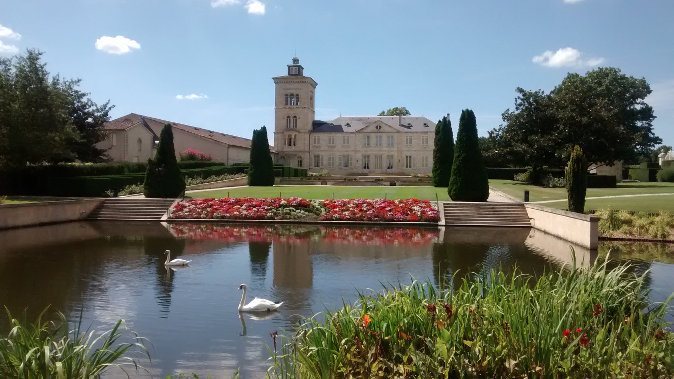
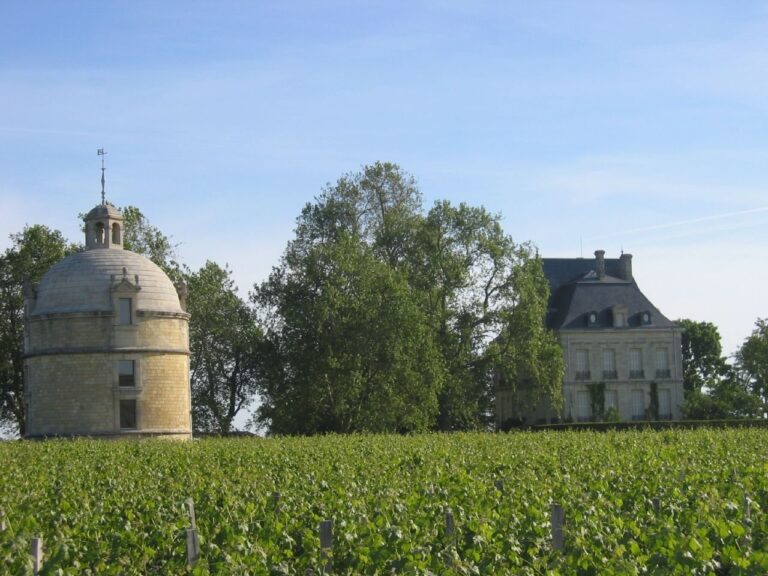
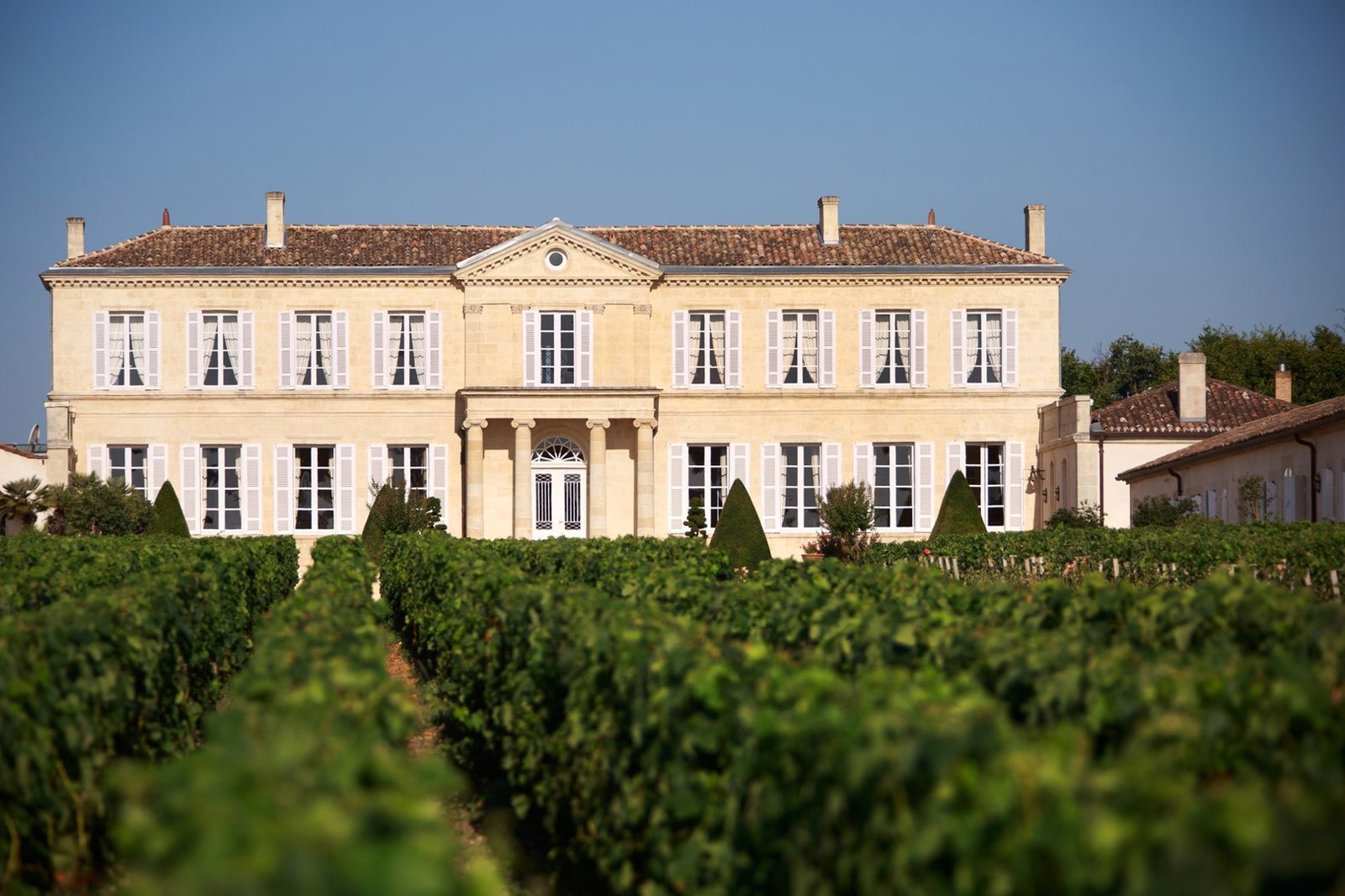
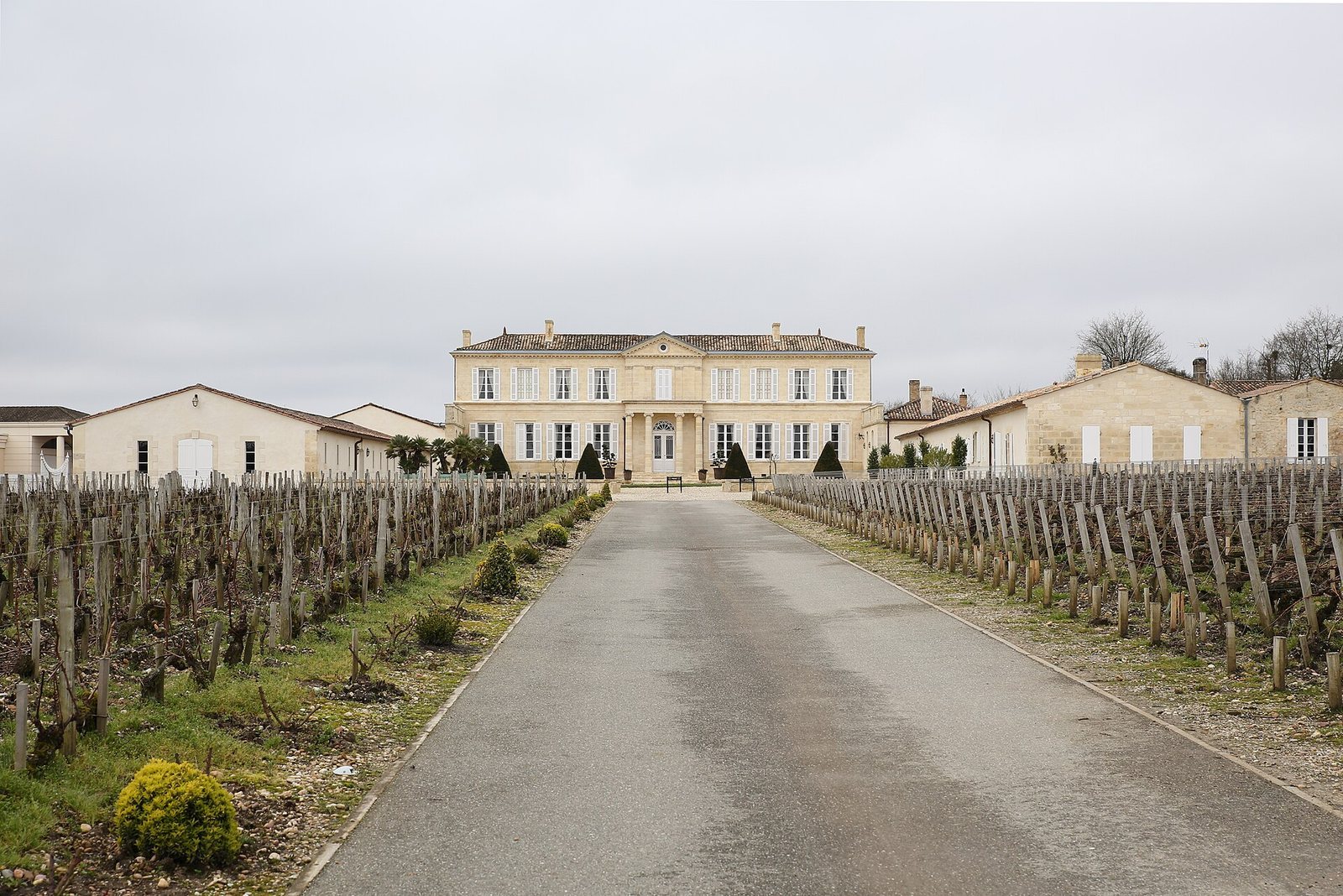
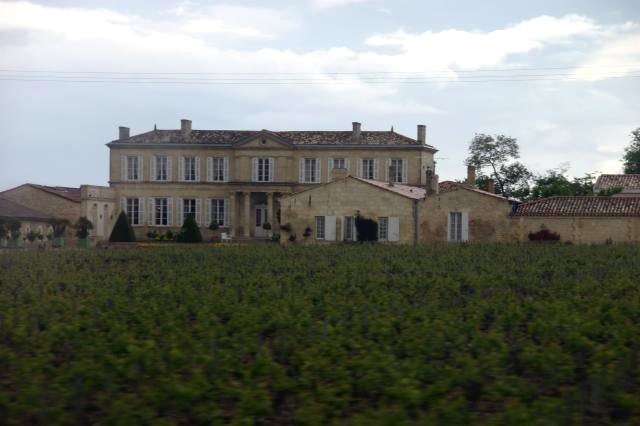
The estate’s layout brings together its main château, vineyards, and winemaking facilities. The château faces Château Beychevelle near the southern edge of the Saint-Julien appellation, while the vineyards extend along an east–west axis across its southern part.
Château and vineyard landscape
Main château
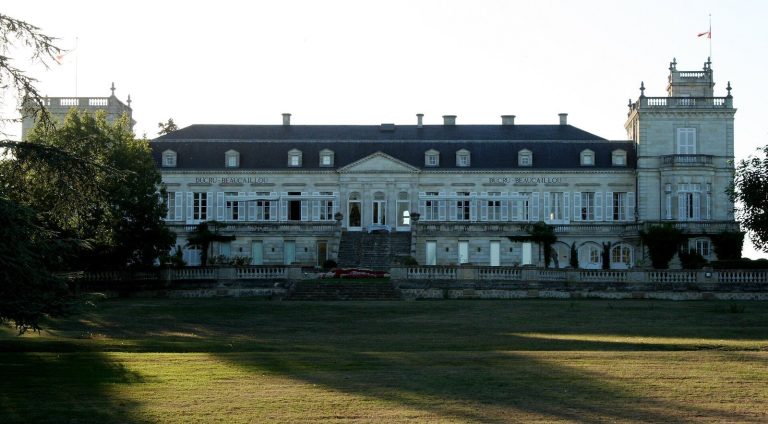
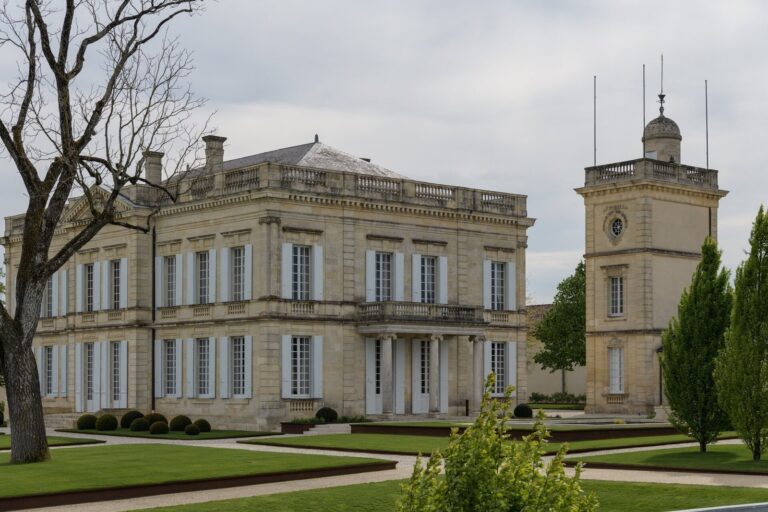
The château is the estate’s principal building. Its interior and exterior were later rehabilitated as part of work to renew the property.
Vineyards
The vineyard covers about 50 hectares and is divided into roughly 15 distinct growing areas. The estate also holds three hectares in the Haut-Médoc appellation. Its soils are gravel from the Quaternary geological period. Cabernet Sauvignon is the leading grape variety, followed by Merlot, with smaller plantings of Cabernet Franc and Petit Verdot. The vines average 35 years of age, and workers harvest the grapes by hand.
Winemaking facilities
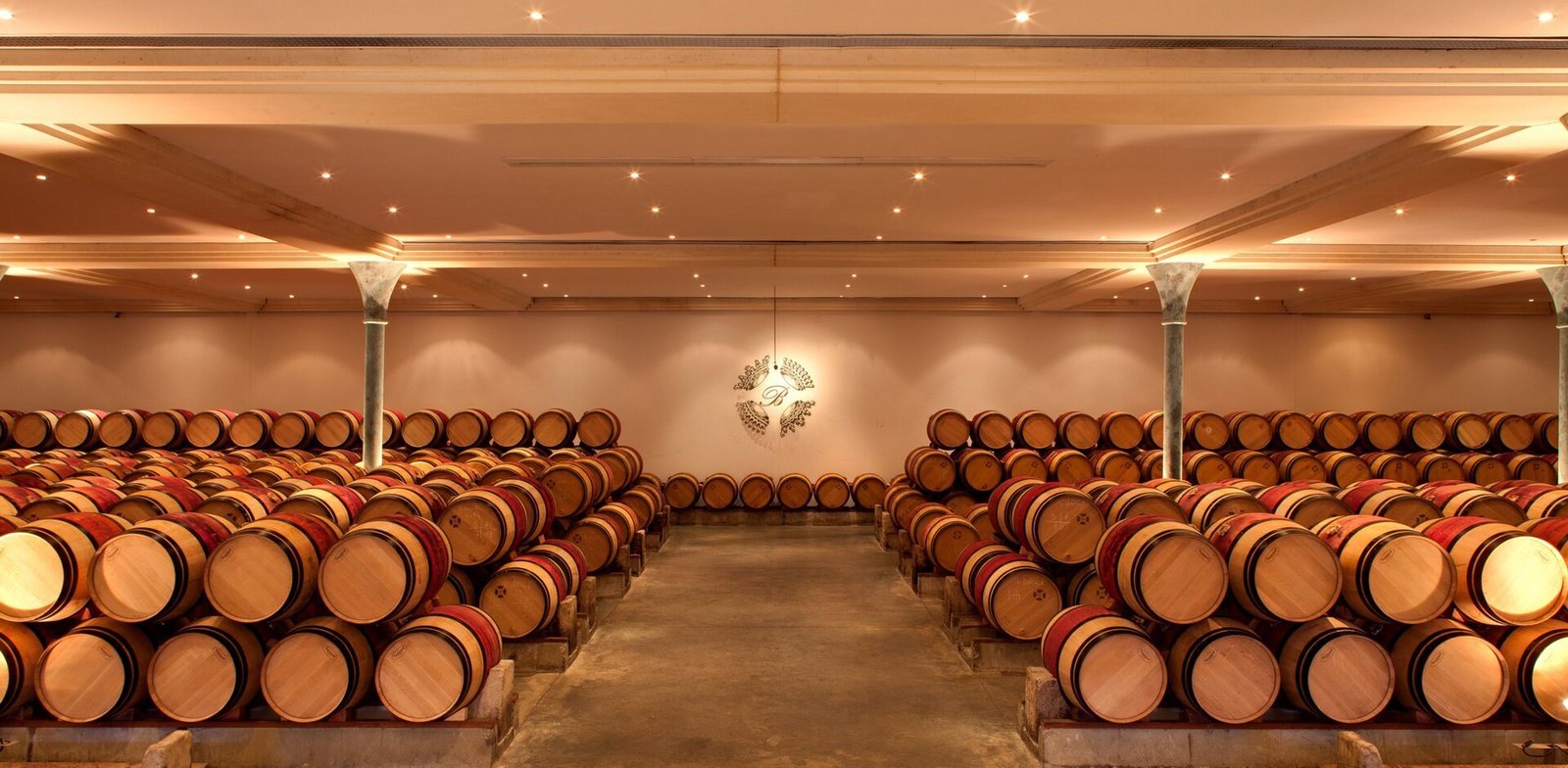
A gravity-flow winery, which moves grapes or wine between stages using gravity rather than pumps, was installed in 1991. Its 28 temperature-controlled stainless-steel vats allowed grapes from individual vineyard areas to be fermented separately without pumping. Ten vats were added in 2010. The newer gravity-flow cellar has 65 suspended vats, and the total number of fermentation vats increased from 38 to 75. It was the Médoc’s first suspended-vat cellar with this many vats. Primary fermentation lasts about three weeks. Around one-third of production undergoes malolactic fermentation, a secondary process that converts malic acid into lactic acid, in new oak barrels. The wines then age for 18 to 24 months in oak, with half of the barrels new.