Tamnougalt: A Historic Kasbah and Oasis in Morocco
Site at a Glance
- Popularity
- Medium
- Country
- Morocco
- Primary era
- Unclassified
- Eras represented
- Unclassified
- Civilizations
- Unclassified
- Site type
- Settlement
- Remains
- Town
On this page6 sections
History
Tamnougalt is a historic settlement in Morocco’s Draa River valley, formerly the capital of the Mezguita region and a residence of local caids, or governors. Its kasbah served as a garrison during Saadian rule, the Moroccan dynasty that preceded the Alaouites, although its construction date is unknown. The name means “meeting point” in Tachelhit, an Amazigh language spoken in southwestern Morocco.
Caids and political change
Tamnougalt’s political and economic influence grew in the eighteenth century, when a sultan of the Alaouite dynasty appointed a local caid. The caid’s sons continued to govern the area, extending their authority as far as the Dades Valley, until Morocco gained independence. In 1874, Thami El Glaoui, a caid from the Telouet family, expelled the area’s caid from the territory of Ouarzazate.
During a visit in 1884, French explorer Charles de Foucauld noted that Tamnougalt was the capital of a region governed by a local caid. In 1907, the regional caid offered forces from Mezguita to defend Sultan Moulay Hafid against his brother. Thami El Glaoui began a military campaign to take control of the region in 1919; afterward, his cousin took up residence in the kasbah.
Jewish community and traditions
In the 1950s, about 210 Jewish residents lived in Tamnougalt’s mellah, or Jewish quarter. A Talmud Torah, a school for Jewish religious instruction, operated there. Residents farmed plots in partnership with Arab neighbors, and some traded in dates.
The medieval Arab geographer Yaqut al-Hamawi described the overwhelming majority of merchants in the Draa Valley as Jewish. At Tamnougalt, members of a local Kohen tribe, part of the hereditary Jewish priestly line, were buried in the Jewish cemetery. They were sought out for treating eye diseases and venerated by Muslims as well as Jews; a rabbi was also buried there. The annual Moussem Ellama, a communal cultural and religious gathering for surrounding villages, takes place in the first week of October.
Remains
Kasbah and oasis
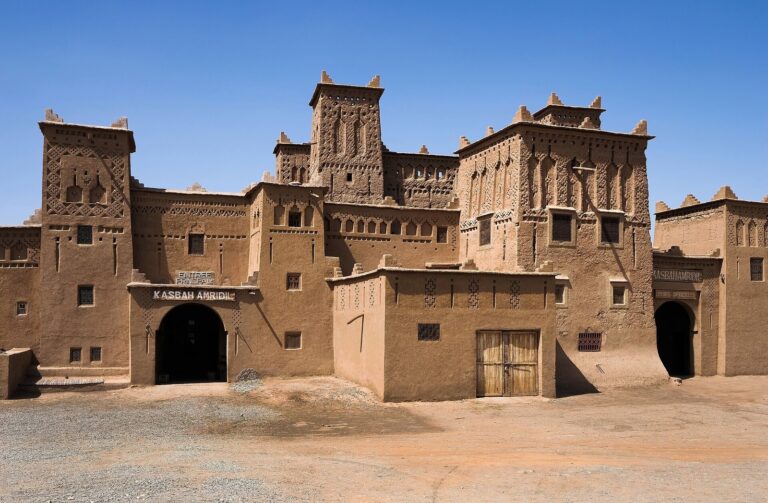
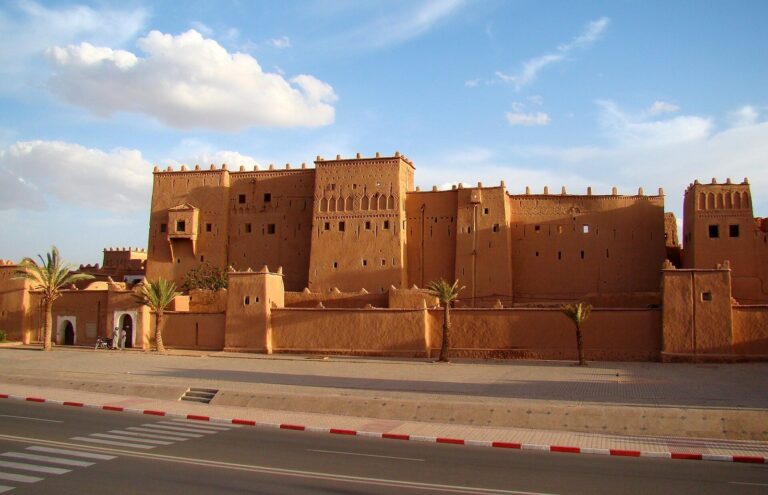
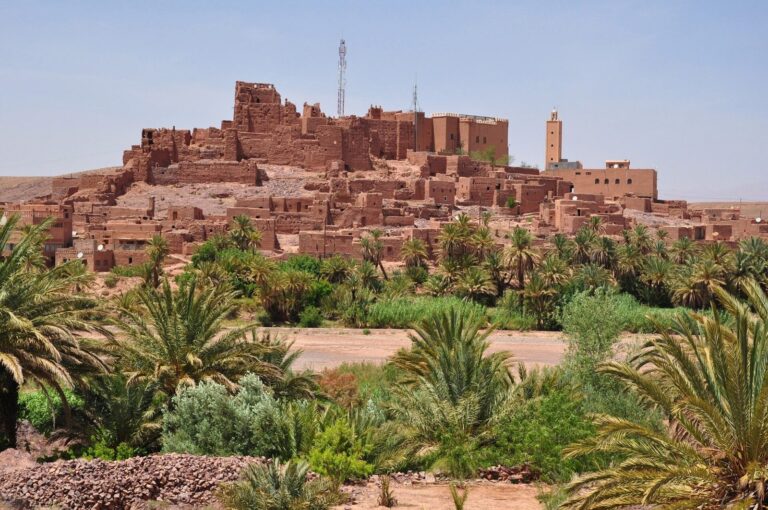
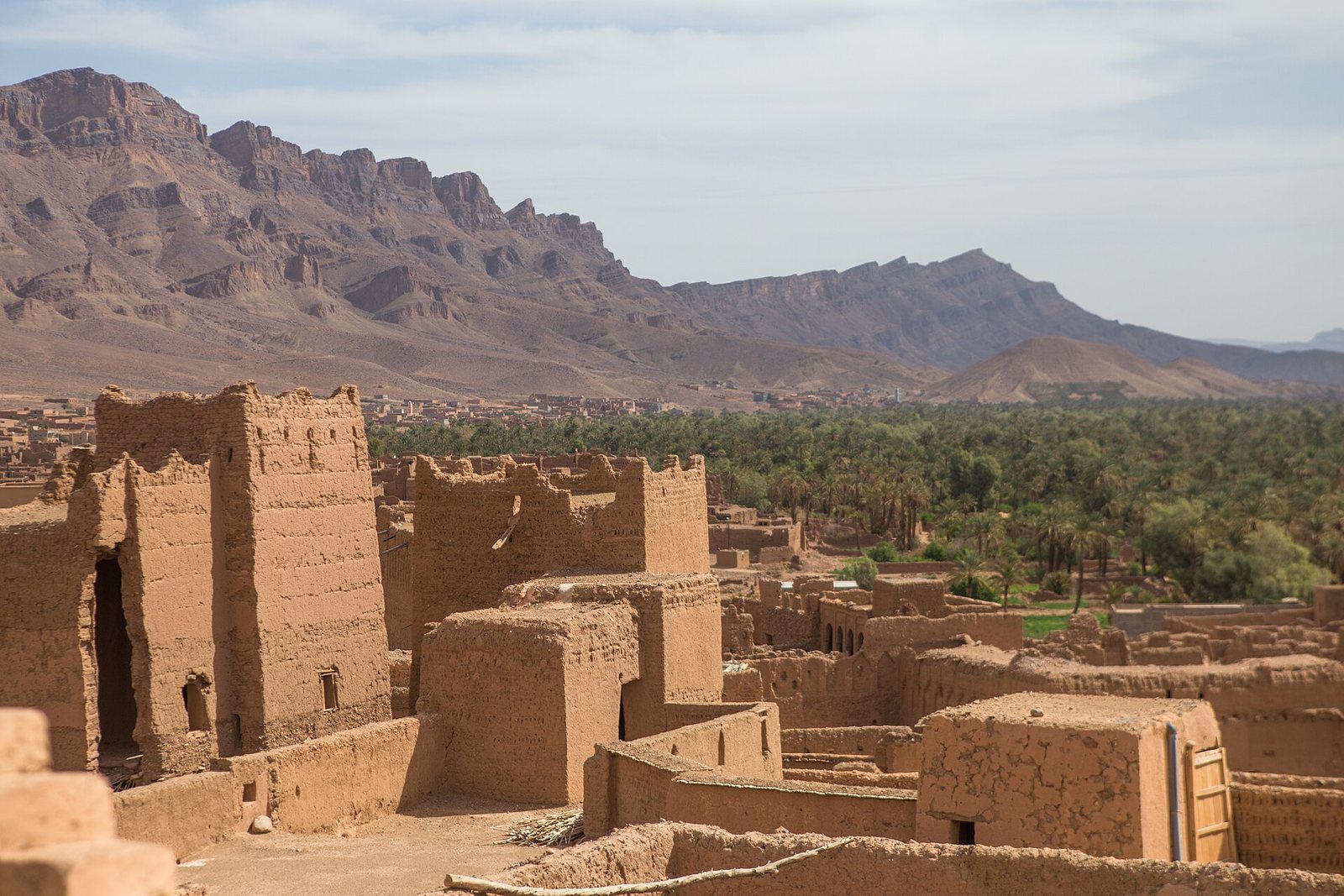
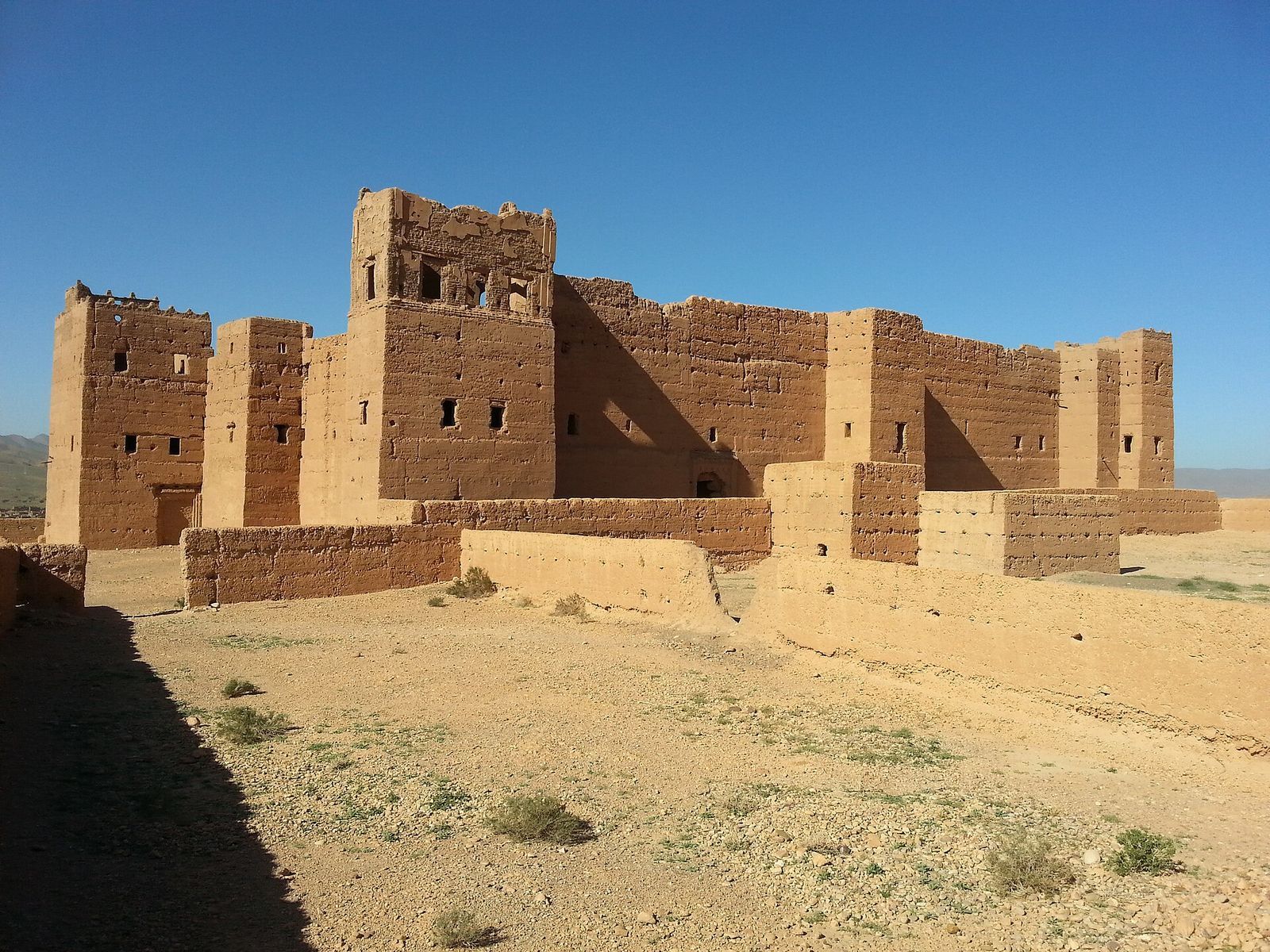
Tamnougalt comprises a kasbah and a date-palm oasis in the Atlas Mountains, within the Draa River valley. The kasbah is near Agdz, at the foot of Jbel Kissane, a mountain that rises to the north and dominates the landscape. Ouarzazate lies about 75 kilometres away.
Mellah and cemetery
The mellah is east of the Draa River, opposite Agdz. The Jewish cemetery occupies a nearby hill; burials there followed Muslim practice.