Vardhangad Fort: A Maratha Frontier Outpost in Satara, India
Site at a Glance
- Popularity
- Medium
- Country
- India
- Primary era
- Early Modern
- Eras represented
- Early Modern
- Civilizations
- Maratha
- Site type
- Military
- Remains
- Fort
On this page8 sections
History
Construction and frontier role
Vardhangad Fort is a Maratha hill fort in Satara district, India. Chhatrapati Shivaji Maharaj, sovereign ruler and founder of the Maratha kingdom, began its construction in 1673, and it was completed in 1674. The fort served as an outpost guarding the eastern frontier of territory Shivaji had recently acquired.
Attacks and political change
In 1800, the fort was held by a Pratinidhi, a senior representative of the ruler. Mahadji Shinde, a prominent Maratha commander and statesman, besieged it with a force of 25,000 men. His troops attacked the Ramoshis, a community historically associated with watchkeeping and armed service, on the southwestern machi, or lower terrace. The defenders killed the horse of Muzafarkhan, one of Shinde’s generals. The terraces were then sacked and burned. The wife of Sarnobat Ghorpade, a senior military commander and sister of Shinde’s wife, intervened and halted further destruction.
Fattesingh Mane attacked in 1805. The Killedar, or fort commander, and the Karkhanis, an administrative and stores official, resisted. Mane later killed the Karkhanis and other officers and took horses from the surrounding area. Soon afterward, Mane himself was killed in a battle against Balvantrav Phadnis, a deputy of the Pratinidhi, whose forces were assisted by troops of Chintamanrav Patwardhan.
After the Battle of Vasantgad in 1807, the Maratha general Bapu Gokhale brought the Pant Pratinidhi to Cimanganv, a village in Koregaon just north of the fort, which then surrendered to him. The Pant Pratinidhi administered the fort for five years, until the Peshwa, the chief minister and later dominant political leader, took charge in 1811. The fort appears to have surrendered again in 1818.
Remains
Hill setting and defenses
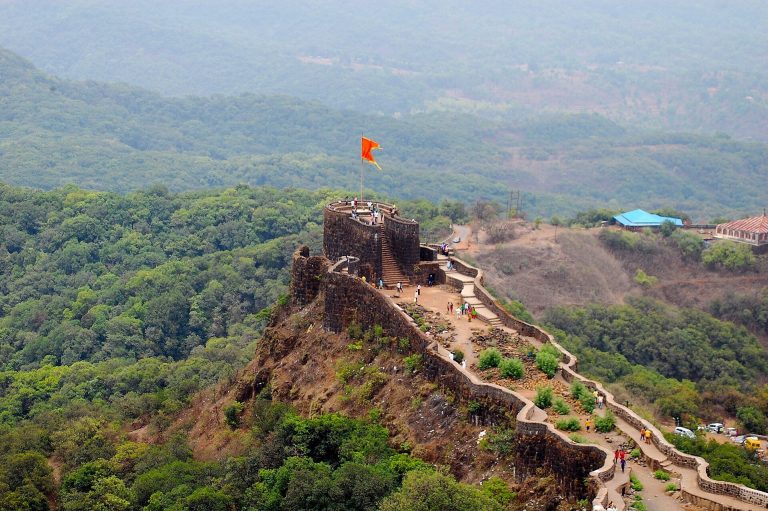
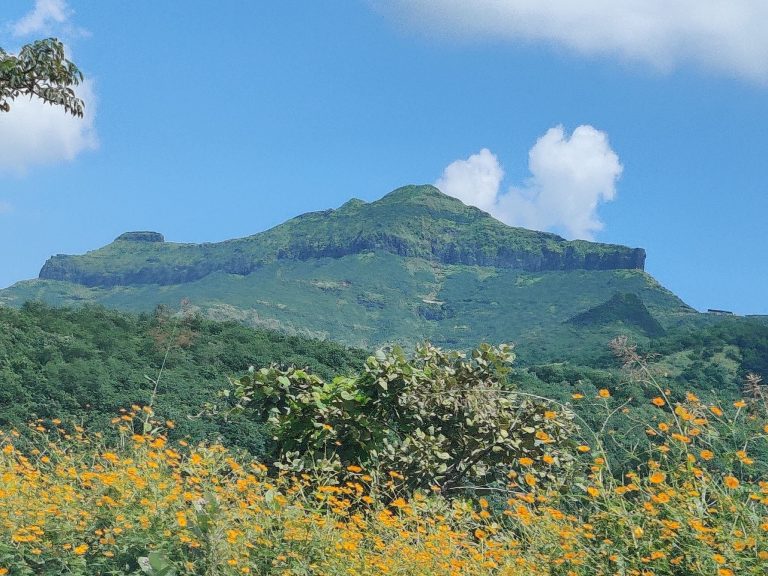
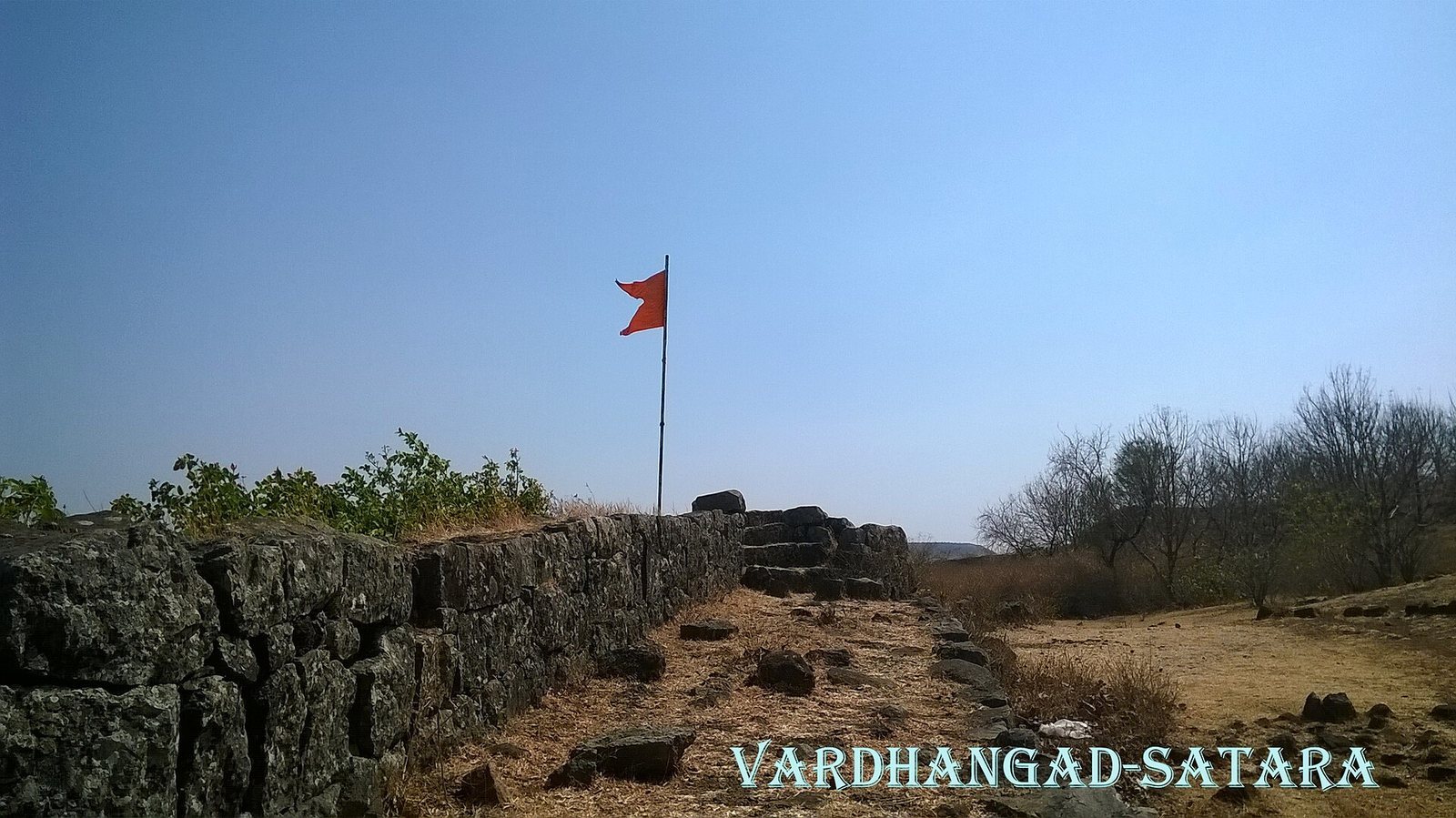
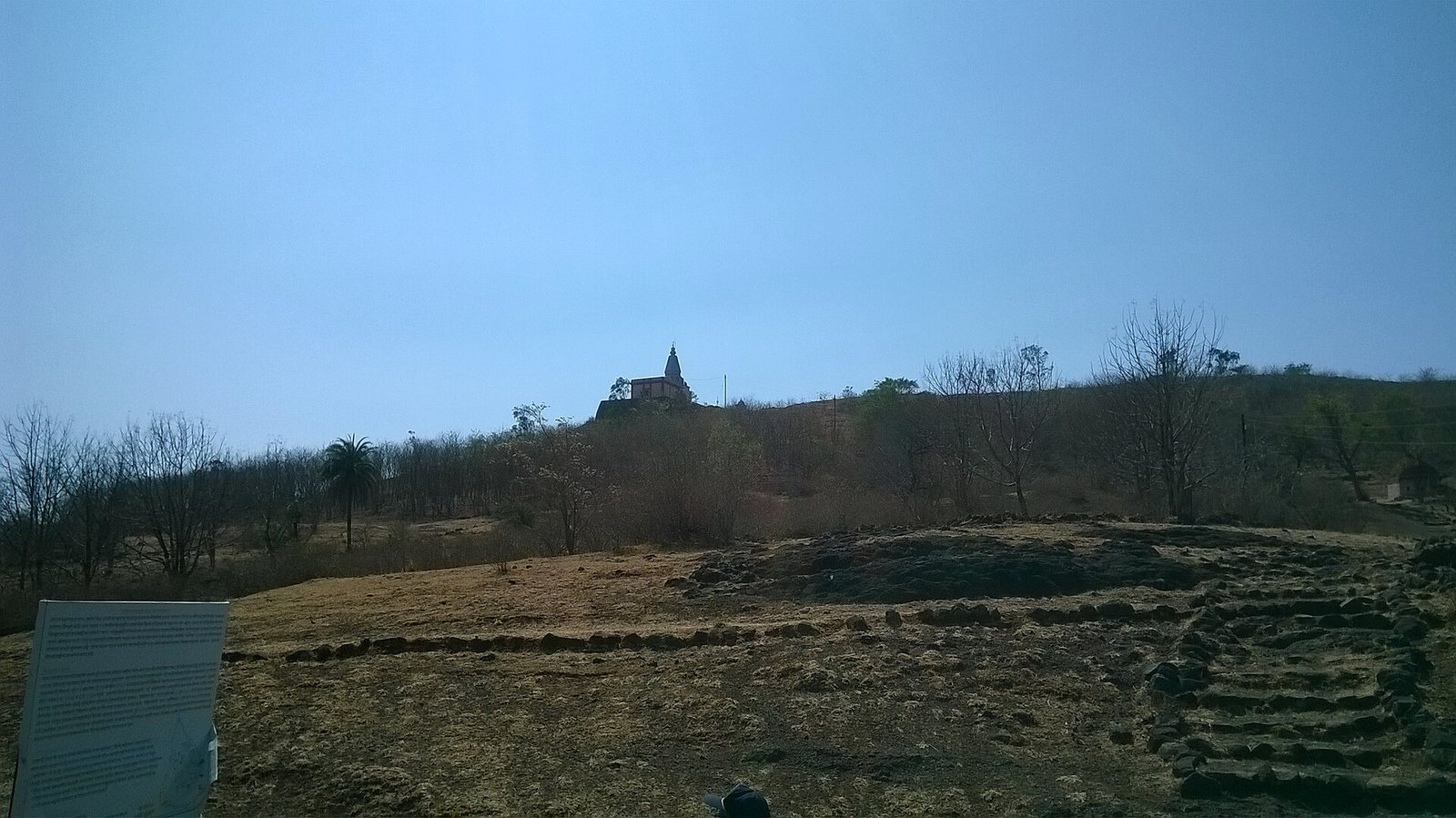
The round-topped fort occupies about 20 acres on the Bhadle-Kundla spur of the Mahadev range, along the boundary between Koregaon and Khatav talukas in Satara district. It lies about seven miles northeast of Koregaon and nine miles northeast of Satara. The stated elevation is 457 metres (1,500 feet); the hill rises about 900 feet above the plain to the west and 700 feet above it to the east. Black rock forms a ridge that projects sharply from the hill, while the surrounding steep slopes have shallow, loose soil. Lalgun hill to the north and Rameshvar hill to the south, each about 2,000 yards away, command the fort, though it can be approached from every side. Its walls follow the ridge, with hollows filled by masonry. The walls are mostly built of small stones, with mortar used in a few places. Their outer faces and parapets measure 10 to 15 feet, and the walls are about 16½ feet thick; the parapet is roughly two feet high on the inner side. The walls stand about six feet above the ground below them, while the rising ground behind offers little shelter at a distance. Several stretches have fallen.
Gateway and approach
The gateway stands midway along the south side and is reached by a turn to the southwest. It remains in good condition. Projecting walls on either side screen the entrance, which is visible only through a narrow passage from the northeast. The gateway has a pointed arch and a wooden door. A mark from a cannon shot beside the doorway is attributed to the 1805 attack. Halfway up the approach is an image of Maruti, a name for the Hindu deity Hanuman. A local belief holds that a person bitten by a snake is given neem-leaf juice and taken around the image; dizziness and vomiting are said to follow, as the legend describes the expulsion of the poison.
Temples and religious features
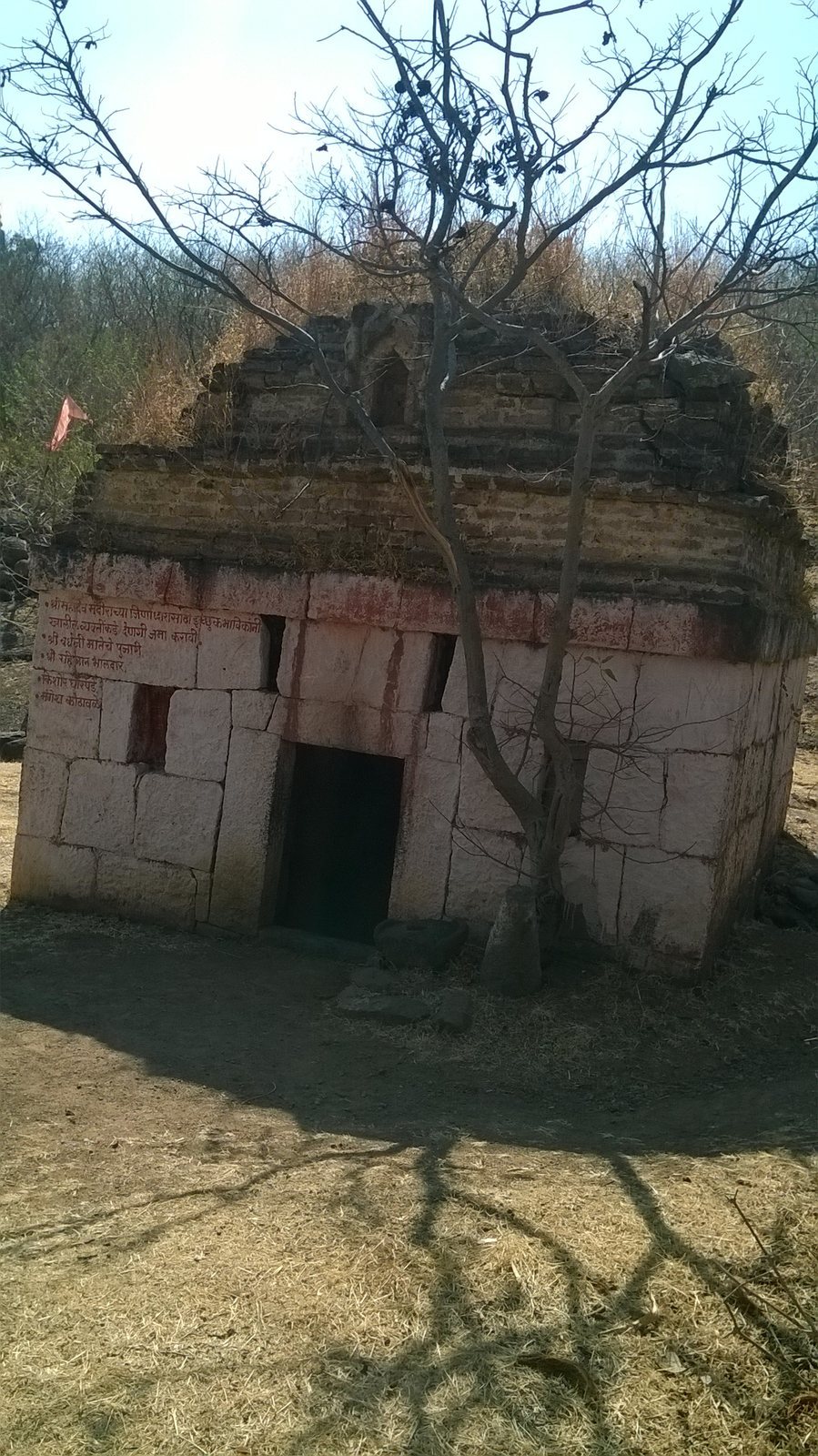
A small temple to Mahadev, an epithet of Shiva, stands just beyond the gateway. Its stone base is in good condition, while the upper part is dilapidated; a banyan tree grows nearby. The Vardhinidevi temple, dedicated to a Hindu goddess, has a stone base and brick upper section. An outer hall stands beside it, with a roof undergoing repair by the village council. Inside is a standing idol facing east, and an idol of Parashuram, a figure in Hindu tradition often regarded as an avatar of Vishnu, is kept in the hall. A dipmal, or lamp pillar, stands outside in front of the temple. An annual fair is held there during Dasara, a major Hindu festival.
Ponds, garrison remains, and tunnel
Two ponds lie south of the Mahadev temple; their water is not potable. Two larger ponds attributed to Muslim construction are about 200 yards south of the road. On the eastern side, a hollow contains two further ponds and the remains of the garrison quarters. The buildings there are in ruins, and prickly pear grows thickly across the area. Two small guns remain among the debris. The eastern side also has a small, year-round water supply. A tunnel said to lead to Mahimangad, another fort in Maharashtra, has an entrance covered by prickly pear and stones.