Heltorf Castle: A Moated Estate in Düsseldorf
Site at a Glance
- Popularity
- High
- Country
- Germany
- Primary era
- Modern
- Eras represented
- Medieval, Modern
- Civilizations
- Holy Roman Empire, Kingdom of Prussia
- Site type
- Domestic
- Remains
- Castle
On this page11 sections
History
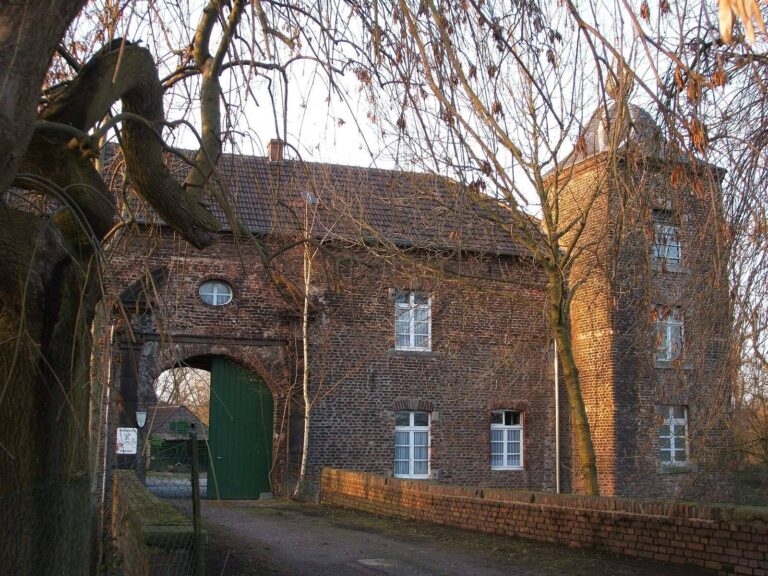
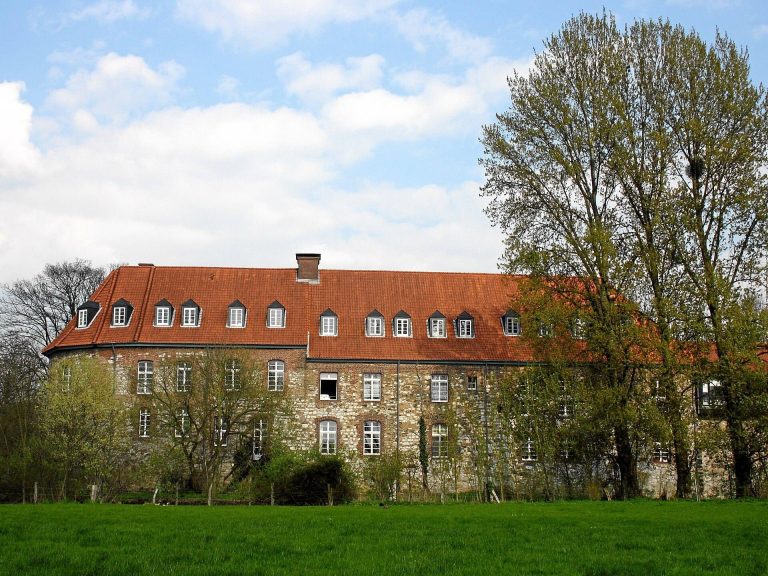
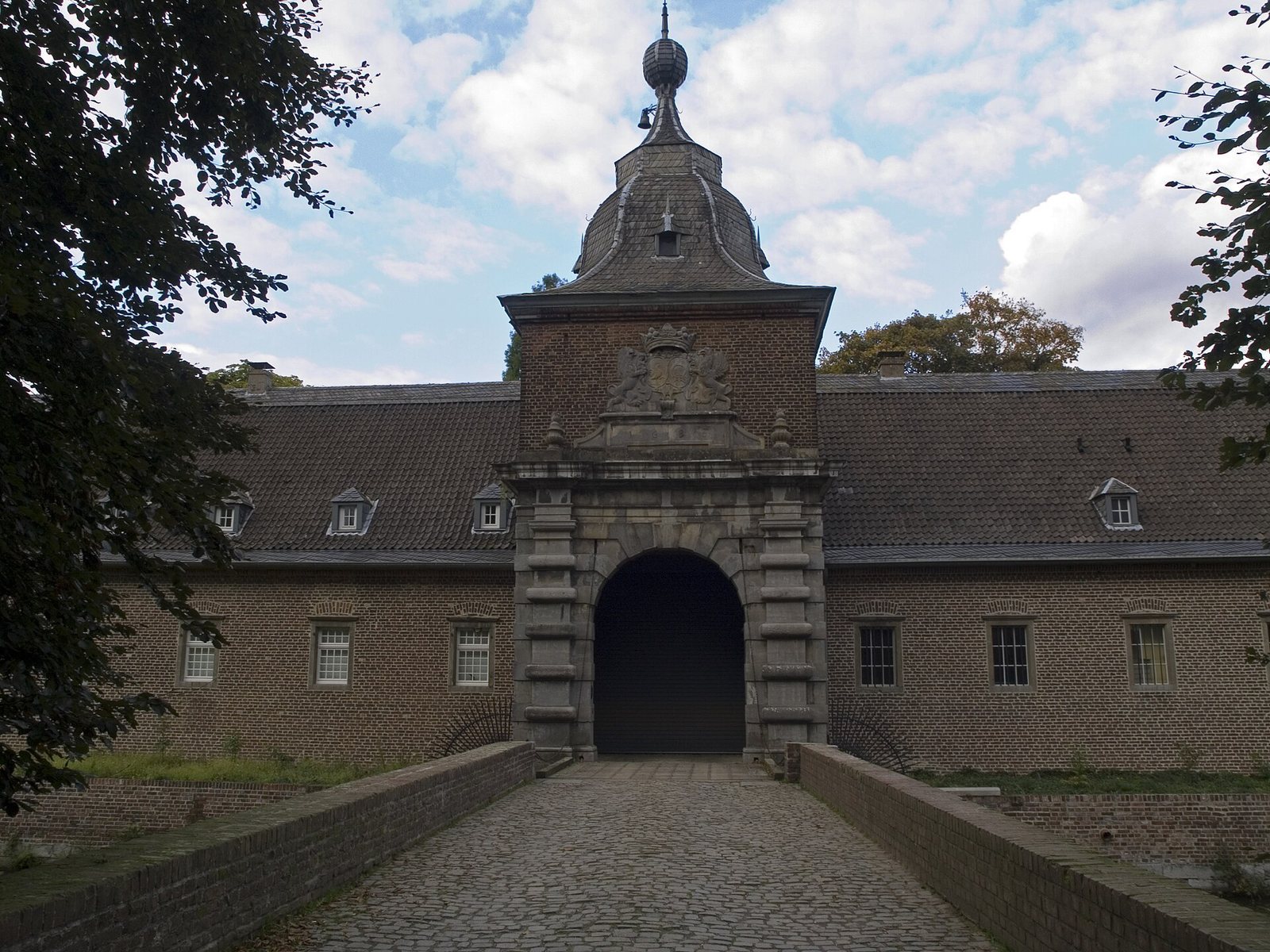
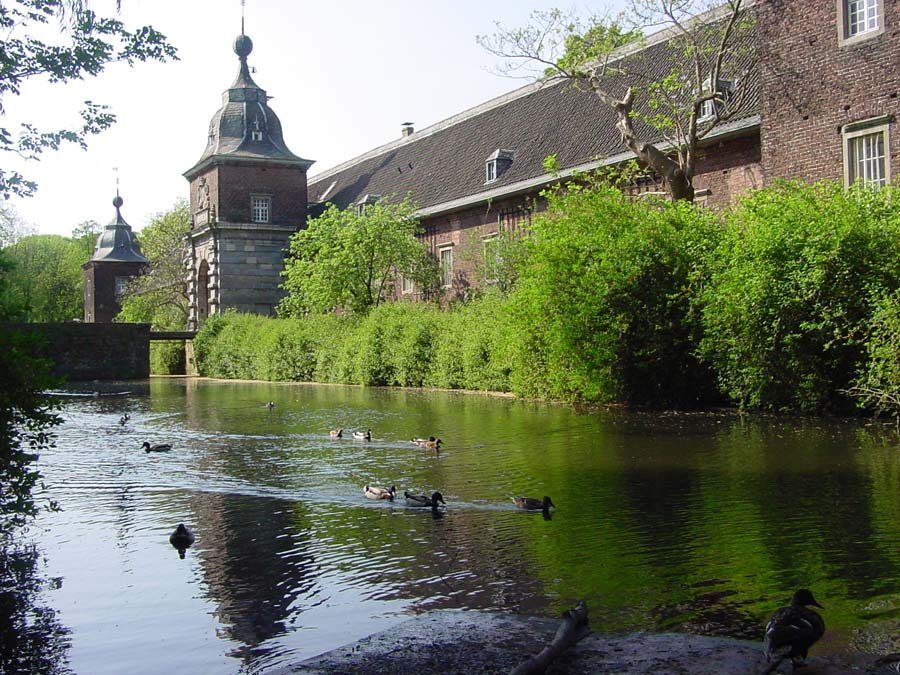
Heltorf Castle is a moated castle in Angermund, in northern Düsseldorf, Germany. Founded in the 12th century, it served the administration of nearby agricultural and forestry estates, in a district where forestry had also been practiced since that century.
The locality belonged to the monastery of St. Suitbert at Kaiserswerth and appears in an 11th-century rent register as the farmstead of Helethorpe. The Lords of Heldorp were among Heltorf’s early owners. Otto von Heldorp is named as owner in 1167 and appears again in a charter from about 1189 concerning Arnold von Teveren’s pledge of right-bank holdings to Engelbert of Berg for 100 marks. The pledged lands included Holthausen, Düsseldorf, Buscherhof, Eickenberg near Millrath, Monheim, Himmelgeist, the Rhine bank near Holthausen, and the Anger.
Medieval and early modern owners
In 1288, Zobodonus de Heldorp witnessed the granting of town rights to Düsseldorf. He was probably the same person as Albertus, known as Zobbe von Heltorf. In 1360, Adolf von Graschaf and his wife, Jutta von Stein, sold Heltorf to Thomas von Lohausen, called Troisdorf, and his wife, Aleide von Geynhoven. The estate stayed with their family, later known as von Troisdorf, for five or six generations. In 1569, Maria, daughter and heiress of Sibert von Troisdorf, brought Heltorf into her marriage to Wilhelm von Scheid, called Weschpfennig.
Heltorf also held the right to keep wild horses in the woodland between Duisburg and Düsseldorf. Only a small number of knightly estates, along with the Duke of Berg, possessed this privilege.
The Counts of Spee and the estate
In 1649, a granddaughter of Maria and Wilhelm von Scheid, also named Maria, married Friedrich Christian von Spee. After her parents died in 1662, Heltorf passed to the Counts of Spee, whose family still owns the estate.
The estate continues to include extensive land in Düsseldorf and the southern Ruhr region, and forestry operations follow sustainable-management principles. An annual open-air celebration honoring Mary is held in the park on Ascension Day, a Christian feast commemorating Jesus’s ascent to heaven, and draws guests from nearby localities.
Remains
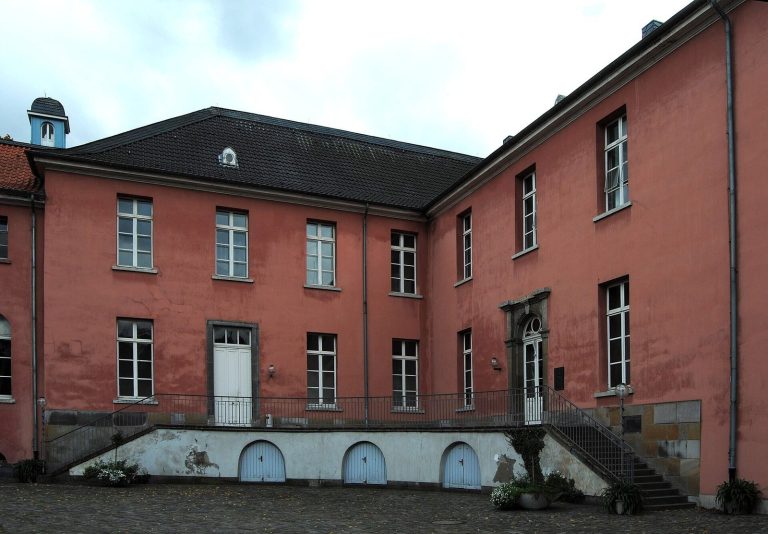
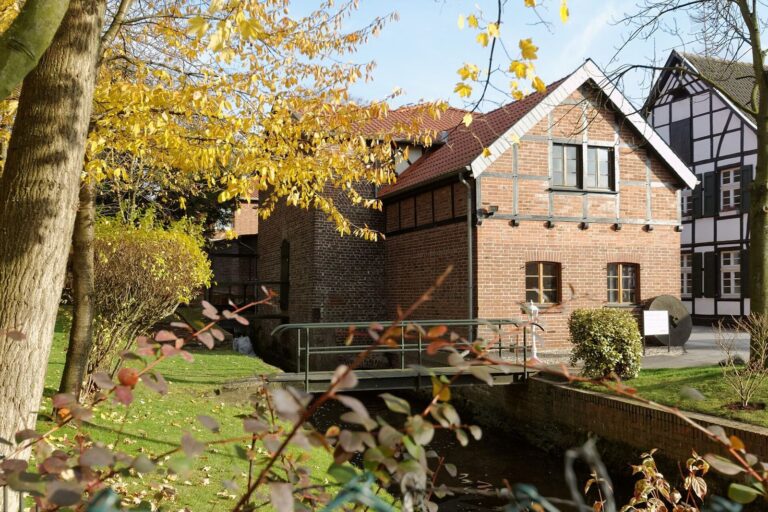
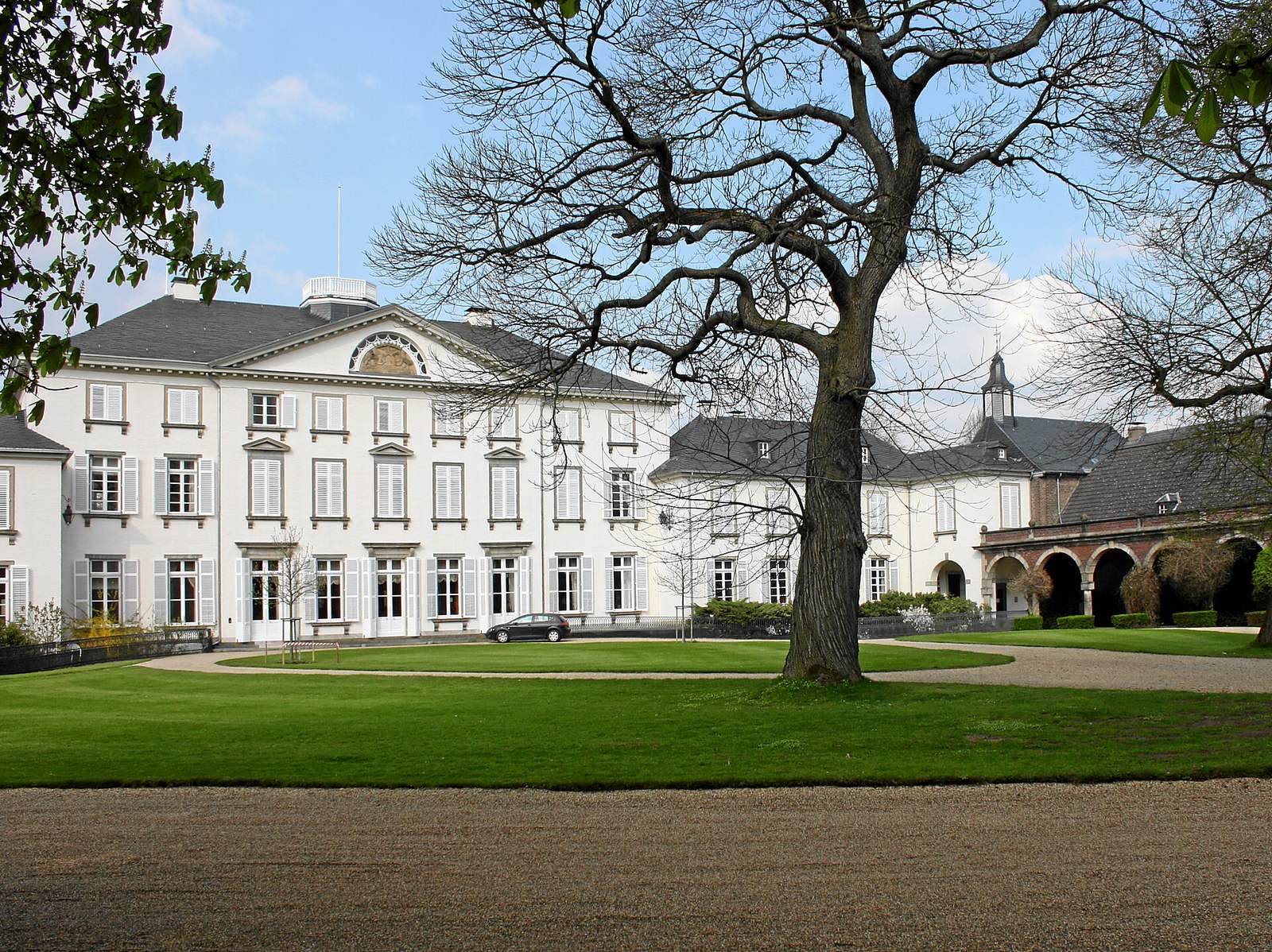
The estate brings together a water-protected castle beside the Angerbach and a 54-hectare landscape and woodland park. Its buildings include an early-19th-century Classicist manor house, a chapel beside it, a painted garden hall, and a later library annex.
Castle buildings
Manor house
The manor house was newly built in the early 19th century to plans by Essen architect Heinrich Theodor Freyse. Its Classicist design draws on ancient Greek and Roman forms.
Chapel
A castle chapel stands beside the manor house.
Garden hall and library
Garden hall
The large garden hall contains a cycle of frescoes devoted to Frederick I, known as Barbarossa, and events associated with his era. Karl Stürmer’s early contributions, dating to 1826, include a scene of Frederick I reconciling with the pope at Venice and an overdoor painting. Heinrich Mücke completed a painting of Henry the Lion’s release from an imperial ban, a formal exclusion from the protection of imperial law, at the Imperial Diet of Erfurt in 1829. His other works include The Humiliation of the Milanese (1833), Frederick I’s coronation as emperor and a gray-toned overdoor painting (1837), and scenes of St. Bernard preaching the Crusade and Bishop Otto of Freising (1838). Carl Friedrich Lessing painted The Battle of Iconium in 1831. Hermann Freihold Plüddemann added The Storming of Iconium by Frederick of Swabia in 1840 and Frederick’s Death in 1841. These wall paintings are regarded as a high point of the Düsseldorf School, a 19th-century artistic movement particularly known for historical scenes.
Library
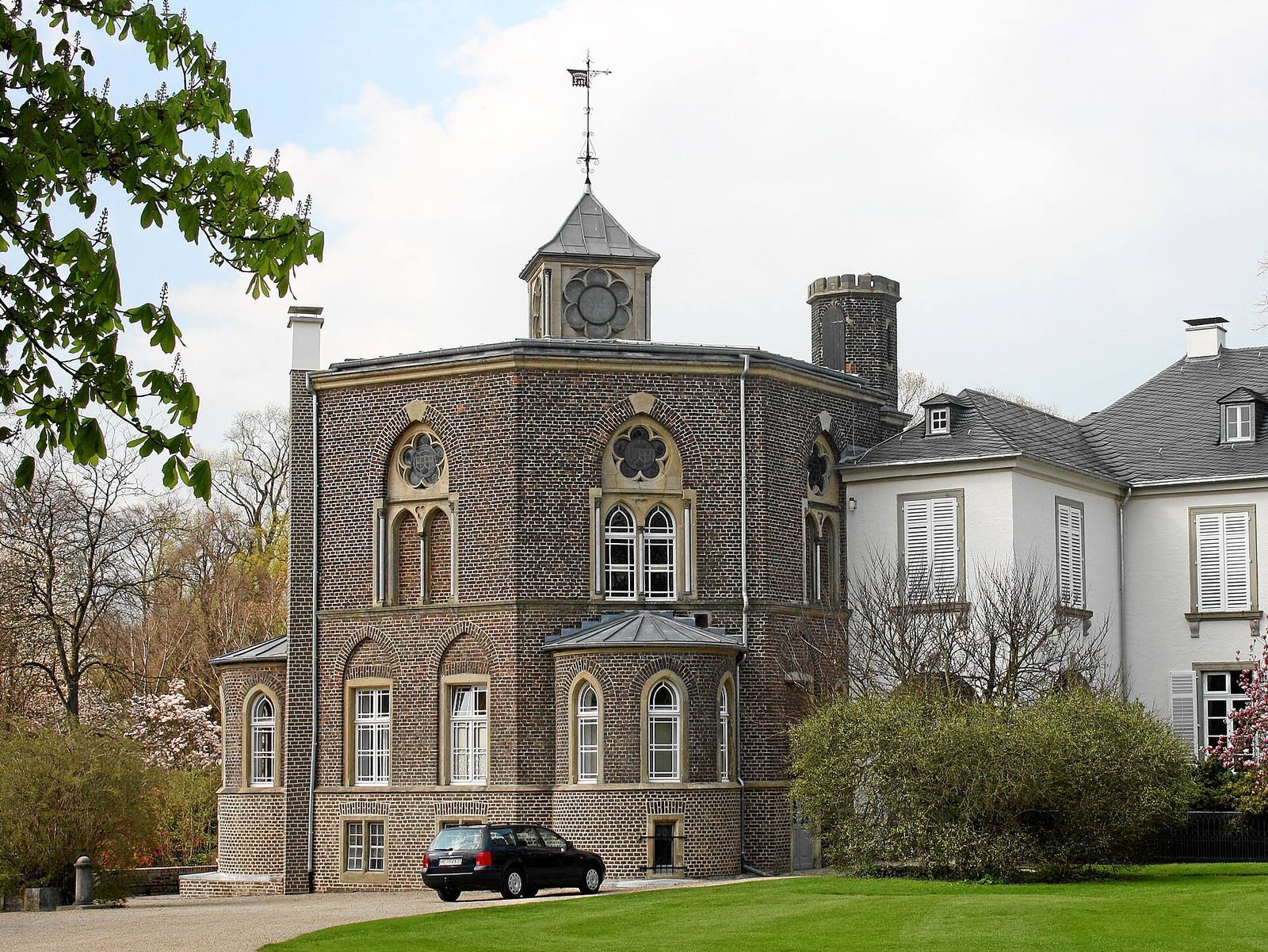
The Count von Spee library holds an extensive collection of old books. In 1862, Count Wilhelm added a tower-like annex in Neo-Gothic style, a revival of medieval Gothic architecture. The design was by Cologne architect Vincenz Statz.
Landscape park
The park follows the English landscape approach, designed to evoke natural scenery rather than formal geometric gardens. A plan proposed by the French abbot Biarelle, the head of a monastery, in 1796 was carried out by landscape architect Maximilian Weyhe in 1803. A castle pond occupies the park’s center.
The grounds include exotic woody plants and a rhododendron planting regarded as Germany’s second-oldest.