Hôtel de police de Marseille: Police Headquarters in a Former Episcopal Palace
Site at a Glance
- Popularity
- Medium
- Country
- France
- Primary era
- Early Modern
- Eras represented
- Early Modern, Modern
- Civilizations
- French
- Site type
- Religious
- Remains
- Palace
On this page8 sections
History
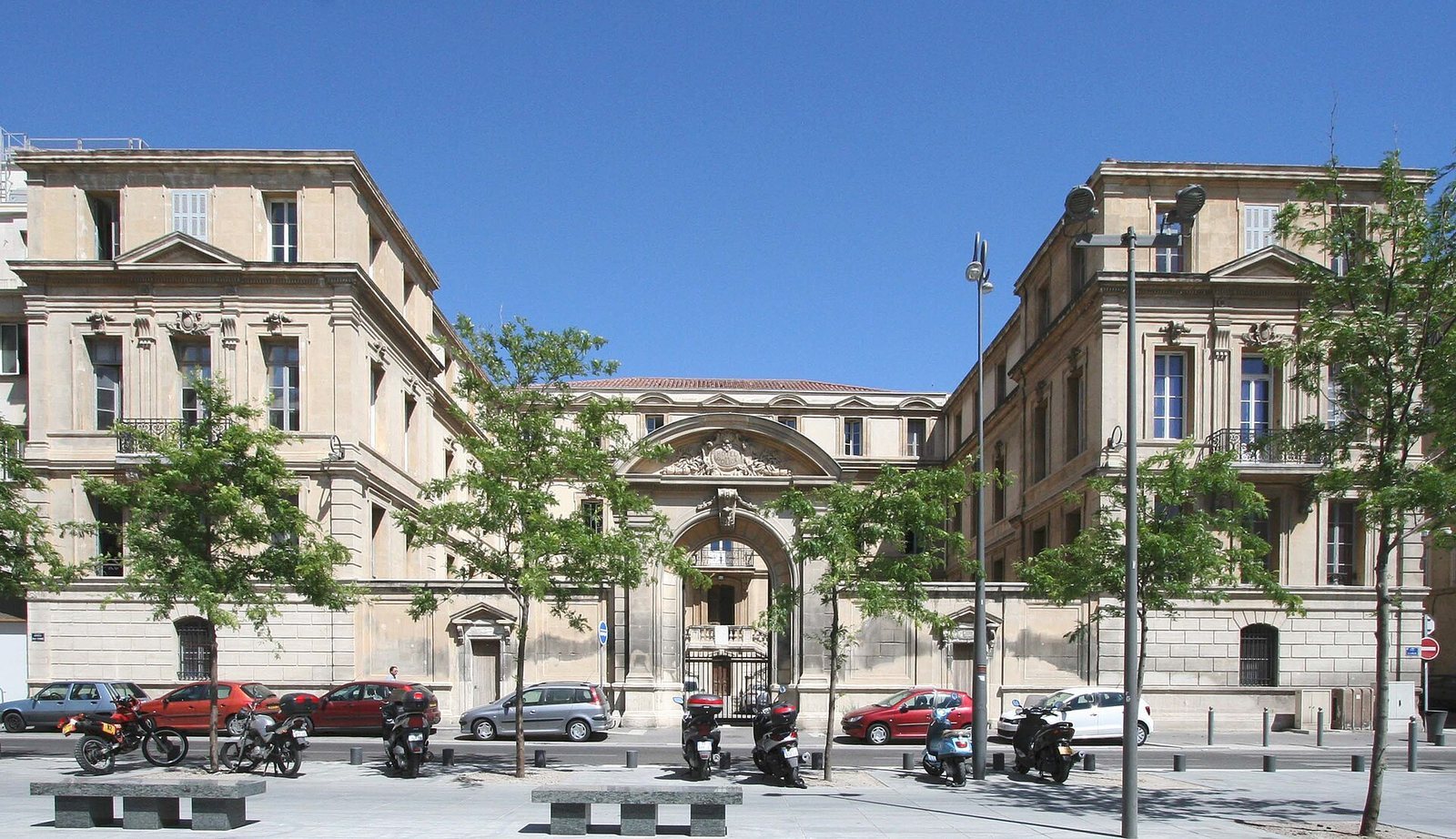
The Hôtel de police de Marseille, in France, is a police complex occupying the former episcopal palace, the bishop’s official residence and administrative center of the diocese. An earlier palace preceded the medieval building, and a mosaic thought to belong to it has been interpreted as an assertion of the bishop’s authority in relation to the bishops of Arles and Aix-en-Provence.
Medieval Palace and Demolition
From the thirteenth century, the medieval palace stood near Marseille’s ramparts beside a large-stone tower known as the Jewish Tower. Bishop Jean Gasc enlarged the palace in 1337. In 1351, his successor, Robert de Mandagout, added the Tower of Rostagnier, purchased from Rostan de Sabran and the widow of Gui de Chateauneuf for 90 gold florins.
In 1524, imperial troops led by Charles III, Duke of Bourbon, a commander serving Emperor Charles V, attacked Marseille. To strengthen the city’s defenses, authorities demolished buildings close to the ramparts, including the palace and a Franciscan friary, a religious house of the Order of Friars Minor. The friary held relics of Saint Louis of Anjou, a Franciscan friar and bishop later venerated as a saint. Marseille’s bishops thereafter lived in private houses.
Construction and Return to the Bishopric
In 1620, Bishop Arthur d’Épinay de Saint-Luc asked Louis XIII for the royal-domain site known as the Foundry, near the cathedral, to build a new palace. The king granted the request through letters patent, formal royal instruments, in January 1621. D’Épinay died a few months later, and the project did not proceed at that time.
Bishop Étienne de Puget later began work at the site, where a foundry for bells and cannons had stood. To finance the project, he transferred jurisdiction over Saint-Marcel, then part of Aubagne, to Marseille under an agreement dated 29 May 1647. Royal letters patent confirmed the transfer in July 1648. The palace’s construction dates from 1648, and Puget’s successor, Toussaint de Forbin-Janson, completed it.
Around 1736, Bishop Henri de Belsunce added a gallery. During the French Revolution, the palace passed into state ownership and served as an equipment depot. A royal ordinance returned it to the bishopric on 31 October 1822, and repairs were finished at the end of 1825.
From Episcopal Residence to Police Headquarters
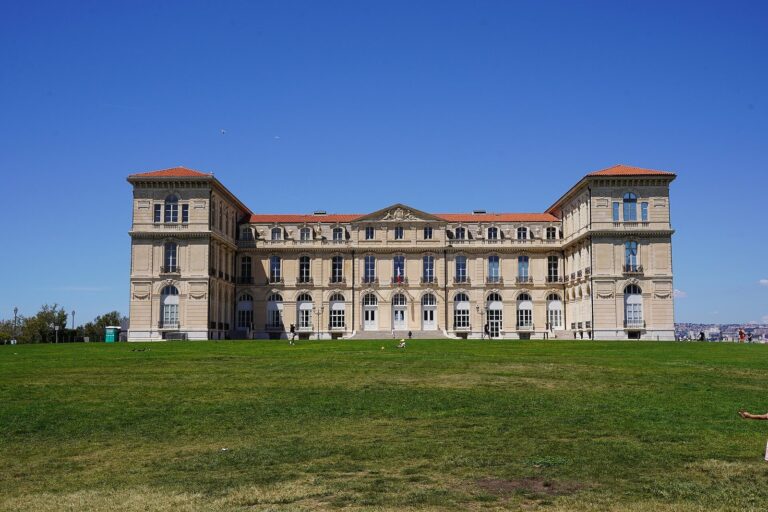
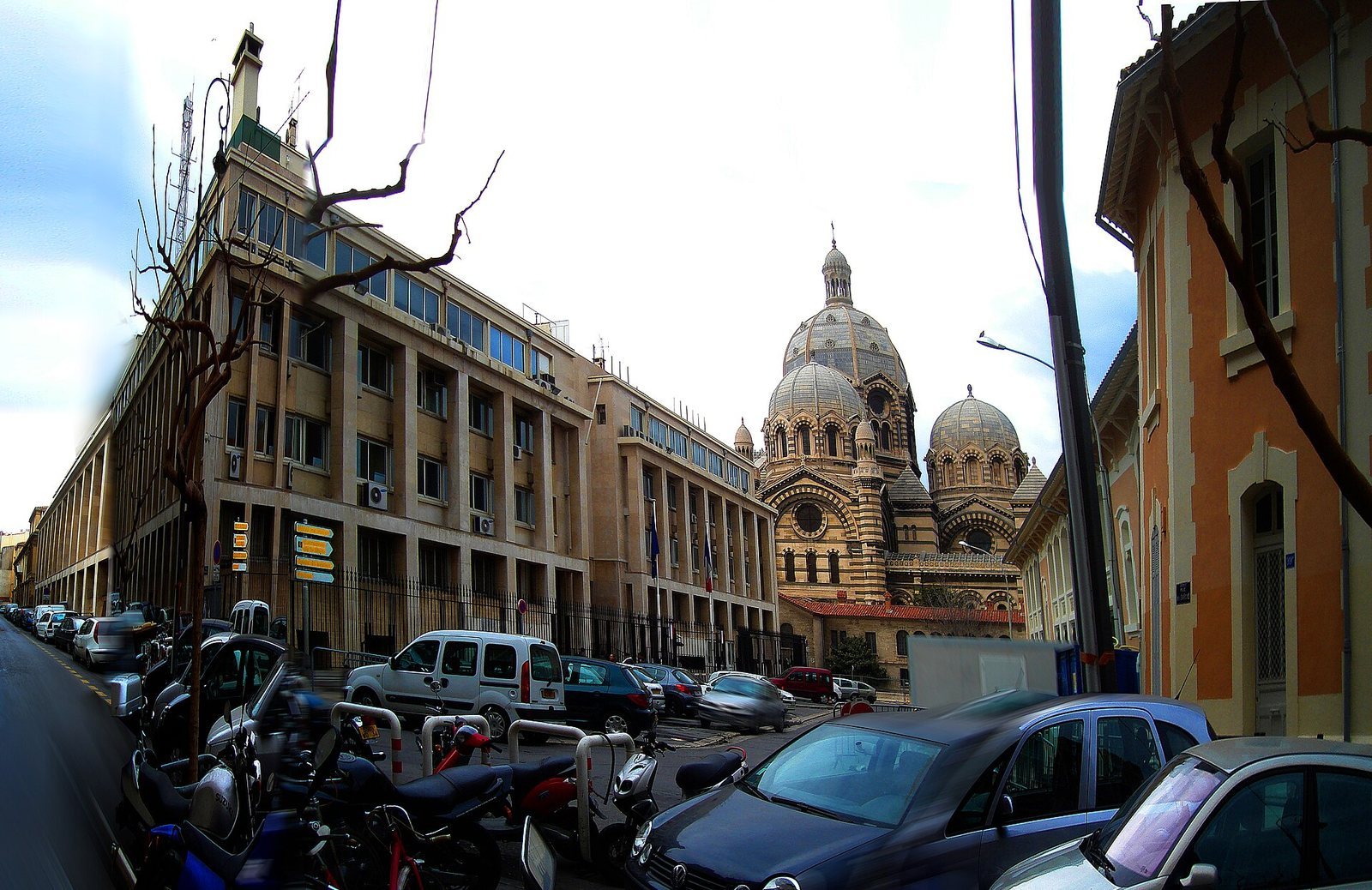
France’s 1905 law separating church and state led to Bishop Pierre Paulin Andrieu’s expulsion from the palace on 20 December 1906. The National Police moved into the building on 1 June 1908, after which it was commonly called the Bishop’s Palace, recalling its former use. A modern building was added in 1950 as the older premises had become too small for police services. The complex now houses Marseille’s central police station and the Interregional Directorate of Judicial Police. In 1978, the palace’s façades, roofs and street portal were listed as historic monuments.
Remains
The present complex combines the former episcopal palace with a modern police building. The older building retains its façades, roofs and street portal. Archaeological remains associated with an earlier episcopal complex include traces of a church and baptistery, as well as a richly decorated mosaic.
Early Christian Remains
Church and Baptistery
The earlier complex included a church and a baptistery, a building or space used for Christian baptism. Remains of these structures came to light during construction of the new cathedral in the nineteenth century.
Mosaic
A mosaic uncovered near the Cathedral of La Major in 2008 is thought to have belonged to the earlier palace. Its design is characteristic of fifth-century early Christian art. Vases holding leafy acanthus, a classical plant motif, appear alongside two pairs of multicolored peacocks facing each other, with a rose stem between them. Interlaced patterns and wheel motifs create geometric frames around the images.
The mosaic covers about 15 square metres, while its original area was about twice as large. Thousands of small colored pieces, called tesserae, form the design in black, white, ochre, yellow, red, sky blue and copper green. They were laid on crushed brick bonded with lime mortar.