Knesebeck Castle: A Medieval Noble Seat and Administrative Center
Site at a Glance
- Popularity
- Medium
- Country
- Germany
- Primary era
- Early Modern
- Eras represented
- Medieval, Early Modern
- Civilizations
- Holy Roman Empire
- Site type
- Civic
- Remains
- Palace
On this page9 sections
History
Knesebeck Castle is a medieval lowland castle in Germany, first recorded in 1296. It became the ancestral seat of the black branch of the von dem Knesebeck family, a medieval German noble house, and held regional importance until about 1400, although its defensive value was relatively limited.
Medieval lordship and changing control
The black branch of the family is first noted around 1248, through Wasmodos von dem Knesebeck. In 1318, the castle appeared in the feudal register of Duke Otto of Brunswick. During the fourteenth century, the dukes of Brunswick-Lüneburg granted it as a fief, property or rights held from a lord in return for obligations, to various lords. In 1340, members of the family pledged castle peace, an agreement to maintain peace in matters concerning a castle, to Dukes Otto and Wilhelm of Brunswick and Lüneburg and the Duke of Saxony.
In 1344, the brothers Paridam and Iwan von dem Knesebeck raided five nearby villages and plundered their farms. After being captured and imprisoned in Lüneburg, they were freed for ransom and swore not to seek revenge. The following year, Paridam pledged a quarter of his estate to the dukes of Brunswick and Lüneburg. The estate was then already referred to as a castle.
In 1348, the dukes placed the castle in the hands of Paridam von dem Knesebeck and the squires Paridam Plote, Henning vor dem Knesebeck, and Huner von Bartensleben for one year of administrative use. In 1351, Dukes Heinrich of Grubenhagen and Wilhelm of Brunswick released the Knesebecks and their castle from their feudal agreement. Three years later, the squires Günther von Bartensleben and Heinrich von Wrestede held the fief; later holders received it from Duke Magnus II of Brunswick.
In 1350, ducal troops destroyed Burg Wittingen to end robberies associated with Paridam and Iwan, and the administrative seat was transferred to Knesebeck. From the mid-fourteenth century, Knesebeck served chiefly as an administrative and judicial center. Complaints about robberies by members of the family reached the Duke of Brunswick again in 1395. The family lost the castle after 1400, and Manecke von Estorf is named as its owner in 1428.
Princely administration and wartime occupation
During the sixteenth and seventeenth centuries, the castle served as a princely administrative seat. Its officials governed about 20 villages in the Knesebeck and Wittingen jurisdictions and administered the courts of Brome and Fahrenhorst. In 1626, troops of Duke Christian of Brunswick occupied Knesebeck during the Thirty Years’ War, the European conflict fought from 1618 to 1648. Swedish regiments quartered in nearby Wittingen in 1639 were also housed at Knesebeck, where they remained until the war ended.
By around 1670, the administrative house and other buildings were in poor condition. Demolitions removed several buildings from the former castle grounds during the eighteenth and nineteenth centuries. The castle’s administrative and judicial functions ended in 1859, when its office was merged with the Isenhagen administrative jurisdiction. The Isenhagen district was formed in 1885.
Archaeological investigation and restoration
In 1916, prehistorian and castle researcher Carl Schuchhardt published a plan of the complex in an atlas. It showed more buildings than survive today. A local association dedicated to preserving the ruins formed in 1998, and the Gifhorn district archaeological service excavated the grounds in 1999, 2000, and 2001. The work revealed buried masonry, stone paving, and the filled inner moat. At a depth of 2.5 metres, excavators found a layer containing material from the castle’s thirteenth-century foundation period.
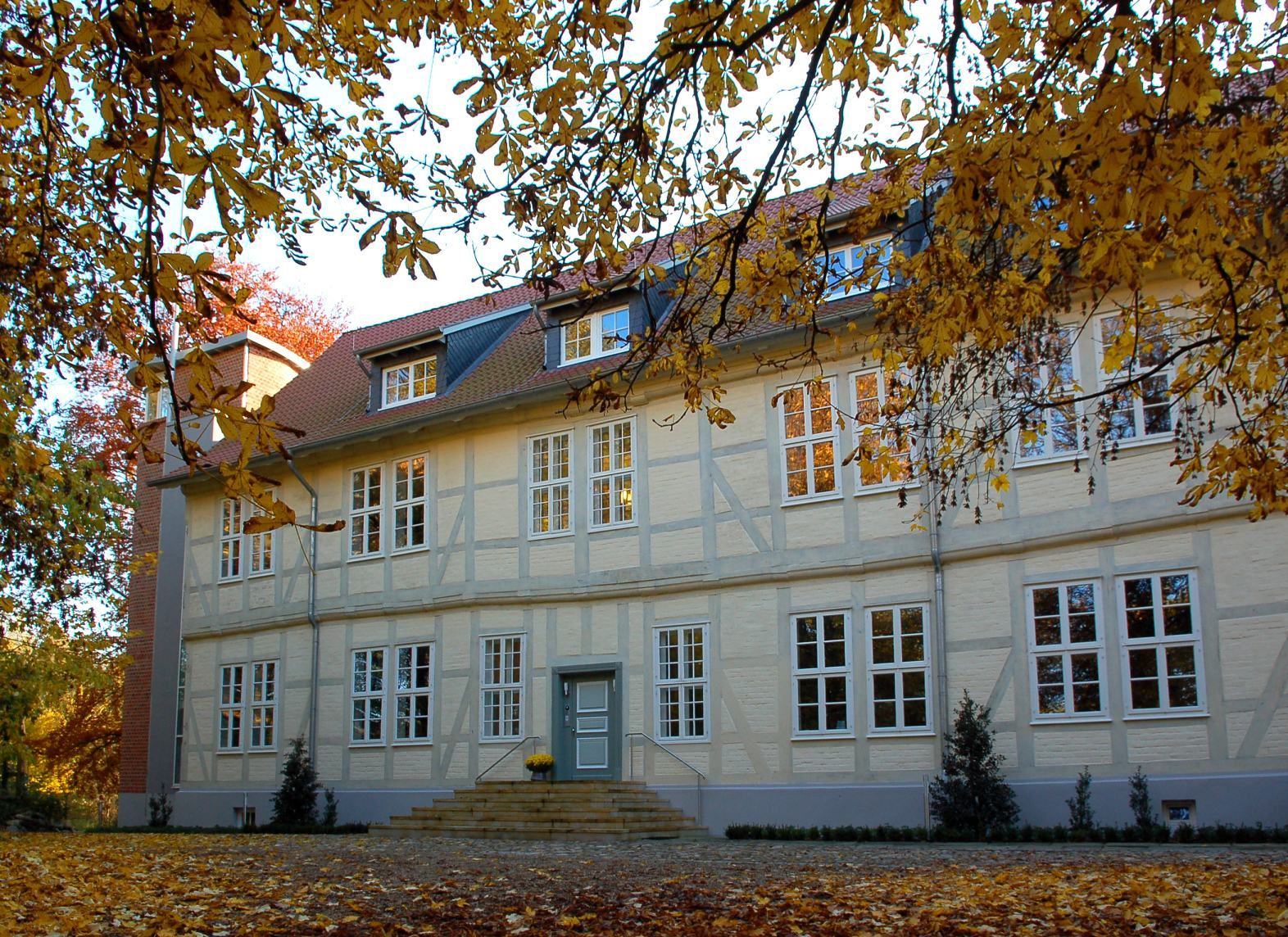
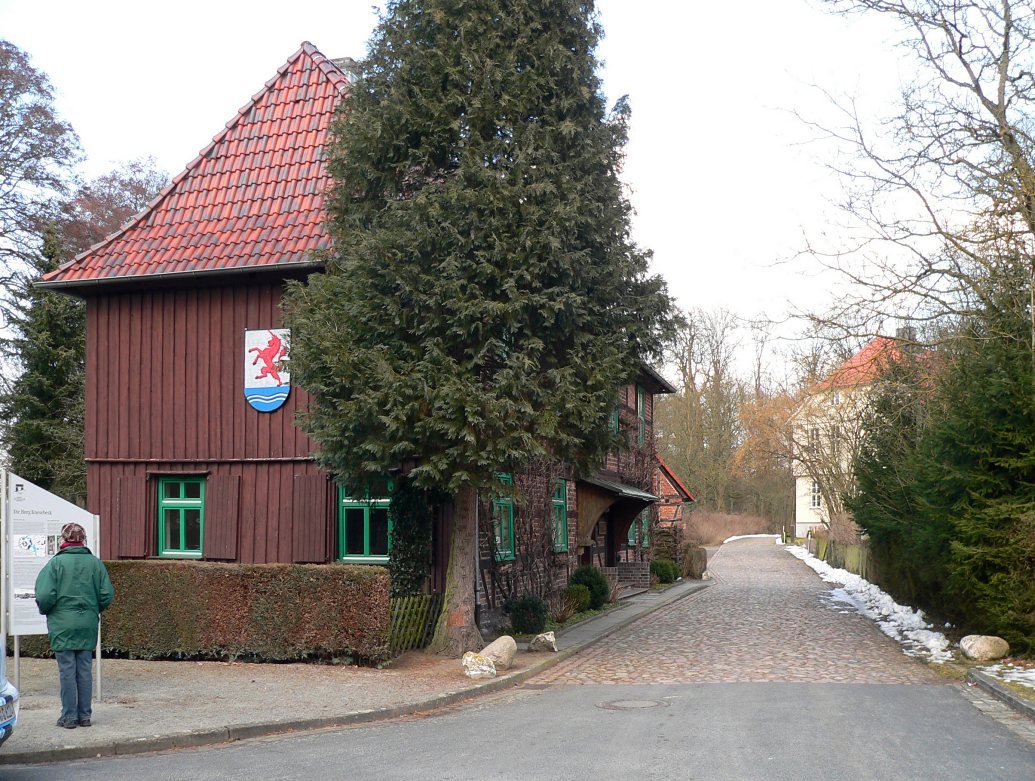
The administrative house became a state forestry office in 1880. After the forestry administration left in 2005, the building was at risk of decay. The Knesebeck-based Butting Group acquired it in 2006 and undertook extensive restoration. Since 2009, it has served as a conference venue for the Butting Academy.
Remains
The former castle stands at the edge of Knesebeck in Lower Saxony’s Gifhorn district. It occupied a small rise, about two metres high, within a marshy hollow; the rise was probably artificial. Inner and outer moats enclosed the site, separating the raised platform and its buildings from the surrounding wet ground.
Moats and historical layout
The inner water moat ran along the foot of the raised platform and enclosed the inner buildings. The Jörnsbeek and Knesebach streams formed the outer moat. The Jörnsbeek still runs along the northern side of the site as a water-filled ditch.
An engraving by Matthäus Merian from around 1650 labels the site as the princely Lüneburg administrative house in the Barnbruch wood and depicts buildings raised on piles in marshland. It shows a wall and two water moats crossed by drawbridges. At the outer moat, a bridge and gatehouse lead to a ring of buildings. Within the castle plot, the main administrative house and its additions, along with another building, enclose a courtyard.
Surviving structures
Castle wall
A freestanding section of castle wall, regarded as the oldest surviving remnant, measures about 15 metres long and 1.6 metres wide. It has window openings and is built with two masonry shells. The wall later formed an exterior side of a washhouse and bakehouse, both of which have since been demolished.
Administrative house
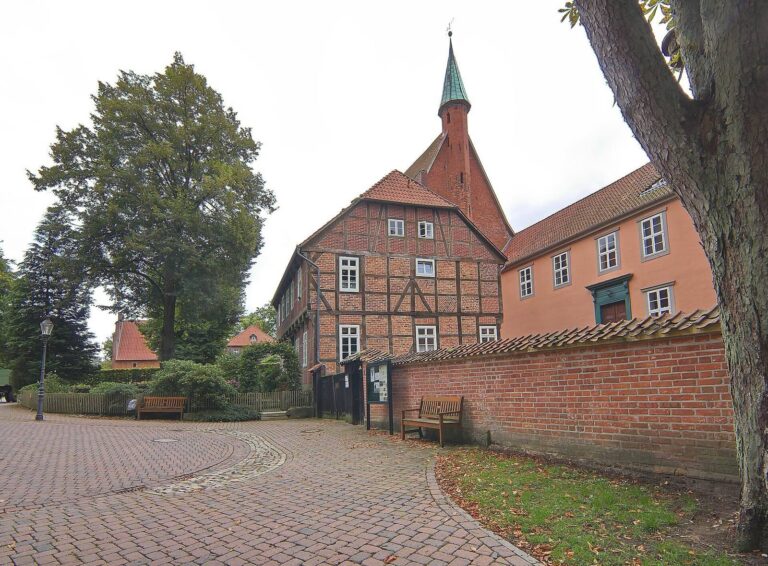
The present administrative house stands near the centre of the former castle plot. Built in 1690 on the foundation of a smaller administrative house dating to 1536, it was extensively restored. A newer adjoining extension refers to the former castle in its design and includes a tower-like stairwell.