Ranikot Fort: A Talpur-Era Military Fortification in Pakistan
Site at a Glance
- Popularity
- Very High
- Country
- Pakistan
- Primary era
- Early Modern
- Eras represented
- Early Modern, Modern
- Civilizations
- Unclassified
- Site type
- Military
- Remains
- Fort
On this page8 sections
History
Ranikot Fort is a military fortification near Sann in Jamshoro District, Sindh, Pakistan, with its earliest construction placed in the seventeenth century and later rebuilding associated with Sindh’s Talpur dynasty. Also known as the Great Wall of Sindh, its fortifications formed the last capital of Sindh’s emirs, rulers who held the title of emir, before British colonial rule.
Origins and Talpur rebuilding
Earlier theories assigned the fort’s origins to Sasanian, Scythian, Parthian, or Greco-Bactrian times. Archaeological dating places its earliest construction in the seventeenth century, while later evidence points to Talpur origins. Some structures were rebuilt in 1812 by the Talpurs, a ruling dynasty of Sindh. The work cost 1.2 million rupees.
Repairs and later conservation
Radiocarbon dating of charcoal in mortar from a collapsed column at the eastern gate places its repair between the early eighteenth and early nineteenth centuries, probably before the British conquest. At that time, Sindh was ruled by the Kalhora dynasty, another ruling house of the region, or, more likely, by the Talpurs. The column itself was built after the fort’s earliest construction.
The first restoration was undertaken by Nawab Wali Muhammad Leghari, a high-ranking official who served as Sindh’s prime minister under Talpur rule. Later projects by Pakistan’s Department of Archaeology, the Sindh Department of Culture, and the Dadu district administration covered the Sann Gate complex, the wall to its south, a mosque, and Miri. After allegations of poor workmanship and favoritism in contracting, a 2005 investigation found that workers had used cement and new stone in ways that did not follow the Venice Charter, an international framework for conserving historic sites. The investigation recommended stopping further work, and restoration was halted in 2006.
Pakistan’s National Commission nominated the fort for UNESCO World Heritage status in 1993. It remains on UNESCO’s Tentative List, a register of properties proposed for possible World Heritage nomination. The fort is also protected under Pakistan’s Antiquities Act of 1975 and later amendments.
Remains
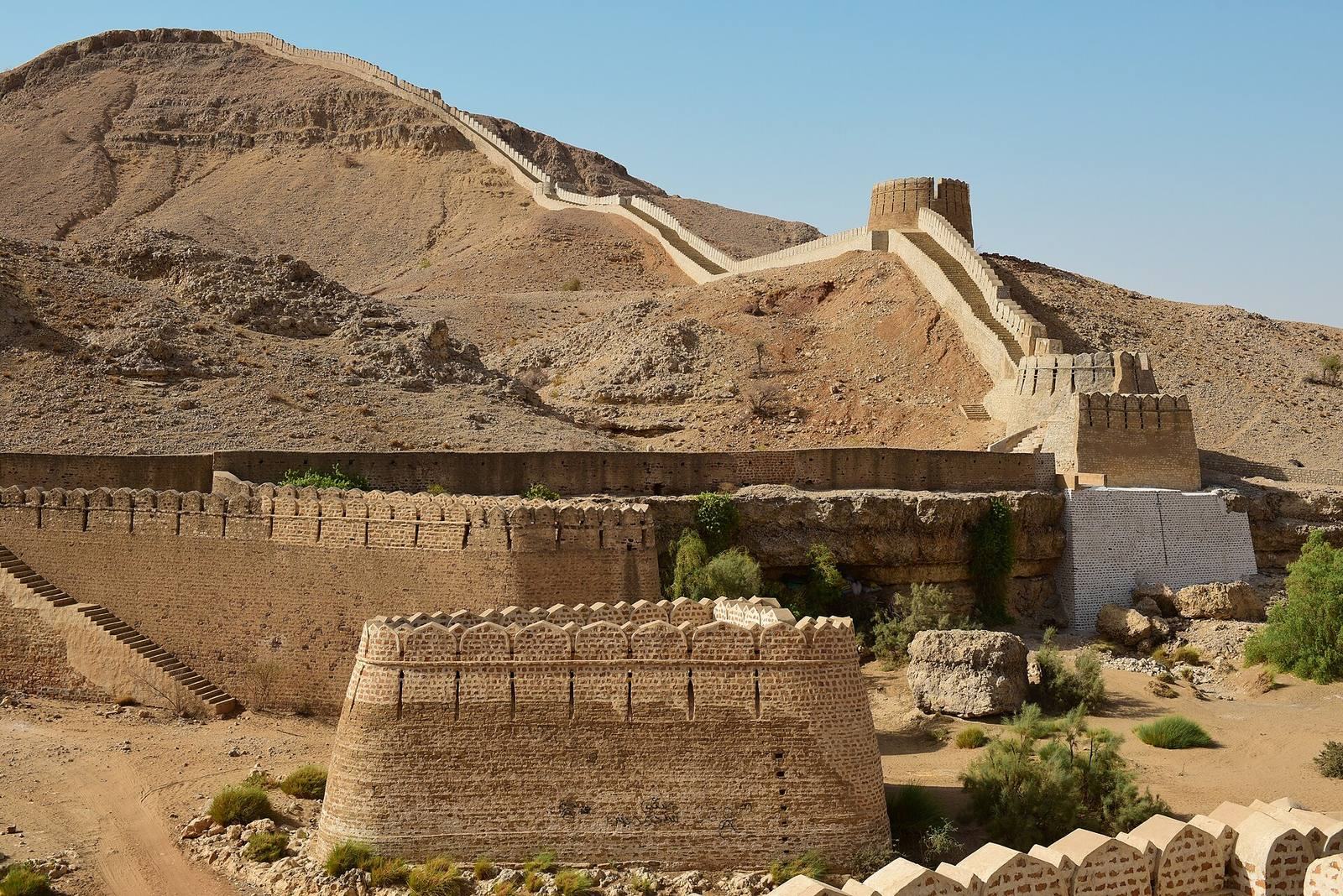
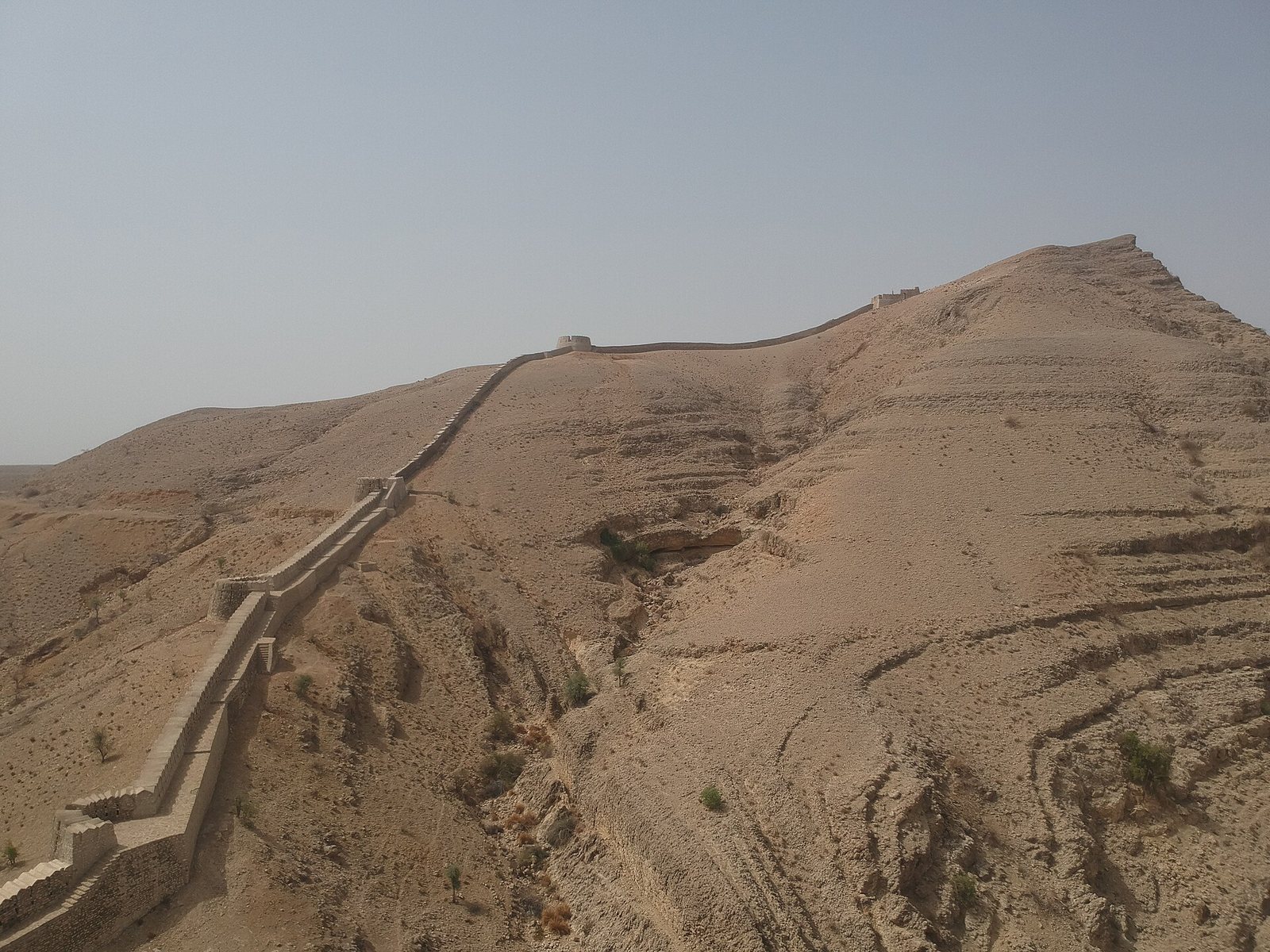
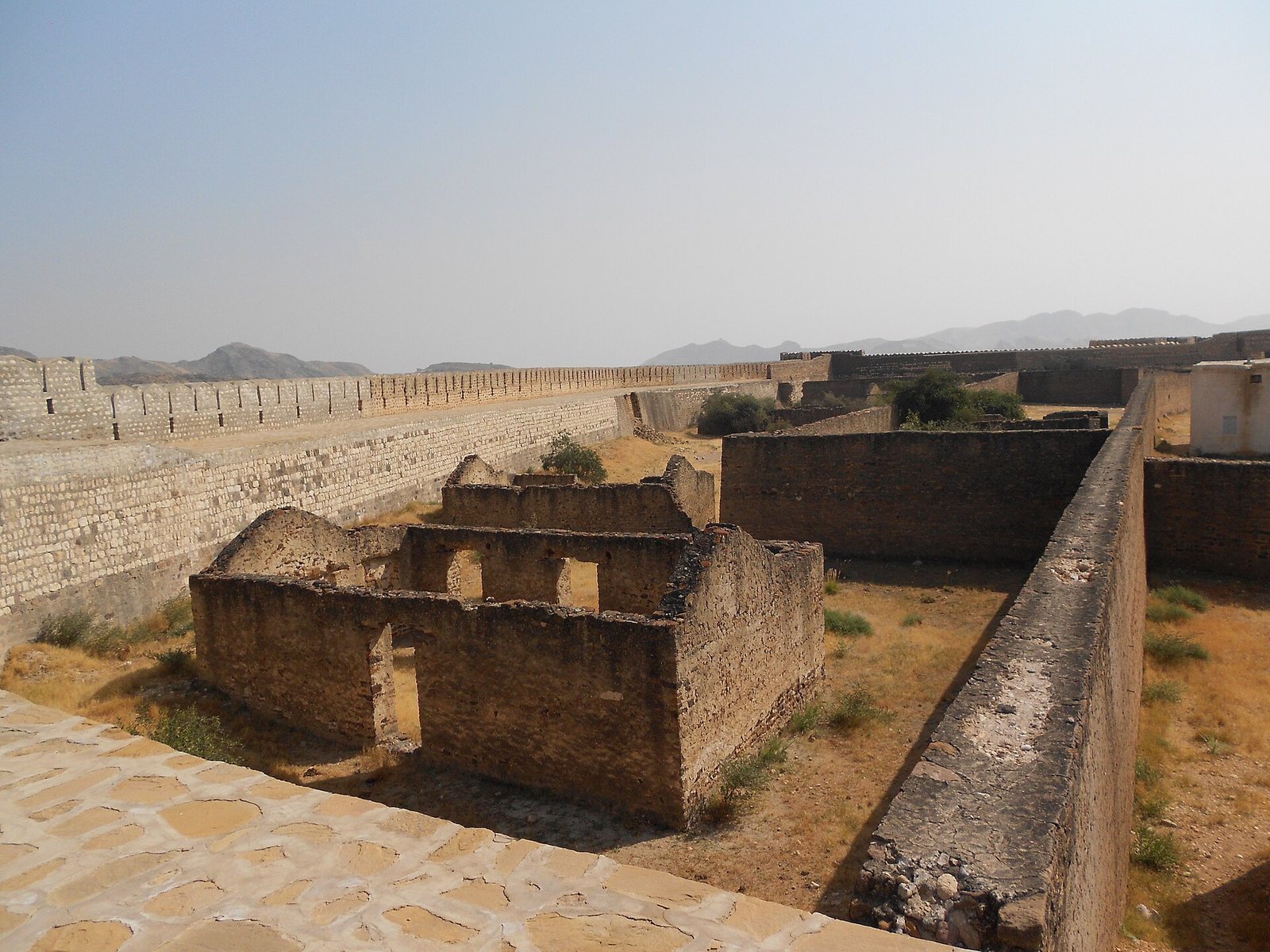
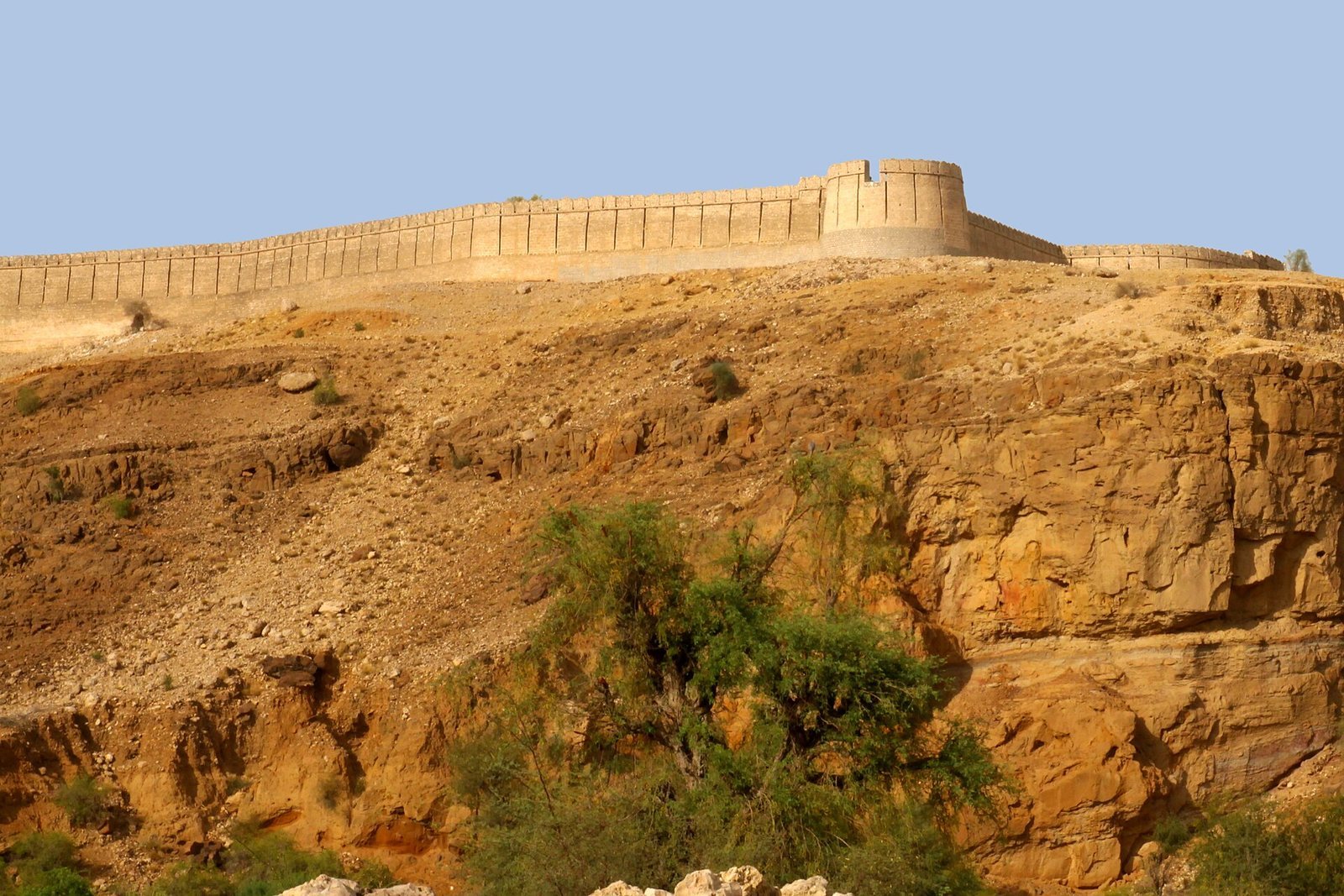
Ranikot Fort lies within Kirthar National Park, and its defenses extend for about 31 kilometres along the contours of barren peaks in the Kirthar Hills. The fort has a zigzag plan and is built of stone set in lime mortar. Its northern boundary follows naturally elevated, hilly ground, while walls defend the other three sides.
Perimeter defenses
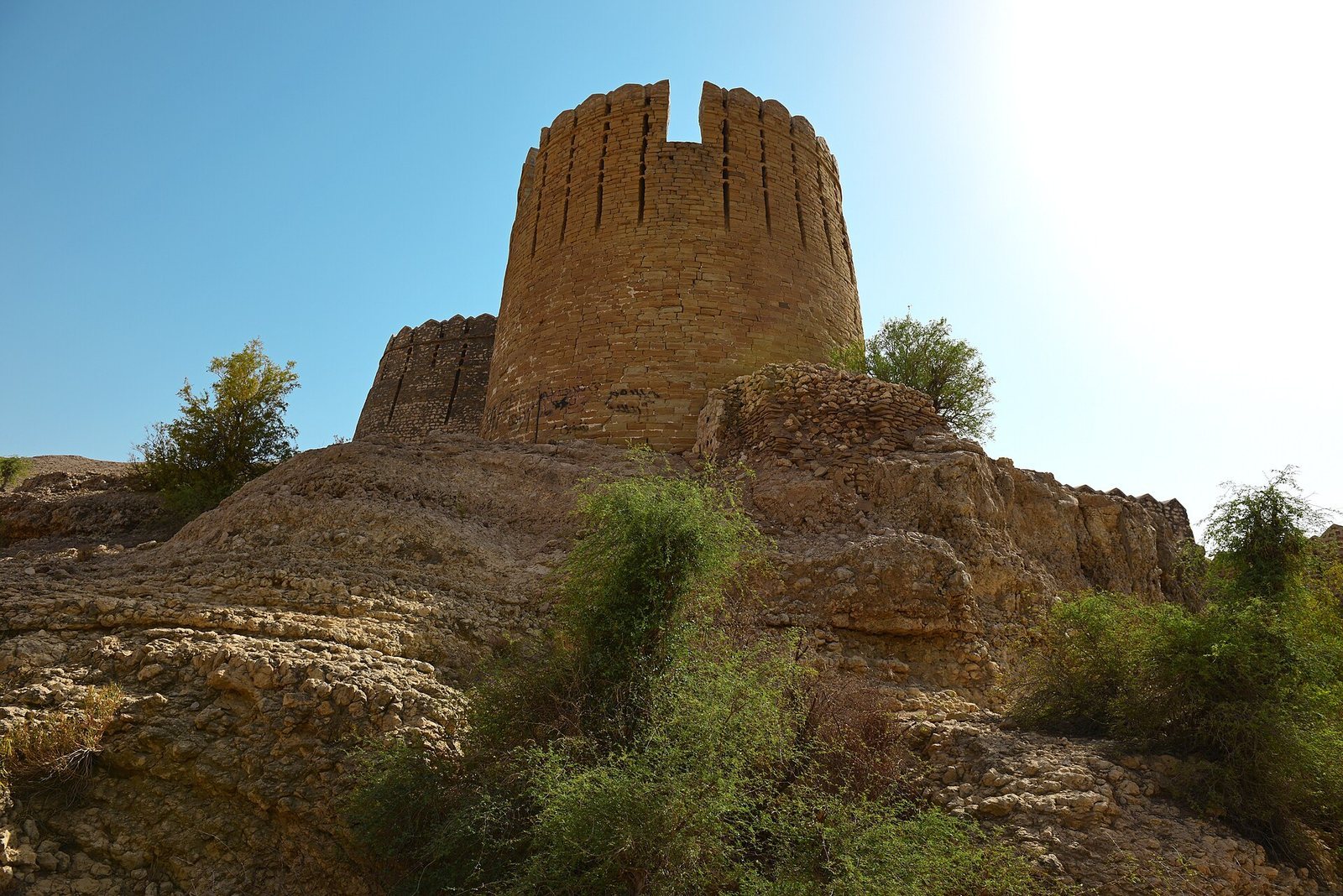
Several bastions, projecting defensive structures, punctuate the walls, including three with semicircular forms. Together, the walls and the naturally elevated northern ground shape the fort’s perimeter across the hills.
Gates and interior structures
Four entrances
The four gates, Sann, Amri, Shah-Pere, and Mohan, are arranged in a diamond-shaped pattern. The Sann River crosses two gates diagonally, and water surrounds the western entrance, making it difficult to approach. The southern entrance has a double gate. The eastern Sann Gate is well preserved and provides a route to the fort’s upper level from either side, as well as entry to Miri. Two niches inside the gates feature floral ornament and carved stonework.
Miri and mosque
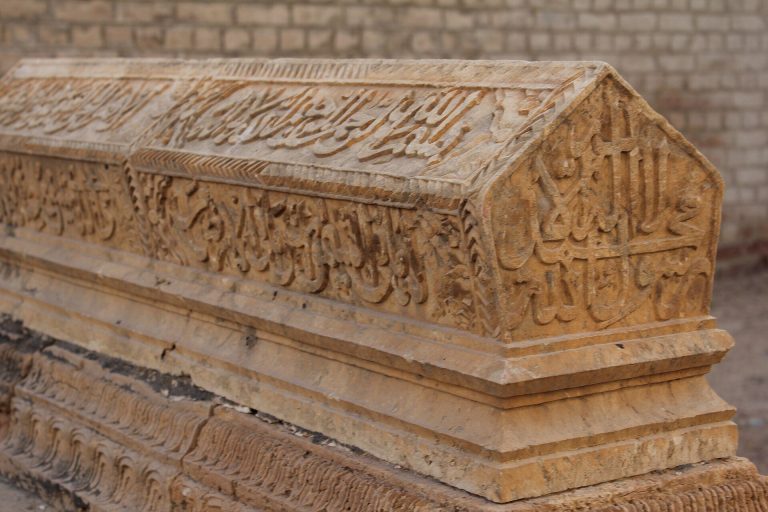
Miri is a smaller fort within the main enclosure, about three kilometres from Sann Gate. It is believed to have served as a palace for the ruler’s family. A mosque is also among the fort’s built structures.