Château d’Issan: A Historic Château and Wine Estate in France
Site at a Glance
- Popularity
- Medium
- Country
- France
- Primary era
- Early Modern
- Eras represented
- Early Modern, Modern
- Civilizations
- French
- Site type
- Domestic
- Remains
- Castle
On this page9 sections
History
Château d’Issan is a château and wine estate in France, with a fortified predecessor dating to the fifteenth century. Its history links the estate to successive noble families and to Bordeaux wine production; in 1855, its wines received Third Growth status in the Bordeaux classification, a ranking of wine estates.
Medieval fortifications and family succession
A tradition holds that wine from the estate was served at the wedding of Eleanor of Aquitaine and Henry Plantagenet on 11 May 1152. Henry later became Henry II of England. The surrounding land was known as Teoban by at least the fourteenth century. In the fifteenth century, Château Teobon formed part of a line of fortifications along the Gironde built during conflicts between England and France. English soldiers left the building in 1453.
The Noalhan family were the first known lords to administer the landholding, followed by the Meyrac family. After Thomas de Meyrac died in 1464, the inheritance passed to his son Jean and, in 1507, to Isabeau de Meyrac. Isabeau’s 1475 marriage to Giron de Ségur brought the estate into the Ségur family, which also owned Lafite and Latour and briefly held Mouton. Her granddaughter Catherine de Ségur de Théobon married Hélie de Salignac, in a marriage dated either 1510 or 1527. The estate then passed to the Salignac family.
The present château and its wine reputation
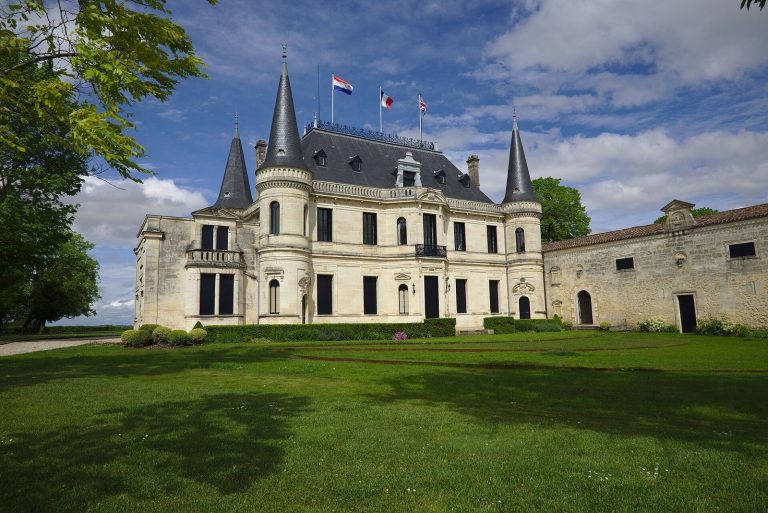
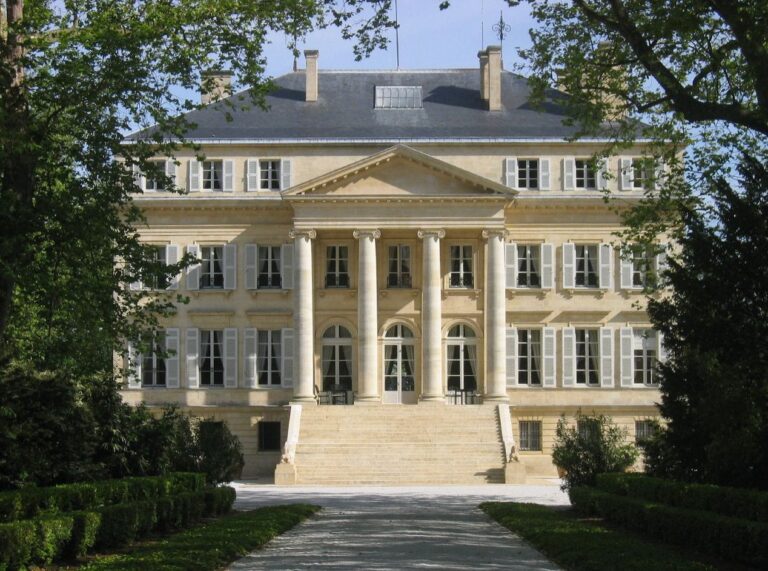
In the early seventeenth century the estate passed to Mademoiselle La Ferrière, and about forty years later to Marguerite de Lalanne. Marguerite married Sarran François d’Essenault, whose family retained the property until 1760. Pierre d’Essenault demolished the existing estate building and erected the present château. The name Issan is said to have developed from a distortion of Essenault. In 1760 the property passed to cousins Bernard de Candale de Foix and Joseph de Castelnau d’Essenault. Joseph paid 15,000 livres for Candale’s landholding in 1775 but left him the estate building, which became known as Château de Candale.
The wines already had a strong reputation by this period. In a letter dated 24 May 1787, Thomas Jefferson placed them among the troisième crus, or Third Growth wines. A treatise published in 1845 described a wine called Rubis fondu d’Issan, made from Mancin, a grape variety then nearly extinct.
Nineteenth-century growth and setbacks
Justin Duluc bought the vineyards and estate building in 1825 for 250,000 francs. He improved the wines and sold the property to Blanchy for 350,000 francs around 1851. Château d’Issan’s wines were named a Third Growth in the 1855 Bordeaux classification. In the nineteenth century, the estate’s wine was also served at the court of Emperor Franz Joseph I.
Gustave Roy acquired the estate in the mid-1860s, invested in wine quality, built a new cellar and fermentation-vat room, and focused replanting on Cabernet Sauvignon and Merlot. Phylloxera, a vine pest, and powdery mildew, a fungal disease, damaged the vines. Roy continued replanting with Riparia, a vine species used as rootstock for grafted fruit-bearing varieties. The 1900 vintage later became especially revered among Bordeaux enthusiasts. Roy sold the estate in 1914, and the Grange family owned it for the next 31 years. Vine diseases and the two world wars took a toll; during the Second World War, German armed forces occupied the estate building.
Modern ownership and production
Emmanuel Cruse bought the property in 1945, when only two hectares of vines were in production. His son Lionel managed the estate until retiring in 1998, when Lionel’s son Emmanuel Cruse II took over. Jacky Lorenzetti became a co-owner in 2013, acquiring a 50 percent share. The wines underwent a marked improvement in quality from the mid-1990s. The château’s façades, roofs, a fireplace in the Justice Room, and a dining-room fireplace have been covered by French historic-monument listing since 1970. Its motto, Regium mensis aris que deorum, means “For the table of kings and the altar of the gods.”
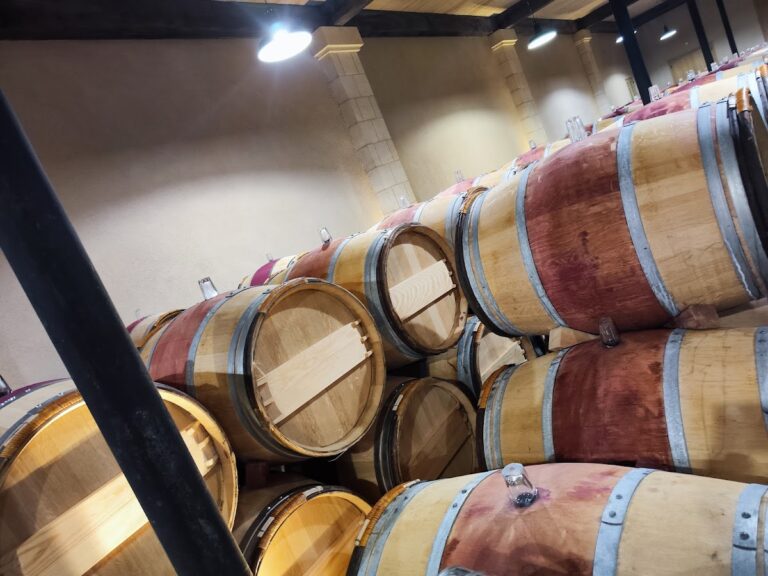
The estate produces Château d’Issan as its Grand Vin and Blason d’Issan as a second wine. In average vintages, the Grand Vin yields about 60,000 to 70,000 bottles, while Blason d’Issan is bottled at about 70,000 annually. Of the estate’s 53 vineyard hectares, 22 are excluded from both wines and supply Château de Candale, marketed under the Haut-Médoc appellation, a regulated wine-growing area. Its production was about 72,000 bottles a year. Since 1988, vines designated Bordeaux Supérieur have supplied Moulin d’Issan, at about 70,000 bottles annually. In October 2007, ten hectares of Haut-Médoc plots were assigned to the Margaux appellation, reducing Château de Candale production and increasing the second wine. Other estate wines include Haut-Médoc d’Issan and Blanc d’Issan. In 2024, the estate harvested and processed Marsanne, Roussanne, Viognier, and Rolle for the first time, from a 1.7-hectare plot.
Remains
Château and moated setting
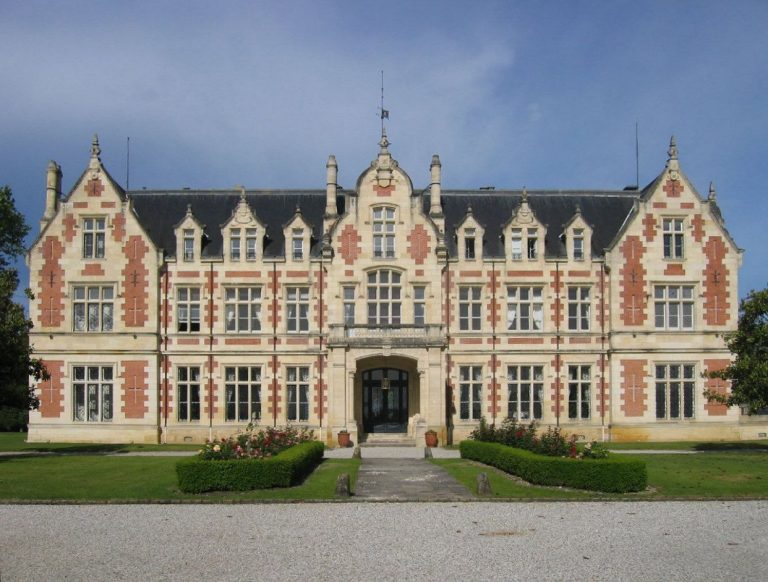
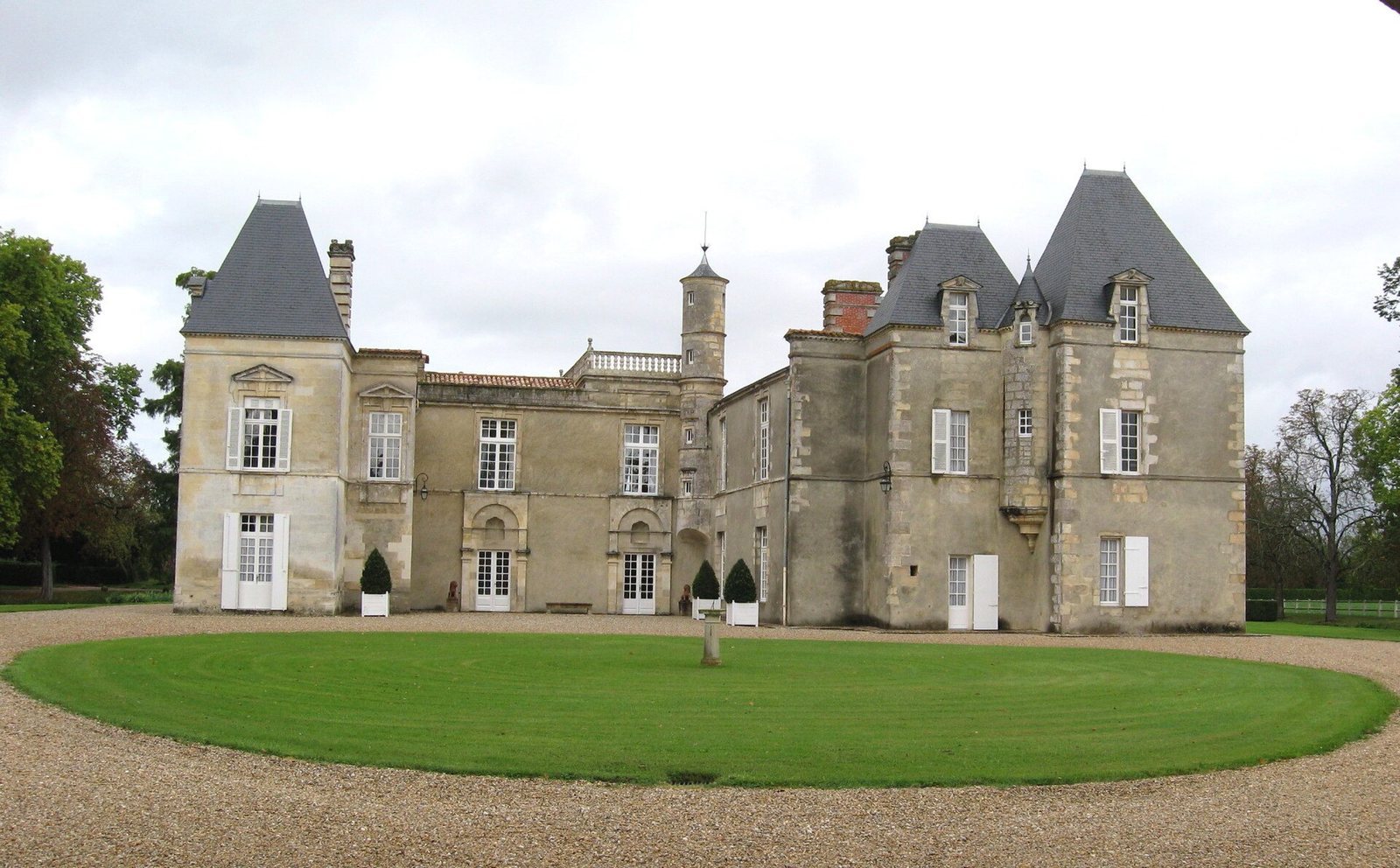
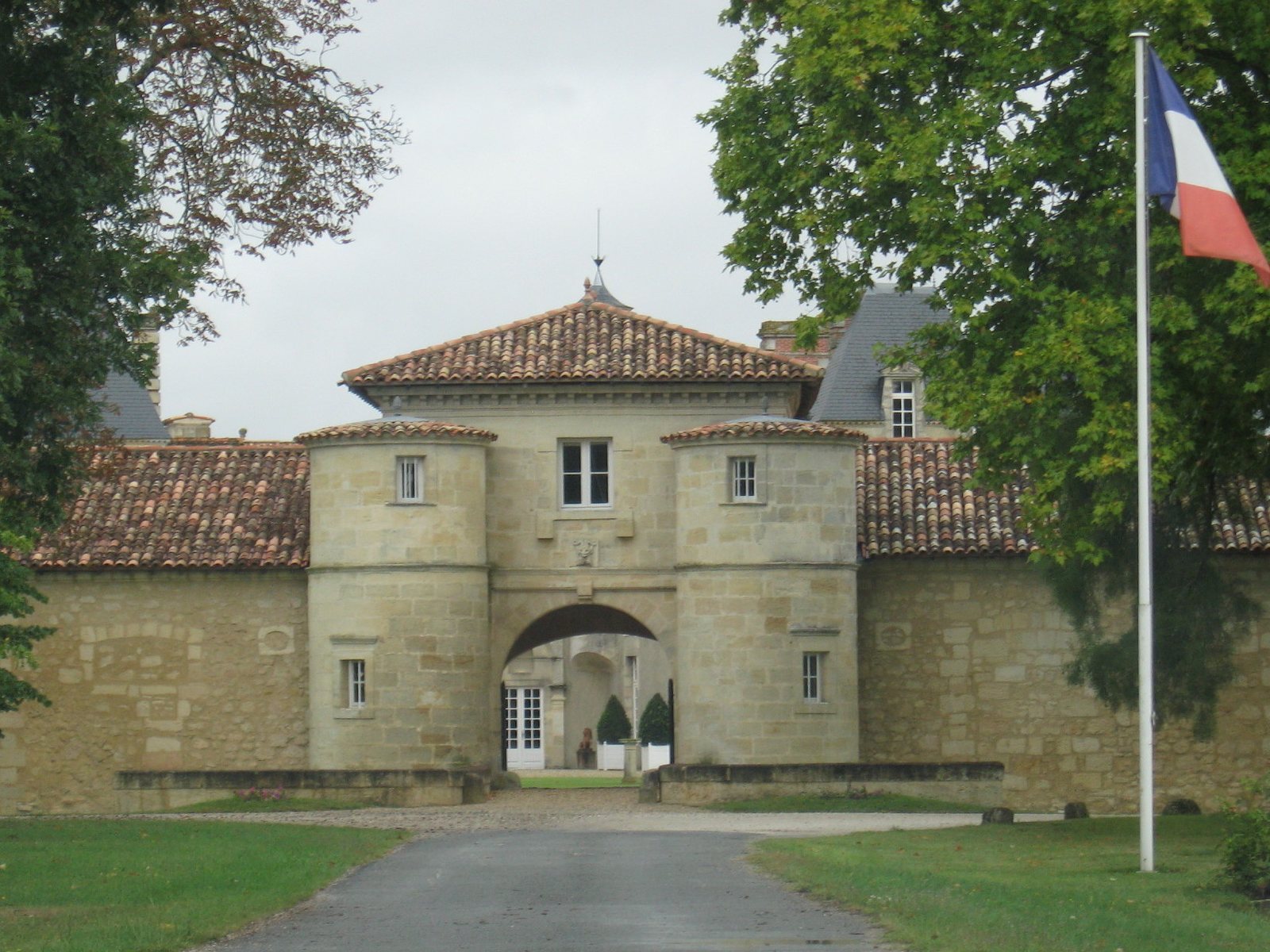
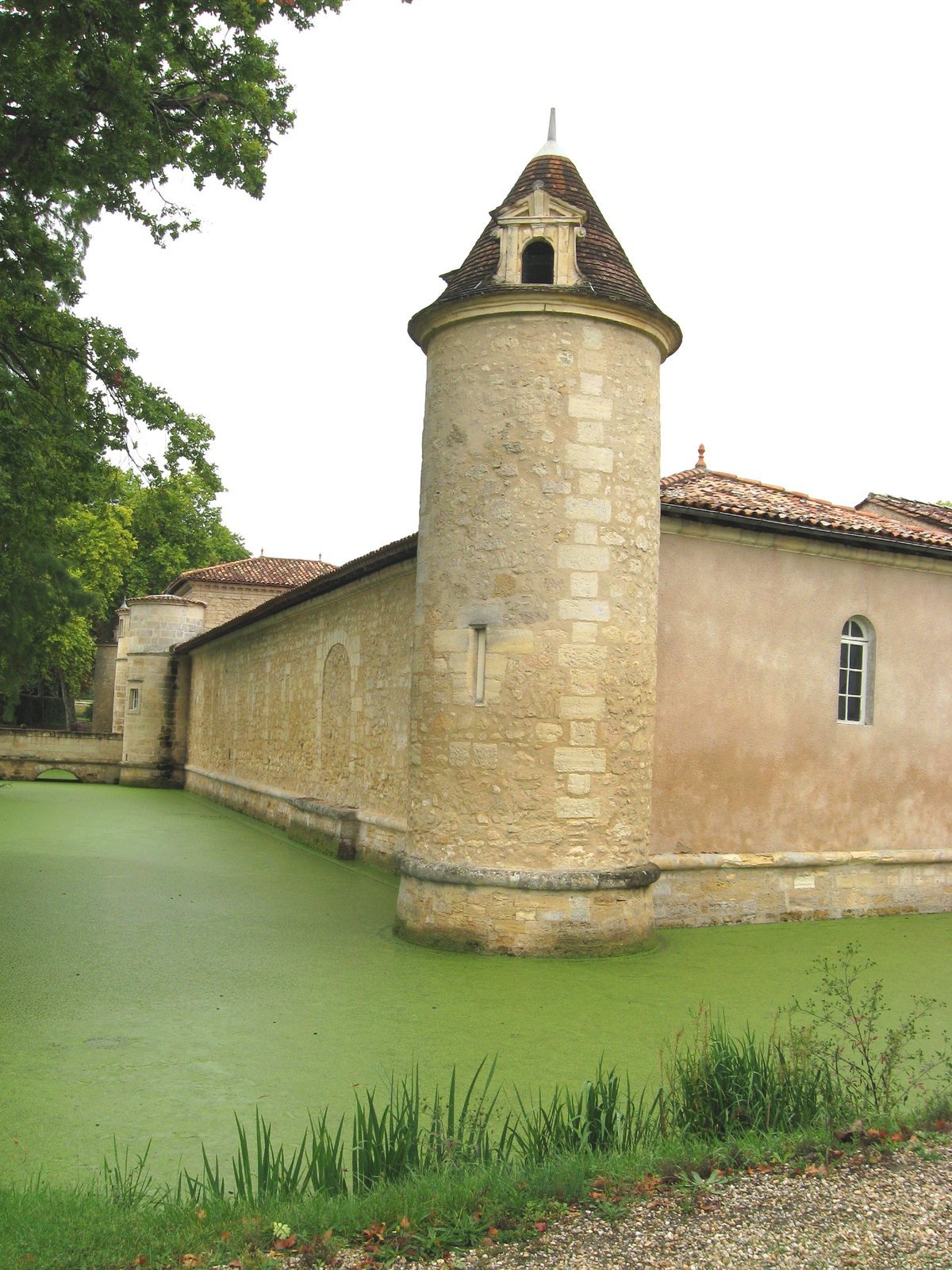
The château stands on a leveled platform surrounded by moats, within an estate set on an island amid water-filled ditches. The present château occupies the historic estate whose medieval fortified building was replaced by Pierre d’Essenault’s construction.
Protected architectural features
The listed parts of the château include its façades and roofs, a fireplace in the Justice Room, and a fireplace in the dining room. These features form the specifically protected architectural fabric of the building.
Vineyards and estate landscape
The property covers 120 hectares, including 53 hectares of vineyard and a contiguous 35-hectare block within the historic Clos, or enclosed vineyard, dated to 1644. The vineyard soils consist of gravel and gravel-clay. Cabernet Sauvignon and Merlot are the principal grapes; the stated composition is 55 percent Cabernet Sauvignon, 40 percent Merlot, 2 percent Cabernet Franc, 2 percent Petit Verdot, and 1 percent Malbec. The estate lies southeast of Château Margaux, and its vineyard parcels also border Château Margaux and Château Palmer.