Combe Sydenham House: A Fifteenth-Century Manor in Somerset
Site at a Glance
- Popularity
- Medium
- Country
- United Kingdom
- Primary era
- Medieval
- Eras represented
- Medieval, Early Modern
- Civilizations
- English
- Site type
- Domestic
- Remains
- Manor House
On this page6 sections
History
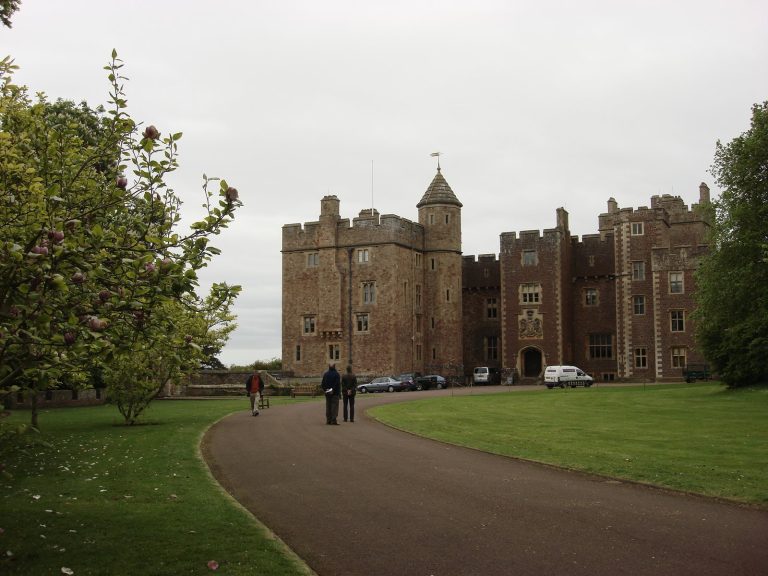
Combe Sydenham House is a fifteenth-century manor house in Stogumber, Somerset, United Kingdom. The estate appears in the Domesday Book, a survey of English landholding completed in 1086, when it was among the manors held by William de Moyon. He was a Norman nobleman and the first feudal baron of Dunster, a landholder whose rank depended on a relationship with the Crown; his seat was nearby Dunster Castle.
The Sydenham family and Sir Francis Drake
From the fifteenth century until 1693, Combe Sydenham Hall was the home of a junior branch of the Sydenham family of Sydenham, Bridgwater. In 1585, Elizabeth Sydenham, the only child and sole heiress of Sir George Sydenham, married Admiral Sir Francis Drake. While Drake was away on a long voyage, her father, then Sheriff of Somerset, arranged a marriage for her with a son of the Wyndham family of nearby Orchard Wyndham.
Tradition relates that as Elizabeth and her intended husband approached St Mary’s Church at Stogumber, thunder sounded and a meteorite broke through the church roof. The event was taken as a bad omen, and the wedding was called off. Drake returned to Plymouth that same day, and he and Elizabeth later married at All Saints’ Church in Monksilver. After Drake’s death in 1596, Elizabeth married Sir William V Courtenay as his second wife.
Civil War and the return of the estate
Sir John Sydenham, 1st Baronet, a hereditary title below the peerage, died in 1643 before his son was born. His widow, Alice, married Sir Francis Dodington, who lived at Combe Sydenham as a Royalist during the English Civil War. Royalists supported the monarchy, while Parliamentarians fought against it. Parliament confiscated the estate in 1651 and purported to sell it to John Ware. Following the Restoration, the return of the monarchy in 1660, the estate went back to Sir John Posthumous Sydenham, the son and heir born after his father’s death.
Musgrave and Notley ownership
Sir John Posthumous Sydenham sold Combe Sydenham to George I Musgrave in 1693. George II and then George III Musgrave followed him; these numbered names distinguish members of the family, not monarchs. George III’s son and heir, Thomas Musgrave, transferred the estate to his sister Juliana in 1765. She later married Sir James Langham, 7th Baronet, and sold the property to George Notley in 1796, following Langham’s death the year before.
The Notley family held Combe Sydenham from 1796 to 1958. Around 1800, George Notley acquired the adjoining manor of Monksilver. His second son, James I Thomas Benedictus Notley, succeeded him in 1831 because the eldest son, George, was legally incapable of owning property. James I was followed by another second son, James II Thomas Benedictus Notley; their elder brother George had been sent to Belgium. When James II died without children in 1872, his younger brother Marwood I inherited the estate.
Marwood I Notley had nine children with Matilda Venn Poole, his common-law wife, and left his estates jointly to his two youngest sons, Montague and Marwood II. Combe Sydenham passed to Marwood II Notley. His daughter and sole heiress, Molly Louise Rosewell, sold the property in 1958.
Twentieth-century ownership
Group Captain E. G. Campbell-Voullaire, a senior Royal Air Force officer, bought Combe Sydenham in 1958. He described the property as badly run down and said he was working to put it back together. William A. C. Theed purchased it in 1979; his estate there included 130 hectares of commercial woodland. Combe Sydenham House is a Grade I listed building, England’s highest listing category, reserved for buildings considered to be of exceptional interest.
Remains
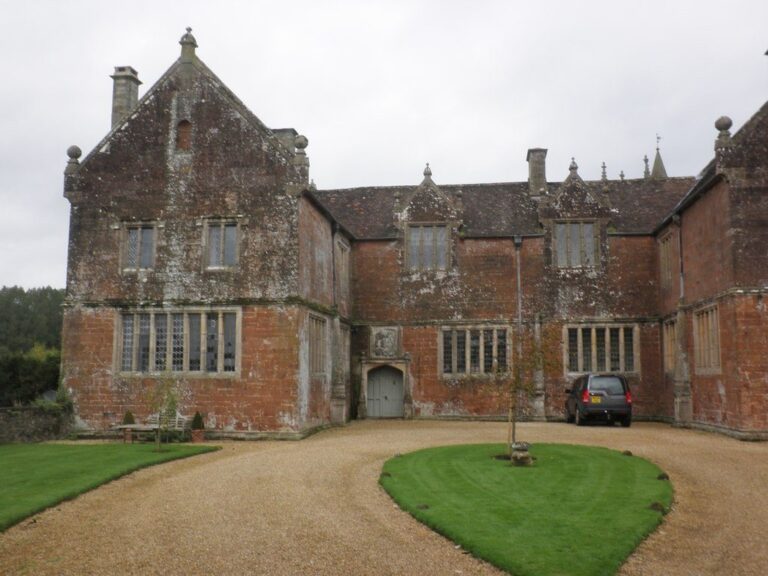
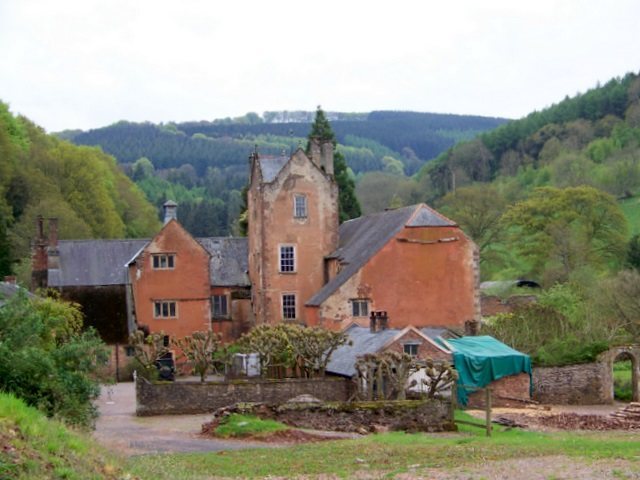
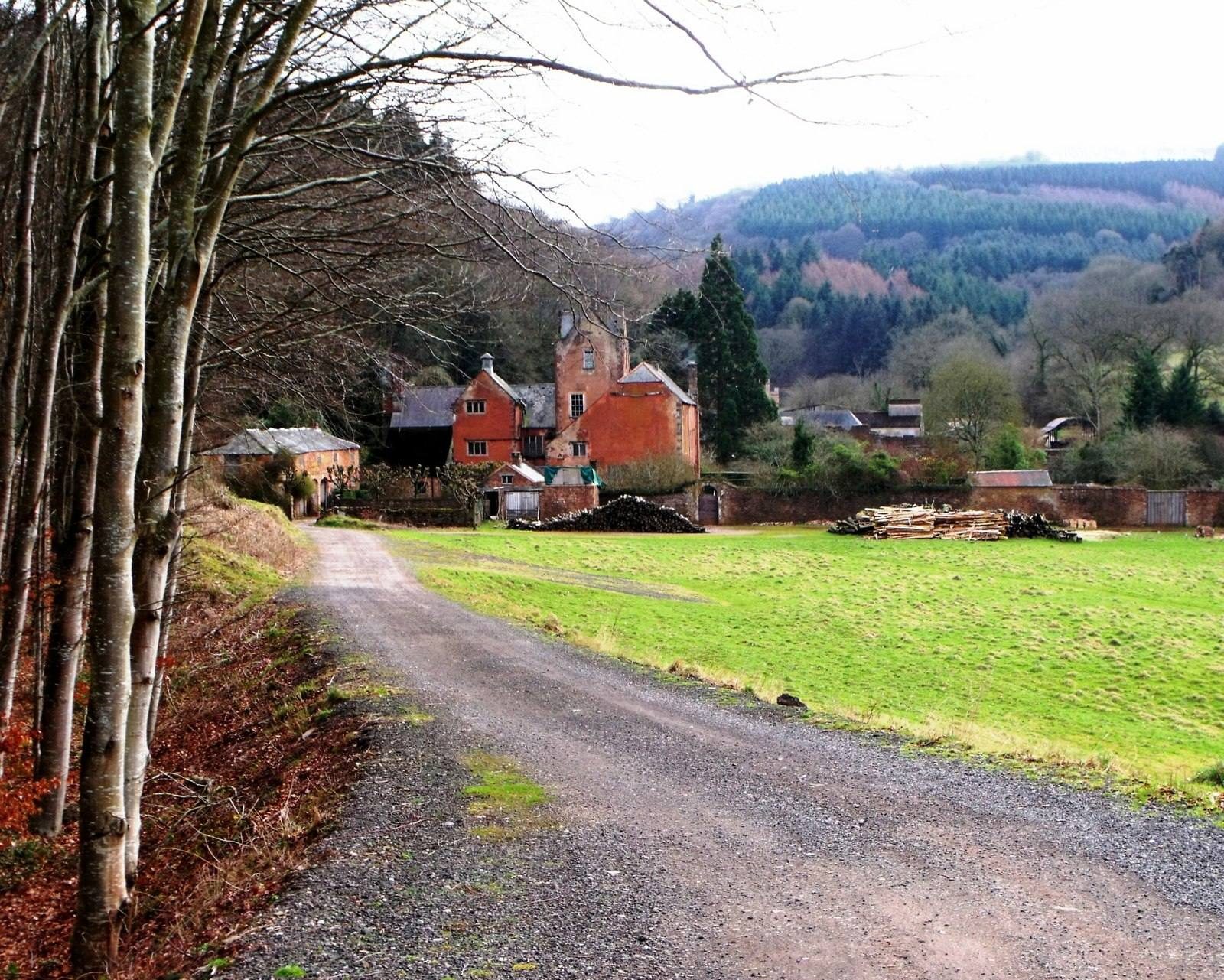
The manor house stands within a 500-acre (200-hectare) estate containing a deer park and walks. The documented changes to the building affect its south and west fronts and the north and east sides. A porch was added to the south front in 1580. Around 1600, windows on the west front were altered, at least two stair turrets were added, and the south-front windows were changed. Buildings to the north and east were demolished.
An iron meteorite measuring 14 inches (360 millimetres) across remains at the house. Its surface became smooth from being rolled along the ground, and it is known as Drake’s cannon ball.