Wellingsbüttel Manor: A Baroque Country Estate in Hamburg
Site at a Glance
- Popularity
- Medium
- Country
- Germany
- Primary era
- Early Modern
- Eras represented
- Early Modern, Modern
- Civilizations
- German, Holy Roman Empire, Kingdom of Prussia
- Site type
- Domestic
- Remains
- Manor House
On this page11 sections
History
Wellingsbüttel Manor is a historic estate in Wellingsbüttel, now part of Hamburg, Germany. Its central residence took shape as a Baroque manor house in the mid-18th century, when the estate belonged to the Kurtzrock family. Wellingsbüttel is also known for the Kurtzrocks’ unusual claim that the estate answered directly to the Holy Roman Emperor rather than to a regional ruler.
Village and changing lordship
Wellingsbüttel first appears in a record from 1296, when the counts of Holstein, Adolf V and John II, confirmed the Harvestehude monastery’s purchase of 13 villages that included it. The village passed to the archbishops of Bremen in 1412 and was pledged chiefly to canons of Hamburg Cathedral. Harvestehude monastery held it in pledge from 1430 to 1484.
After the Reformation, the last cathedral canon was dispossessed. From 1542 to 1572, brothers Hinrich and Hans Kalenberg held Wellingsbüttel as a non-hereditary fief, meaning land granted subject to obligations to a superior. They built an early country house facing the Alster. The Danish governor of Schleswig-Holstein, Heinrich von Rantzau, and his sons held the estate from 1572 to 1627. After subsequent grants, Bremen archbishop’s chancellor Dietrich Reinkingk received it in 1643 as a hereditary fief limited to male heirs.
The Kurtzrocks and claims of imperial status
The Peace of Westphalia transferred Wellingsbüttel to Sweden in 1648. The following year, Queen Christina confirmed Reinkingk’s possession and made the estate freehold, or land held outright rather than as a fief. Reinkingk maintained that Wellingsbüttel was immediately subject to the Holy Roman Emperor, a central European political entity that lasted until 1806, with no judge above him except the emperor.
Theobald von Kurtzrock purchased the estate in 1673. As a member of the Imperial Aulic Council, the emperor’s senior judicial and advisory body, he secured imperial immediacy for Wellingsbüttel. This meant that the estate claimed direct subordination to the emperor rather than to an intermediate ruler. Under the claim, the estate and village owed no taxes or dues to the Holstein government and did not fall under Holstein courts. Theobald died in 1682, and his son Maximilian Heinrich inherited the property. In 1735, Maximilian Heinrich’s eldest son, Theobald Joseph, took control.
Theobald Joseph’s Catholic family maintained a chapel on the manor house’s ground floor. Clergy working from the estate pursued conversions over an extended period, prompting disputes with Hamburg’s council. In 1793, the Kurtzrocks asserted Wellingsbüttel’s imperial status through an inscription above the manor-house entrance and boundary markers. The gatehouse displayed imperial arms and the words “Protectorium” and “Salve-guardia,” referring to special protection. The family linked its position in part to Theobald Joseph’s 1763 membership in the Upper Rhenish knighthood, a regional association of imperial knights. An imperial protection letter issued in 1696 had also allowed the family to use imperial arms on its property during insecure times.
Denmark ordered the inscriptions removed in 1803. Two years later, estate owner Clemens August von Kurtzrock erected a barrier and charged tolls, further aggravating the authorities. On 2 December 1805, the military ordered 120 soldiers to be billeted at Wellingsbüttel. Kurtzrock refused, relying on the estate’s claim to imperial status. The troops stayed at a nearby inn instead. Danish forces removed the boundary markers and, on 8 March 1806, took the imperial arms from the gatehouse.
A court fined Clemens August for rejecting his duties as a subject and asserting imperial immediacy. Wellingsbüttel lost its former privileges under Holstein. Shortly before Emperor Francis II laid down the imperial crown on 6 August 1806, ending the Holy Roman Empire, Kurtzrock agreed to sell the estate to King Frederick VI of Denmark and Norway for 80,000 Taler. The family moved to Austria and adopted the name Freiherren von Wellingsbüttel.
Danish ownership and wartime use
In 1810, Frederick VI granted Wellingsbüttel as a fief to his relative Duke Friedrich Karl Ludwig of Schleswig-Holstein-Sonderburg-Beck and made it a Danish chancellery estate, directly answerable to the royal chancellery in Copenhagen. It had its own court, with the landholder exercising judicial authority over people on the estate. The estate was separated from the village, reducing the lord’s responsibility for the village poor.
During the Napoleonic Wars, the duke had to leave Wellingsbüttel. Two squadrons of the Lützow Free Corps, a volunteer military unit formed during the wars, were stationed there. In 1813–14, Russian forces besieged Hamburg while the city was occupied by French troops. The estate was used by the Russian military and served late in 1813 as the headquarters of Lieutenant General Alexander Ivanovich Ostermann-Tolstoy. General Levin August von Bennigsen was also associated with it during 1813–14.
After the duke died in 1816, the financially ruined estate reverted to the Danish Crown. In 1818, the Crown sold the main farm and some stables to Hamburg merchant Hercules Roß, while retaining the rest of the estate and the village. The privately owned property, then about 250 hectares and including the Grevenau woodland beside the Alster, changed hands several times.
The Jauch estate and country retreat
On 23 September 1846, Hamburg merchants Johann Christian Jauch junior and his son Carl bought the estate and three properties in the royal village at auction. Their timber business prospered amid demand for building materials after Hamburg’s 1842 fire, and Wellingsbüttel became a high point in the family’s fortunes. Prussia annexed Wellingsbüttel in 1868 after the Second Schleswig War, the 1864 conflict between Denmark and Prussia and Austria, but the estate remained with the Jauchs.
Between 1846 and 1876, the family acquired eight nearby properties, including the Grüner Jäger country house and the Sander inn. They demolished buildings on the acquired land except for Grüner Jäger and incorporated the land into the park, which also included the former Sillem family estate. The park grew from about 110 to 250 hectares. Some smallholders, already poor, lost or sold their land; the village’s shrinking population also reduced the schoolteacher’s fee income. After an intervention from Copenhagen, farmsteads on some retired farms were used to house servants. The Jauchs paid half the costs of the village poorhouse.
As farming yielded less, Wellingsbüttel increasingly served as a Hamburg country retreat for hunts and social gatherings. Johann Christian Jauch junior enclosed non-native red deer for hunting, and a deer park behind the manor house became a destination for country outings. The family leased Duvenstedter Brook for small-game hunting and released pheasants there. In the 1880s, seven shooters killed about 4,000 rooks at Wellingsbüttel over three days as pest control. The poet Friedrich Gottlieb Klopstock had visited the park on 11 July 1756, before the Jauch ownership.
Subdivision and new uses
After Carl Jauch’s death in 1888, his heirs sold the estate to banker’s widow Cäcilie Behrens. She commissioned a major alteration of the manor house in 1888–90 and died soon afterward. Hamburg merchant Otto Jonathan Hübbe later owned the property, which then employed about 65 people and kept 26 horses, 180 dairy cows and 30 young cattle.
By 1912, Hübbe had placed the roughly 500,000-square-metre estate in the Alster Valley Terrain Company for housing development. Regulations issued in 1913 set minimum plot sizes according to the landscape, requiring plots along the Alster in Wellingsbüttel to cover at least 5,000 square metres. After the company was liquidated in 1947, Hamburg became its legal successor and remained bound by the regulations in its planning. Wellingsbüttel became part of Hamburg under the Greater Hamburg Act in 1937. The last agricultural land disappeared after the Second World War as the area developed into a suburban villa district.
Since the Second World War, the manor house has also accommodated overflow classes from Strenge primary school, established in Wellingsbüttel in 1934. From 1964 to 1997 it housed the Hansa-Kolleg, an adult school offering a route to the Abitur, the German qualification for university entry, as well as boarding accommodation. Founded by Hamburg, Bremen and Schleswig-Holstein, the school expanded in 1971 and added a two-storey wing. It decided to leave the manor house in 1995 and moved to Barmbek-Süd in 1997.
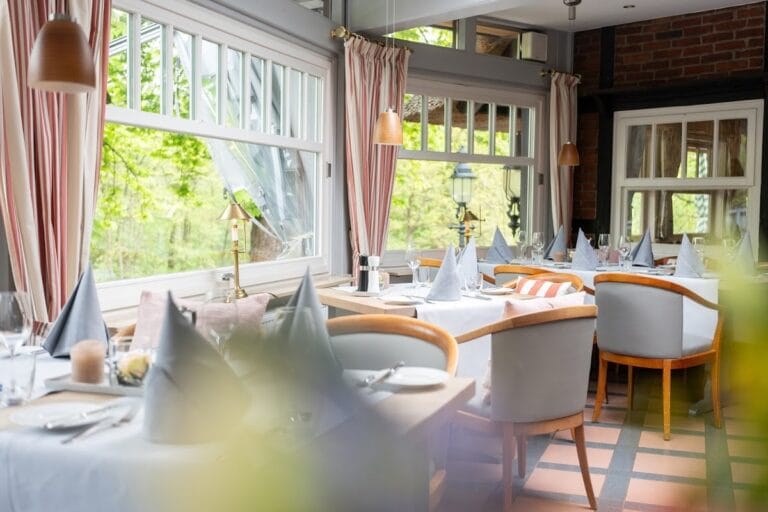
The Alstertal Museum opened in the partly restored gatehouse in 1957 and moved to its left wing after further restoration in 1970. Repairs to the right wing took place from 1967 to 1973. The manor house underwent extensive adaptation in 2005 and became a senior residence with 14 apartments the following year. Its larger ground-floor reception rooms retained their original layout. The house is also partly used as a public café, while the gatehouse remains a museum and cultural venue. The manor house and gatehouse are a listed historic ensemble.
Remains
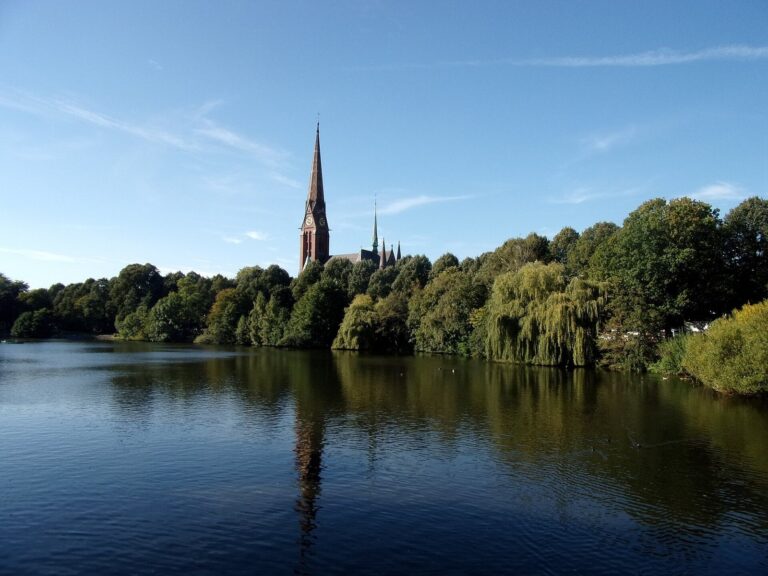
The historic estate occupies ground beside the Alster within the Alster valley nature reserve. Its surviving ensemble includes the manor house, the gatehouse at the estate entrance, and parkland with three lookout bastions. The principal buildings combine brick Baroque design with later changes to the manor house.
Principal buildings
Manor house
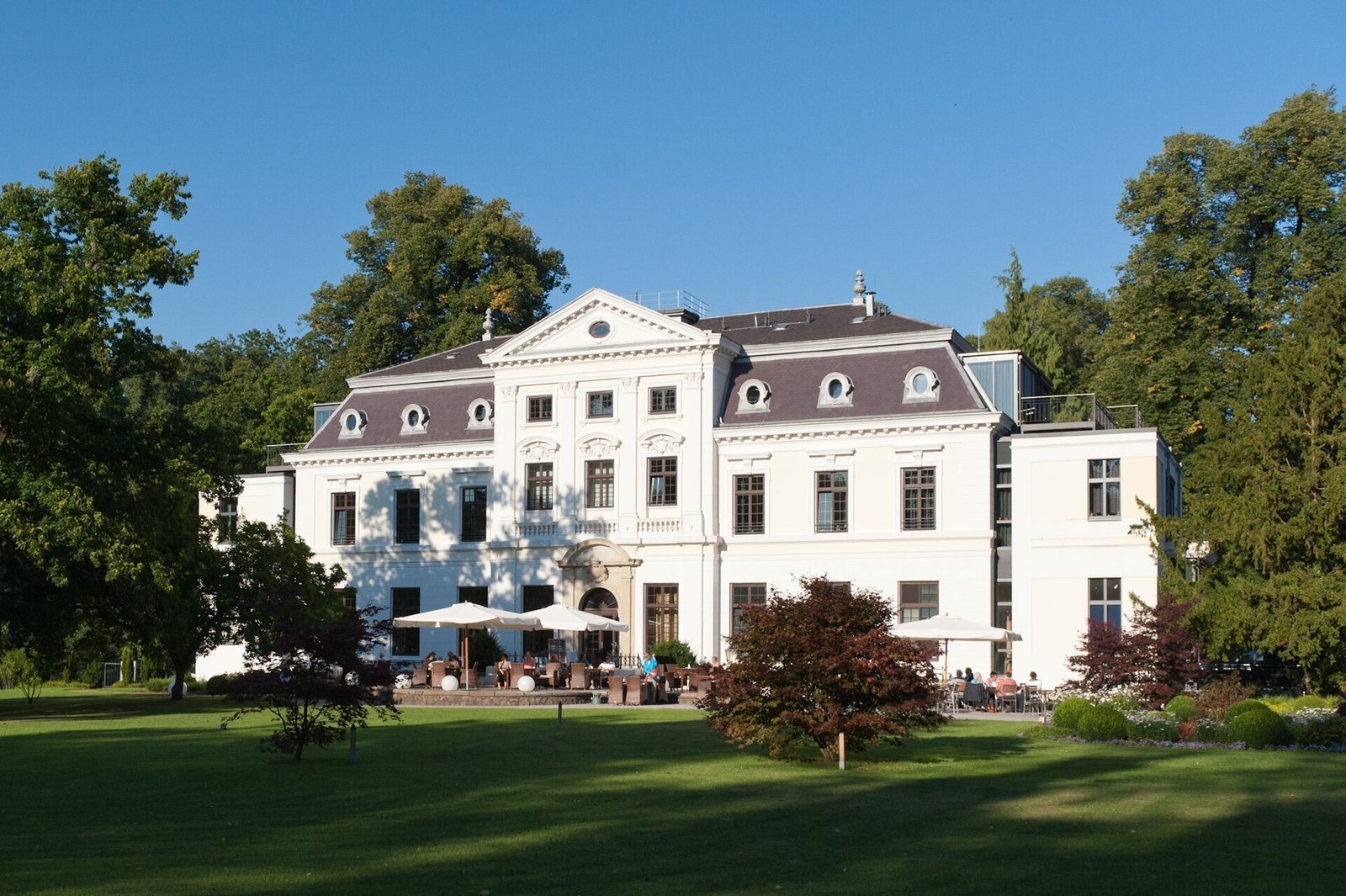
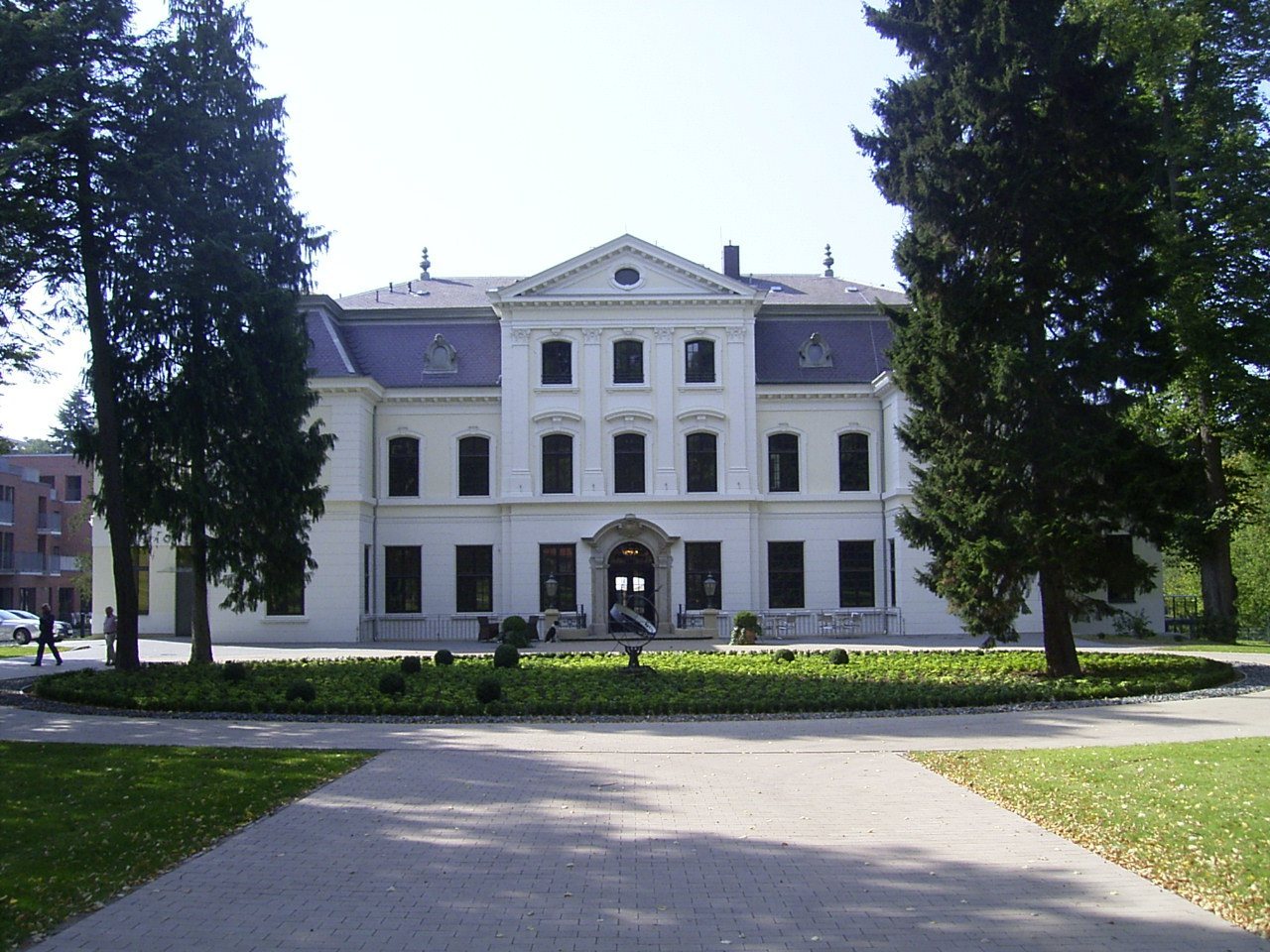
The manor house is a nine-bay Baroque building, meaning its façade is divided into nine sections. Built around 1750 to replace a simpler estate house, it has a projecting central section with the main hall behind it. The original building was one storey high, except for the central section, which rose to an upper storey. In 1888, architect Martin Haller added another storey and covered the exterior in a neo-Baroque plaster façade. He also installed water supply and lighting systems. A two-storey extension on the east side was added in 1971 for the Hansa-Kolleg’s boarding accommodation.
One of the few surviving parts of the original interior is a wall painting dated to about 1750, now in the gatehouse museum’s library. It shows a courtly masquerade. The scene is traditionally linked to Russian Emperor Peter III, who is said to be introducing a courtier whom his mistress had been ordered to marry; the story describes her displeasure when unmasked. Some furnishings are also attributed to a gift from a Russian tsar to a Kurtzrock who had served for many years as an imperial Russian envoy in Hamburg.
Gatehouse
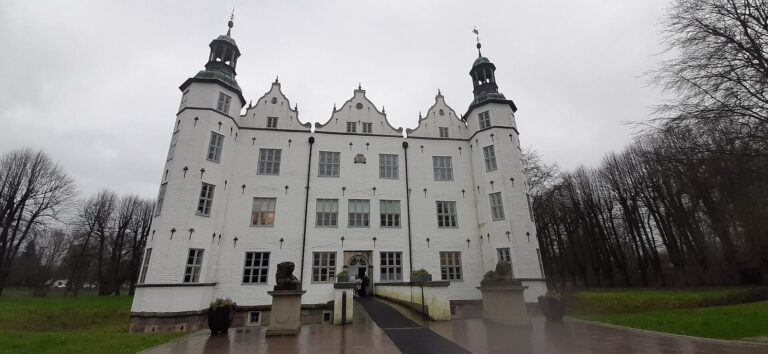
Built in 1757, the gatehouse is a brick Baroque structure designed by Georg Greggenhofer and constructed by master mason Leptien. A roof turret and clock rise above it. The building stands before the manor house and marked the estate entrance. Horse stalls and a room for grooms occupied the left wing, while the head farmhand and agricultural workers lived in the right wing. A grain loft stood above the passage, which was once closed by a large gate.
The left wing now houses the Alstertal Museum. Its collections include prehistoric and early historical finds from the Alster valley, regional ethnographic objects and farming equipment. Exhibitions also cover the estate, manor house and old village. They include the only copy of the 1810 deed granting Duke Friedrich Karl Ludwig the estate as a fief, displayed with the Danish Crown’s permission.
Park and lookout bastions
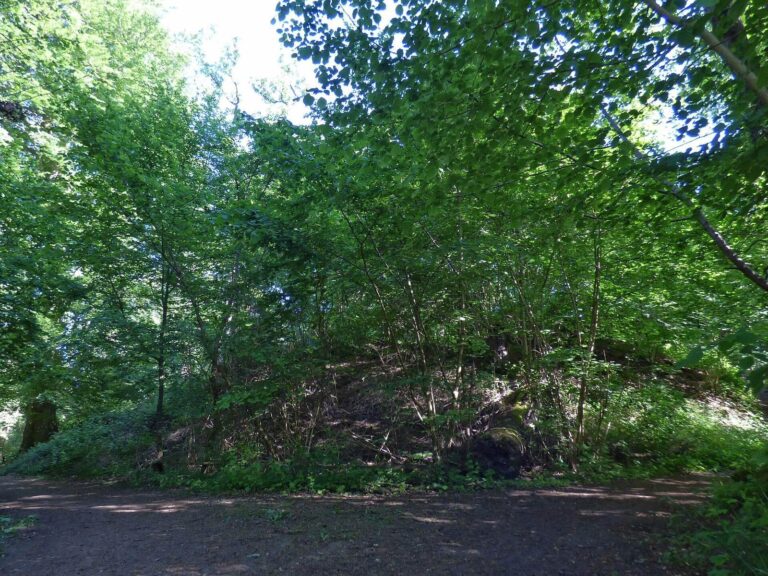
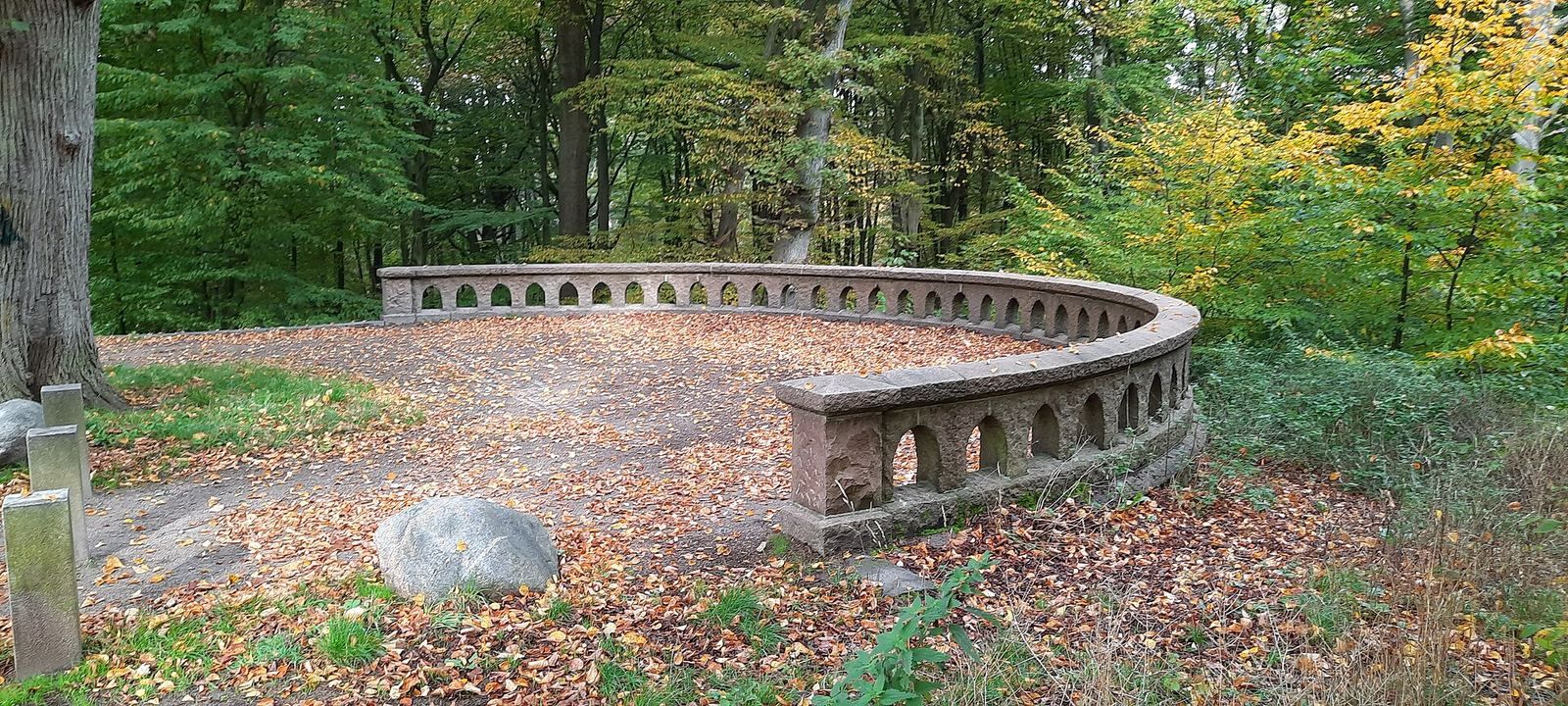
Three lookout bastions, raised platforms used for observation, form part of the historic grounds. One stands on Christian-Boeck-Allee in line with the manor house and gatehouse. A second is offset from the gatehouse along the avenue, which runs between the gatehouse and a bastion. The third is beside the manor house near the Alster hiking trail. After deteriorating almost to ruin, the bastions were restored to their original forms in 2021.