Burial Mounds in the Iller Valley near Tannheim: A Hallstatt Cemetery
Site at a Glance
- Popularity
- Very Low
- Country
- Germany
- Primary era
- Iron Age
- Eras represented
- Iron Age
- Civilizations
- Hallstatt culture
- Site type
- Burial
- Remains
- Necropolis
On this page12 sections
History
The Burial Mounds in the Iller Valley near Tannheim are a cemetery in Germany dating to the Younger Hallstatt period, an Iron Age cultural phase in central Europe, around 650–475 BC. More than 40 mounds are distributed across four findspots. The cemetery lies within the West Hallstatt cultural region, its western regional grouping, and is attributed to Celtic people, although that identification is uncertain.
Excavations took place at 23 mounds in the Härdtle forest between 1904 and 1909. The House of Schaesberg, a noble family with a count’s title, initiated the work; Max Geyr von Schweppenburg and Peter Goessler led the excavations and assessed the finds. The mounds remain on land belonging to the House. The dead were buried uncremated and fully clothed. Most grave goods were everyday objects intended to accompany them on a journey to the afterlife, and some objects were deliberately broken before burial for ritual reasons.
Other prehistoric and Roman evidence
Finds from Tannheim and its surroundings also belong to periods earlier than the mound cemetery. Construction of the Iller Canal and Tannheim reservoir between 1917 and 1927 brought Stone Age and Bronze Age material to light. Among the finds were a quartzite engraving tool, several axes and needles attributed to the Middle Stone Age, the prehistoric period between the Palaeolithic and Neolithic.
Roman coins were found in 1913 near a square earthwork enclosure. Under Roman rule, the wider region between the Alps and the Danube formed the province of Raetia, an Alpine and Danube region. Romans used the names Vindelici and Raeti for different peoples under their control; the Vindelici were Celtic. Traces of these peoples later disappear during Alemannic settlement.
Alemannic burials
Discoveries in 1885, 1910 and 1937 revealed Alemannic row graves, burial grounds arranged in rows, within Tannheim’s built-up area. The Alemanni were Germanic peoples associated with settlement in southwestern Germany. Graves were found around Hindenburgstrasse and Alemannenstrasse, as well as in the area around Lechstrasse and Memminger Strasse.
Finds from Am Egelseer Weg, including a knife, short sword and shield boss, date to about AD 600. A woman’s grave uncovered on Hindenburgstrasse dates to about AD 680–700; its contents included beads, bronze rings, a bow brooch, an arm ring, a bone comb, an iron key and hooks, and a crystal sphere. Of three graves found on Alemannenstrasse in 1937, one held a man buried with numerous weapons and a fully harnessed horse.
Remains
Setting and distribution
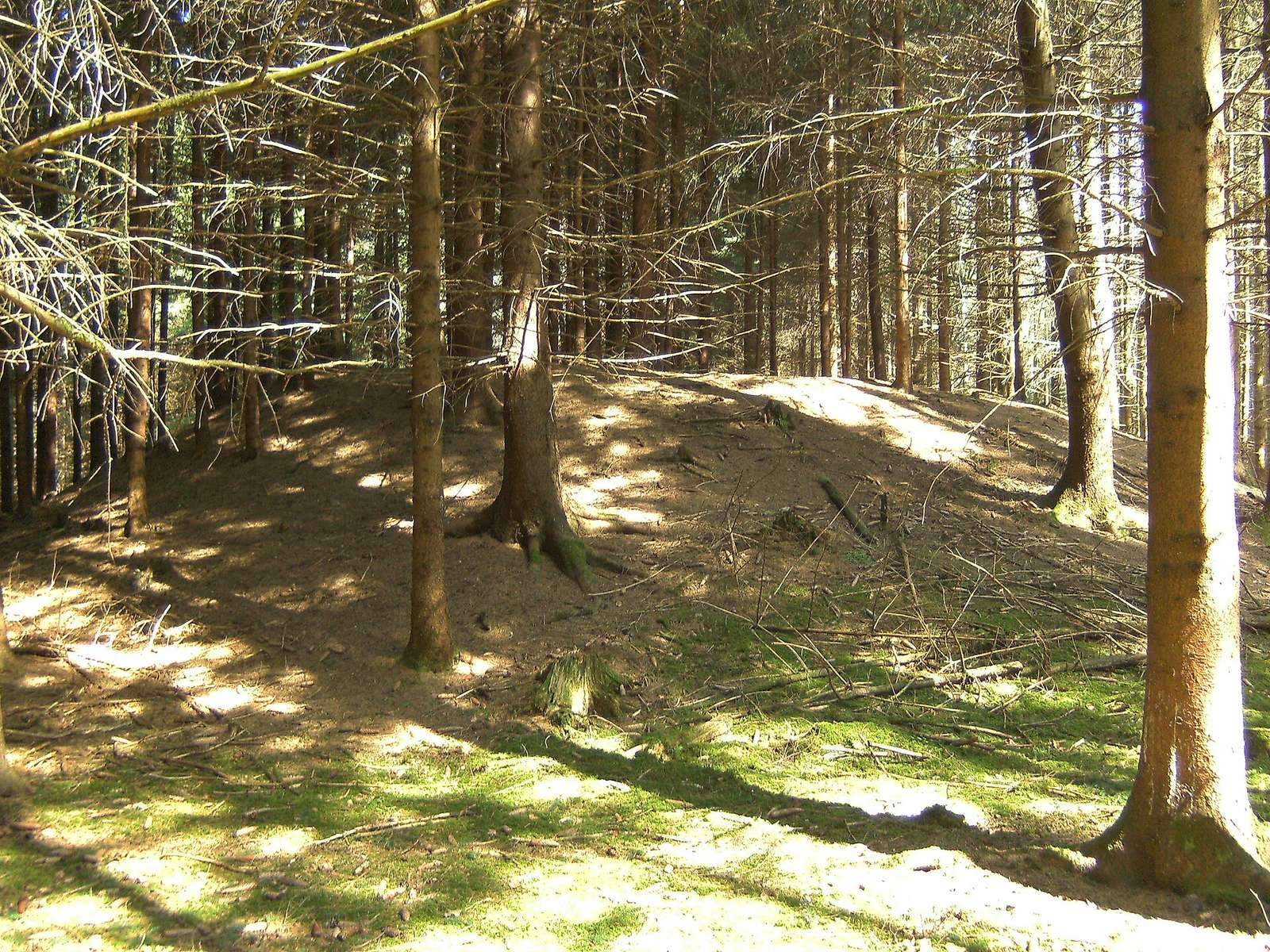
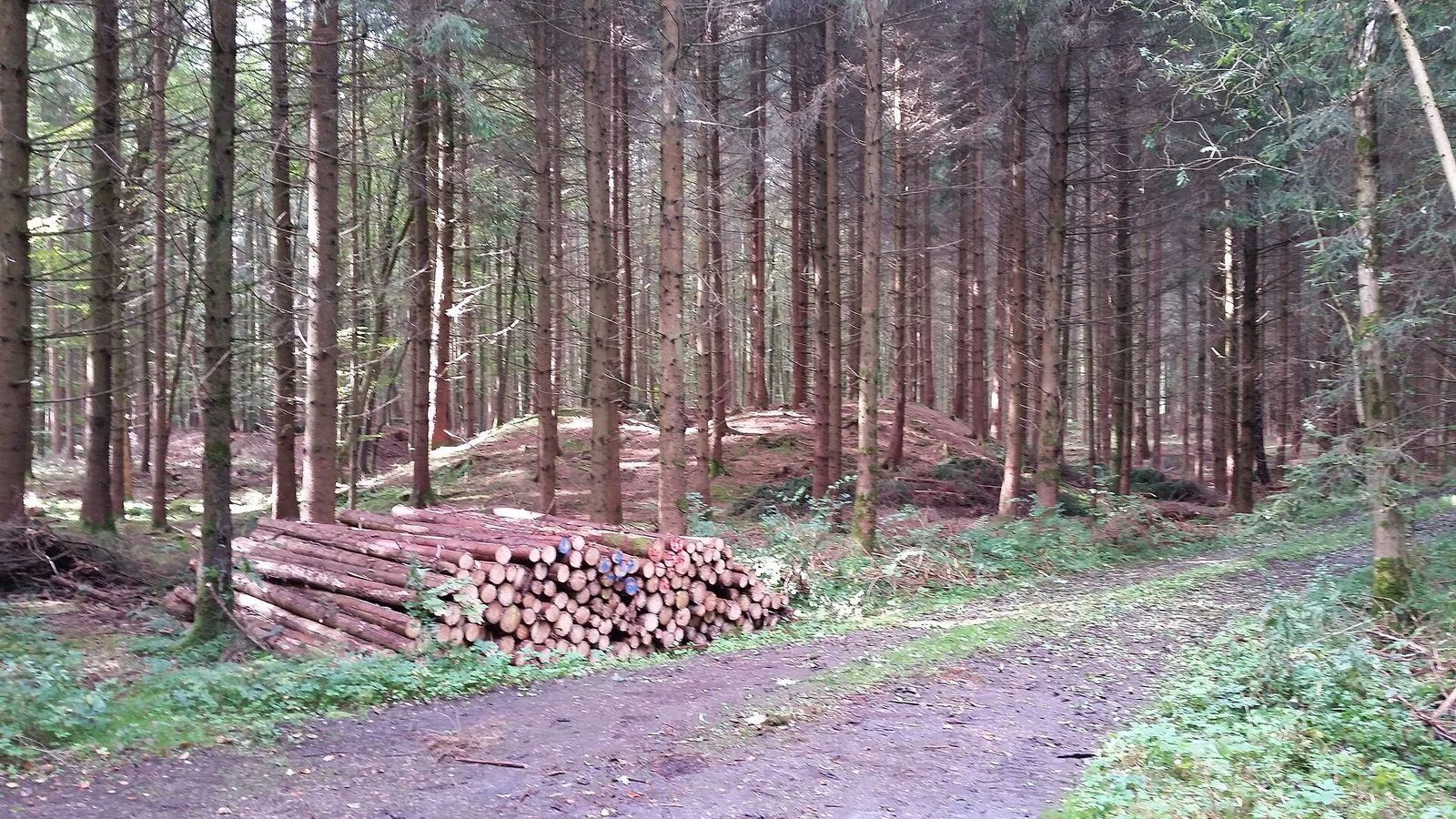
The burial grounds lie in the Härdtle forest, about 500 metres south of Tannheim railway station. They are east of State Road 260 and west of the Iller, which here forms the boundary between Bavaria and Baden-Württemberg. The four findspots comprise groups of mounds associated by their proximity. Mound size does not correspond to the quantity of grave goods.
Grave construction
Burial placement
The bodies were laid level with the ground surrounding each mound, then covered with loose fill up to 40 centimetres deep. They lay on the western side of the mounds, with grave goods on the eastern side. Eight bodies rested on boards. Mounds X and XX held multiple people; the other investigated mounds contained single burials. Five bodies were aligned southeast–northwest, one west–east and one southwest–northeast. In mound XII, the deceased was seated and faced from north-northeast toward south-southwest. This mound stands higher than the others.
Clay and stone structures
Eight graves had floors of compacted clay, and the clay was fired in five of them. The mound fill above the dead and their belongings was coated with clay, then a fire baked the layer. Gravel lay over the clay in eight graves. Stones formed the fill in mounds VII, VIII and XIV, while mound XXIII had a charcoal layer. Broken stone vaults were found in mounds II, XI and XIII. In mound V, the deceased lay in a wooden coffin.
Wagon burials
Five mounds contained wagons, placed as ordinary grave goods rather than as chariots or other military vehicles. The well-preserved wagon from mound VIII leaves it uncertain whether iron formed part of its axle or fittings. Damp ground near former Iller channels and the river’s old main bed may have contributed to the decay of any iron parts.
Finds and burial containers
Grave goods
Bronze vessels and bronze bridle equipment show substantial wear. Mound IX contained an iron ploughshare. Horse ornaments and practical pottery are plentiful, while weapons are scarce. A distinctive jug shaped with a bull’s head has parallels at Salem and Hallstatt. Some finds are displayed in Tannheim Town Hall, and most of the collection is displayed at the Württemberg State Museum in Stuttgart.
Urns and vessels
Almost all the urns had three stones beneath them, though the stones’ purpose is uncertain. Most urns contained traces of grain. Ceramic urns were placed directly in the earth. Bronze vessels were wrapped in woven material and covered with a board.