Dolmen de Bagneux: A Neolithic Collective Burial Monument in France
Site at a Glance
- Popularity
- High
- Country
- France
- Primary era
- Stone Age
- Eras represented
- Stone Age
- Civilizations
- Unclassified
- Site type
- Burial
- Remains
- Tomb
On this page6 sections
History
The Dolmen de Bagneux is a megalithic burial monument in Saumur, France, probably dating to around 3000 BC, during the Neolithic, the later part of the Stone Age associated in many regions with farming and settled communities. It is interpreted as a collective burial place that may have held numerous burials.
An individual identified only as Dolomieu may have excavated the dolmen in 1775, apparently finding nothing. French historian Jean-François Bodin gave its first description in 1812.
Later folklore attributed its construction variously to fairies, druids, members of learned and religious groups in ancient Celtic societies, or the Goths, an East Germanic people. The monument was classified as a historic monument in 1889.
Remains
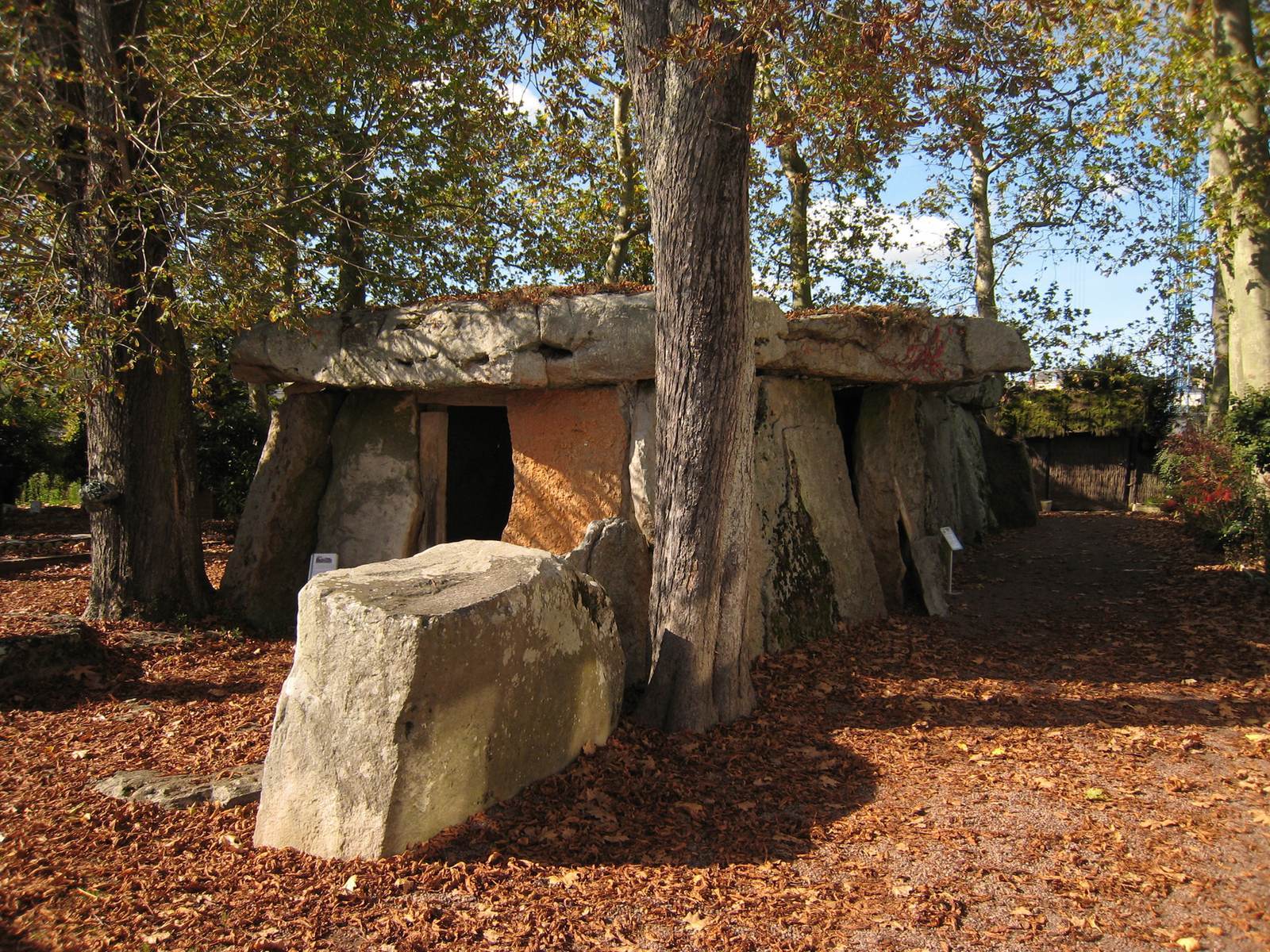
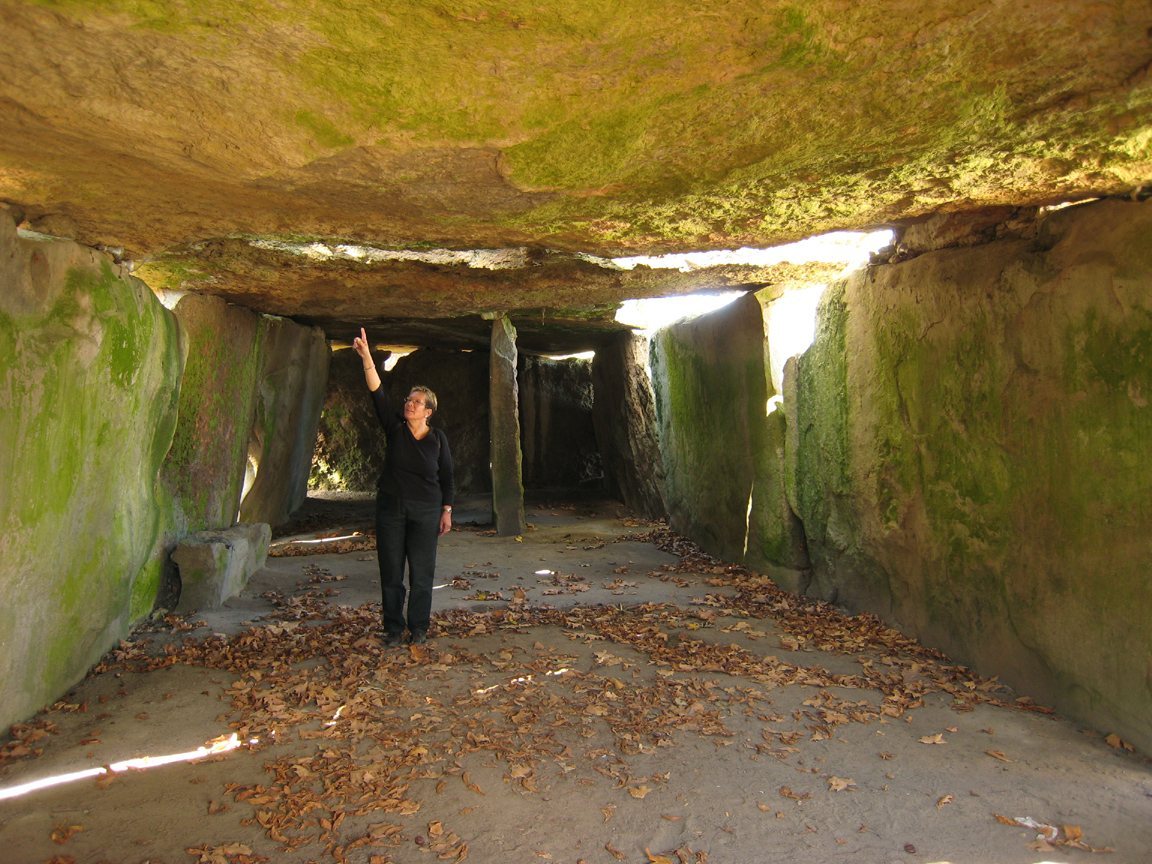
The Dolmen de Bagneux is a covered stone chamber with a nearly rectangular plan and a southeast-facing entrance. Its external length exceeds 23 metres. The chamber is 17.3 metres long, widening from 4.25 metres at the entrance to 5.4 metres at the rear, with an internal width greater than 5 metres. Its floor area is about 90 square metres and its volume is estimated at about 200 cubic metres. Prehistorian Michel Gruet regarded it as the largest dolmen with a portico in Anjou, a historic region of western France. Here, a portico is a recessed entrance formed by two upright stones supporting a lintel.
Chamber and roof
Four upright slabs line each side of the chamber, which terminates in an end slab 7.3 metres long. Four large covering stones form the roof. The largest is split and has been estimated to weigh about 90 tonnes. Another upright slab, set at right angles to the end slab, may be the remnant of an internal partition.
Entrance and mound
The entrance opening is 1.3 metres wide and framed by two slabs. The left-hand slab is original; the thinner slab on the right was added later and conceals a more recent wall. The porch is partly damaged. Four additional slabs just beyond the entrance may be remains of an antechamber. A mound raised over the burial place once surrounded the dolmen, and traces of it were still visible in 1847.
Building stones
The monument comprises 15 slabs and two stones used to wedge them in place; further wedging stones may remain buried. The stones are local sandstone from the Senonian, a stage of the Late Cretaceous. Outcrops on the heights and slopes of Bournand and Terrefort could have supplied the material, with transport over roughly 200 to 400 metres sufficient to bring it to the site. The monument’s other stones have been estimated to weigh more than 500 tonnes collectively.
Associated finds
In 1839, André-Marie Ampère recorded that a skeleton with a stone knife in its side had been found at the dolmen’s foot. Three polished-stone axes and a flint knife found later nearby are considered likely to have come from the monument.