St. Laurentius Church, Lessenich: A Roman Catholic Parish Church
Site at a Glance
- Popularity
- Low
- Country
- Germany
- Primary era
- Medieval
- Eras represented
- Medieval
- Civilizations
- Holy Roman Empire
- Site type
- Religious
- Remains
- Church
On this page11 sections
History
St. Laurentius Church, dedicated to Saint Lawrence, a third-century Christian deacon and martyr in Rome, is the Roman Catholic parish church of Lessenich/Meßdorf in Bonn, Germany. Its core dates to the 11th century, and its history is closely connected with Bonn’s Cassius-Stift, a collegiate chapter, or community of clergy serving a collegiate church.
Medieval development and affiliation
In 1131, a document confirmed that the tithe associated with the church at Lessenich belonged to the Cassius-Stift. The parish church was formally incorporated into the chapter in 1385. Around 1200, builders added a north aisle and a choir tower; a south aisle followed around 1240, giving the church a basilical plan, with a central nave flanked by aisles.
War damage and restoration
War damage destroyed the south aisle in 1645. During the restoration that followed, the aisle was not rebuilt, and the central nave received a Baroque vault, in a later European style characterized by dramatic, elaborate forms.
Twentieth-century renovation
A major renovation from 1961 to 1965 reconstructed the south aisle using excavation findings and removed the Baroque vault. The church, rectory, and outbuildings are protected together as a listed monument.
Remains
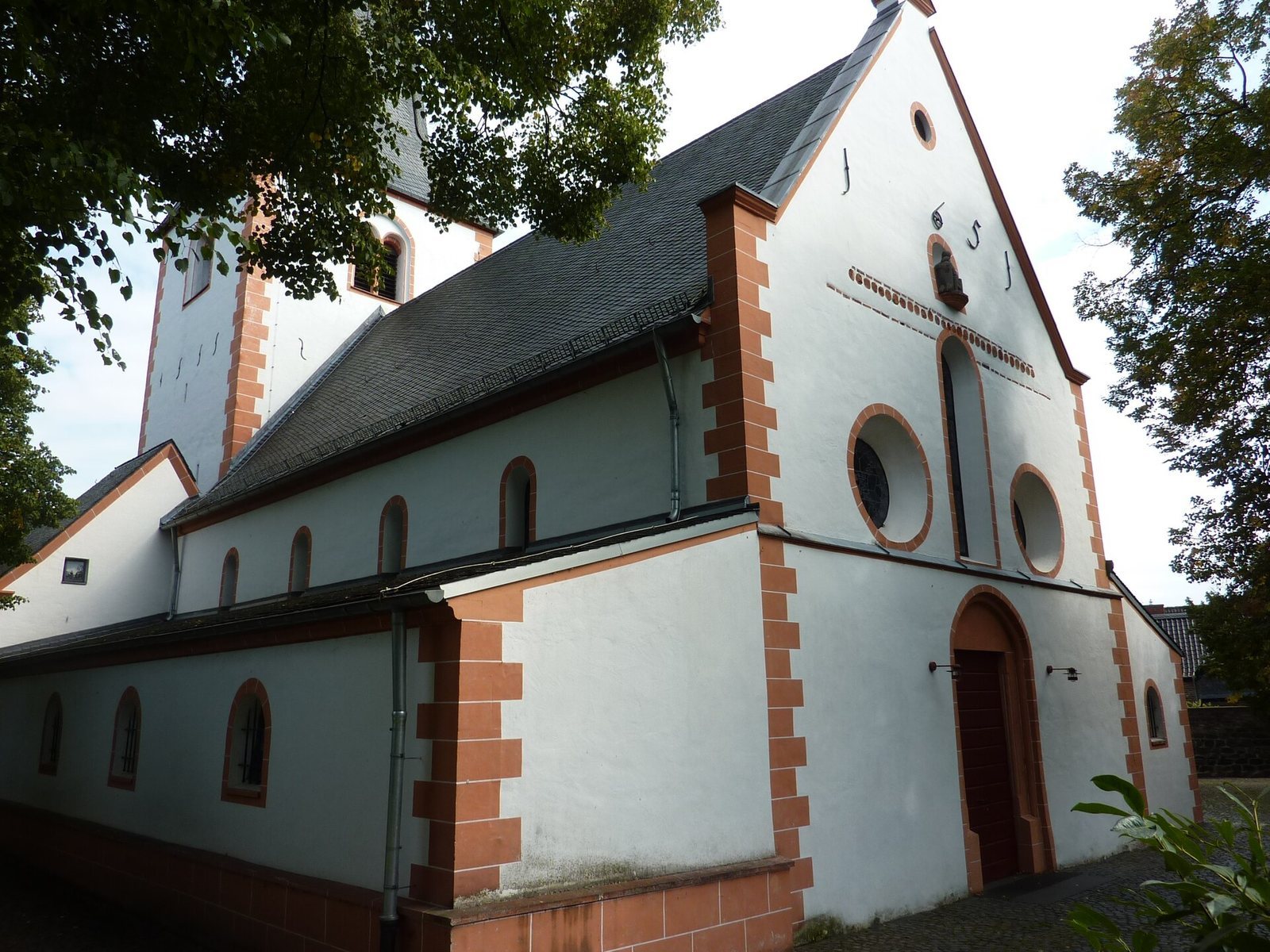
The parish complex includes the church, rectory, and outbuildings. The church’s overall form is basilical, with a central body and aisles alongside it.
Church structure
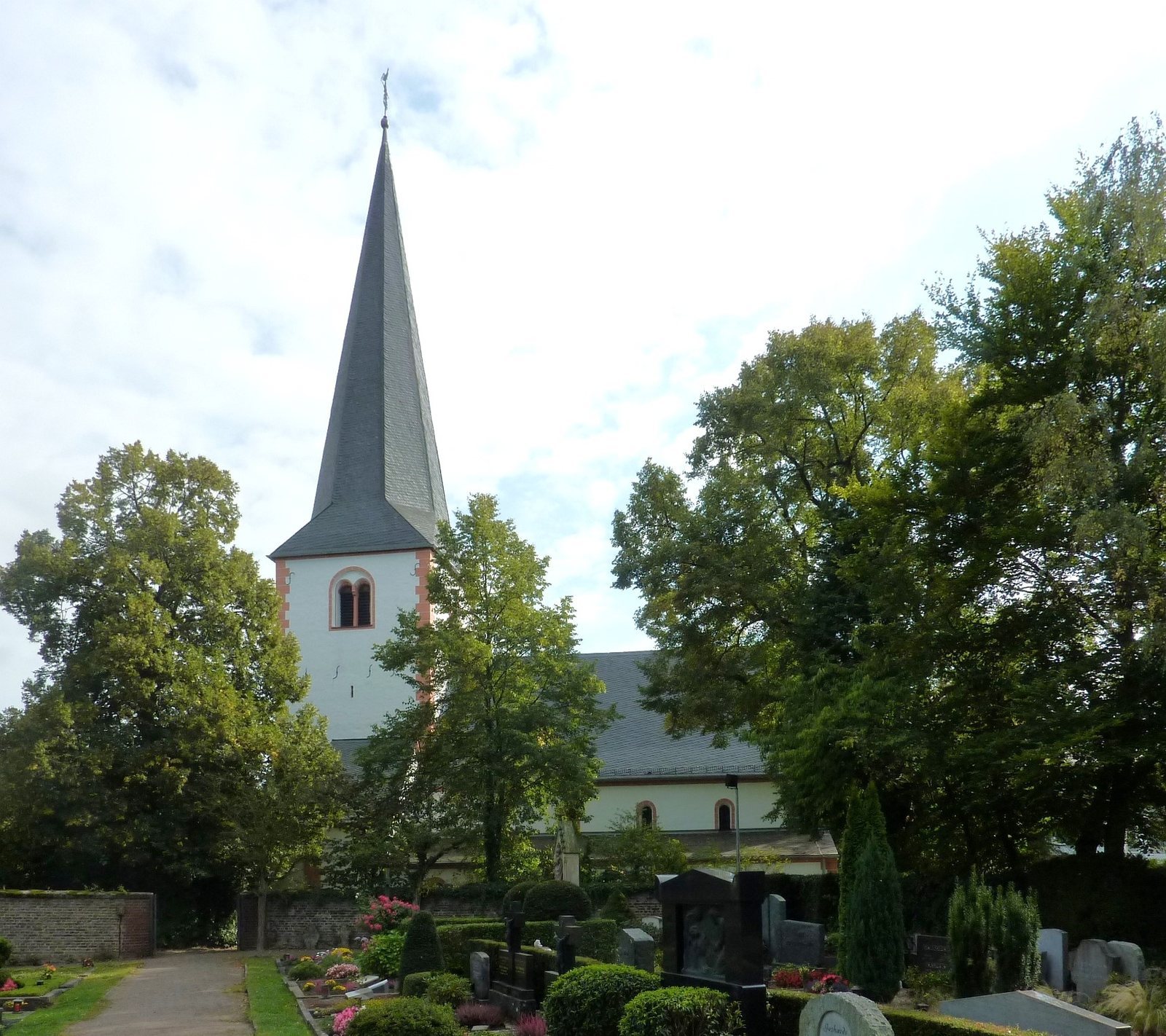
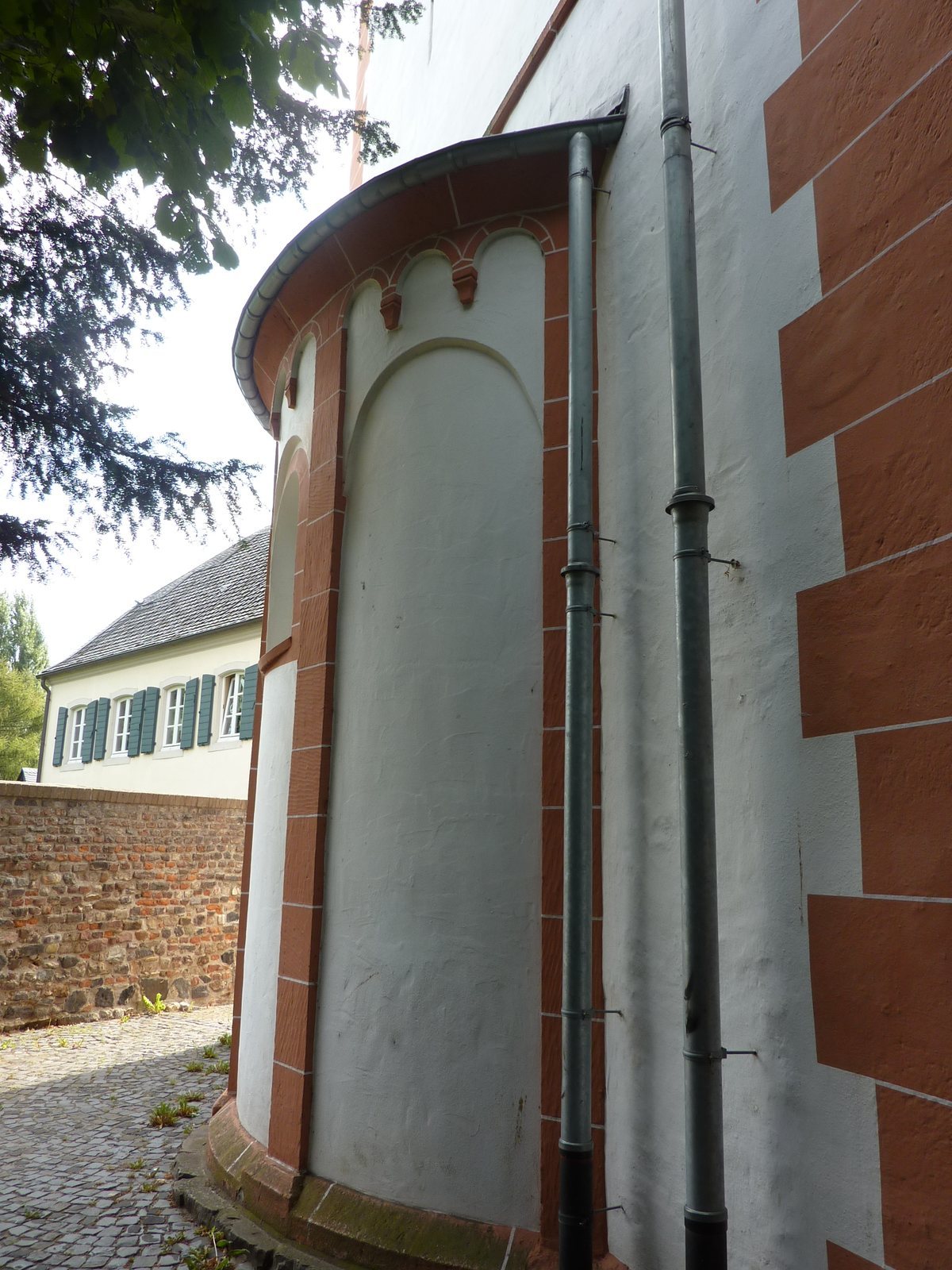
The church’s single-nave hall core is flanked by north and south aisles. A choir tower stands at the choir end, with an apse that projects only slightly. Above the lower aisle roofs, the exposed Romanesque clerestory, the upper wall of the nave, reflects a medieval architectural style.
Organ
Installed in 1995, the church’s organ is Opus 1733 by Bonn’s Klais organ workshop. It has 20 stops, each controlling a set of pipes that produces a particular sound, two manuals played by hand, and a pedalboard played by foot.
Bells
First bell
Martin Legros of Malmedy cast the first bronze bell in 1778. It was consecrated that June by C. J. Mayer, dean of Bonn’s church of Saints Cassius and Florentius, under Johann Honecker. Its godfather was Maximilian Fridericus, Archbishop and Elector of Cologne and Count of Koenigsege. The inscription asks St. Laurentius to protect the church from lightning and storms.
Second bell
The second bell is dedicated to the Sacred Heart of Jesus and asks to ring unharmed for many years. Its inscription names Caspar Anton, Baron von Belderbusch, as its first godfather. It identifies him as a master commendator, an official associated with a commandery of the Teutonic Order, a Catholic religious order, and as a privy councillor to the imperial and royal majesty and minister to the Archbishop and Elector of Cologne.
Third bell
M. Legros cast the third bell in 1778 under Johann Honecker. Petit and the Edelbrock brothers of Gescher recast it in 1896 under Lessenich parish priest Johann Theoph. Hub. Schwerdt. The inscription records both its original casting and its recasting.