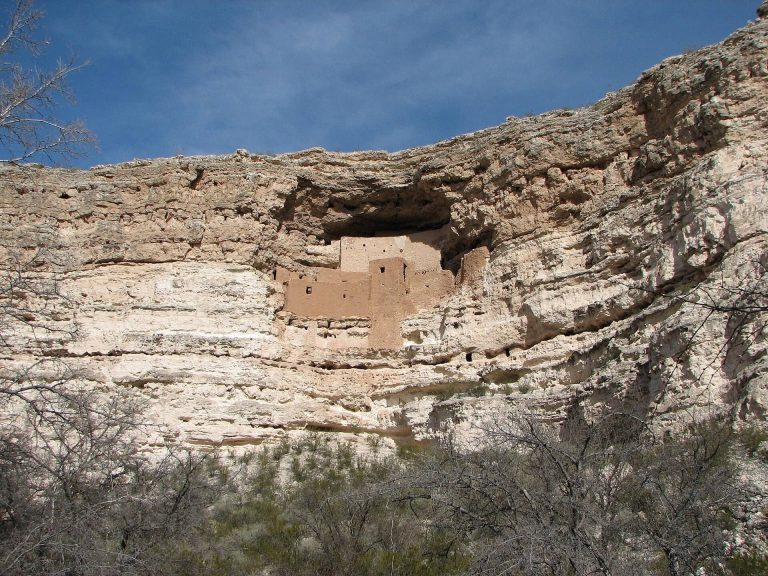
Walnut Canyon National Monument: Preserving Sinagua Cliff Dwellings
Site at a Glance
- Popularity
- High
- Country
- United States
- Primary era
- Medieval
- Eras represented
- Medieval
- Civilizations
- Unclassified
- Site type
- Domestic
- Remains
- House
On this page7 sections
History
Sinagua community
Walnut Canyon National Monument is a protected archaeological landscape in the United States, where the Sinagua, a pre-Columbian cultural group, built cliff dwellings and lived from about 1100 to 1250. More than 100 people made up the community during this period.
The Sinagua farmed maize, beans, and squash, hunted deer, wild sheep, and other game, and gathered wild plants. Water flowed intermittently along the canyon floor, while natural basins collected rain and snowmelt from springs, providing enough water for the community to grow crops despite the harsh climate. The area’s varied plant life, including concentrations of sensitive species, may have influenced the choice of settlement. The Sinagua are also thought to have traded widely, with activity and influence extending to the Gulf of Mexico and Central America.
The community left the canyon around 1250. The reason is uncertain; drought and fear of neighboring groups are possible explanations.
Federal protection and recognition
On November 30, 1915, President Woodrow Wilson proclaimed Walnut Canyon a national monument to protect its cliff dwellings. The USDA Forest Service, which manages national forests and related lands, administered the monument until it transferred to the National Park Service, the federal agency responsible for national parks and monuments, on August 10, 1933.
The monument’s historic district was added to the National Register of Historic Places, the federal register of historically significant properties, on October 15, 1966. The district covers 2,249.5 acres, and the Old Headquarters is also listed. In 2016, Walnut Canyon, Sunset Crater Volcano, and Wupatki National Monuments became an International Dark Sky Park in recognition of their night skies and efforts to reduce light pollution.
Remains
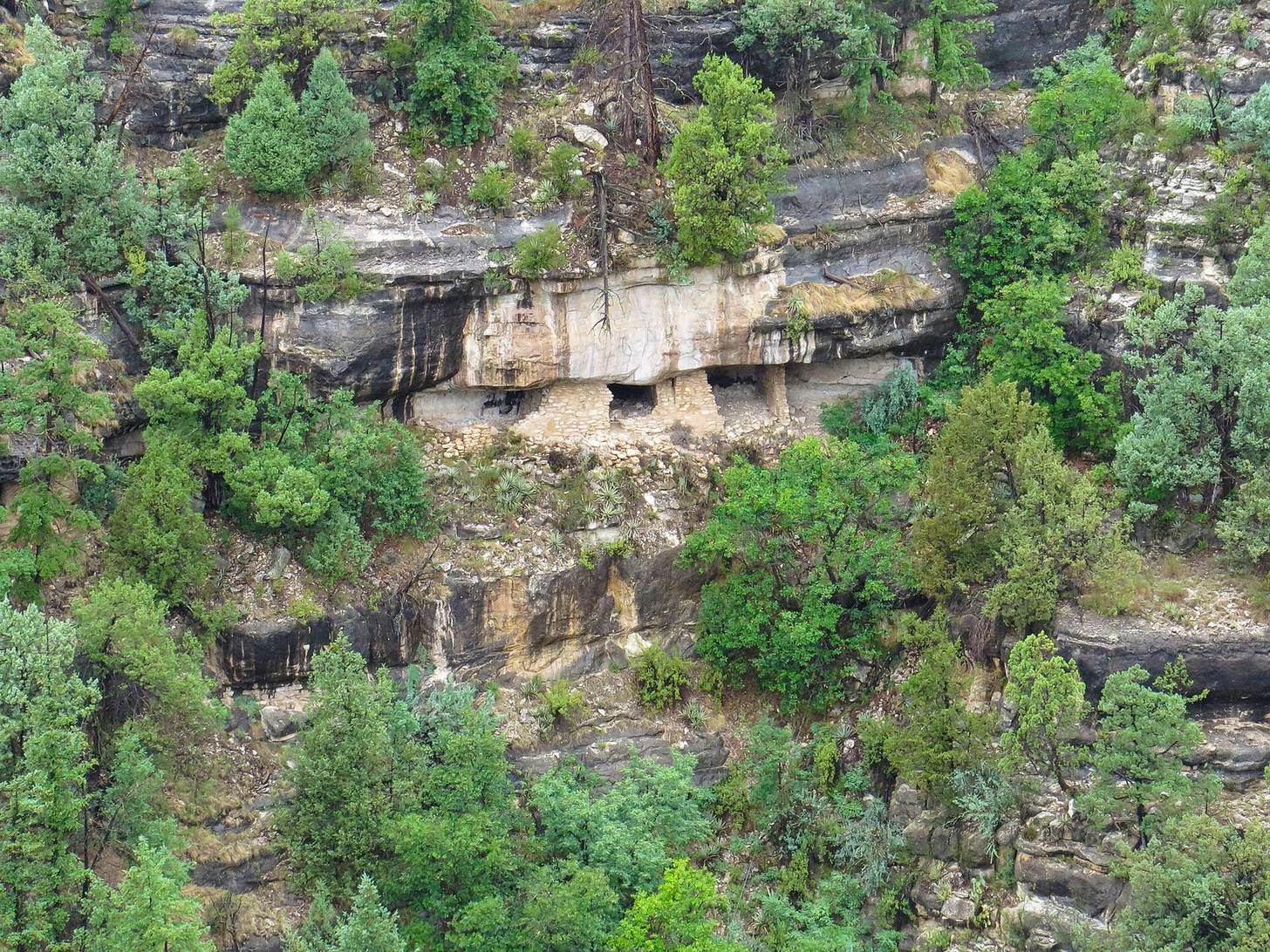
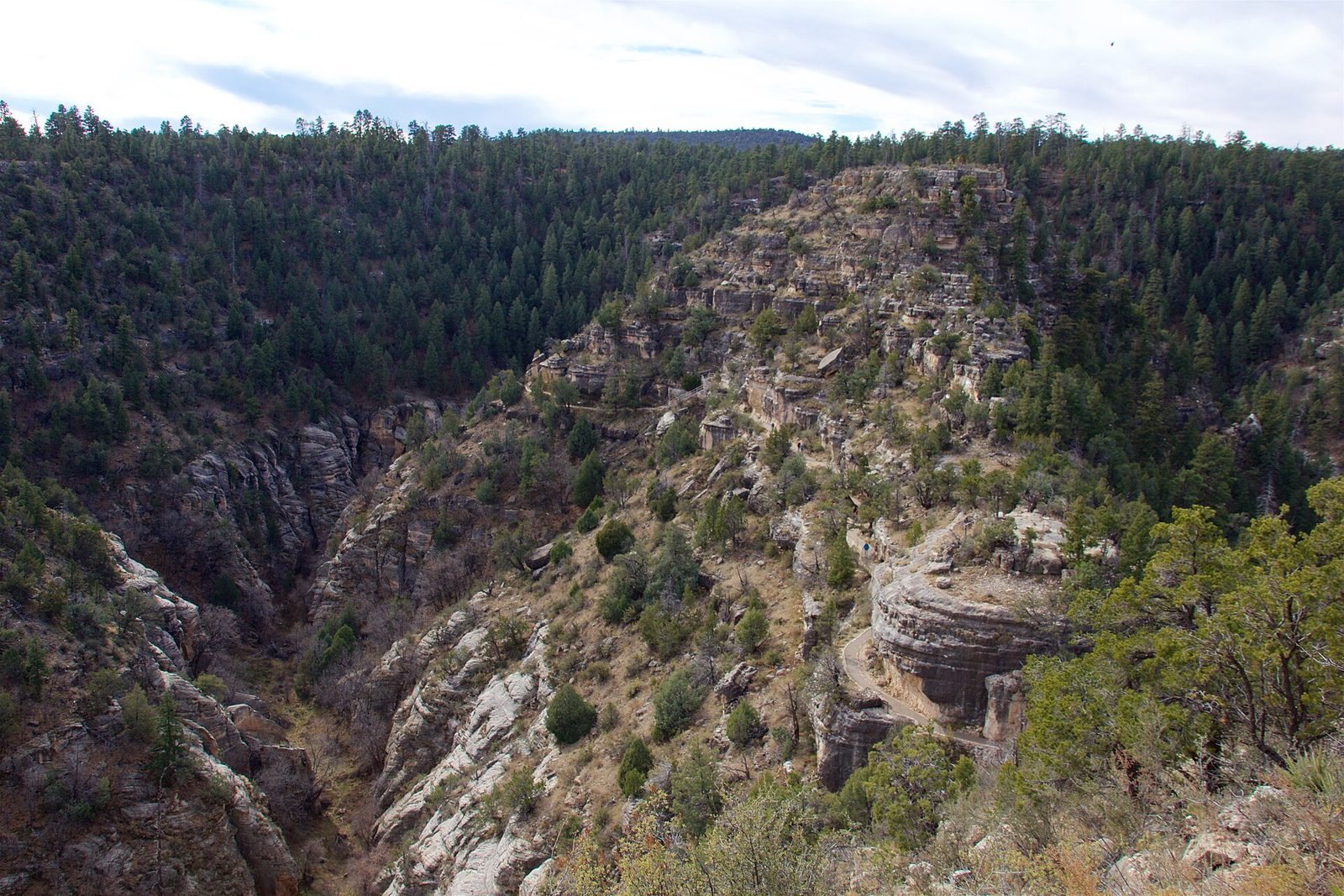
The monument covers about 3,529 acres. Walnut Creek runs east through the canyon and bends around three sides of a high rocky plateau, leaving it almost surrounded. More than 80 Sinagua cliff dwellings survive beneath limestone ledges along the canyon walls.
Canyon geology and setting
The canyon lies on the Colorado Plateau, a broad elevated region, with its rim about 6,690 feet above sea level and its floor roughly 350 feet below. Walnut Creek carved the canyon and joins the Little Colorado River on its course toward the Grand Canyon. The canyon cuts through Permian rock, from a geologic period before the Triassic, exposing Kaibab Limestone, the Toroweap Formation, and Coconino Sandstone. Layered limestone forms the upper third of the walls; steep, scrub-covered slopes of the Toroweap Formation lie below, and sheer sandstone makes up the lowest third. Erosion created alcoves in the limestone, whose upper walls contain marine fossils indicating an ancient sea. The sandstone’s inclined layers preserve forms shaped by wind in an ancient desert.
Cliff dwellings
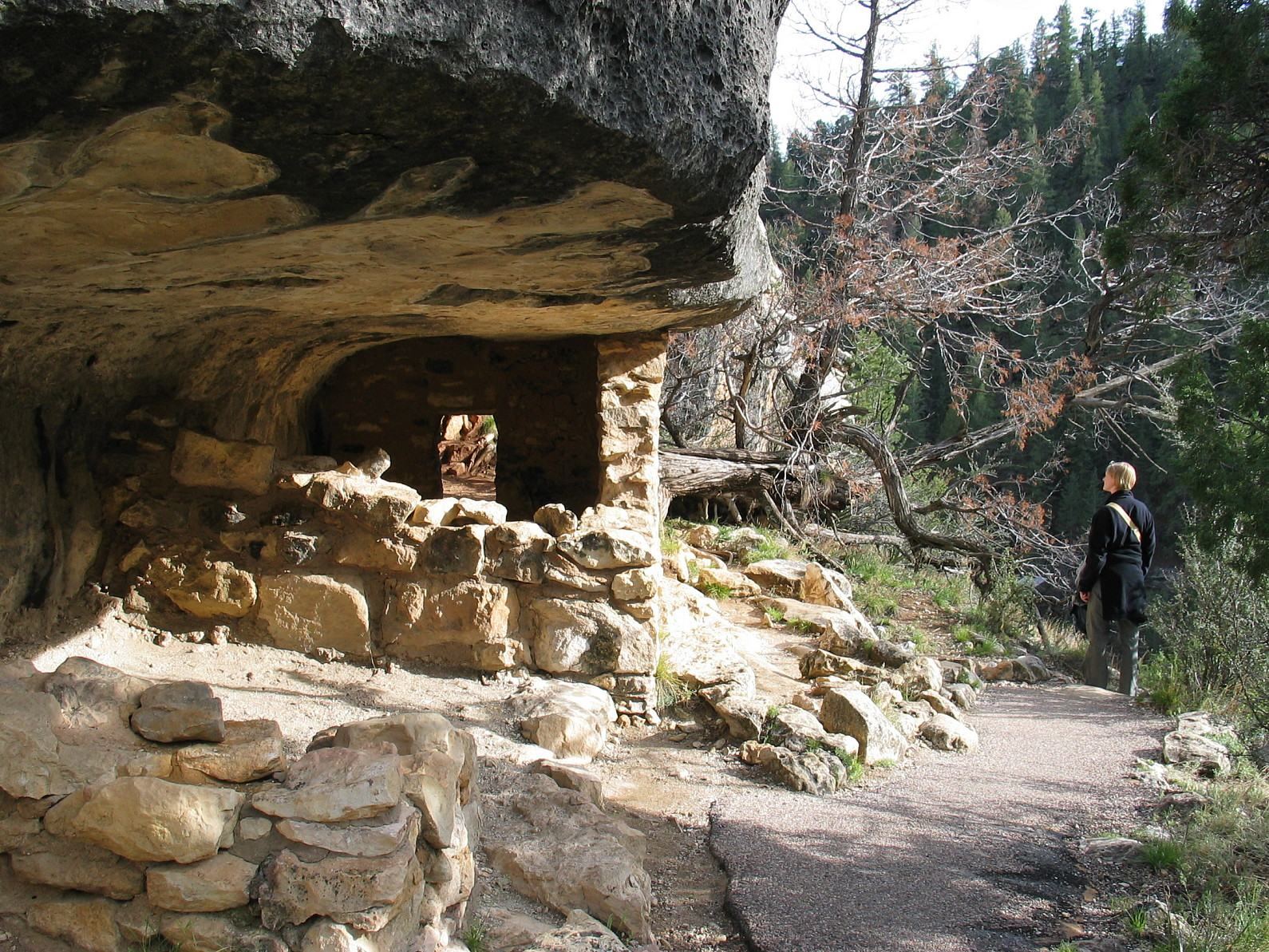
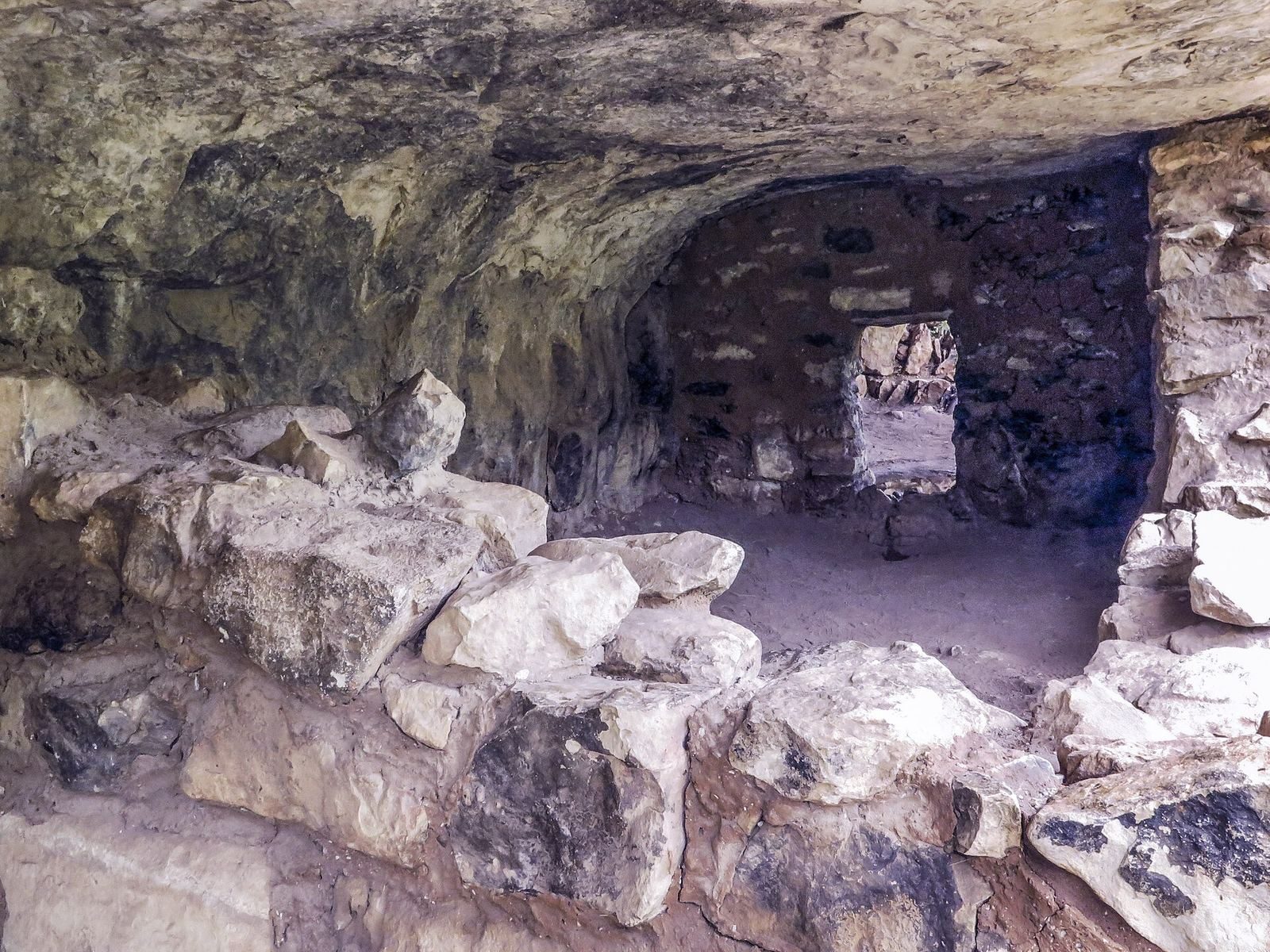
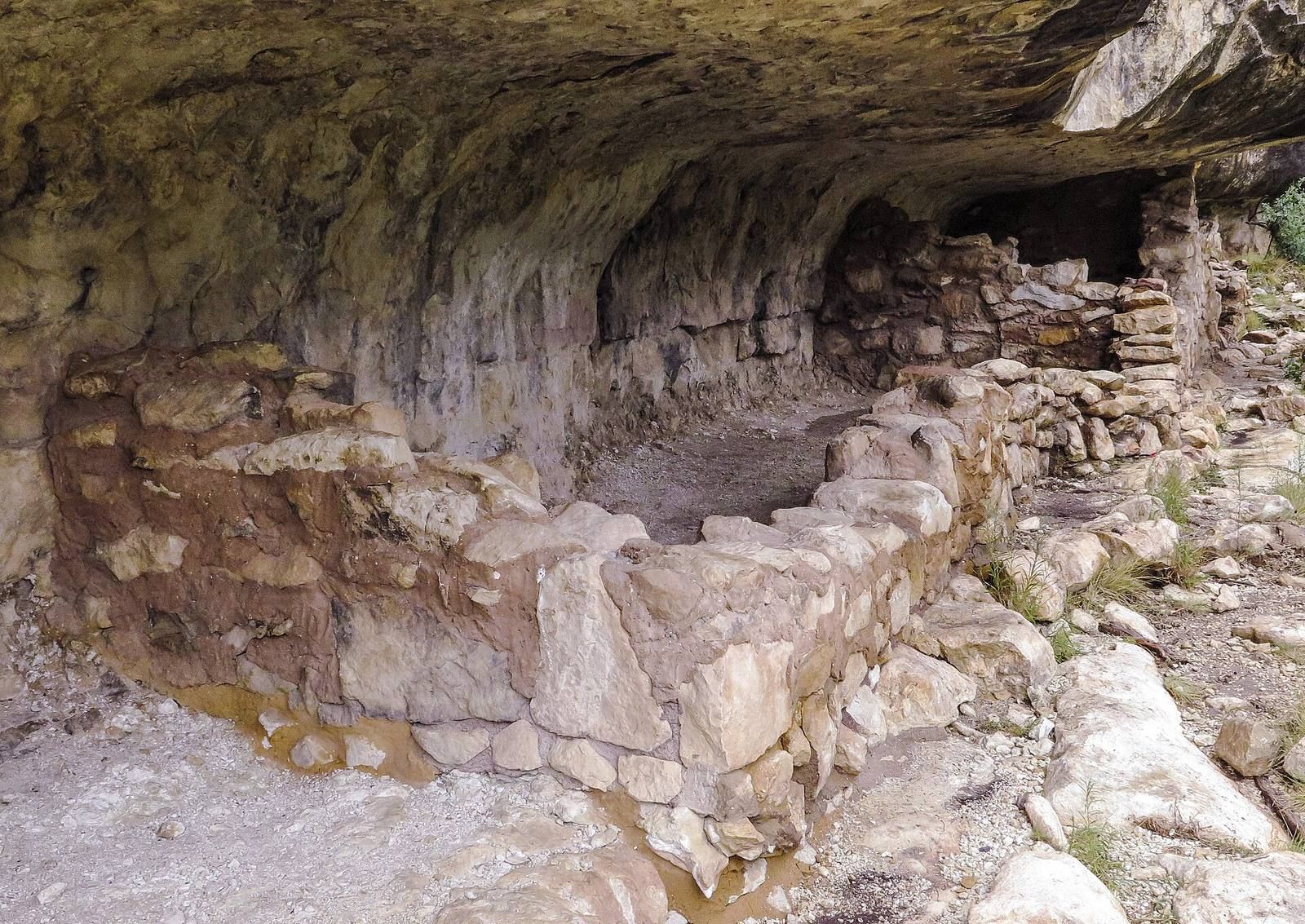
The dwellings occupy natural recesses in the cliff walls, formed by water erosion over millions of years, beneath protective limestone ledges. A typical room may have housed one family and measured about 2 metres high, 6 metres long, and 3 metres deep, with space for cooking and sleeping. A 0.9-mile loop trail descends about 185 feet into the canyon and passes 25 dwelling rooms. Most are close to the trail, generally just above it and outside the loop.
Vegetation and climate
Several walnut species grow on the canyon floor, including the Arizona black walnut for which the canyon is named. More than 387 plant species grow in the area, among them prickly pear cactus. Shaded, north-facing walls support fir and ponderosa pine, while sunny, south-facing slopes have agaves and cacti, including opuntia, echinocereus, and cholla. Pines also cover the surrounding plateau. The canyon and rim experience winter snow, summer heat and afternoon thunderstorms, and strong, gusty winds in spring.