Ranem Church: A Romanesque Parish Church in Overhalla, Norway
Site at a Glance
- Popularity
- Low
- Country
- Norway
- Primary era
- Medieval
- Eras represented
- Medieval, Modern
- Civilizations
- Norwegian
- Site type
- Religious
- Remains
- Church
On this page8 sections
History
Medieval foundation and parish
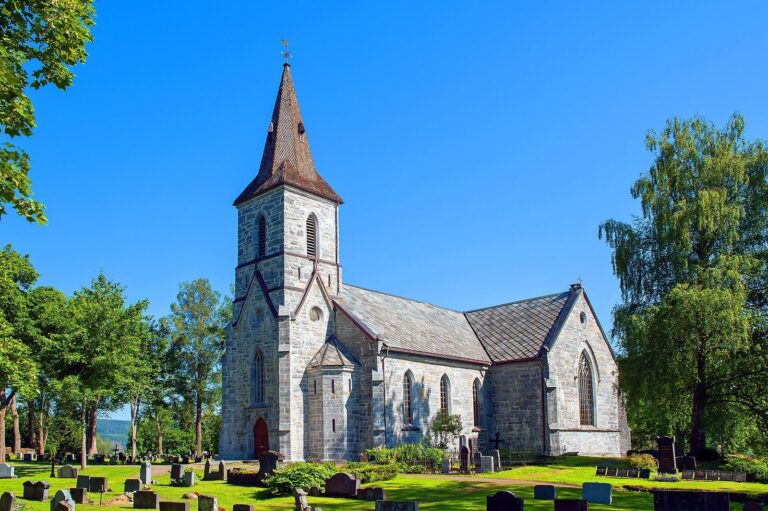
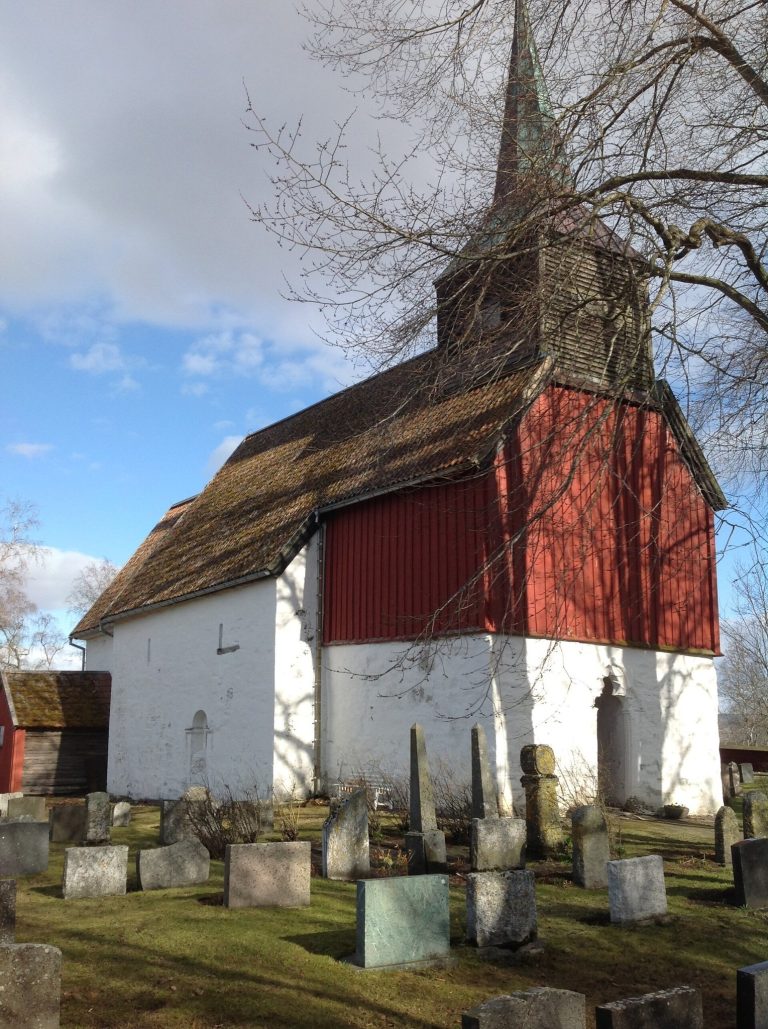
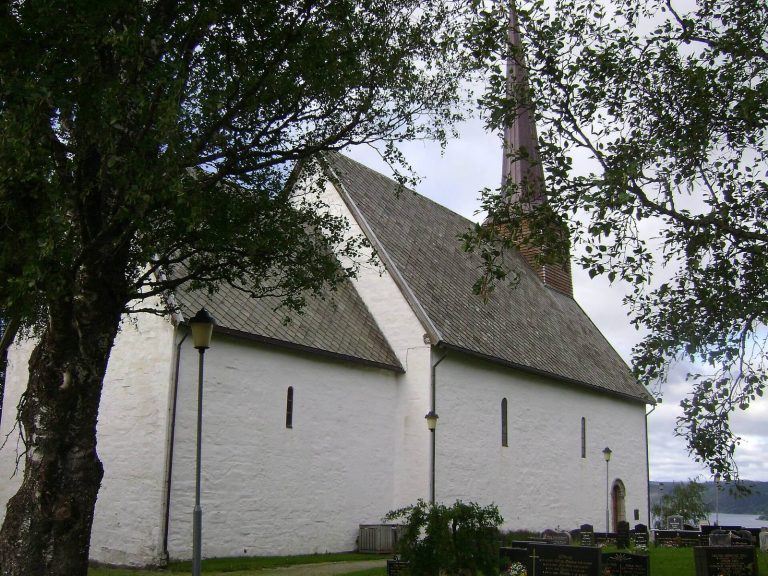
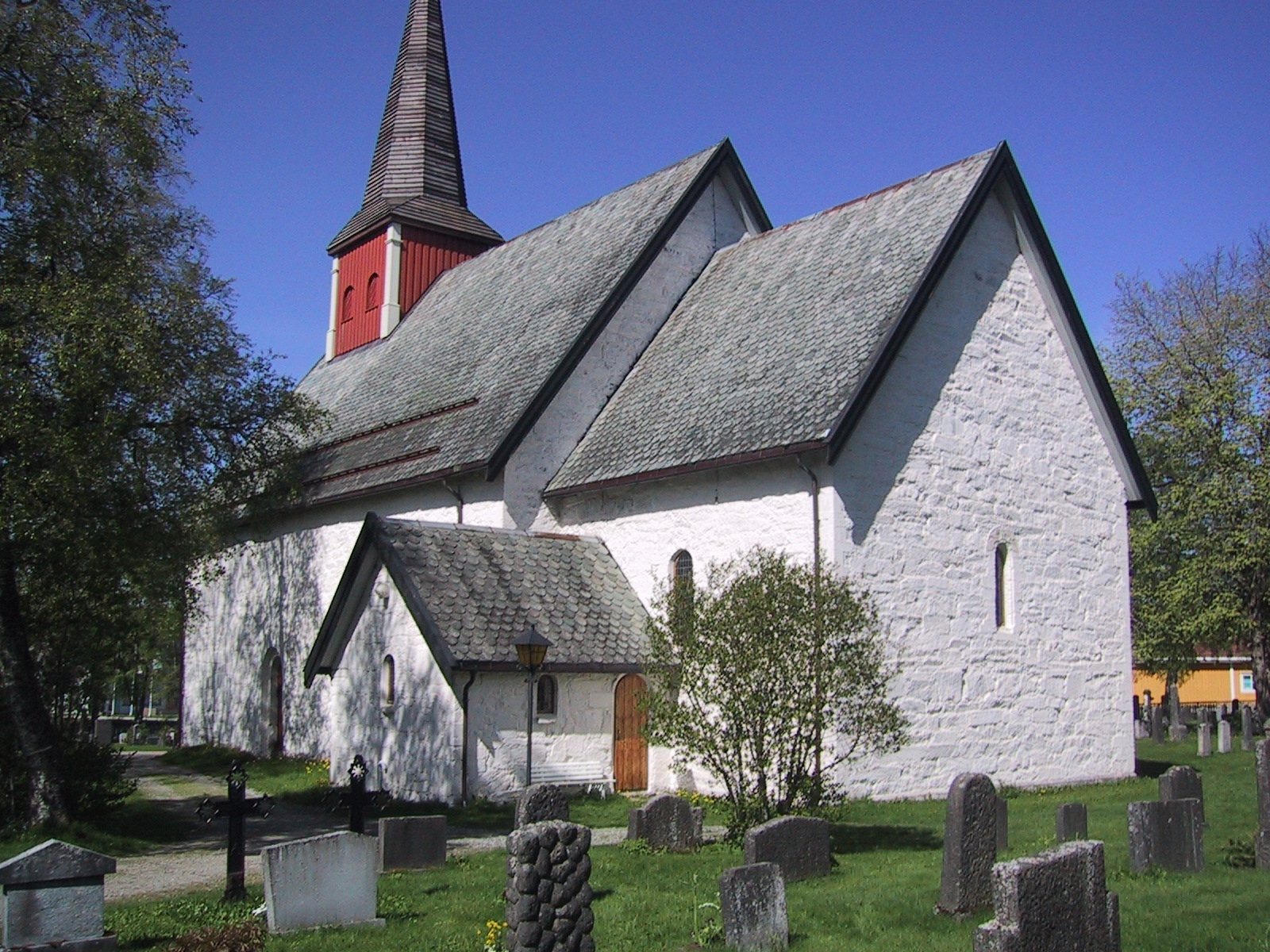
Ranem Church is a Romanesque long church in Overhalla, Norway, built and consecrated around 1187. Romanesque architecture is a medieval European style characterized by substantial masonry construction and rounded arches. The earliest surviving records that mention the church date from 1326. It originally served all of inner Namdal; chapels established later in the surrounding area eventually led some communities to form separate parishes.
Ranem Church was formerly affiliated with the Catholic Church and is now an Evangelical Lutheran parish church of the Church of Norway. It belongs to Ranem parish, within the Namdal deanery and Diocese of Nidaros. A deanery is a subdivision of a diocese, or church administrative district.
The 1814 elections
In 1814, the church served as a polling place for Norway’s first national elections, which chose representatives for a constituent assembly, a body convened to draft or establish a constitution. Each parish selected electors, who then met at county level to choose the assembly’s representatives.
Renovation and rebuilding
Architect and antiquarian Christian Christie directed renovations and restoration in 1878. A fire on 20 March 1899 destroyed the church’s wooden interior structures. The church was rebuilt in 1900 according to Christie’s plans. A further comprehensive restoration began in the late 1950s and was completed in 1987. Ranem Church is automatically protected as a Norwegian cultural heritage site.
Remains
Plan and construction
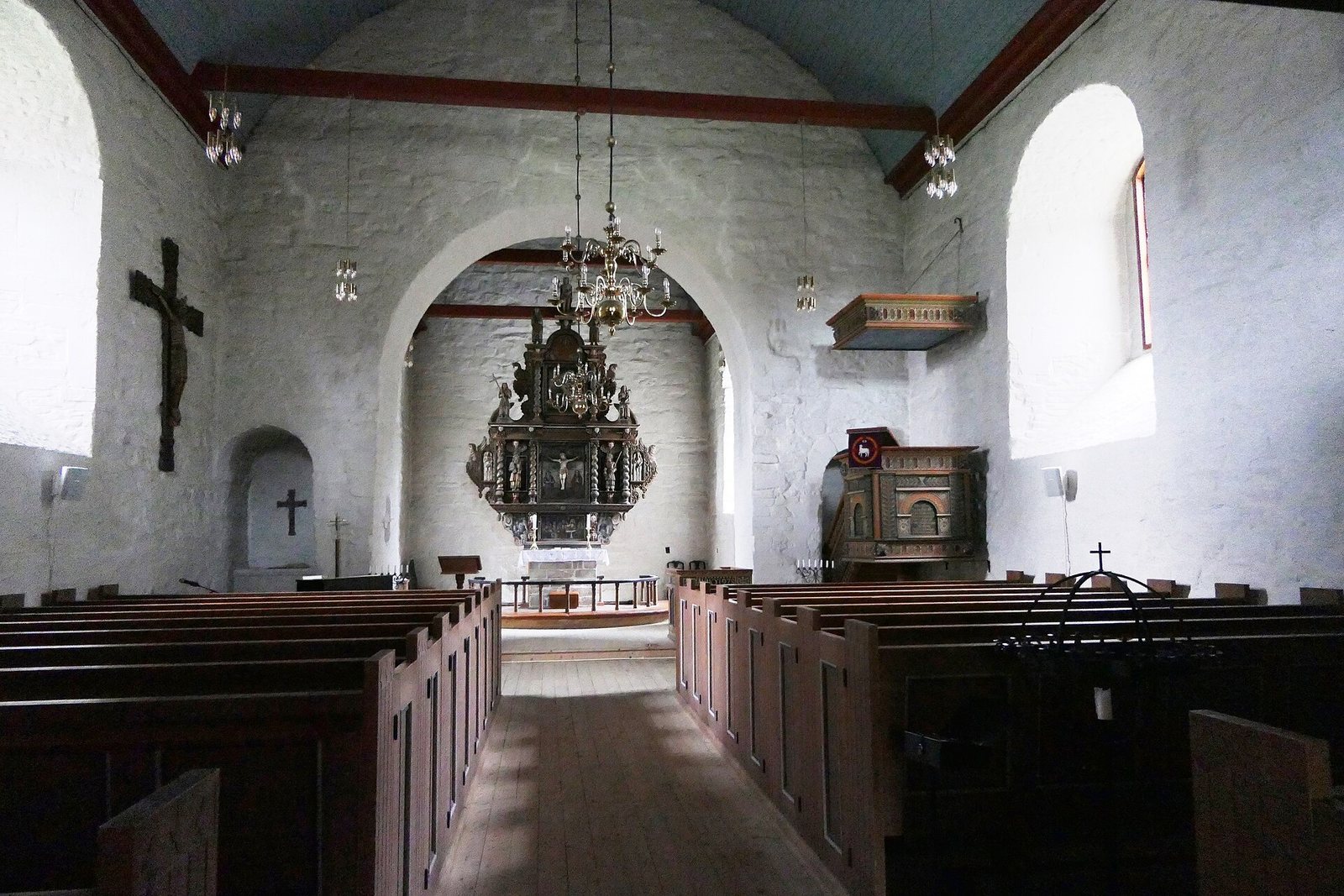
The building follows a long-church plan, with the nave and chancel arranged end to end. Its rectangular nave measures 18.25 by 12 metres, while the narrower, square chancel measures 9.2 metres on each side. The church combines masonry and timber construction, using stone and wood. Decorative stonework dates to around 1187. During rebuilding after the 1899 fire, plaster was applied to both the interior and exterior walls.
Stone, riverbank, and churchyard
The marble used in the church came from quarries at Veglosfjellet, while rubble stone came from Solemsfjellet. Quarry traces remain, particularly at the marble quarry, where the deposit is very pure white marble. The church stands on the north bank of the Namsen River, beside the water. Numerous clay landslides in the area make plausible the prediction that the building may eventually slide into the river. A churchyard lies nearby.
Interior and furnishings
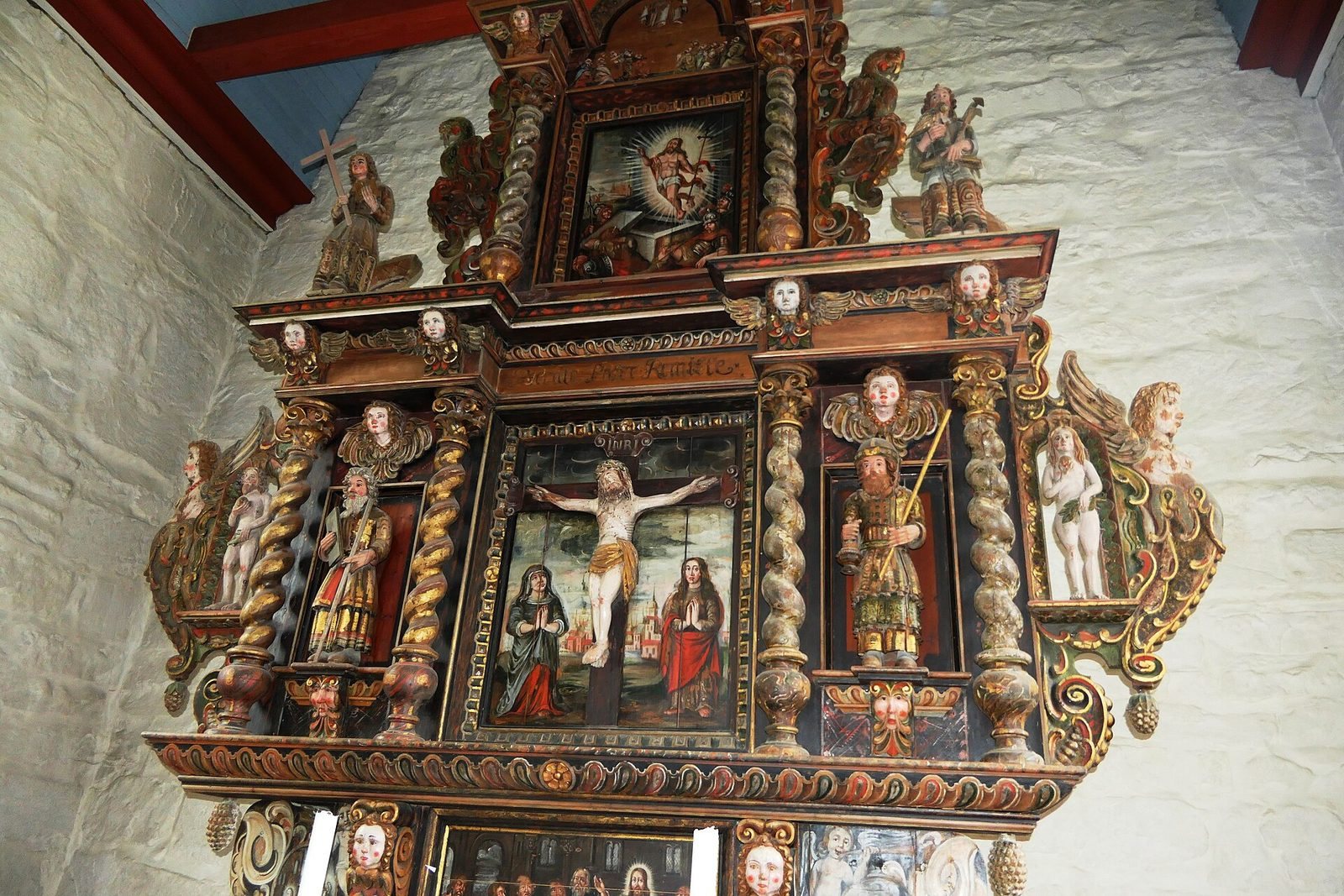
The church seats about 200 people. Its altarpiece, an artwork or decorated structure behind the altar, dates to 1678 and was saved from the 1899 fire.