Old Jewish Cemetery in Kolín: A Historic Jewish Burial Ground
Site at a Glance
- Popularity
- Low
- Country
- Czechia
- Primary era
- Early Modern
- Eras represented
- Medieval, Early Modern, Modern
- Civilizations
- Austria-Hungary, Austrian Empire, Habsburg, Holy Roman Empire, Kingdom of Bohemia
- Site type
- Burial
- Remains
- Necropolis
On this page11 sections
History
The Old Jewish Cemetery in Kolín is a historic Jewish burial ground in Czechia. Its foundation is dated either to around 1418, a date associated with Rabbi Richard Feder, a Jewish religious teacher and interpreter of Jewish law, or to the late 15th century. It is considered one of the oldest Jewish cemeteries in the Czech Republic.
Community, foundation, and rabbinic life
The Jewish community of Kolín is first mentioned around 1376. The cemetery served that community and was enlarged several times, particularly during the 17th, 18th, and 19th centuries.
Kolín became a center of activity for prominent rabbis and was known as “Jerusalem on the Elbe.” Becalel ben Jehuda Löw, son of the prominent Prague rabbi and scholar Judah Löw, established the town’s first yeshiva, a school for advanced study of Jewish religious texts.
Later use and care
The cemetery remained in use until 1887–1888, and its last funeral ceremony took place in 1887. Burials then moved to the New Jewish Cemetery in Kolín-Zálabí, on the Elbe’s right bank.
During the 20th century, construction of an adjacent scout clubhouse reduced the cemetery’s area. The Jewish Community of Prague has cared for the grounds since 1996. The cemetery is protected as a Czech cultural monument and is regarded as the country’s second most important Jewish cemetery after the Old Jewish Cemetery in Prague.
Remains
Grounds and gravestones
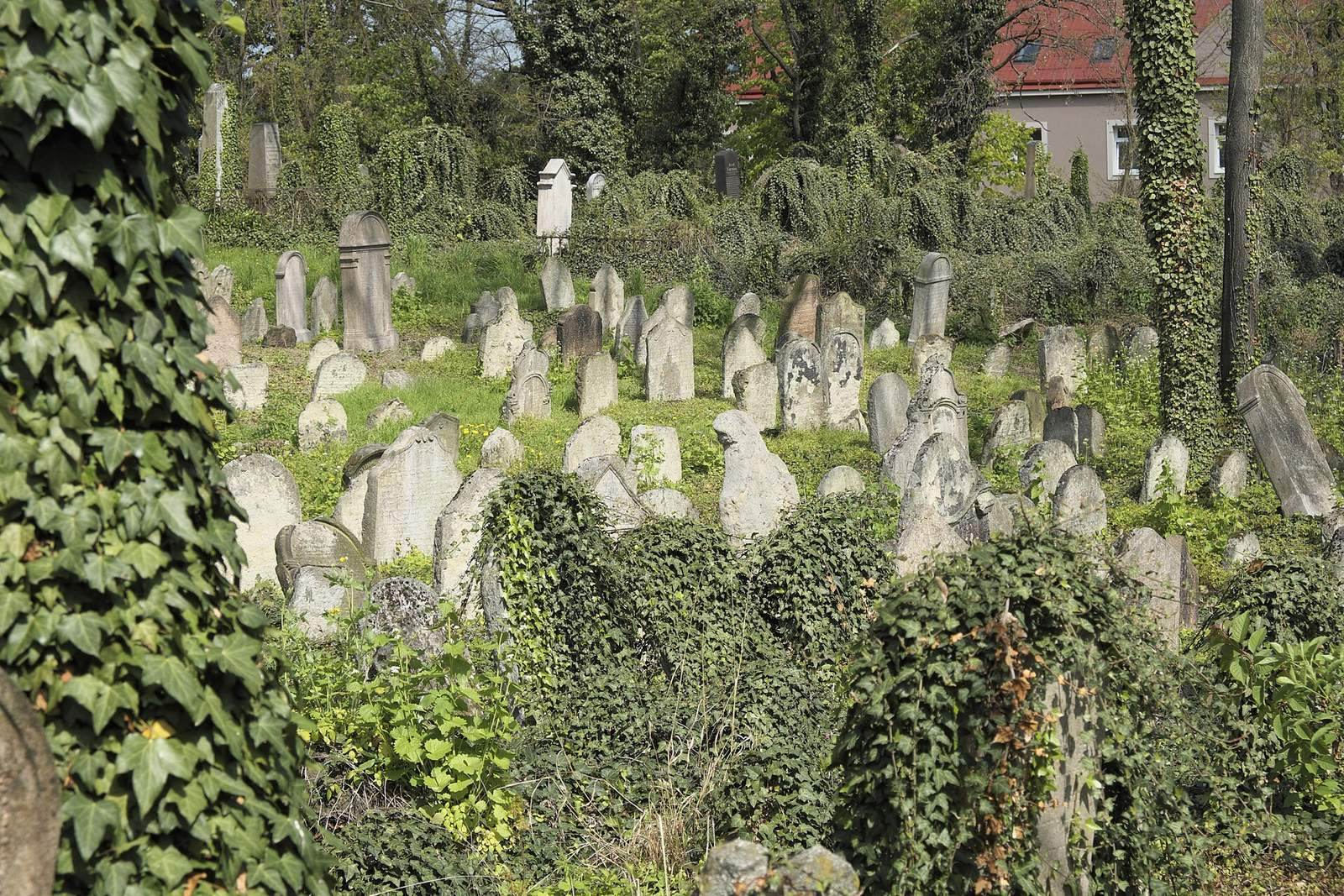
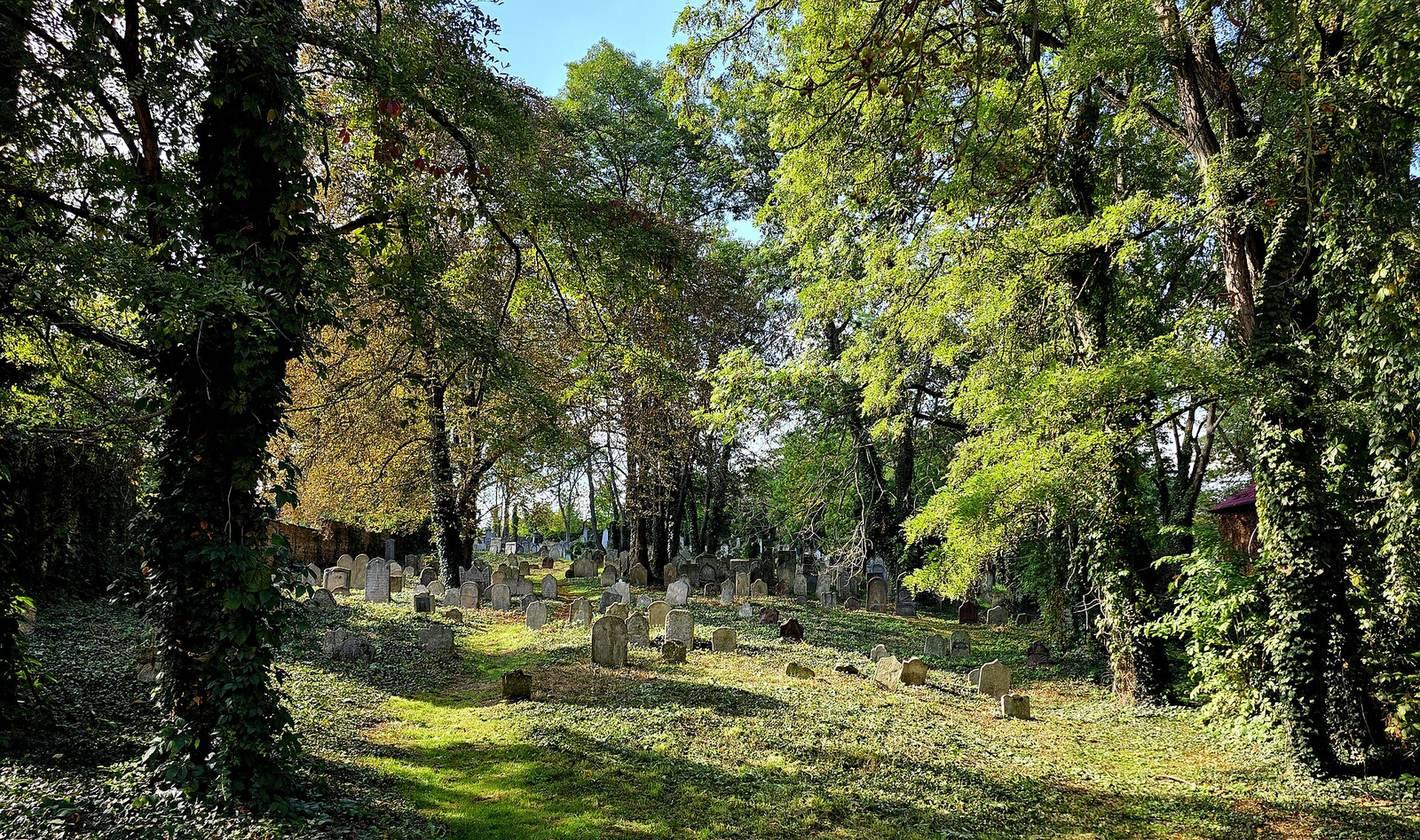
The cemetery forms part of Kolín’s old Jewish quarter, at the western edge of the old town on the Elbe’s left bank. Its entrances are on Kmochova and Sluneční streets. The grounds cover about 1.13 hectares, or roughly 11,250 square meters.
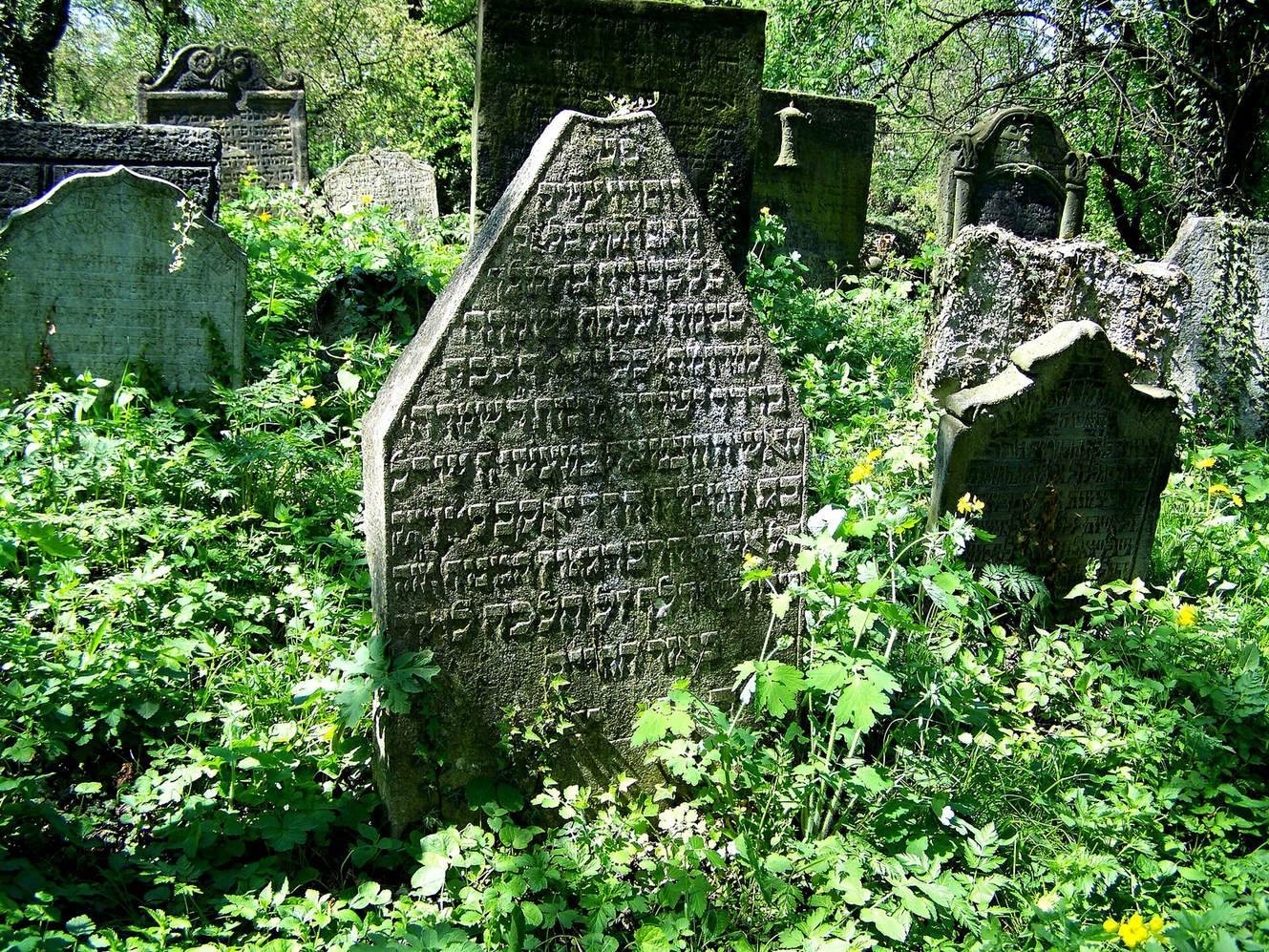
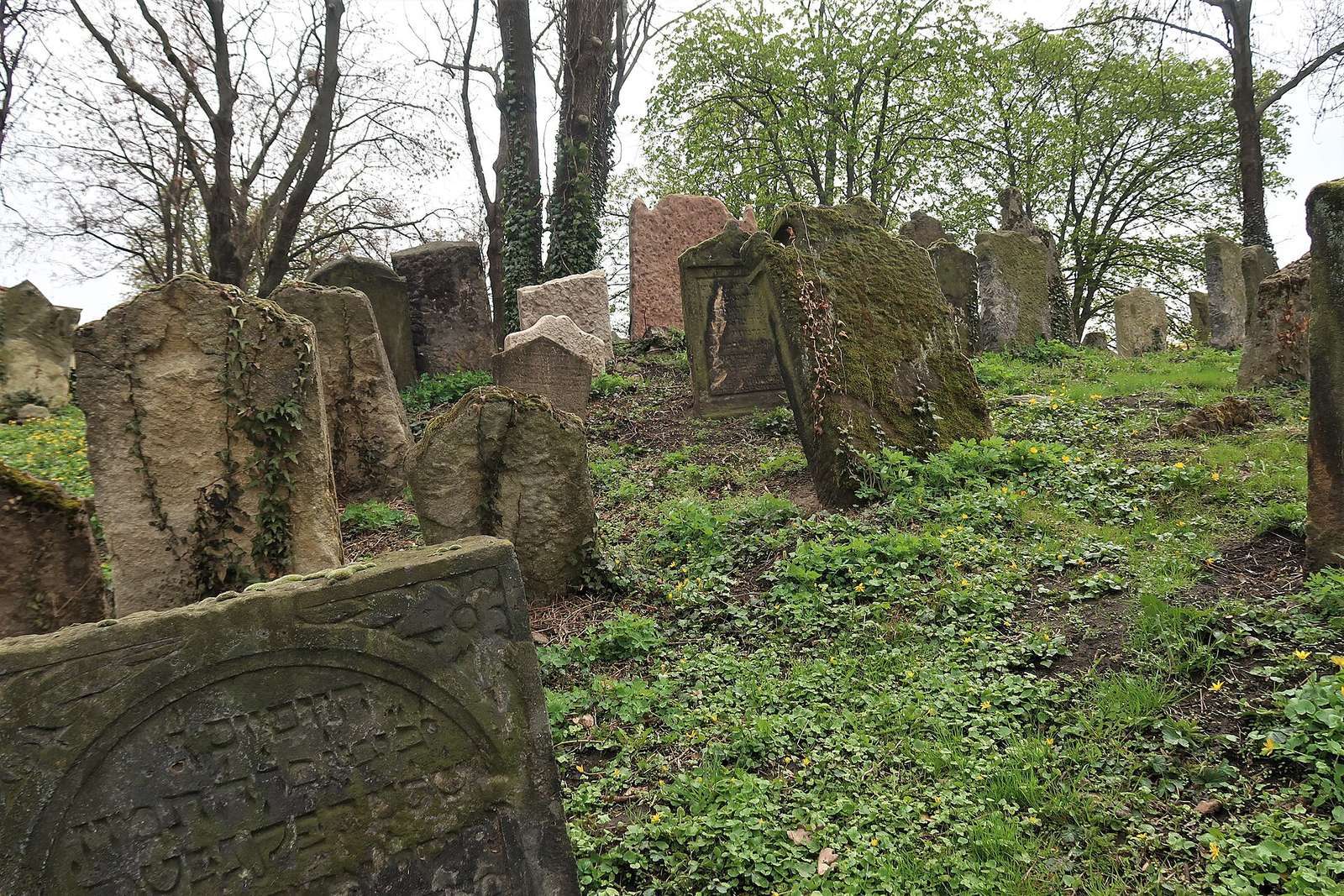
The cemetery has 2,693 gravestones, with around 2,600 described as surviving. Most date from the 16th to the 19th centuries, while the oldest surviving stones bear the date 1492. The markers are mostly sandstone, with some made of red marble. Their forms have been compared with those in Prague’s Old Jewish Cemetery, and together they show the development of Jewish funerary monuments.
Notable tombstones
Elijah ben Samuel Maisel
Near an entrance stands the 1621 marble tombstone of Elijah ben Samuel Maisel, a relative of Mordechai Maisel, a leader, financier, and patron of Prague’s Jewish community. A mouse carved on the stone represents Elijah’s name.
Rabbi Chajim ben Sinaj
A large, richly decorated tombstone for Rabbi Chajim ben Sinaj, dated 1624, stands on a mound at the cemetery’s center. Its Renaissance style reflects renewed interest in classical antiquity, and its design resembles the Prague tomb of Chajim’s uncle, Judah Löw.
Becalel ben Jehuda Löw
The Renaissance tombstone of Becalel ben Jehuda Löw, who died in 1599, features a cluster of grapes.
Heinrich Teichner
In the cemetery’s northern part is the grave of Heinrich Teichner, who died in 1866 and is described as the first important Czech photographer.
Josef Weissberger
The gravestone of factory owner Josef Weissberger (1824–1872) has Classicist features, drawing on forms and principles from ancient Greek and Roman art and architecture.