Flehm 1 Megalithic Tomb: A Neolithic Passage Grave in Germany
Site at a Glance
- Popularity
- Very Low
- Country
- Germany
- Primary era
- Stone Age
- Eras represented
- Stone Age
- Civilizations
- Unclassified
- Site type
- Burial
- Remains
- Tomb
On this page12 sections
History
Construction and later use
The Flehm 1 Megalithic Tomb is a Neolithic passage grave on the eastern side of Rührsberger Weg in Högsdorf, Germany. Communities of the Funnel Beaker Culture built it between 3500 and 2800 BC. This Neolithic culture takes its name from its distinctive funnel-shaped pottery. The Neolithic, or New Stone Age, was a period associated with the spread of farming and settled communities.
The chamber later received secondary burials associated with the Single Grave Culture, a northern European culture characterized by individual burials. Archaeologist Ernst Sprockhoff directed the tomb’s excavation in 1953. It is catalogued as Sprockhoff no. 215, an identifier in a catalogue of megalithic monuments.
Remains
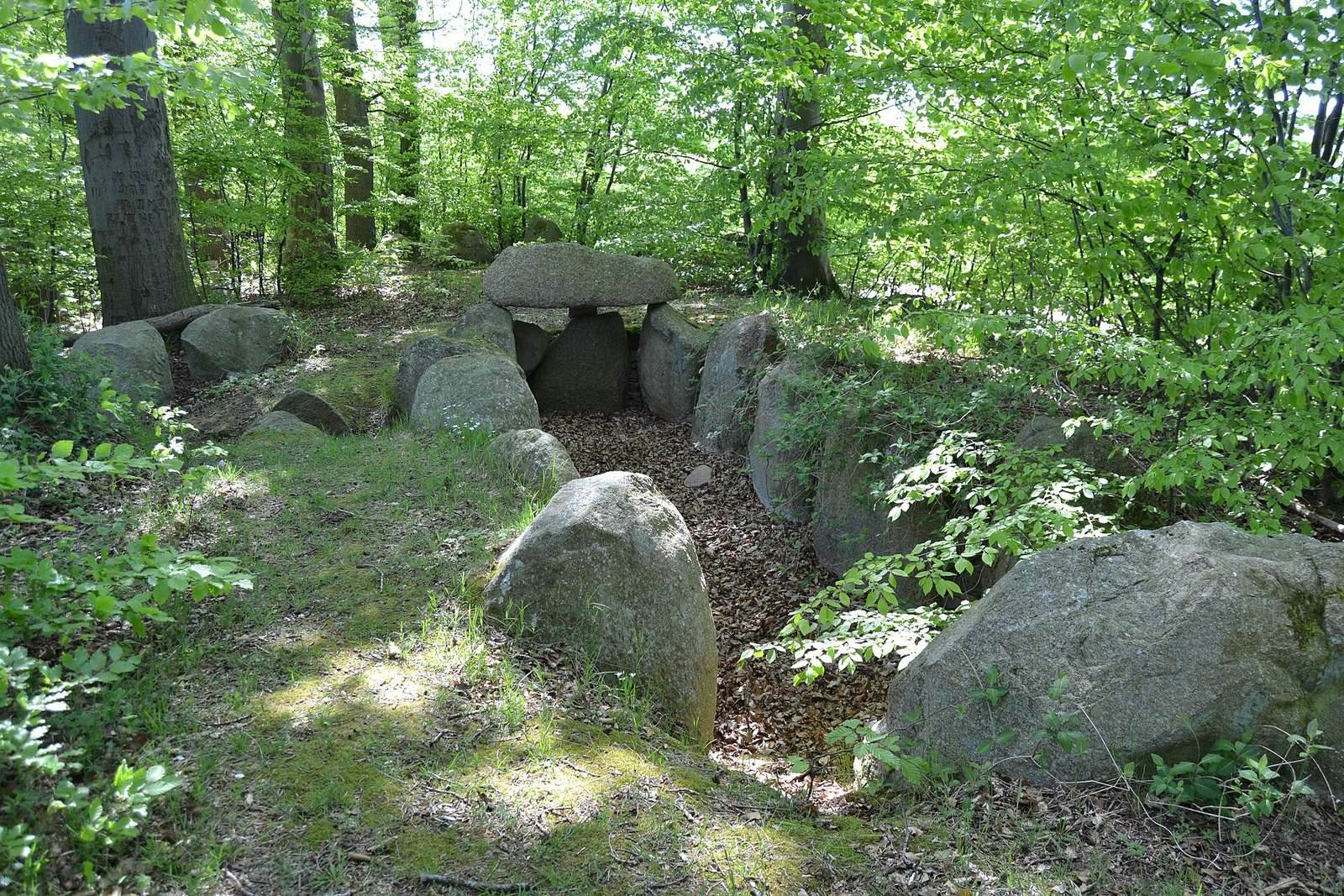
The tomb combines a long earthen mound with a stone burial chamber entered through a passage. Its surviving features lie about 500 m south-southwest of Flehm, along the eastern side of Rührsberger Weg.
Earth mound
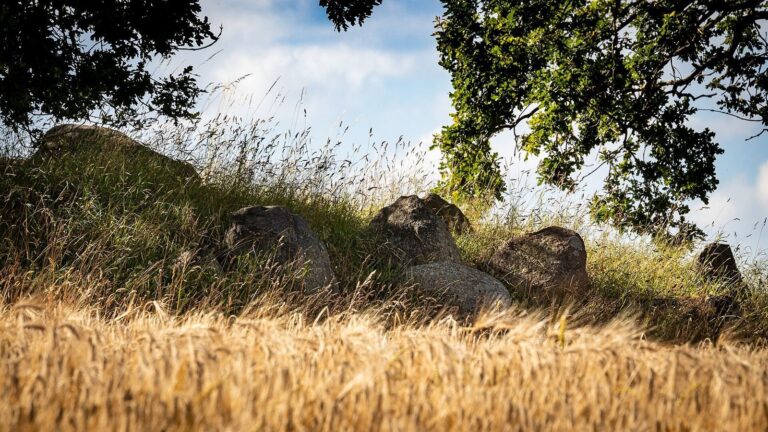
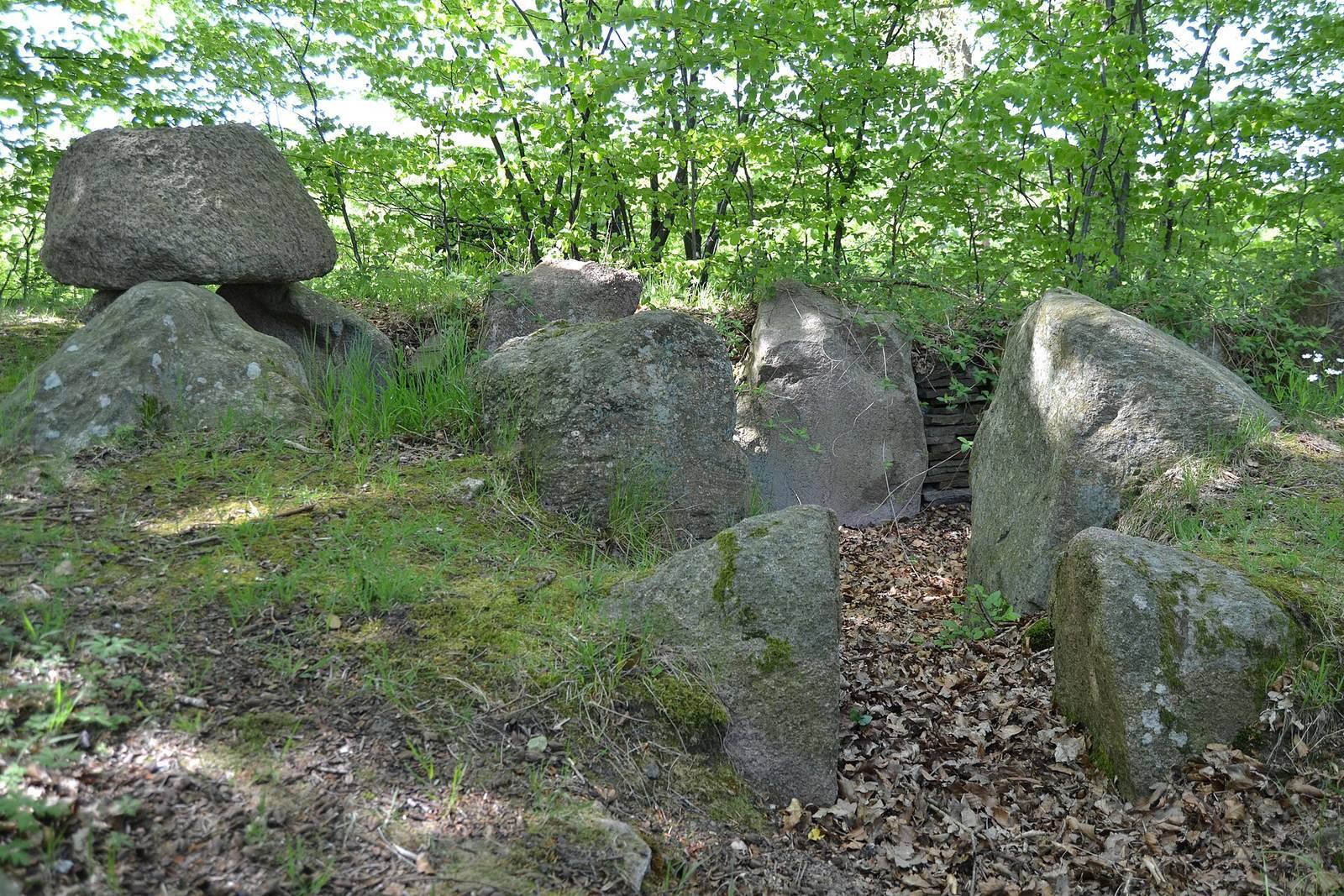
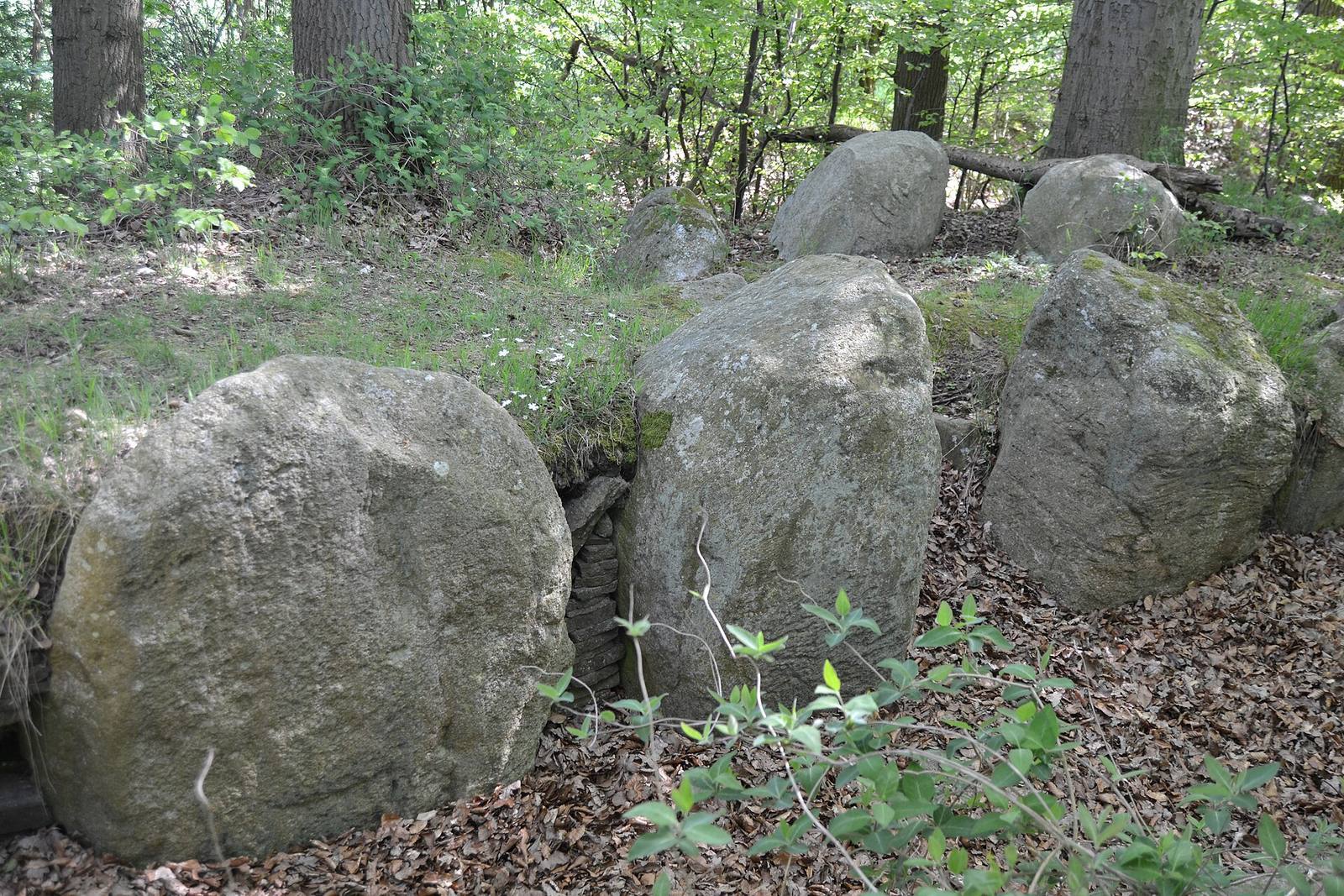
The rectangular mound, or long barrow, runs northeast to southwest and measures 26 m long by 8.5 m wide. It rises to the tops of its mostly preserved kerbstones, although some have toppled or shifted from their positions. Charcoal remains were found within the mound.
Chamber and entrance
Burial chamber
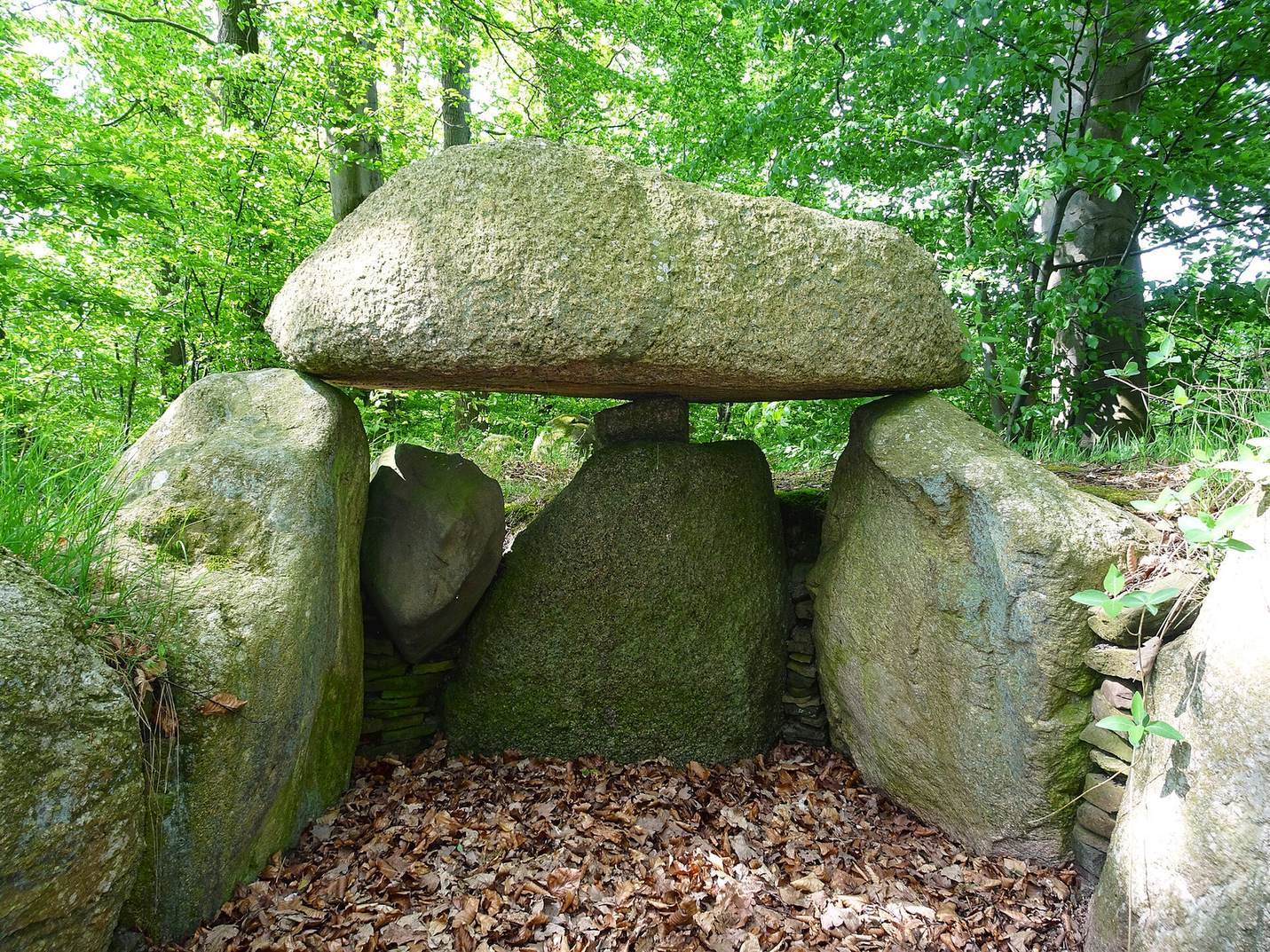
The slightly trapezoidal chamber is a regional Holstein type of passage-grave chamber. It follows the mound’s northeast-to-southwest orientation and measures 5.2 m long. Its width increases from 1.45 m at the southwest end to 1.85 m at the northeast end. Five supporting stones line each long side. The southwest closing stone remains in place, while the northeast closing stone is missing.
Stonework and covering
Three of the five original capstones survive, one at the southwest end and two at the northeast. They had sunk before excavation and were set back in position afterward. Dry-stone masonry, held with clay, filled the gaps between the wall stones; some remains, though sections had shifted near the entrance and beneath the capstones.
Several packed layers enclosed the chamber. Burnt flint formed an inner lining about 0.4 m thick at the base of the walls, rising to 1.1 m. Clay packing followed, reaching the same height; it measured 1.5 m thick at the base and 0.8 m at the top. Stones covered these layers beneath the mound.
Entrance passage
The passage opens on the chamber’s southeastern long side, between its first and second wall stones. It is 3 m long and formed from two pairs of wall stones. A slab found inside the chamber beside the entrance measures 1.25 by 0.68 m and is 0.1 to 0.2 m thick. It was probably the inner blocking slab. Larger slabs and cobbles set in clay formed the outer blocking.
Interior and burial finds
Floor and end compartments
Before excavation, fine yellow clay filled the chamber to about 0.2 m below the capstones. Beneath it, the floor consisted of stone slabs and small cobbles covered by a 0.15 to 0.20 m layer of burnt flint. At each short end, slabs measuring 0.3 by 0.4 m divided off a compartment about 1 m wide. Each compartment had a floor of stone slabs, burnt flint, and another layer of stone slabs.
Burial deposits
Remains of several human skeletons lay scattered across the chamber pavement alongside four amphorae, ten cups, six bowls, two undecorated vessels, three transverse arrowheads, a flint dagger, a flint point, seven flint flakes, and seven amber beads. Offerings from the later burials lay about 0.5 m above the chamber floor. Two axes were found opposite the entrance. Along the southeastern wall, to the right of the entrance, were three vessels, two axes, five amber beads, and a fire striker.
Passage find
A badly damaged flint axe was found in the entrance passage.