Old Gimmestad Church: A 17th-Century Church and Museum in Norway
Site at a Glance
- Popularity
- Very Low
- Country
- Norway
- Primary era
- Early Modern
- Eras represented
- Early Modern, Modern
- Civilizations
- Denmark–Norway, Norwegian
- Site type
- Religious
- Remains
- Church
On this page13 sections
History
Churches before 1692
A church stood at Gimmestad by 1308, the date of the earliest surviving record. The first known building was a stave church, a medieval wooden church supported by upright load-bearing posts. It was the first of three known churches on the site.
In 1650, the stave church was considered to be in such poor condition that a replacement was planned. It was demolished in 1652 and succeeded by a timber-framed building. A winter storm badly damaged that church in December 1690, leading to its demolition and replacement on the same site. The present Old Gimmestad Church was completed and consecrated in 1692. Its construction is attributed to master builder Nils Monsson, who supervised the building work. Its design may have drawn inspiration from Ree Church, also known as Breim Old Church.
The parish’s earlier religious affiliation was Catholic. The church later served Gimmestad parish in the Church of Norway, an Evangelical Lutheran institution, within Nordfjord Deanery, a subdivision of the Diocese of Bjørgvin, a regional church district overseen by a bishop.
Preservation and continuing use
By the early 1900s, the church was too small for the parish, and many parishioners attended Vereide Church across the fjord. In 1902, the Church Ministry, the Norwegian government department responsible for church affairs, decided that the building should be demolished and replaced. Local opposition, with Bukta Youth Association especially active, secured its preservation as a museum and prompted plans for a new church nearby. The new Gimmestad Church, about 0.6 kilometres east and closer to the fjord, was completed in 1910 and became the parish’s main church. The old building then ceased regular use.
Restoration work took place in 1914–1915 and again in the 1960s. During the latter work, the interior paintings and wall and ceiling decorations were restored. Norwegian antiquities-preservation authorities and Parliament later supported a major restoration project. The church is now used mainly as a museum, but still hosts occasional services, baptisms and weddings. Services are also held for 17 May, Norway’s Constitution Day, and St John’s Eve, the night before the feast of St John the Baptist. The church is automatically protected as a Norwegian cultural heritage site.
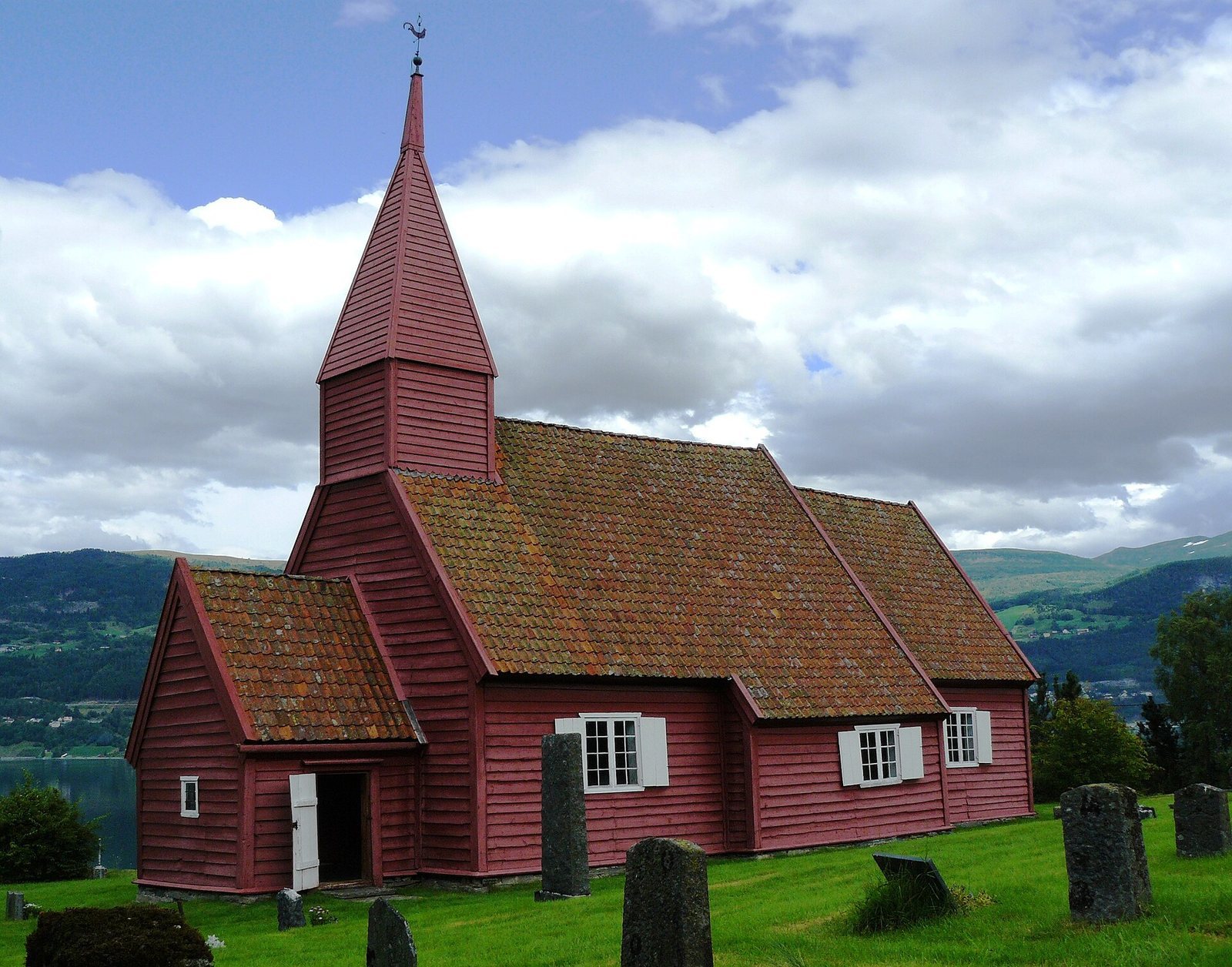
Its red color was retained despite the later trend toward white-painted churches. Red was common on churches after the Reformation, the 16th-century religious movement that produced Protestant traditions including Lutheranism, and symbolized God’s love. White became a more prominent Christian symbol in the early 19th century.
Remains
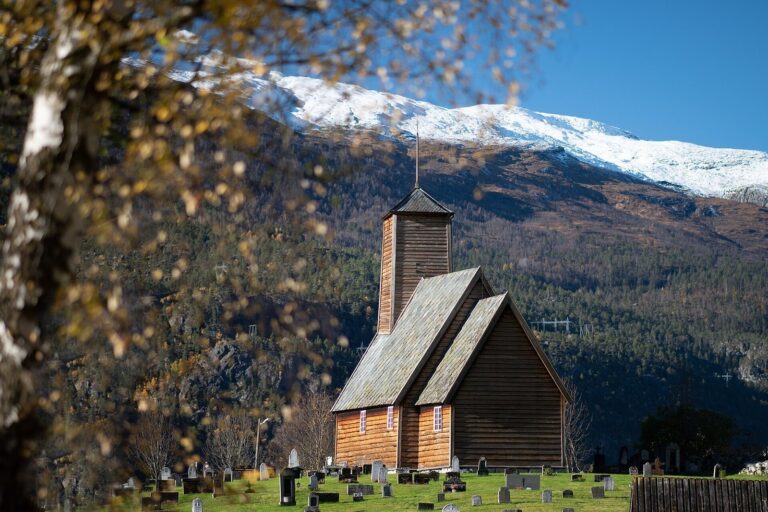
Old Gimmestad Church is a long church, with its main spaces arranged along a lengthwise axis. The timber building has panelled walls and stands on high ground at Gimmestad farm, west of Sandane, on the southwest side of Gloppefjord. It is in Sørstranda, in Gloppen Municipality, and graves surround it.
The building and painted interior
Exterior and condition
The church is painted red and is one of Norway’s few red-painted churches. Although its walls have been altered, most of its original features survive, and its form remains substantially unchanged. The building seats about 70–80 people. Its windows were enlarged in 1859. Leaks in the roof have damaged the interior walls, and much of the text on the wall beside the entrance has been lost. The paint is not water-resistant, so the walls must not be washed.
Painted decoration
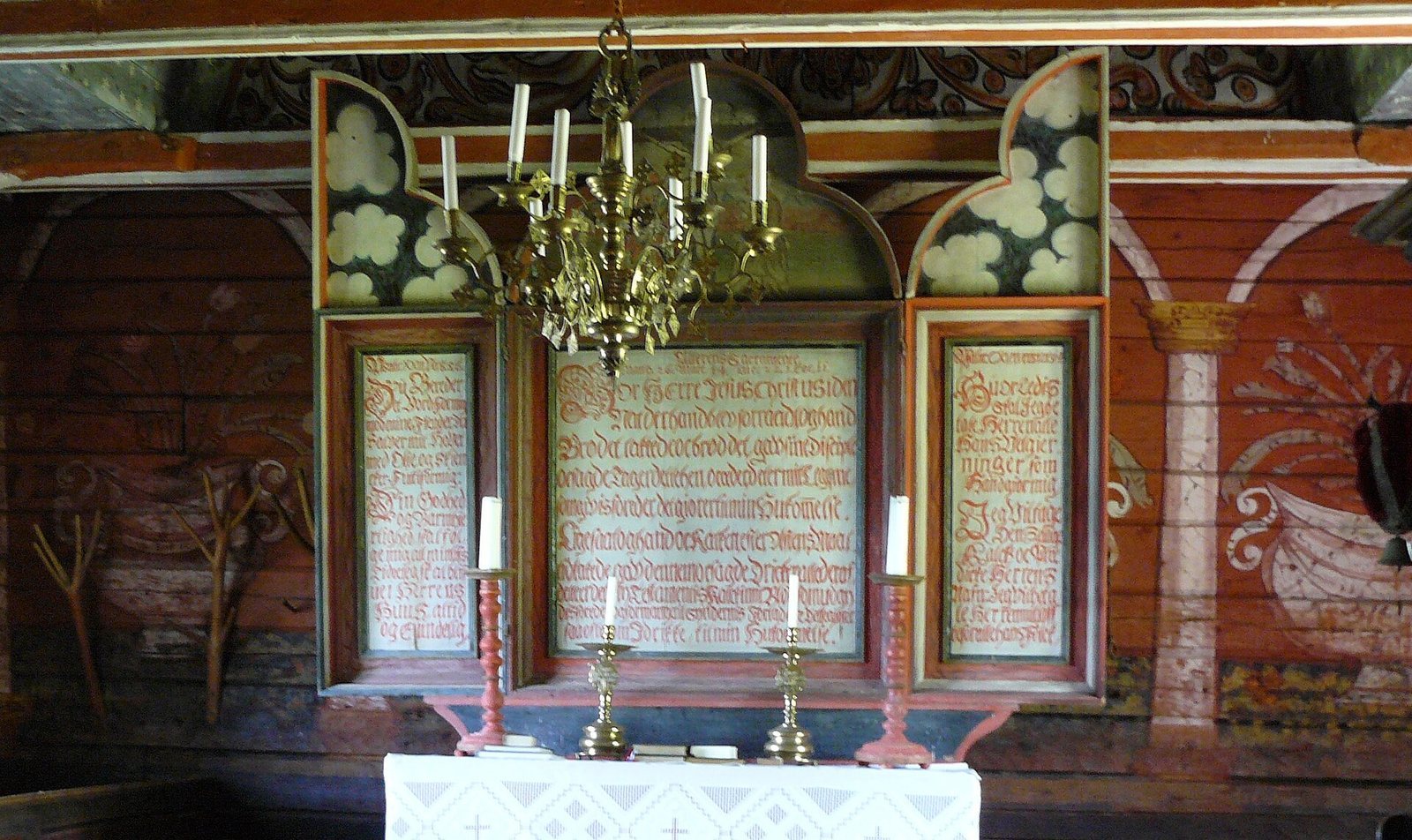
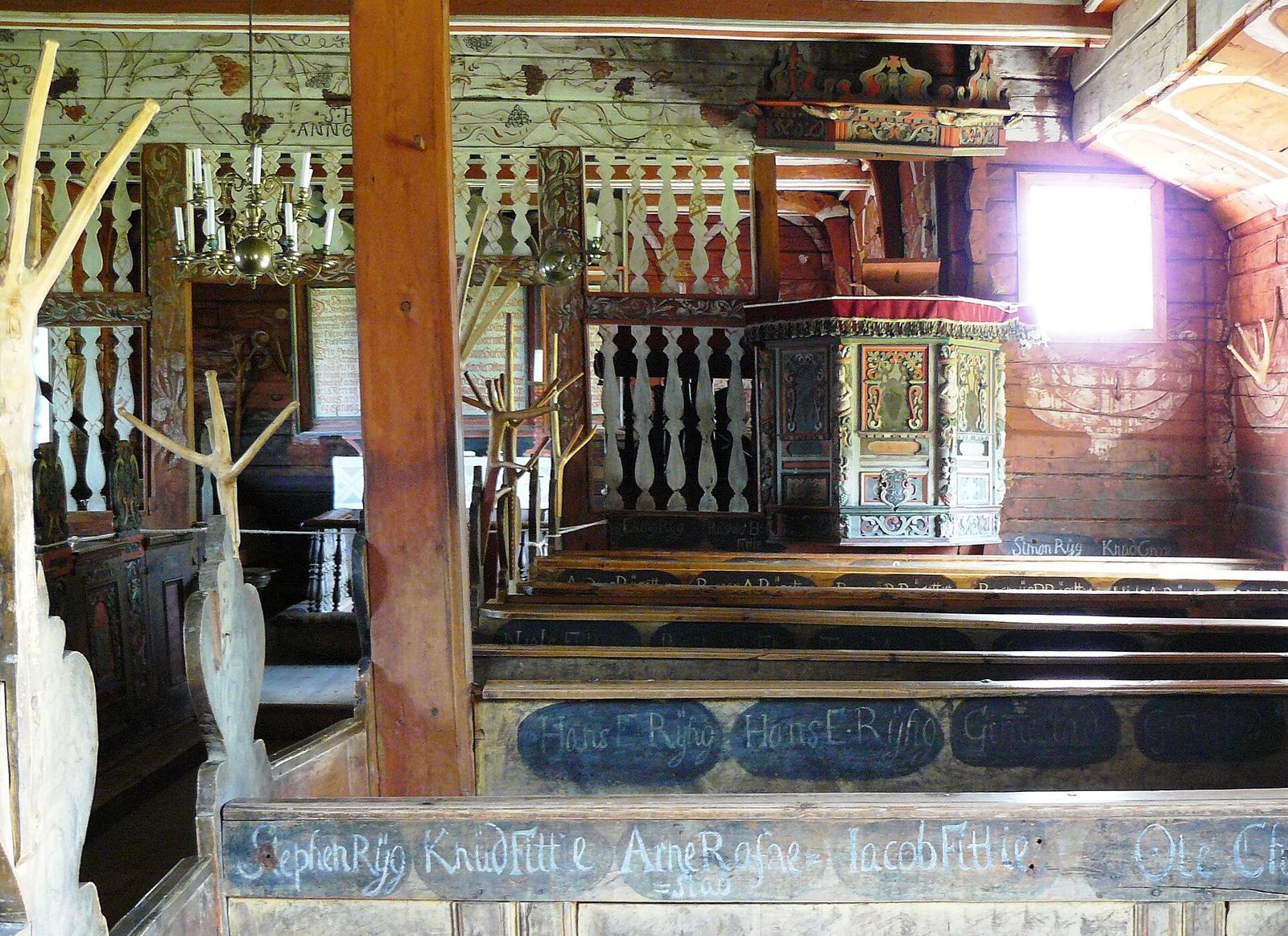
Around 1720, the interior was painted red and decorated with floral motifs, while the ceiling was painted blue and marked with stars. Biblical verses and rosemaling, a style of stylized floral painting, also decorate the walls.
Interior fittings and objects
Baptismal room, font and altar panel
A christening room, also called a front house, occupies the back of the building. In earlier practice, babies were baptized there and then carried to the altar. The built-in baptismal font dates to the early 17th century and has Renaissance styling, a European artistic style associated with the revival of classical forms. The altar holds a catechism panel, which presents a summary of Christian teaching, dated to 1590–1620. It is thought to have been installed at about the same time as a large catechism panel at Vereide Church across the fjord.
Candlesticks, chandelier and bells
The church contains a two-armed brass candlestick dated 1632, a brass wall-mounted candle arm from the 17th century, and a brass chandelier dated 1710. Two brass candlesticks at the altar date to 1727, while another brass chandelier probably comes from the 16th century. One of the church’s two bells is medieval; the other may be medieval or date from the Reformation period.
Benches bearing farm names
The benches are marked with the names of parish farmers. Originally, church access was restricted to landowners, and later generations continued to be identified by their farms. On the left, traditionally the women’s side, the markings combine a farmer’s name, a possessive “s” and a Gothic “Q.” The letter probably stood for a word meaning “woman,” identifying a place for the farmer’s wife. Because the Q resembles the numeral 2, it has also been suggested that it marked a farmer’s second wife.
Suspended cod
A stuffed cod made before 1700 hangs from the middle of the main church space. It remains in notably good condition, with its head angled toward the ceiling and its mouth open. A male figure is painted between its pectoral fins, and decoration surrounds its anal opening. The fish is believed to represent the great fish in the biblical story of Jonah, in which a fish swallows the prophet and later releases him. The cod hangs from a long rope of twisted roots and turns as humidity or air pressure changes. Farmers used its direction as a weather sign: its nose pointing toward the altar panel was taken to foretell high pressure and fair weather, while the opposite direction was associated with low pressure and storms.
Dove above the pulpit
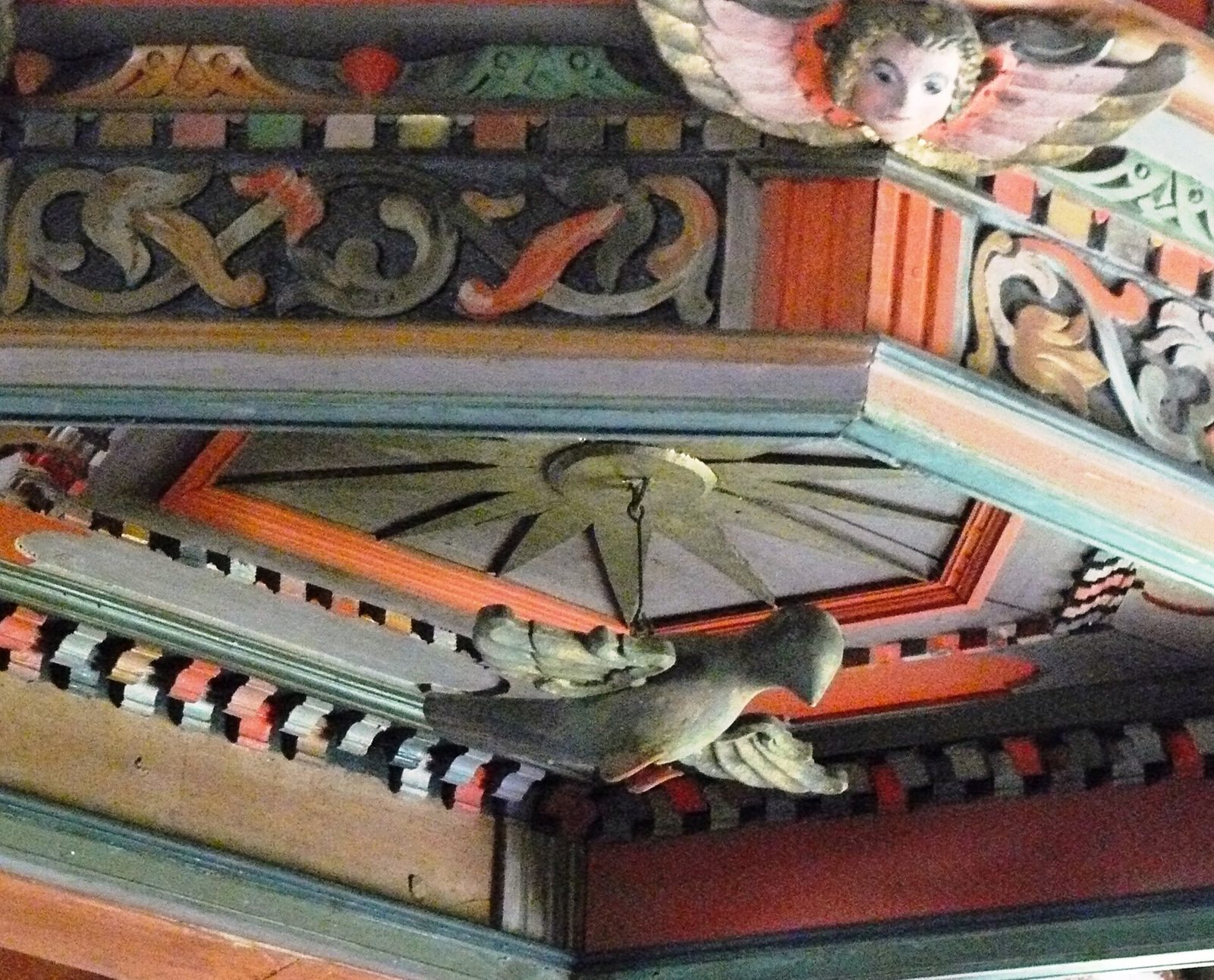
A wooden dove hangs above the pulpit.