Abbaye du Jardinet: A Cistercian Monastery in Walcourt, Belgium
Site at a Glance
- Popularity
- Low
- Country
- Belgium
- Primary era
- Early Modern
- Eras represented
- Early Modern
- Civilizations
- Spanish
- Site type
- Religious
- Remains
- Monastery
On this page11 sections
History
Abbaye du Jardinet, also known as Notre-Dame du Jardinet, was a Cistercian monastery at Walcourt in present-day Belgium, founded for a community of nuns in 1229. The Cistercians were a Catholic monastic order rooted in Benedictine tradition and committed to strict discipline. Jardinet belonged to the network of houses associated with Clairvaux, had Moulins-Warnant as its mother abbey, and depended on Aulne. Dedicated to the Virgin Mary, it was part of the Diocese of Namur.
Foundation and the nuns’ community
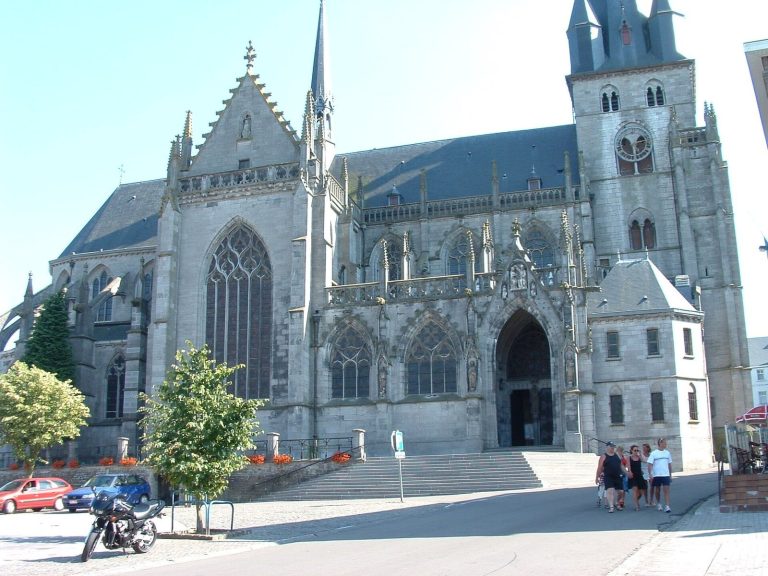
A foundation legend connects the abbey with a fire at Walcourt’s collegiate church, also known as the Basilica of Saint Maternus. Traditionally dated to the 1220s, the fire was said to have revealed an image of the Virgin above the flames. The image settled in a tree at Jardinet and could not be taken down until Thierry II of Walcourt vowed to build a monastery there and rebuild the church. It then descended into his arms.
In 1232, Thierry II relinquished his rights to the site and endowed the nuns with twelve gardens, along with rights to fish, graze animals, and operate mills. Alix, the first abbess, came from Fontenelle and took office at Jardinet in 1242. A cartulary, a collection of copied charters and institutional records, names an abbess called Marie in 1311.
During the fifteenth century, the community dwindled and discipline weakened. After the abbots of Aulne and Cambron inspected the monastery, the Cistercian governing assembly ordered its members dispersed. The order was carried out in 1440, when only six nuns remained; they were released from their vows of stability and obedience.
From nuns to monks
On 26 May 1441, the two delegated abbots installed Jean Eustache as Jardinet’s first male abbot. Monks from Moulins replaced the three nuns who were still there. Under Eustache, the poorer house adopted a stricter and more austere routine, with greater separation from the outside world. He received the vows of 46 monks and 35 lay brothers, members of the community who were not choir monks and commonly undertook practical work.
Jardinet’s monks also served as confessors to women’s communities at Saulchoir near Tournai, Ath, and Valduc, as well as to Benedictine nuns. In keeping with Cistercian mutual support, monks from Jardinet were chosen to lead Moulins, Saint-Rémy at Rochefort, Boneffe, and Villers. Eustache resigned in 1477 because of his age. Martin de Lannoy had been elected in 1471, although the sequence of the two abbots’ appointments is uncertain.
Arnould de Solbreucq, formerly a Benedictine monk at Saint-Martin of Tournai, entered Jardinet in 1483 and became abbot in 1489. During his abbacy, 28 monks and nine lay brothers joined the community, which numbered 103 religious in 1489. With permission from the head of the Cistercian order at Cîteaux, Arnould also accepted election as abbot of the Benedictine monks of Gembloux in 1502. He died in 1511.
Commendatory abbots and conflict
Under the commendatory system, an abbot could hold an abbey’s office and revenues without directly governing its community. Guillaume Flecquier, elected in 1520, resigned in 1526 to live as a hermit at Thirissart near Chimay. Jacques Raveschot resigned in 1530 and was succeeded by Jacques de Rosa, a monk of Cîteaux.
In 1557, de Rosa joined Vaucelles to Jardinet under his rule, a decision that angered Jardinet’s monks. The Cistercian governing assembly required him to choose between the two abbeys. He chose Vaucelles and took many of Jardinet’s goods, including horses and oxen.
War, decline, and dissolution
Robert de Namur, a monk of Villers, became abbot of Jardinet in 1631. During the seventeenth-century conflicts that ravaged the region, German, French, and Spanish troops confronted him and his monks, and the monastery suffered extensive damage. Robert’s departure for Villers after his election as its abbot in 1647 marked the start of Jardinet’s decline. The community numbered 17 monks under Bernard Loyetz, elected in 1665, and 11 under Ignace Malfroid, elected in 1710. It continued to decline during the eighteenth century under the abbots Maréchal, Sébastien Delestenne, and Paul Lebecque.
Jean Wautelet, elected abbot in October 1790 and consecrated at Aulne the following year, was Jardinet’s last abbot. In 1793, the French Revolutionary Army of Sambre-et-Meuse expelled Wautelet and the remaining monks and set fire to the buildings. The abbey was destroyed during the Revolution, officially suppressed in 1796, and sold in 1797.
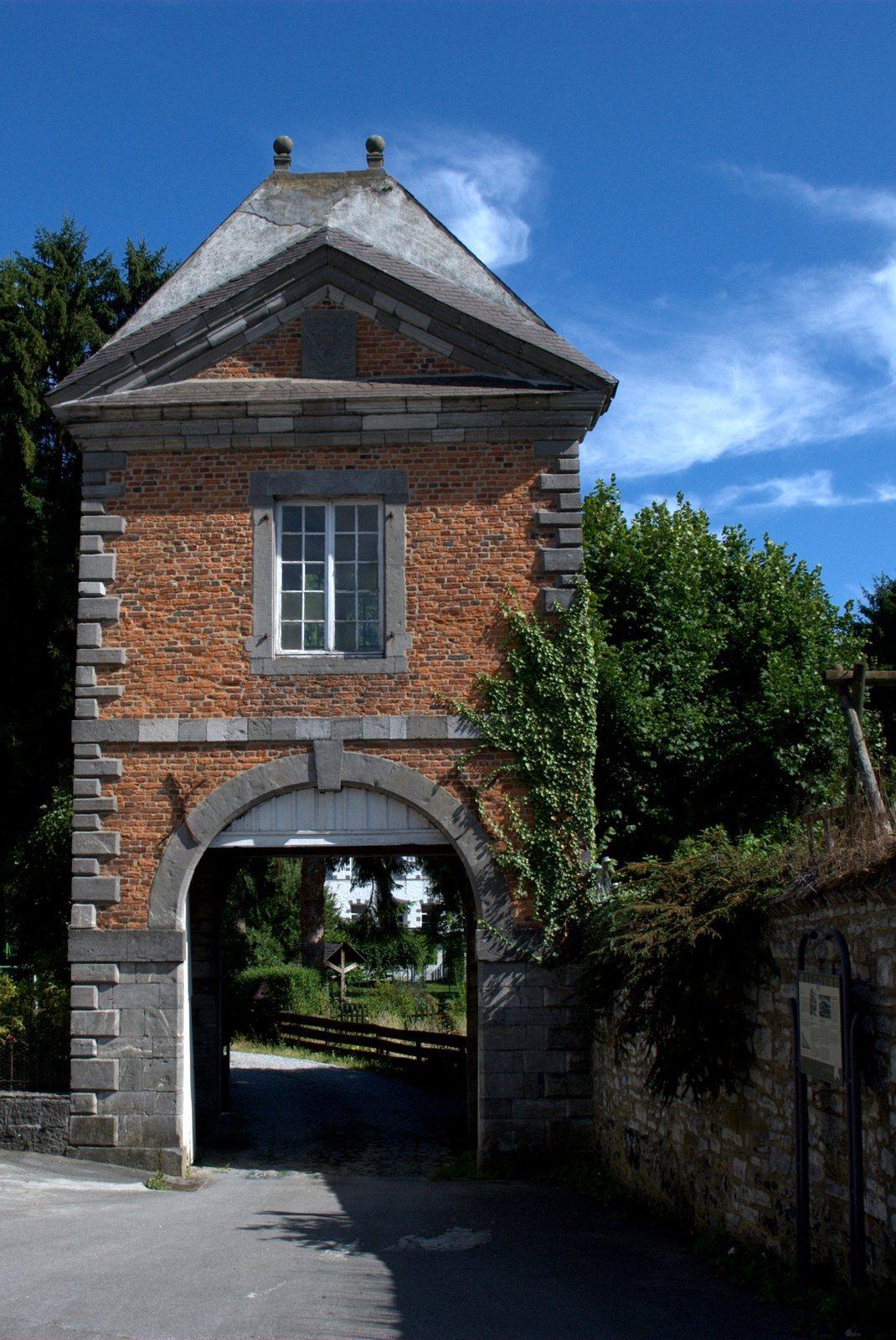
The entrance portal received protected-heritage status in 1947. The annual Grand Tour on Trinity Sunday, the Sunday after Pentecost, continues a tradition dating to the thirteenth century and commemorates Thierry II’s vow to the Virgin. The procession follows an eight-kilometre route around the basilica, stopping at chapels and roadside shrines. It includes an escort for the Virgin’s image in uniforms modeled on Napoleonic-era dress and a ceremony at the birch tree associated with the legend.
Remains
The largely dismantled abbey survives in several identified elements: a farm on the hillside, a brewery, a residence, and the entrance portal. Walcourt railway station now occupies the site of the former abbey church.
Surviving structures and collections
Farm and associated buildings
The abbey farm remains on the hillside, alongside the identified brewery and a residence. These buildings form part of the surviving remains of the former monastery.
Entrance portal
Ignace Malfroid, Jardinet’s nineteenth abbot, built the entrance portal in 1713. His coat of arms appears on the panel above the entrance, together with the motto Praeit et urget.
Former church site
Walcourt railway station occupies the site of the abbey church.
Library manuscripts
About thirty manuscripts from the abbey library, including some of considerable age, are preserved at the Provincial Museum of Ancient Arts of the Namur Region in Namur.