Vidbo Church: A Medieval Church in Sweden
Site at a Glance
- Popularity
- Very Low
- Country
- Sweden
- Primary era
- Medieval
- Eras represented
- Medieval, Early Modern, Modern
- Civilizations
- Swedish
- Site type
- Religious
- Remains
- Church
On this page13 sections
History
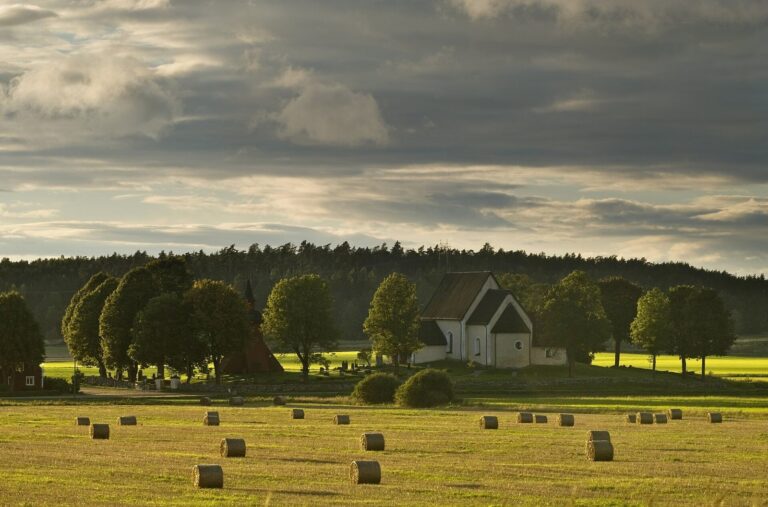
Vidbo Church is a Romanesque church built around 1200 in Vidbo, Sweden. Romanesque is a medieval European architectural style. The church is in Vidbo parish and belongs to Skepptuna parish, within Märsta pastorate and the Diocese of Uppsala in the Lutheran Church of Sweden.
Medieval construction and enlargement
The original church had a nave, the main space for the congregation, a narrower chancel around the altar, and an apse, a rounded end. A small sacristy, a room for worship items and preparation, was added later in the Middle Ages. During the first half of the fifteenth century, builders removed the apse and lengthened the chancel eastward. They added cross vaults, formed by intersecting vaulted sections, to the extension, and probably vaulted the nave at the same time. The porch was built later in the fifteenth century.
Later alterations
A major renovation in 1753 replaced most of the old sacristy with a larger room built to its east. The arch between the nave and chancel was removed to improve the view between the gallery and pulpit. Workers rebuilt the old chancel vault and whitewashed the interior. The Gardtman burial chapel dates to 1780. A freestanding belfry, a separate structure for church bells, was built in 1744 and clad with boards in 1786.
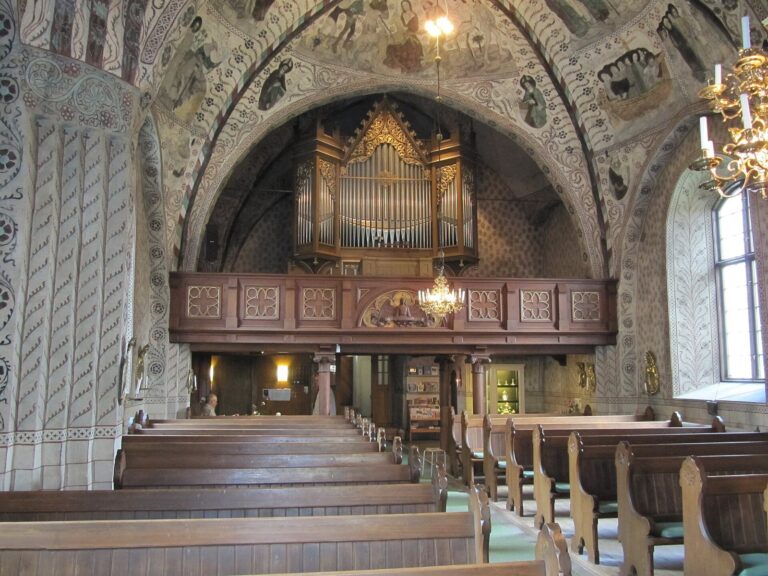
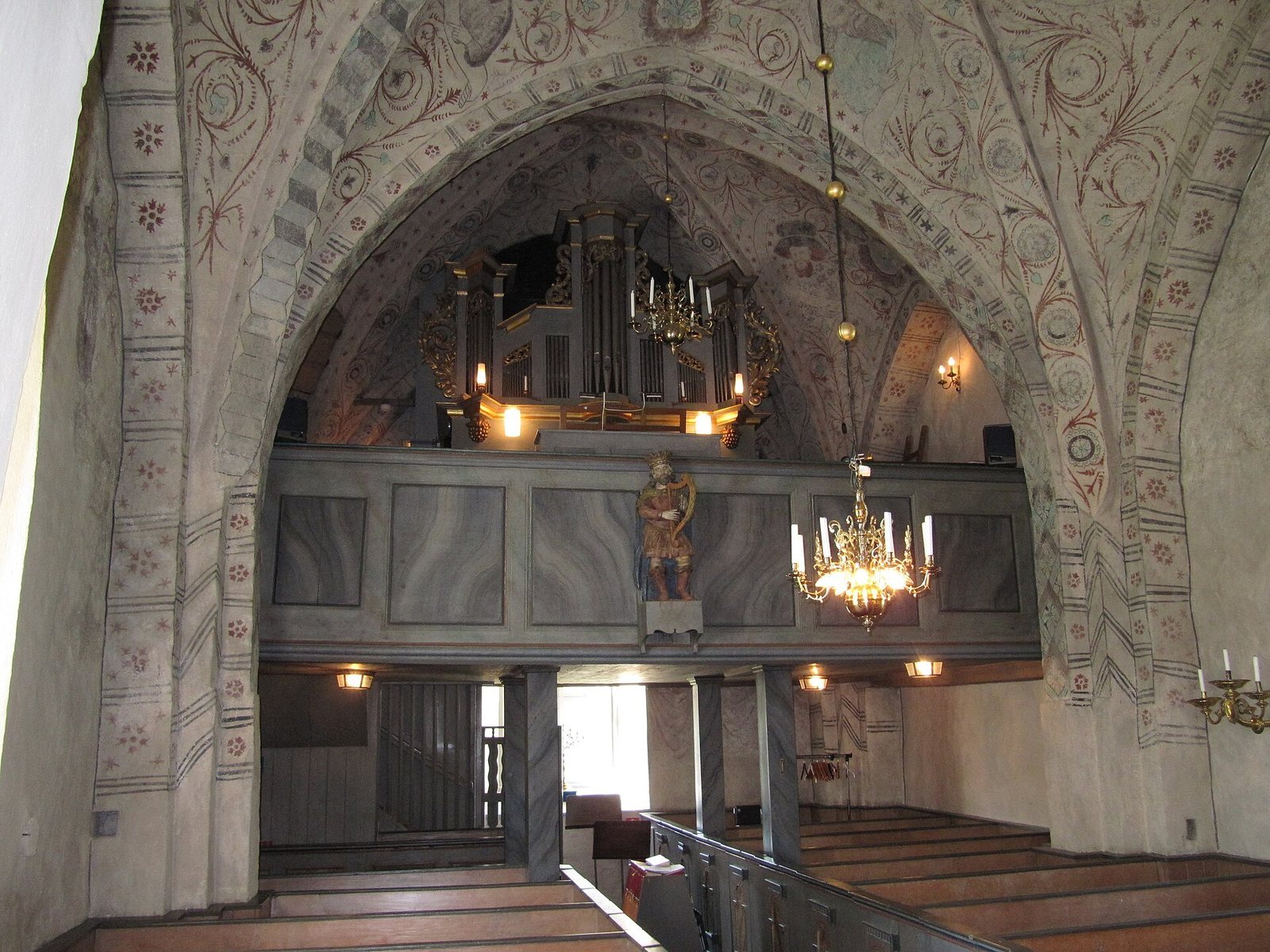
The windows were widened during the eighteenth century and given their present form, with shallow curved tops, in 1833. In 1915, slate replaced shingles on the roof. An organ made by Isac Risberg in 1706 was acquired from Nora Church in Uppland in 1785. The present organ was built in 1924 by Furtwängler & Hammer, an organ-building firm in Hannover. Its stop arrangement, the controls selecting sets of pipes, was changed several times before Gunnar Carlsson of Borlänge revised it in 1983.
Medieval wall paintings were uncovered and conserved in 1933, when earlier interior colors were also restored. The paintings were heavily blackened and cleaned in 1962. Electric bell ringing was installed in 1952.
Remains
Church building
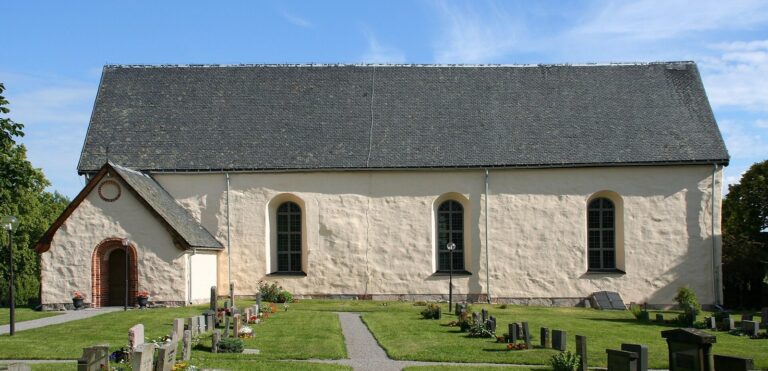
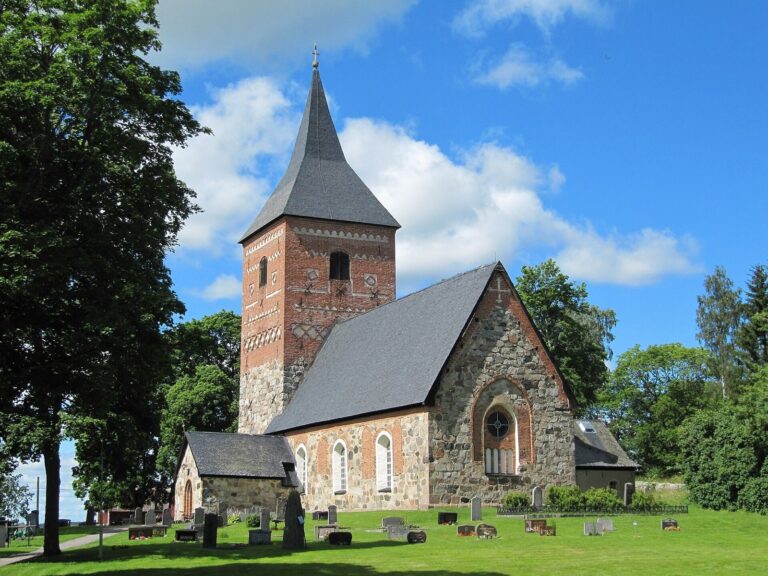
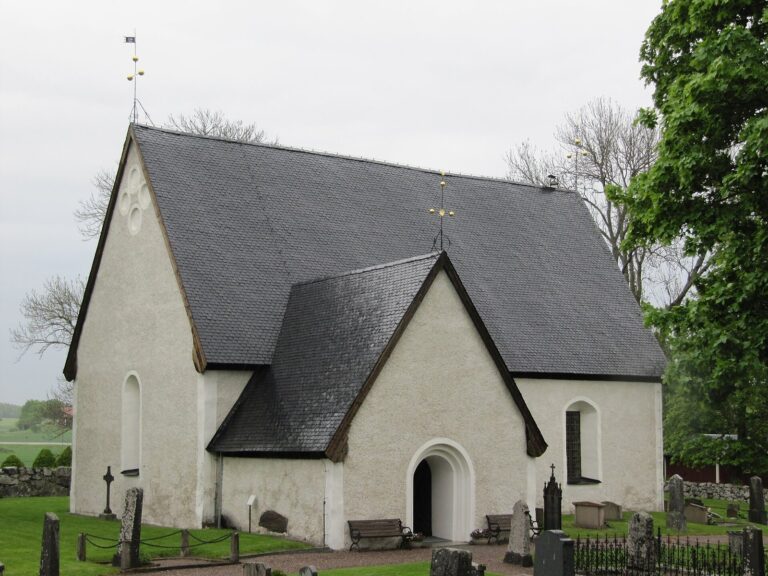
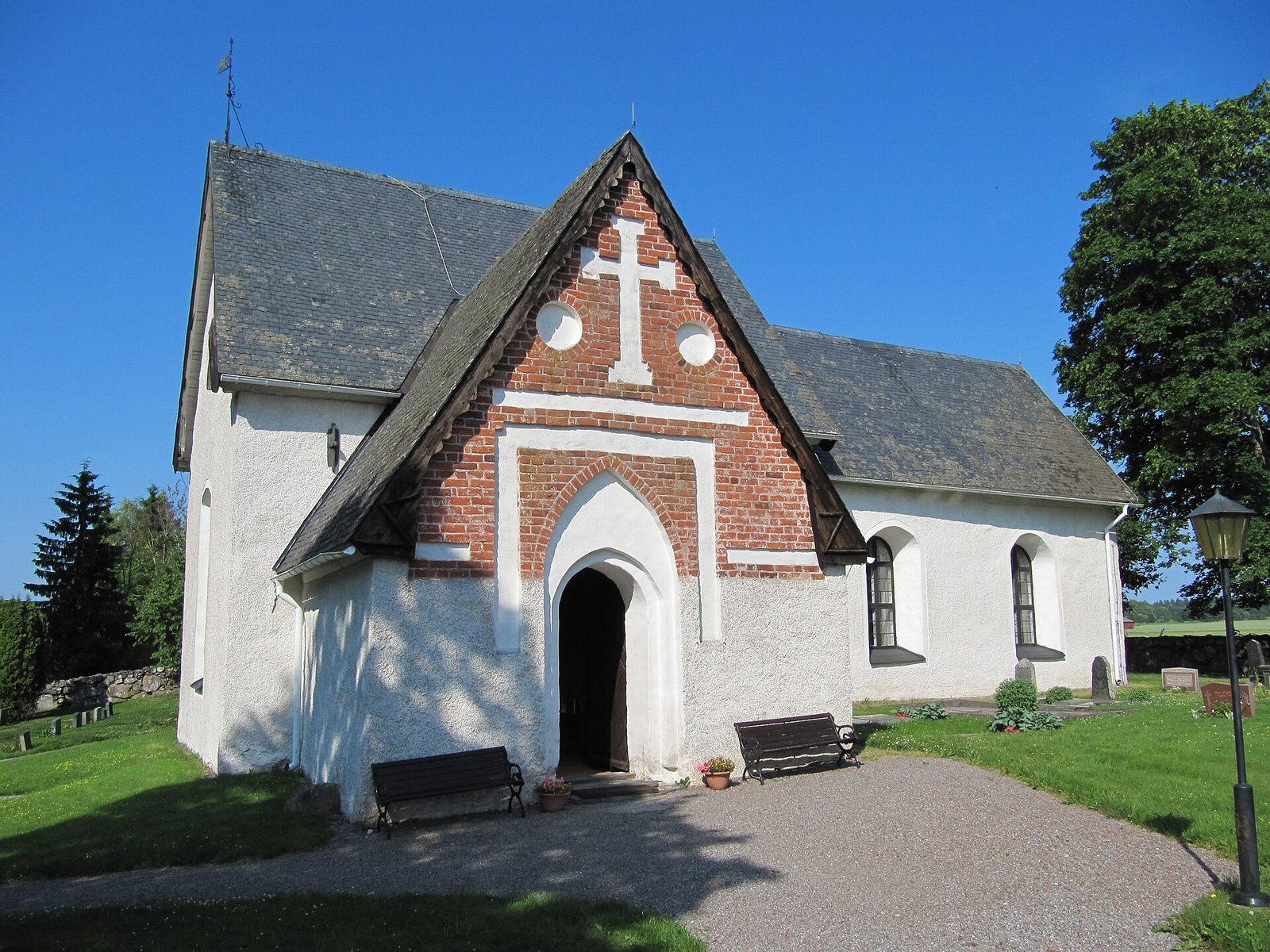
The church has a rectangular nave and a narrower, straight-ended section extending east. The eastern end of this section forms the present chancel. A sacristy stands to the north and a porch to the south, through which the interior is entered. The building is white-rendered natural stone, with brick used around openings, in the vaults, and in the porch gable. That gable has blind arcading, decorative recessed arches that do not open into the building. Slate covers the gabled roofs, and much of the exterior retains its medieval character.
Interior paintings and furnishings
Wall paintings
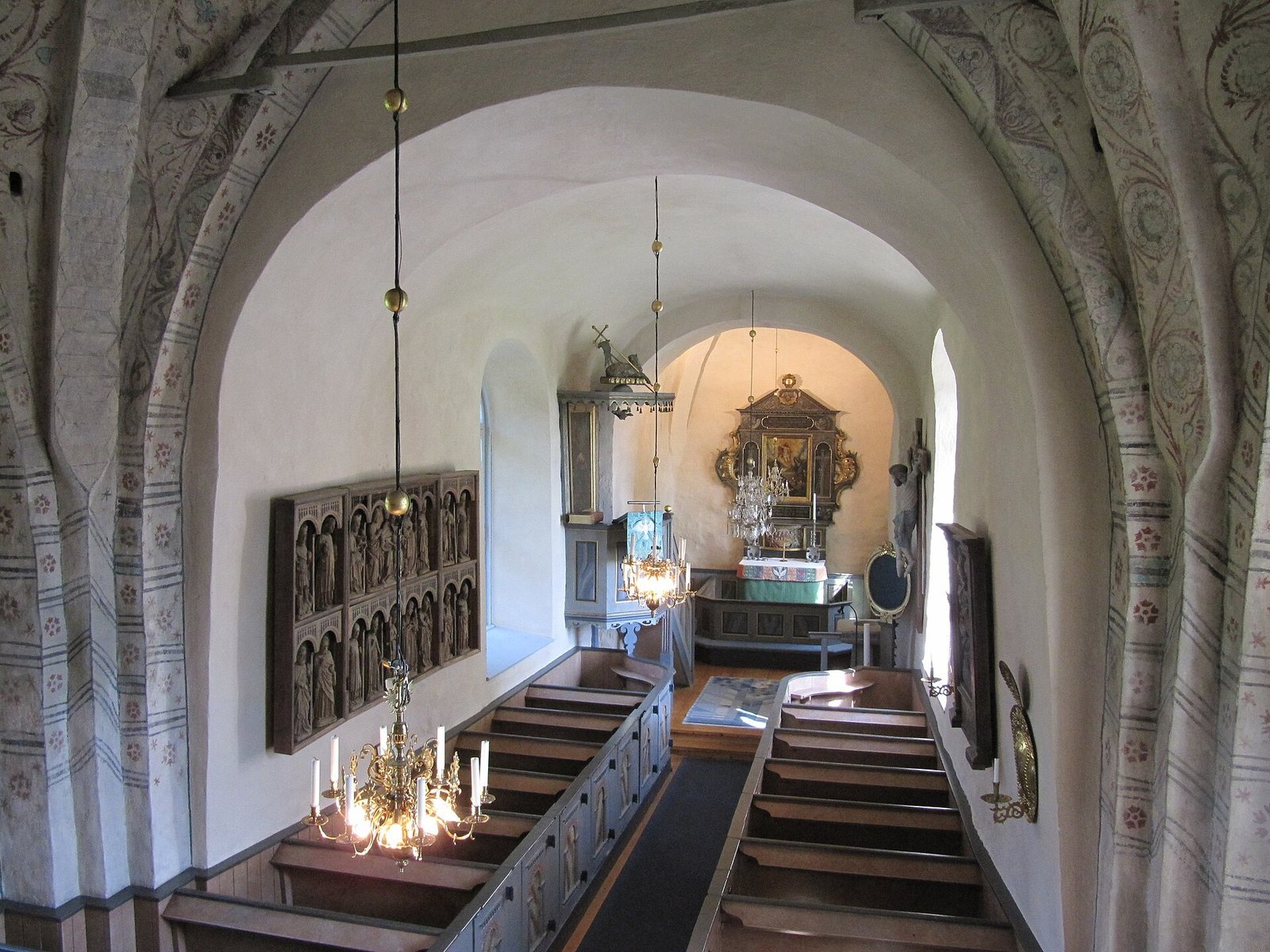
Fragments of wall paintings survive in the nave. They were probably made in the mid-fifteenth century and are associated with the Ärentuna School, an art-historical grouping linked to medieval church painting in Uppland.
Altars and pulpit
The church has an altarpiece cabinet from the later fifteenth century. The present pulpit was acquired in 1862. The front of an earlier pulpit hangs on the south wall and serves as an altarpiece.
Crucifix and baptismal fonts
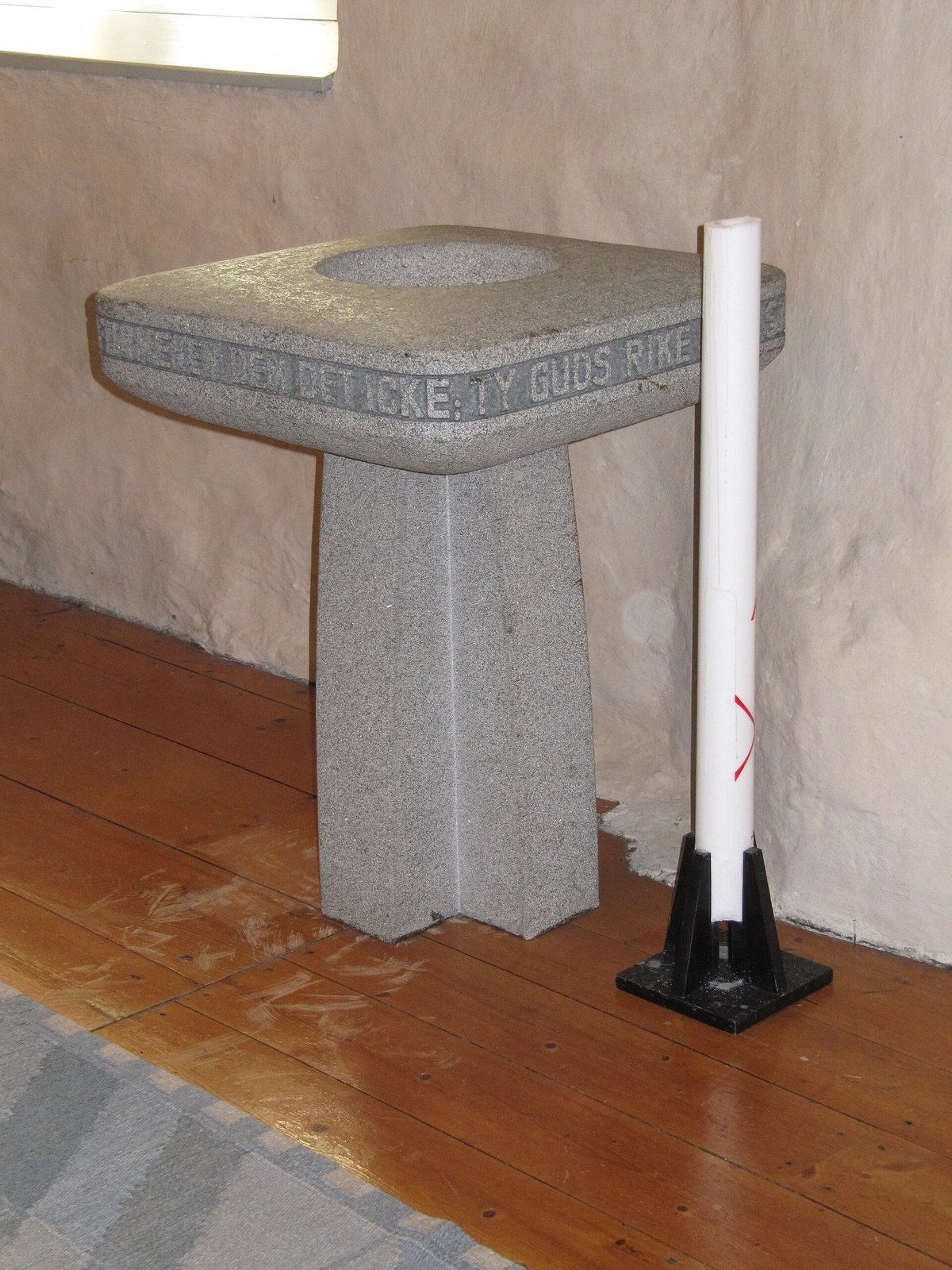
The triumphal crucifix, a large crucifix associated with the division between nave and chancel, probably dates to the early fourteenth century. It was painted white in 1702, but its original colors have since been restored. Parts of a baptismal font date to the early thirteenth century. A modern stone font in the chancel has a broad bowl on a narrow foot.
Organ
The present organ is air-operated and has Taschen windchests, a type of mechanism that distributes air to organ pipes. Its manual keyboard has 56 keys and its pedal keyboard 30. It has a crescendo pedal, which progressively brings additional stops into use, four fixed combinations, and automatic pedal change. The organ’s façade comes from the earlier instrument.
Churchyard structures
Gardtman burial chapel
The Gardtman burial chapel stands beside the south churchyard wall.
Belfry
The separate belfry stands on a hill north of the church and contains two bells. The larger was cast in 1907 by Joh A Beckman & Co.; the smaller was cast in 1759 by Gerhard Meyer the Younger.