Jostedal Church: A Norwegian Parish Church with Medieval Origins
Site at a Glance
- Popularity
- Very Low
- Country
- Norway
- Primary era
- Early Modern
- Eras represented
- Early Modern, Modern
- Civilizations
- Denmark–Norway, Norwegian
- Site type
- Religious
- Remains
- Church
On this page7 sections
History
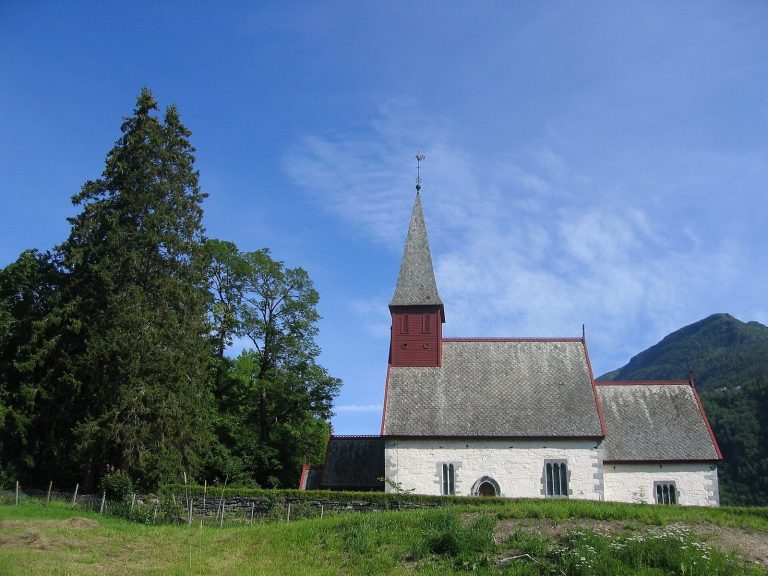
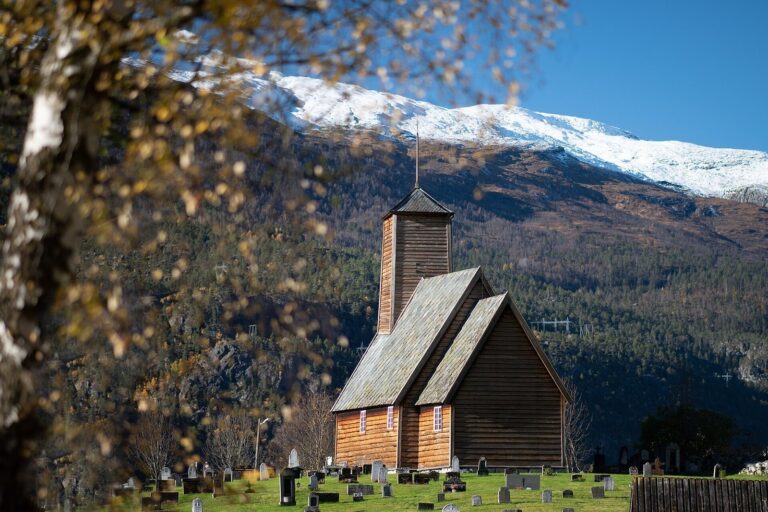
Jostedal Church is a parish church of the Church of Norway in the village of Jostedal, Norway. Its present wooden building was completed in 1660 in the long-church plan, with a nave for the congregation and a chancel around the altar arranged lengthwise. The church is Evangelical Lutheran and belongs to Jostedal parish in Sogn deanery, a subdivision of the regional Diocese of Bjørgvin.
Medieval church and resettlement
Documents from 1318–1319 and 1322–1323 mention a church and priest in Jostedalen. The first church on the site was probably a 13th-century stave church, a medieval wooden building supported by upright posts. After the Black Death, the devastating plague pandemic that reached Norway in the mid-14th century, Jostedalen became virtually uninhabited. Tradition holds that the church went unused and was left unmaintained from the mid-14th to the mid-16th century. The valley was probably resettled in the second half of the 16th century. A 1596 tax list, the first written record from the valley after the plague, sets out the dues farmers owed the priest.
Rebuilding and enlargement
The stave church was probably repaired after the valley’s resettlement, but in 1656 it was judged to be in poor condition and was demolished around 1660. A replacement on the same site was completed and consecrated at about that time. Hans Ottesen Ravn, the priest’s son, built it to plans by an unidentified architect, reusing some materials from the earlier church. An avalanche damaged the tower in 1680. During the 18th century, the former chancel became part of the nave, a new chancel was added to the east, and a porch was built at the west end. Painter Moses Målar decorated the interior in 1716.
Election and modern changes
In 1814, Jostedal Church served as a polling place in Norway’s first national elections, which selected representatives for the Constituent Assembly at Eidsvoll. The assembly drafted Norway’s constitution. Each parish chose electors, who later selected representatives at county level. An extensive renovation in 1907–1910 rebuilt the porch and enlarged the chancel. The old floor was replaced in 1960, and insulation was added in the 1990s when the nave ceiling was opened up.
Remains
Building and plan
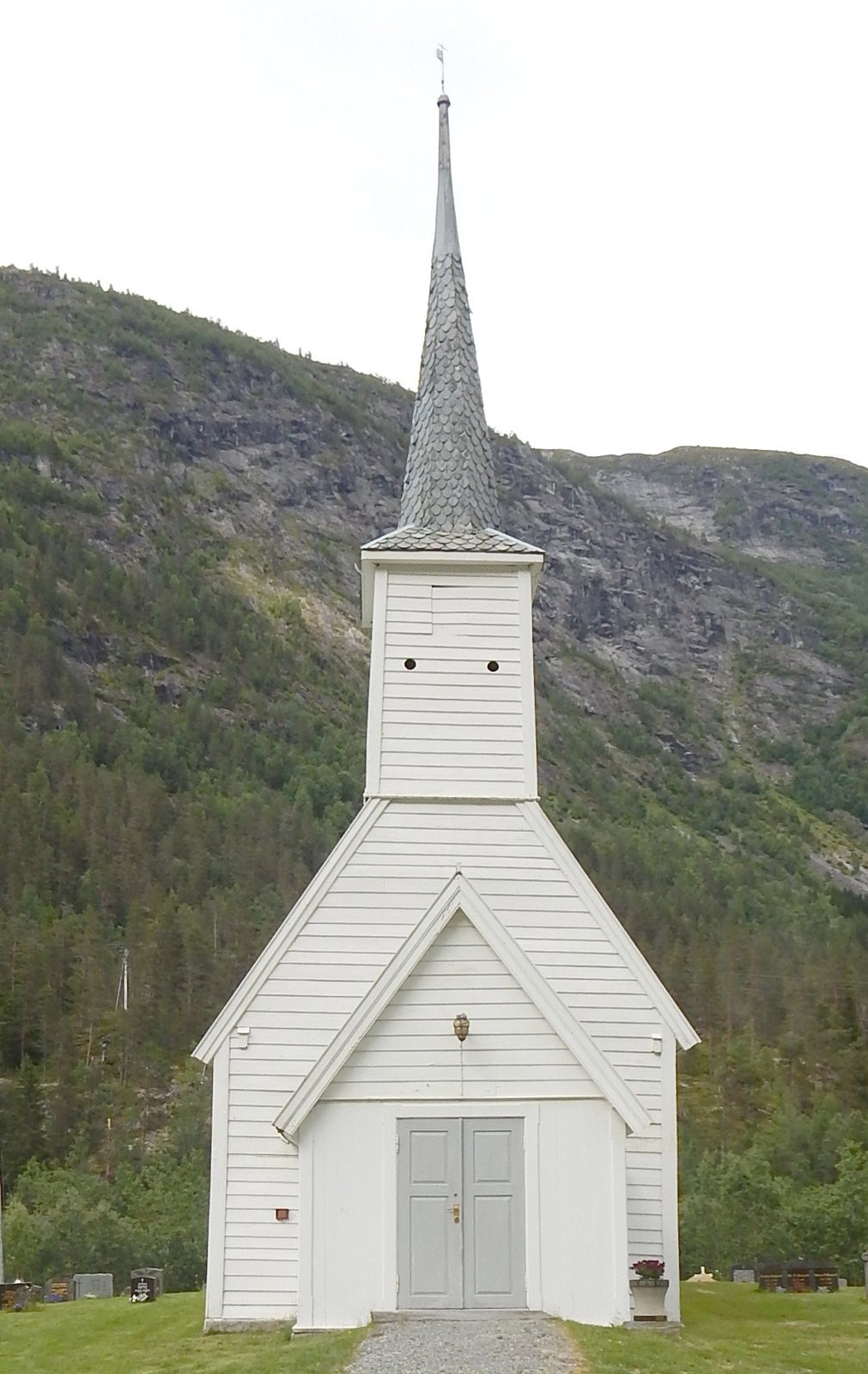
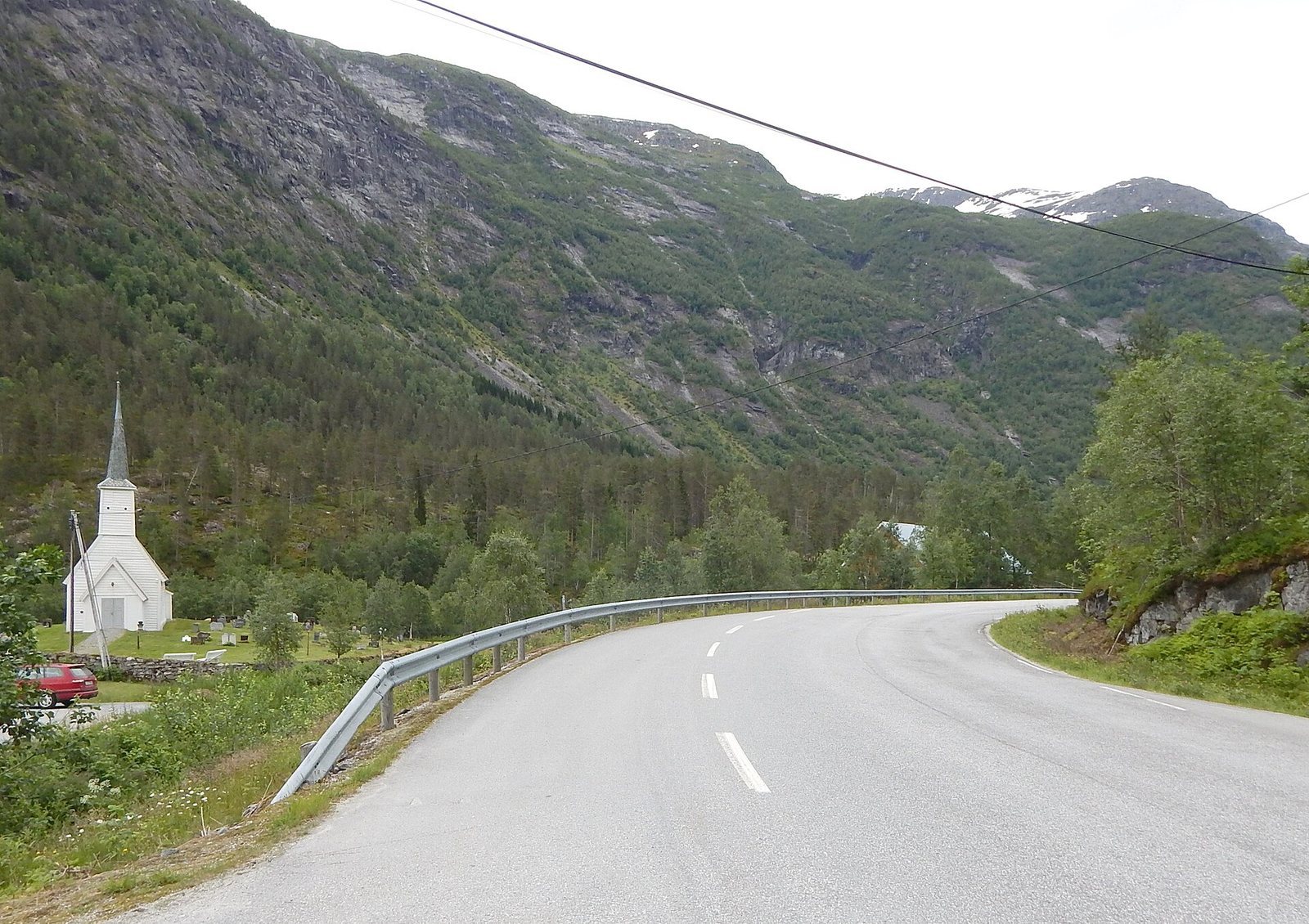
The white wooden church stands beside the Jostedøla River, with a churchyard nearby. Its construction is mainly log-built, with some timber framing. Its early form measured 12 metres long and stood 11 log courses high. The west end has a tower and porch, while the straight-ended chancel is at the east. The church has seating for about 120 people.
Interior furnishings
The church contains a pulpit, a raised stand for preaching, dated to 1626. Its altarpiece, an artwork placed behind or above an altar, came from Kaupanger Stave Church, a medieval wooden church in western Norway.