Vassunda Church: A Medieval Parish Church in Sweden
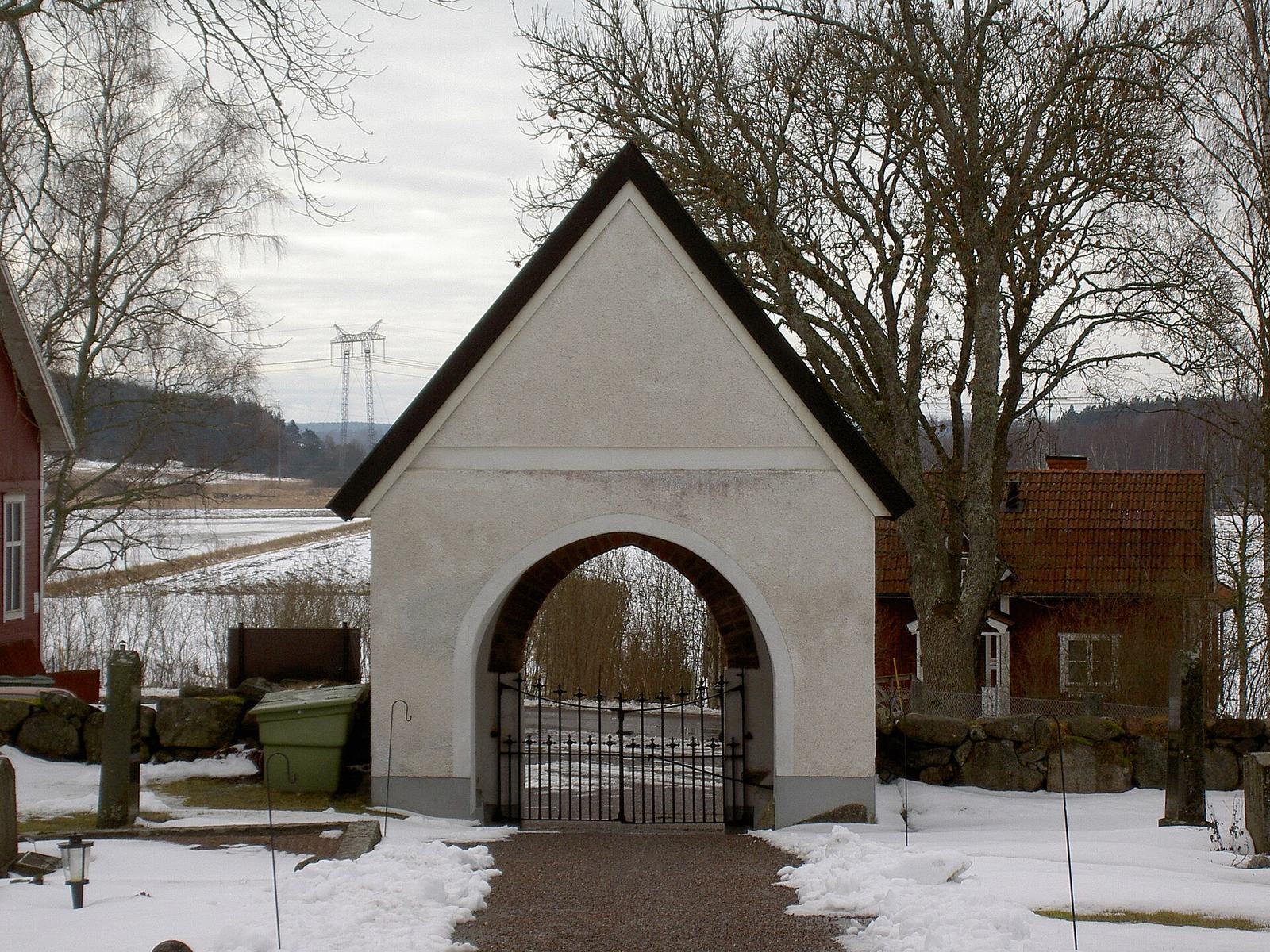
Site at a Glance
- Popularity
- Low
- Country
- Sweden
- Primary era
- Medieval
- Eras represented
- Medieval, Early Modern, Modern
- Civilizations
- Swedish
- Site type
- Religious
- Remains
- Church
On this page12 sections
History
Vassunda Church is a parish church in Vassunda, Sweden. It belongs to the Church of Sweden, an Evangelical Lutheran church, and serves Vassunda parish within the Diocese of Uppsala, a regional church jurisdiction, and Knivsta pastorate, an administrative grouping of parishes.
Medieval origins and development
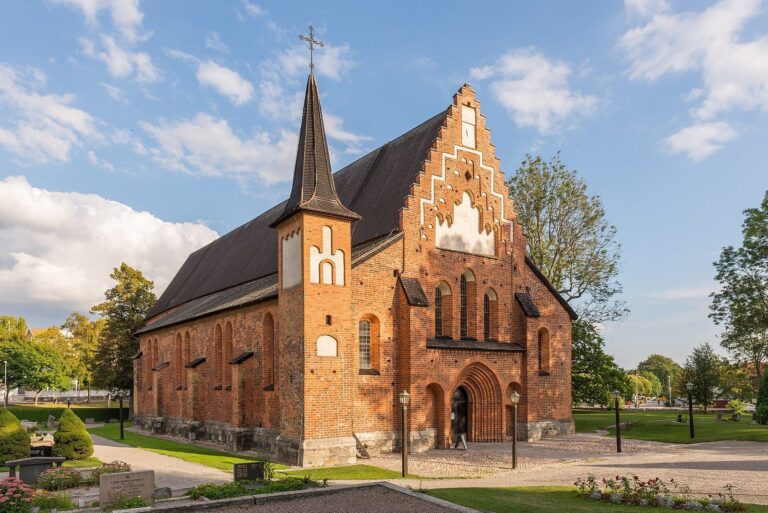
A Romanesque church, built in a medieval European architectural tradition, probably stood on the site by the 12th century. The oldest parts of the present church likely date to the 13th century, when the church was consecrated. It was extended eastward during the 14th century and was considered complete by about 1500.
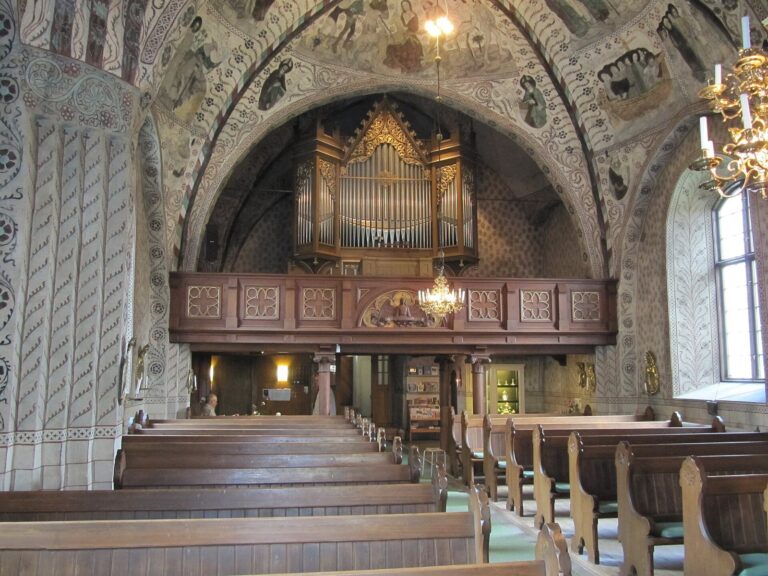
A tower was built in the early 15th century. Brick vaults and wall paintings followed in the middle of that century, with the paintings dated to around 1448–1468. After about 1500, the church underwent no major changes for roughly two centuries.
Changes from the late 17th century
In the late 17th century, the church gained its three-sided chancel and was damaged by a fire. The extent of the damage is uncertain. The tower’s pointed spire was probably destroyed and replaced by a simpler cap, which remained through the 18th century.
Rebuilding and later work
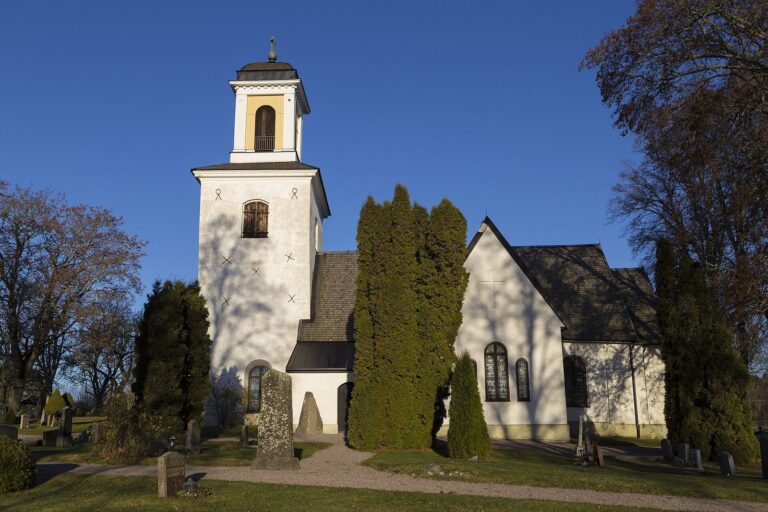
A major rebuilding began in 1804. It included the removal of a detached bell tower, a south porch, and the western churchyard gate, and substantially changed the church’s exterior and interior. The church’s silver was stolen in 1853 and was never recovered.
An interior renovation in 1954 conserved 18th-century furnishings and adjusted the color scheme to match older colors uncovered during the work.
Remains
Plan and exterior
Built mainly of natural stone, the church has a nave leading to a three-sided chancel, with a sacristy extending northward. Its oldest parts probably belonged to a church with a narrower, separate chancel and either a flat ceiling or an open roof frame. The eastward extension created a broader, hall-like church with a sacristy. A large crucifix stood at the division between the nave, the main congregational space, and the chancel, the area around the altar.
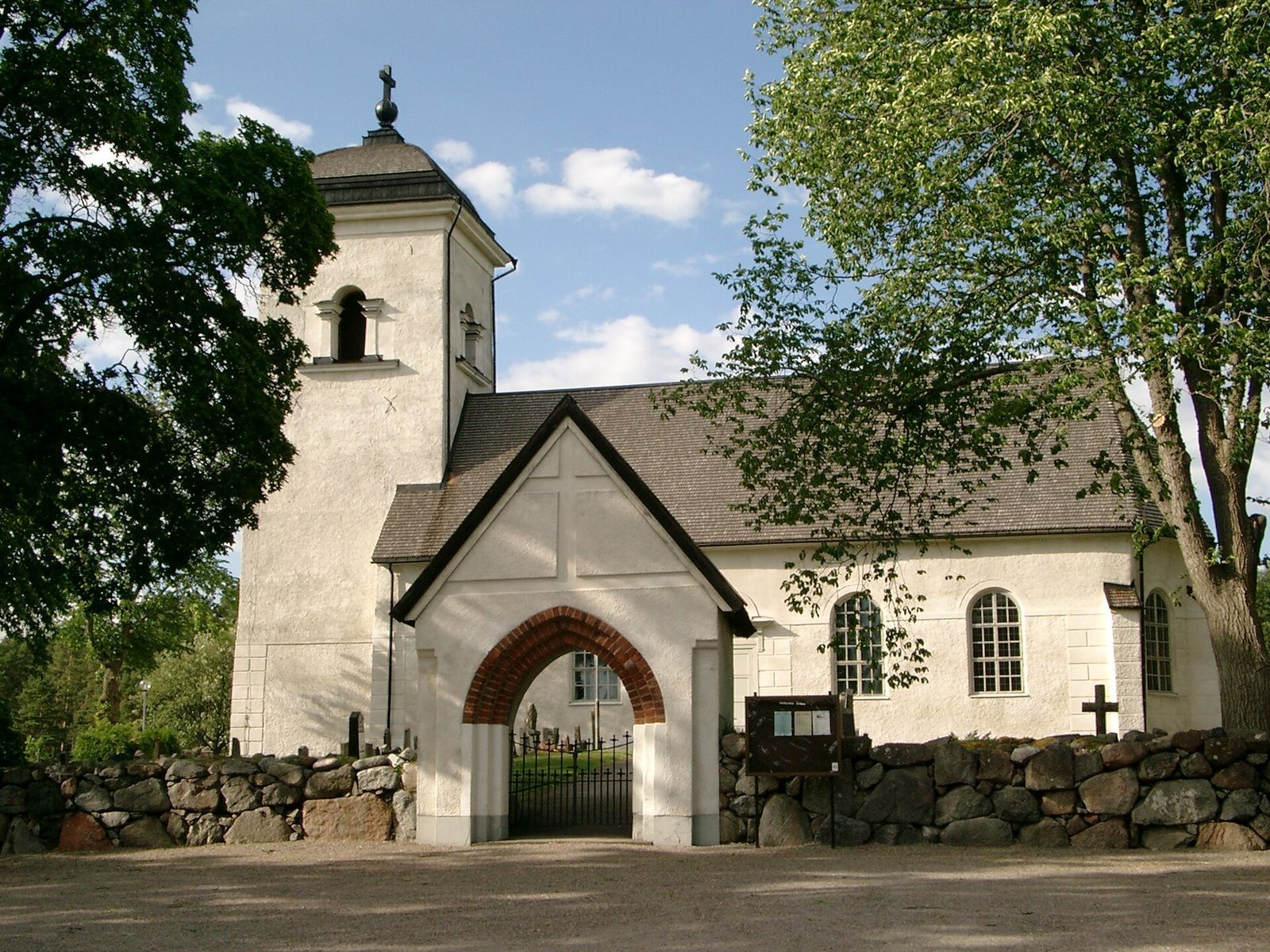
The church’s present tower form dates to the rebuilding. Its ground floor serves as the porch and main entrance, and the bells were moved into the tower from the detached bell tower. Openings for sound were made in the tower walls, and a west entrance was added. The church walls were repaired, new windows were opened, and existing ones enlarged. The facade is Neoclassical, a revival of classical forms. Drawings by Swedish antiquarians Johan Hadorph, dated 1682, and Peringskiöld show an earlier porch; Hadorph’s drawing also depicts a tall, pointed tower spire.
Interior structure
The medieval brick vaults, decorated with wall paintings, were replaced by a plastered wooden vault during the rebuilding. A stairway cut through the sacristy wall gives access to the pulpit. The interior retains stylistic features from the early 19th century, alongside a west gallery built in 1745.
Furnishings and liturgical objects
Altar, pulpit, and pews
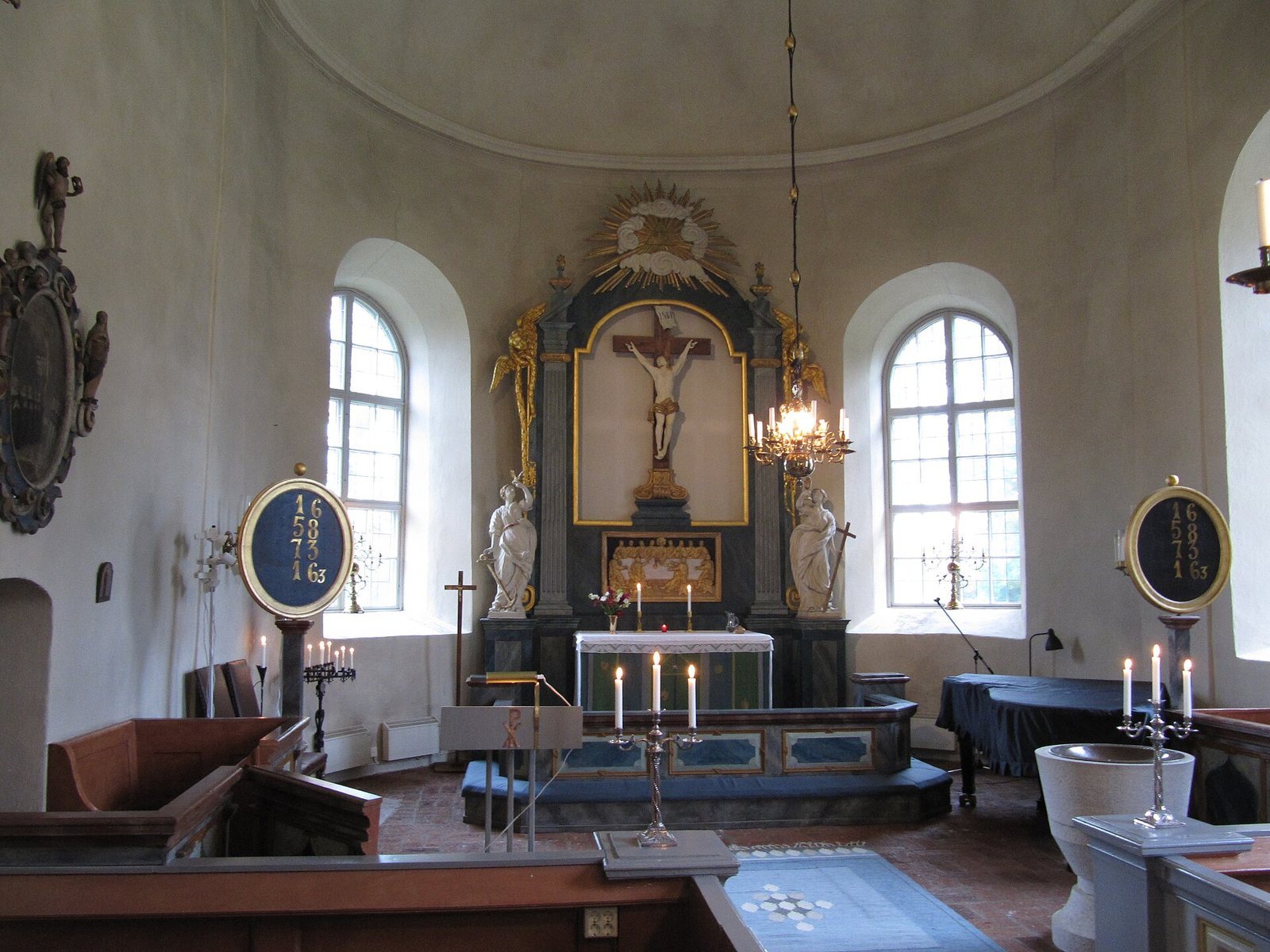
The pews date from 1798. Joachim Lutken Schvager made the pulpit in 1716, and sculptor Magnus Granlund created the altarpiece in 1767. The Oxenstierna and Fleming families donated an altar frontal, a hanging for the front of an altar, in 1742.
Chandeliers and baptismal furnishings
A medieval brass chandelier hangs at the center of the church. Another, donated before 1638 by the owner of Ala manor, hangs opposite the pulpit; Anders Öhrman gave a further brass chandelier in 1728. The chancel’s baptismal font, carved from Öland limestone, dates to 1954. In the porch, a 1728 sundial rests on the base of a medieval baptismal font.
Textiles and communion vessels
The church has a black chasuble, a priest’s vestment worn for the Eucharist, dating from 1801. A fragment of a processional banner from the 1490s is kept in the sacristy and may have come from the workshop of the church painter Albertus Pictor. The communion jug was purchased in 1880; goldsmith P. F. Palmgren of Stockholm made the chalice and paten, the plate for communion bread, in 1853. The wafer box was donated in 1866.
Organ
The church probably had an organ in the 17th century, and an organ gallery stood there in 1634. Carl Holm of Uppsala built a seven-stop organ in 1761, with each stop controlling a set of pipes. Pehr Hedström of Lagga built an organ in 1851, and its present facade dates from that year. In 1912, Carl Richard Löfvander of Stockholm added a second manual, or keyboard, with three stops. Åkerman & Lund’s New Organ Factory of Knivsta enlarged and renovated the instrument in 1965, removing that manual and adding a pedal. The organ has mechanical action and slider chests, boards that direct air to selected sets of pipes, and its stated compass is 54/27.