Santi Benedetto e Scholastica: A Regional Church for Norcia’s Community in Rome
Site at a Glance
- Popularity
- Low
- Country
- Italy
- Primary era
- Early Modern
- Eras represented
- Early Modern
- Civilizations
- Papal States
- Site type
- Religious
- Remains
- Church
On this page11 sections
History
Santi Benedetto e Scholastica is a Roman Catholic church in Rome, Italy, whose origins lie in an early seventeenth-century confraternity formed by residents from Norcia. Its chapel was enlarged and converted into a church in 1625. Dedicated to Benedict of Nursia, a monk associated with the origins of Western monasticism, and his sister Scholastica, traditionally regarded as the first Benedictine nun, it serves people from Norcia living in Rome. The church belongs to the parish of Santa Maria in Aquiro in the Diocese of Rome.
The confraternity and the church’s foundation
A confraternity, or lay religious association, was established by people from Norcia and initially also from Spoleto to help fellow residents in Rome. Pope Paul V approved the group in 1615, and Pope Gregory XV raised it to the status of an archconfraternity in 1623. It first met at Sant’Eustachio in Campo Marzio, later moved to Santa Maria della Pietà near Piazza Colonna, and also gathered at a house owned by Pier Matteo Lucarucci.
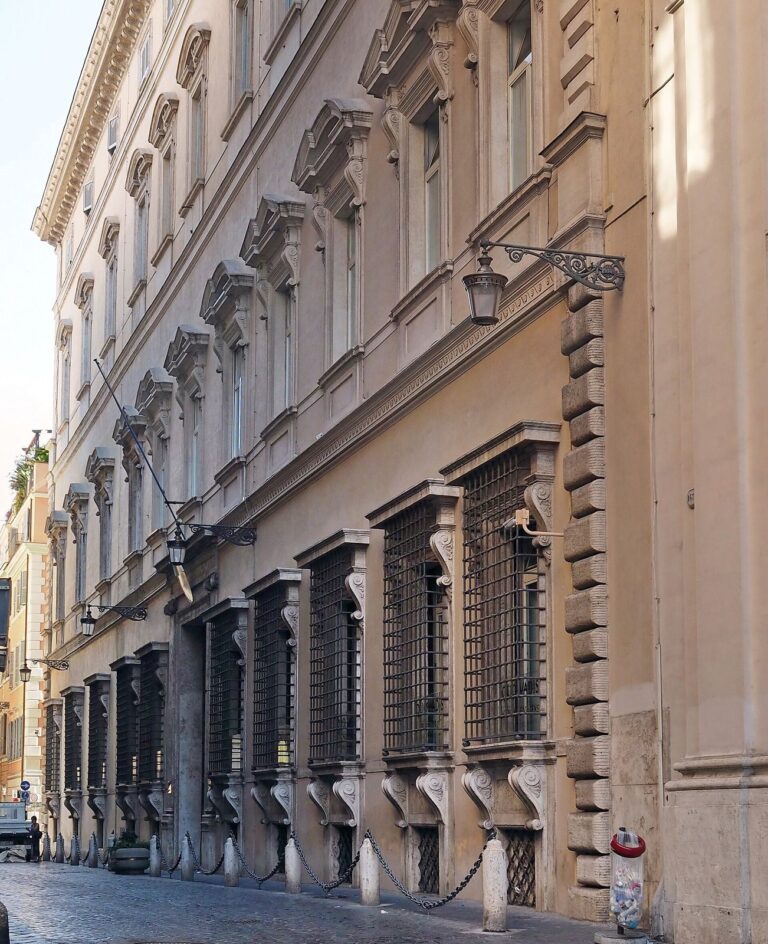
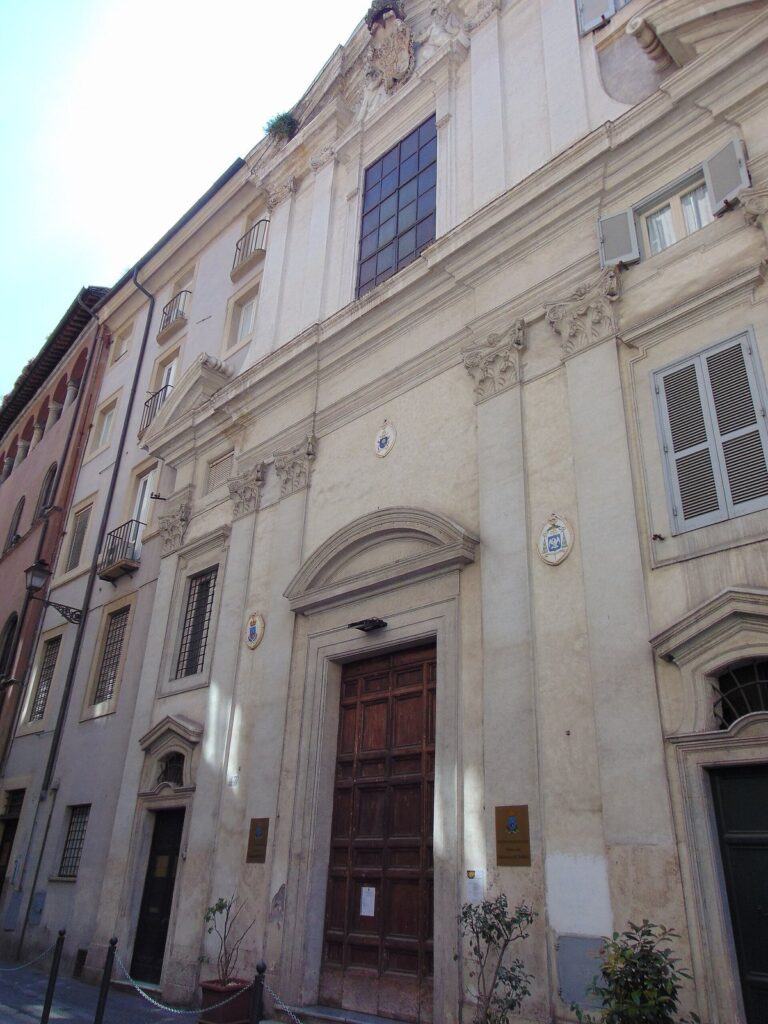
Lucarucci left his property to the confraternity. After his death in 1622, its ground-floor chapel there was enlarged and made into a church in 1625. The church occupies part of Palazzo Lucarucci on Via di Torre Argentina.
Local names
The name Argentina is linked to Torre Argentina, whose name comes from Argentoratum, the Latin name for Strasbourg. In 1503, papal official Johannes Burckard had a palace built beside the tower, which was later incorporated into a building.
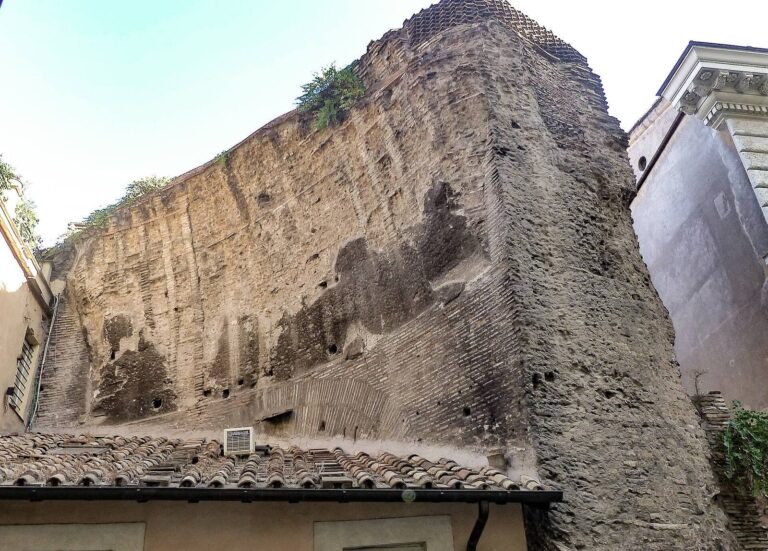
The local name Ciambella is associated with the rotunda of the Baths of Agrippa, an ancient Roman public bathing complex. The rotunda was known as Arco della Ciambella from 1505. A different explanation, preserved in the memoirs of Roman sculptor Flaminio Vacca, tells of workers searching the baths for antiquities for Cardinal Andrea della Valle. They found a gilded crown from imperial times and called it a bronze head-ring, or ciambella. The sign of a nearby inn helped popularize the name.
Looting, restoration, and revival
During the French occupation of Rome in 1798, the church was looted and closed for worship, and its archive was lost. It was restored, reconsecrated, and reopened in 1841 under Pope Gregory XVI. The church was looted again during Rome’s short-lived republican government in 1849, then restored soon afterward. Further restoration work took place under Popes Pius IX and Leo XIII.
The archconfraternity ceased to function in the mid-twentieth century. The Diocese of Rome took over the church, which was then closed. People from Norcia helped bring it back into use, and the first Mass in the restored church was celebrated on 25 December 1980. The archconfraternity was revived under new statutes in 1984.
Remains
The small church occupies the ground floor of Palazzo Lucarucci and is built into the larger street-facing structure. Its compact interior has a slightly irregular single nave, the main body of the church, divided into two sections by an arch. The congregation’s section has a barrel vault, a continuous arched ceiling, while the altar end has a flat ceiling.
Street entrance
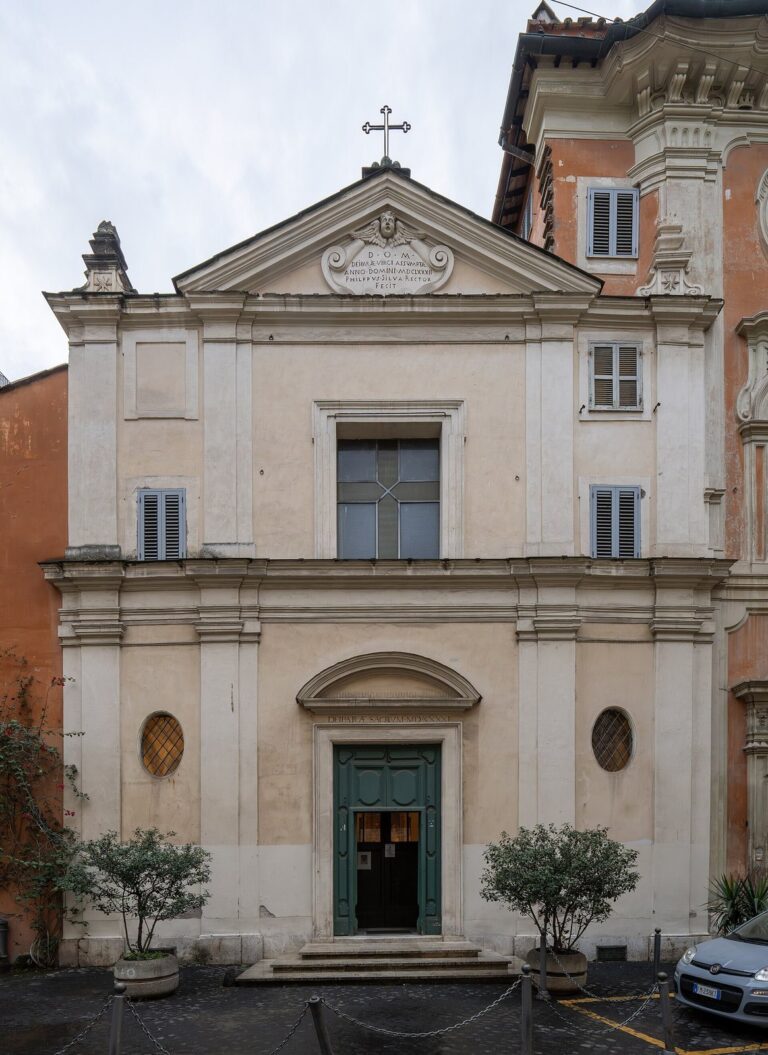
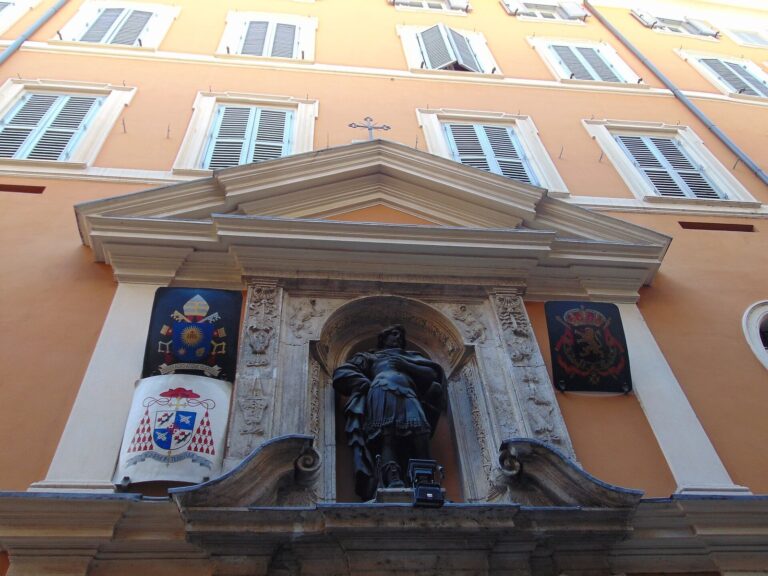
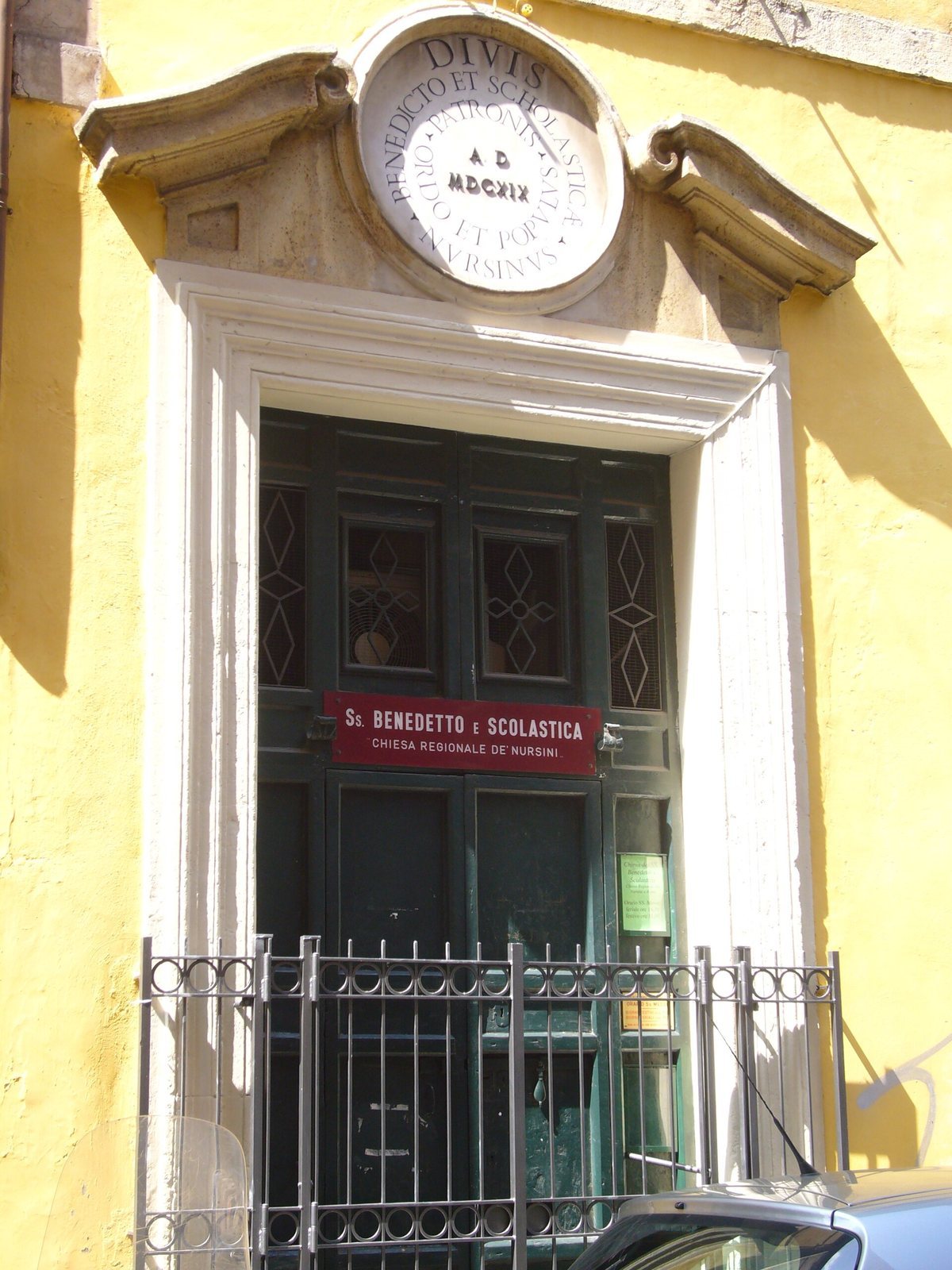
The entrance is a portal set into the palazzo’s street frontage; the church has no separate façade. A round medallion above the doorway carries a Latin dedication to Benedict and Scholastica as patrons of Norcia, made in the name of the town’s magistracy and people. The portal is topped by a broken pediment, an interrupted upper molding, whose curved sides end in spiral ornaments.
Interior
Plan and painted decoration
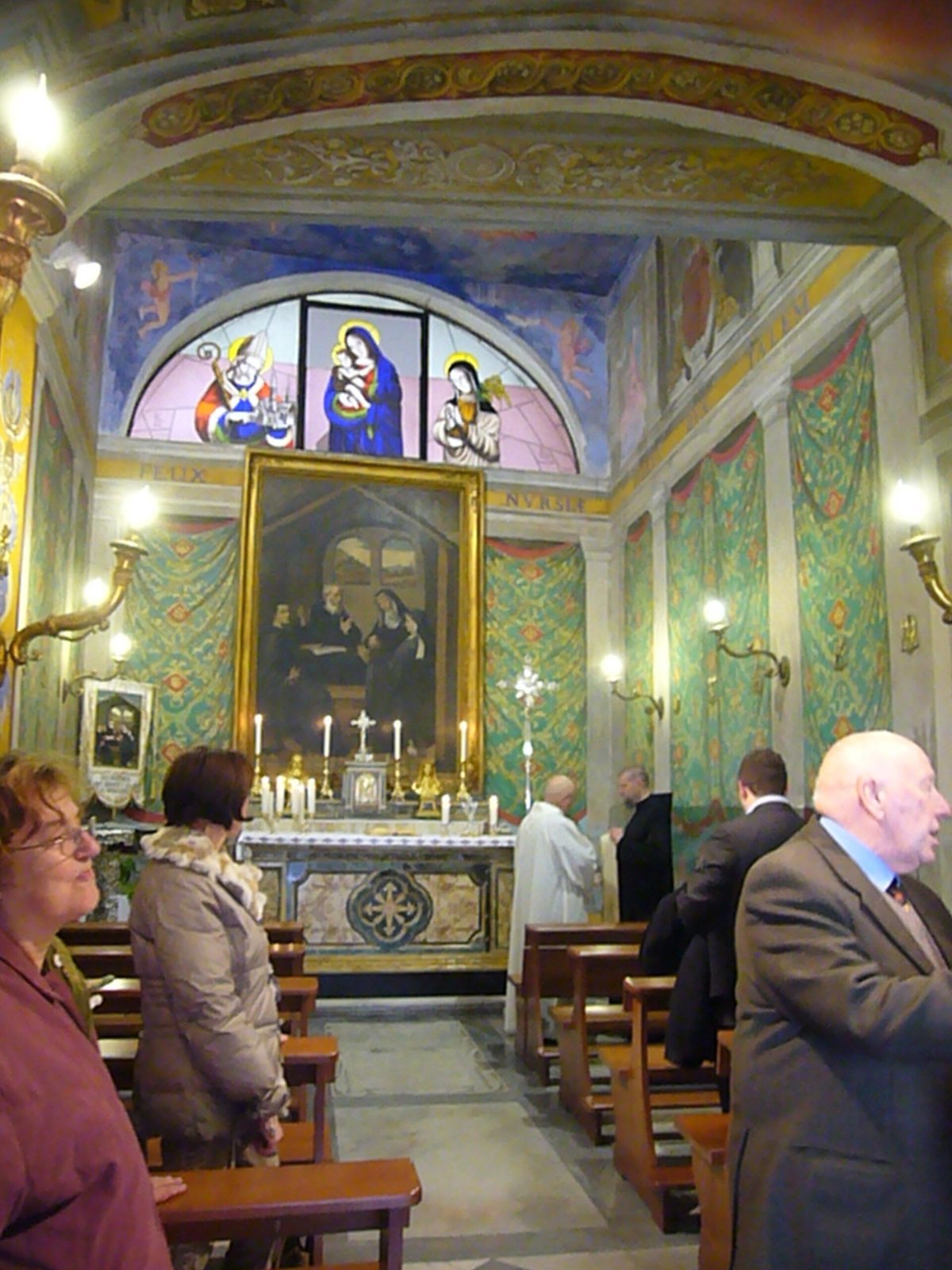
An arch resting on shallow pilasters, wall projections resembling columns, divides the nave from the altar section. Painted decoration creates the appearance of hanging curtains, columns, pilasters, cornices, an entablature, a horizontal structure above columns, and coats of arms. At the entrance end, actual pilasters support a gallery and follow the relatively plain Tuscan classical style. An inscription praises Norcia as the land that gave birth to such a son.
Ceiling and high altar
A ceiling fresco depicts the glorification of Saints Benedict and Scholastica. At the high altar is a seventeenth-century Umbrian painting of the saints’ last meeting, together with an altarpiece from the same period. Above the altar, stained glass in a semicircular opening shows the Madonna and Child with Benedict and Scholastica; it provides the church’s only natural light. A tabernacle, a cabinet for the reserved Eucharist, stands between two reliquaries, containers for the saints’ relics.
Side altars
The altar on the right has a painting of the Adoration of the Shepherds from the late seventeenth century. At the left altar, an eighteenth-century wooden crucifix is flanked by oval paintings of the Virgin Mary and the Apostle John.
Burial slabs
The floor contains grave slabs for residents of Norcia who died in Rome, most dating from the seventeenth century. They include memorials to Pier Matteo Lucarucci, who died in 1622, and Gradasso Pitta, who died in 1617.