Bollendorf Castle: An Ecclesiastical Seat and Baroque Palace in Germany
Site at a Glance
- Popularity
- Medium
- Country
- Germany
- Primary era
- Early Modern
- Eras represented
- Medieval, Early Modern
- Civilizations
- Duchy of Luxembourg, Habsburg, Holy Roman Empire, Merovingian, Spanish
- Site type
- Military
- Remains
- Castle
On this page6 sections
History
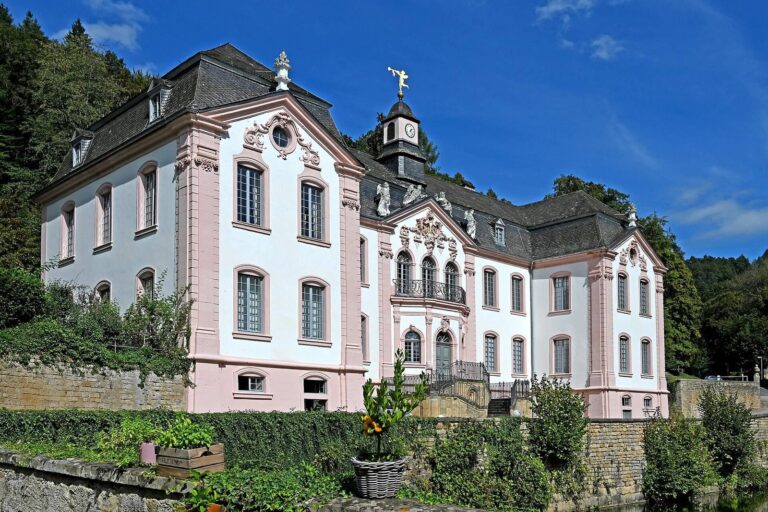
Bollendorf Castle, also known as Bollendorf Palace, is a castle in Bollendorf, Germany, with origins dated to around AD 700, although its exact construction date is unknown. Its connection to Echternach Abbey and its later transformation into a Baroque palace shaped its role in local administration and architecture.
Echternach Abbey’s administrative seat
The property passed to Echternach Abbey in 716. Until the end of the eighteenth century, the castle served as the seat of a subordinate provostship, an ecclesiastical administrative unit within the larger Provostry of Echternach. Its office administered local manorial districts, or estates, in Bollendorf, Ernzen, and Irrel.
From manor house to Baroque palace
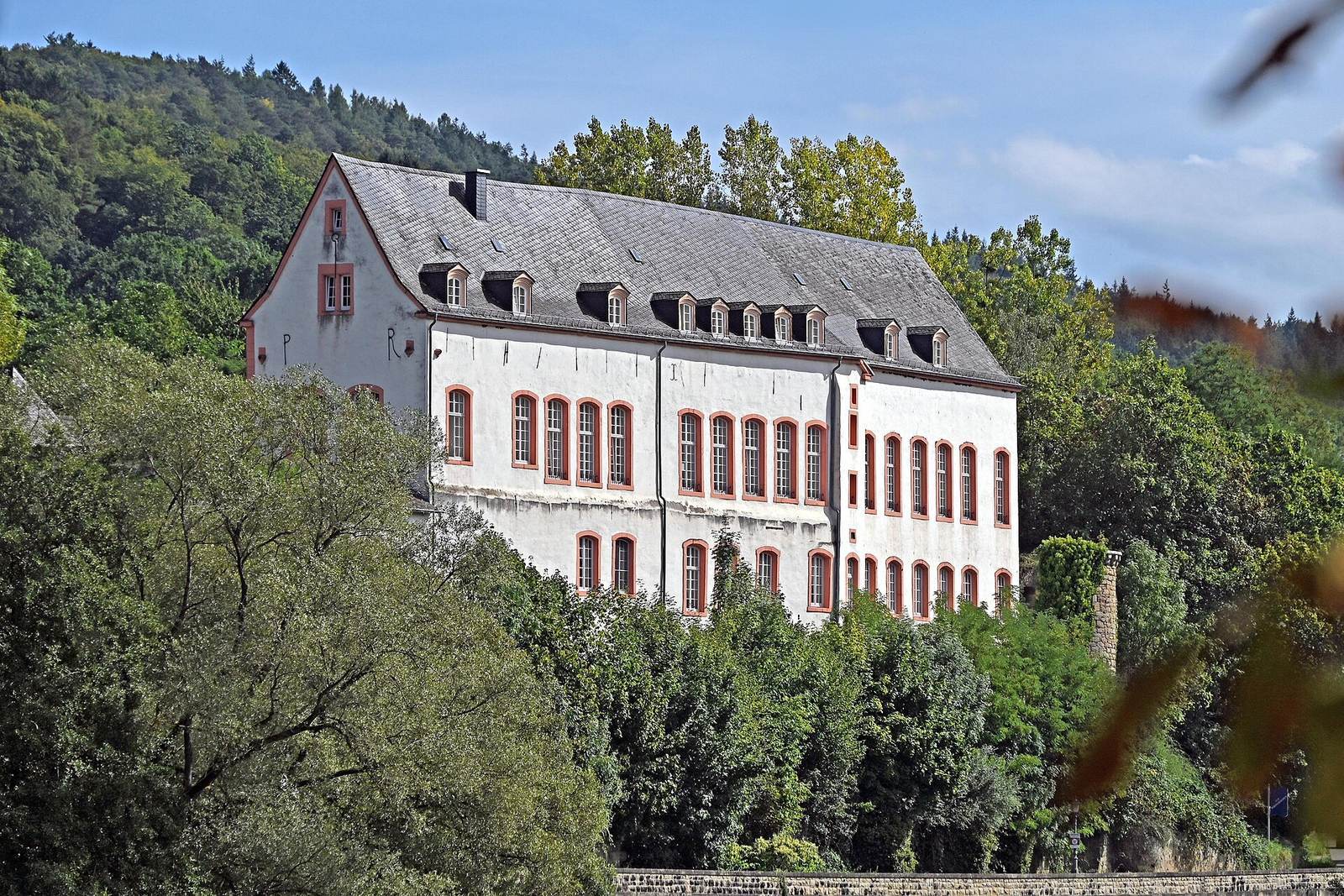
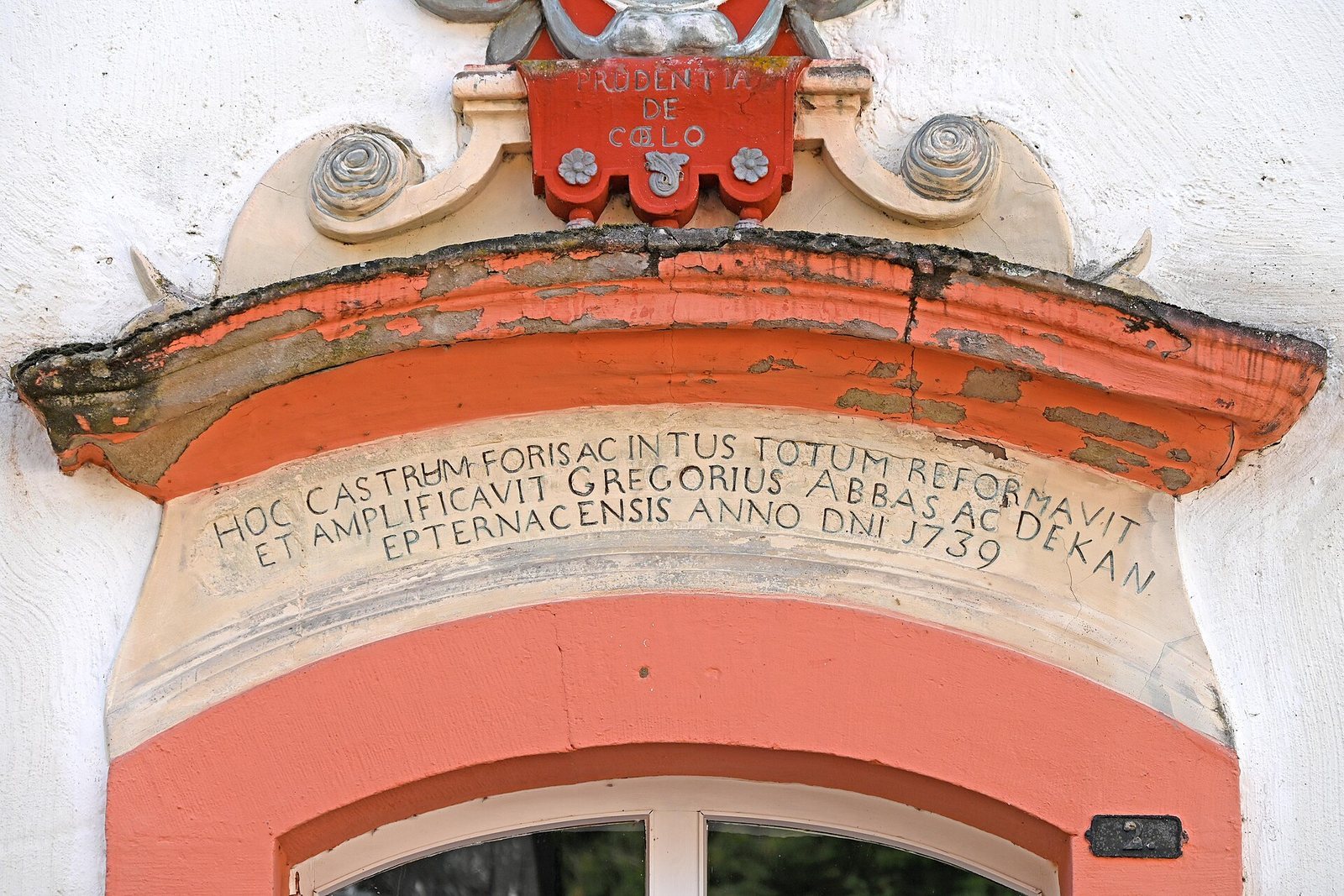
In 1619, Abbot Peter Richardt, the head of Echternach Abbey, had the castle’s southwest corner converted into a residence. Beginning in 1739, Abbot Gregorius Schouppen enlarged the building and transformed the manor house into a Baroque palace, a style of European art and architecture prominent in the seventeenth and eighteenth centuries.
Remains
The castle is a lowland complex on a rocky outcrop in the floodplain of the Sauer River. Built over the foundations of a former Roman fortification, it retains substantial parts of its historic fabric.
Medieval fortifications
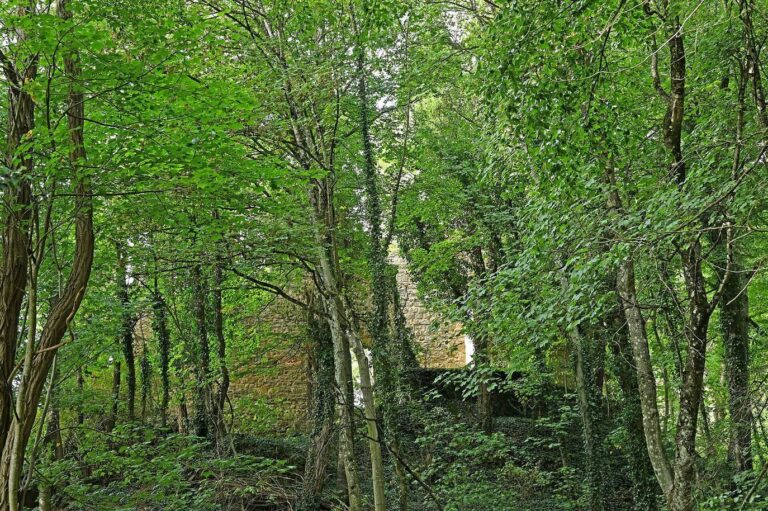
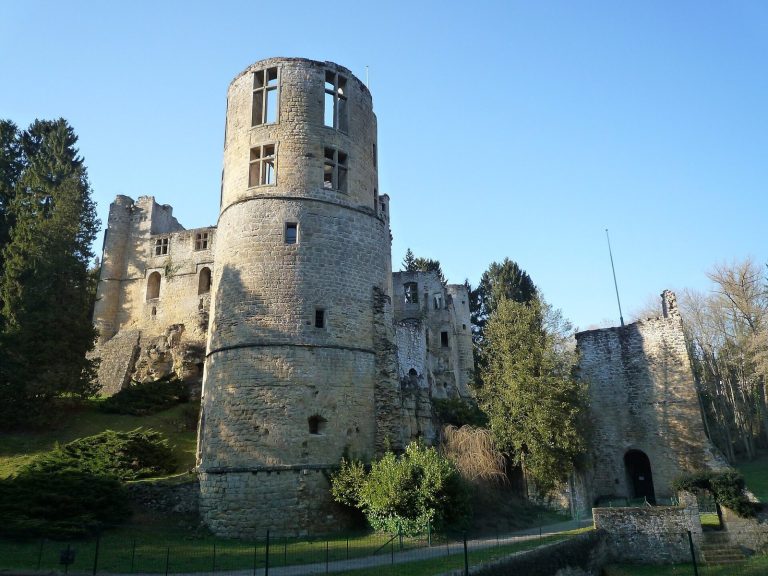
The medieval remains include an enclosing wall and remnants of a round tower. The tower has T-shaped loopholes, narrow openings in the defensive structure.
Residential and palace buildings
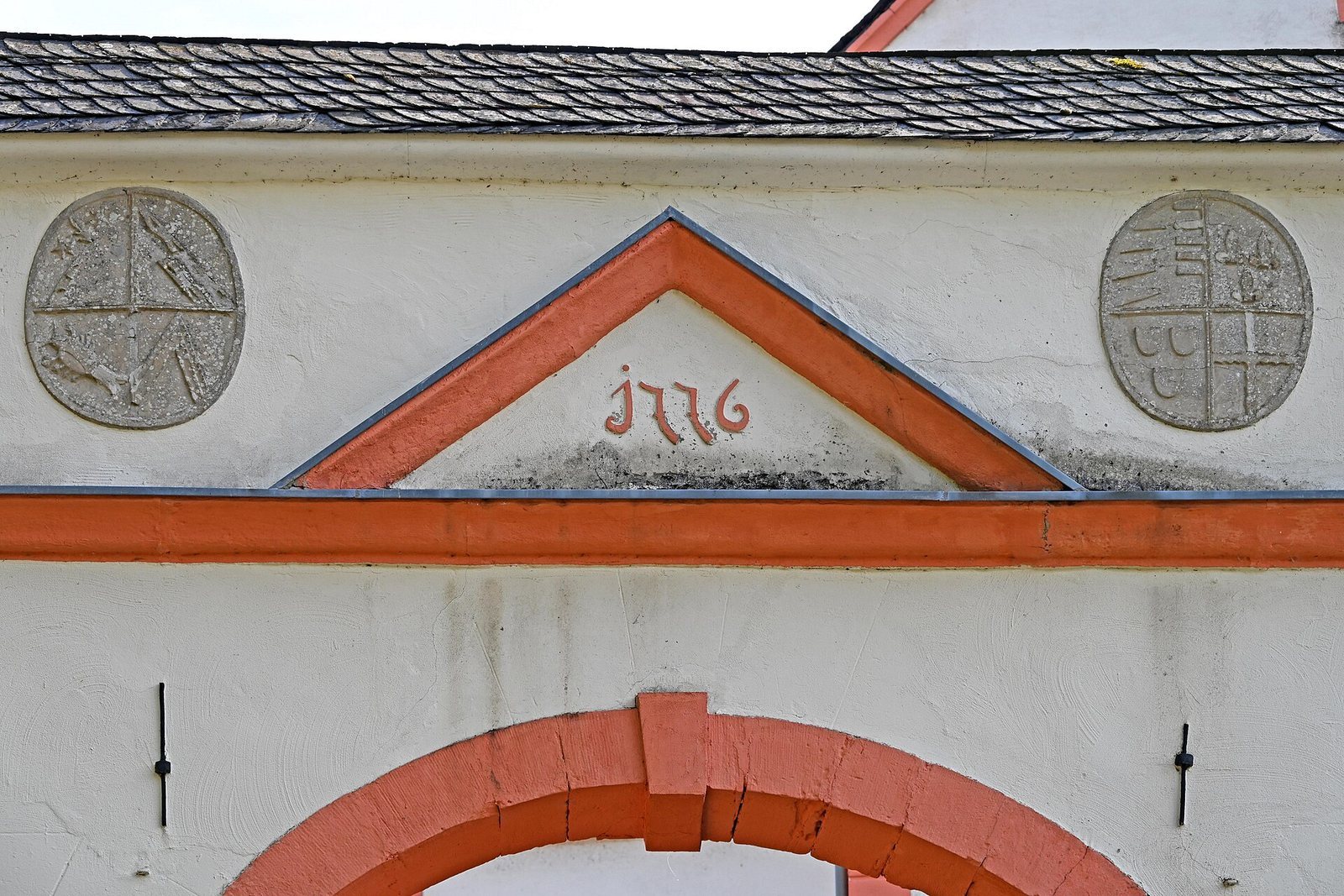
The northern section is associated with the residential alterations, which incorporated a circular spiral staircase extending through every storey. A central block is also identified within the complex. Later buildings include a castle hall, a second hall, and a knights’ room. The palace portal dates to 1739, while the entrance gate dates to 1776. The grounds include a park dating to 1777.